
Free tools Windows power users keep installed
One-click scans. No signup required.
iTechGuides is reader-supported. When you buy through links on our site, we may earn an affiliate commission. As an Amazon Associate I earn from qualifying purchases. Learn more
The best no-code app builder depends on what you are building: Bubble is the strongest choice for complex web SaaS, Adalo for straightforward native mobile apps, FlutterFlow for mobile apps with code export, Glide for spreadsheet-driven internal tools, Softr for portals, AppSheet for Google organizations, Power Apps for Microsoft enterprises, Retool for internal operations, Zoho Creator for SMB workflows, and Thunkable for beginner prototypes.
Those recommendations are use-case judgments, not a universal ranking. A no-code platform that is excellent for an employee dashboard may be a poor foundation for a consumer iOS app, while a mobile builder that is easy to start with may become limiting when your product needs custom backend logic, high traffic, or developer handoff.
Key takeaways
- Bubble is the best fit for a serious browser-based SaaS product because it combines visual UI design, workflows, database, APIs, authentication, and hosting, but its Workload Units make production costs usage-dependent.
- Adalo is the simpler native-mobile choice for many founders, publishing from one visual project to the web, Apple App Store, and Google Play; its Starter plan was listed at $36 per month when billed annually in the August 18, 2026 snapshot.
- FlutterFlow is the strongest option when mobile development and future developer handoff matter because its paid Basic plan advertises source-code and APK downloads.
- Glide, Softr, AppSheet, Retool, Power Apps, and Zoho Creator are primarily business-application choices rather than interchangeable alternatives to consumer mobile builders.
- A free plan rarely represents the full cost of a production app: users, editors, records, storage, automation, workload, AI credits, external services, app-store accounts, and migration work can all affect the budget.
What is a no-code app builder?
A no-code app builder is a platform that lets a person create an application through visual interfaces instead of writing the application’s source code as the normal build path. Typical features include screen and component design, database modeling, authentication, conditional logic, workflows, API connections, notifications, hosting, publishing, analytics, and administration.
“No-code” does not mean “no technical work.” A production application still needs a sensible data model, access-control rules, error handling, performance testing, secure API configuration, backups, analytics, accessibility checks, privacy documentation, and a plan for maintenance.
#1 Best Overall

- 【Multi-Use Double-Sided Whiteboard】-- Versatile and practical, this magnetic double-sided whiteboard with stand can be used on both sides, providing double the writing space for all your needs. The board can be placed on a desktop with the stand or hung on a wall. Whether you're brainstorming ideas, making to-do lists, or practicing your drawing skills, this whiteboard has got you covered
- 【Smooth Writing & Easy to Clean】-- Enjoy a seamless writing experience on this dry erase board, as its smooth and durable writing surface allows your markers to glide effortlessly. When it's time to start fresh, cleaning is a breeze - simply wipe away your notes and drawings with a dry eraser or a soft cloth
- 【Easy to adjust】-- The aluminum frame is sturdy, does not oxidize and scratch, remains clean as new after a long period of time, and is safer for writing and painting. The aluminum stand can be rotated up to 360 degrees, and upgraded knobs make it easier to lock the board, which conveniently adjusts to a comfortable angle, allowing the board to stand up securely
- 【Value Set & Premium Quality Craftsmanship】-- The 16" x 12" Magnetic Double-sided dry erase board set comes with 8 magnetic dry erase markers (include 8 color), 8 magnetic pieces, 1 magnetic dry eraser and 1 marker holder. It is made from an aluminum frame and holder, making it lightweight and durable. This is handy to carry from room to room on their own
- 【Widely Application Scenario】-- The magnetic dry erase board with stand is suitable for a wide range of scenarios, making it incredibly versatile. Whether you need it for personal use at home and collaborative work in the office, this whiteboard is the perfect tool to facilitate communication, creativity, and organization
No-code, low-code, and AI app generation are different
| Category | What the user normally does | Where technical work appears |
|---|---|---|
| No-code | Builds screens, data, and workflows visually. | Advanced integrations, unusual logic, data architecture, security, and troubleshooting may still require technical expertise. |
| Low-code | Uses visual development with formulas, expressions, scripts, SQL, JavaScript, Dart, Deluge, Power Fx, or custom functions. | Complex behavior often requires code-like configuration or developer assistance. |
| AI app generation | Uses prompts to create screens, schemas, workflows, or source code. | The user remains responsible for reviewing, securing, testing, maintaining, and deploying the generated result. |
AI-assisted editing can accelerate work inside a visual platform, but a prompt-to-code product is not automatically equivalent to a managed no-code runtime. Generated source code can improve portability while also creating a conventional software-maintenance obligation.
Which no-code app builder should you choose?
Use the following shortlist before comparing prices. The right no-code app builder is determined first by output, audience, data, complexity, and portability.
| Best for | Recommended platform | Why it fits | Watch out for |
|---|---|---|---|
| Complex web SaaS and full-stack products | Bubble | Integrated visual frontend, backend, workflows, database, APIs, authentication, and hosting. | Workload-based costs and platform lock-in. |
| Native mobile with minimal backend setup | Adalo | Visual database-driven projects can publish to web, iOS, and Android. | Less flexibility for complex backend architecture. |
| Mobile product with developer handoff | FlutterFlow | Mobile, web, and desktop targets plus source-code export on paid plans. | You may need to select and manage a separate backend. |
| Spreadsheet-driven internal apps | Glide | Fast route from structured data to operational apps. | Not a general-purpose native App Store builder. |
| Portals and business software | Softr | Strong fit for portals, intranets, forms, dashboards, and workflows. | Plan limits and external-data permissions need checking. |
| Google Workspace organizations | AppSheet | Connects with Google data and supports offline business processes. | Per-user licensing and business-oriented UI. |
| Microsoft enterprise applications | Power Apps | Dataverse, Microsoft connectors, identity, governance, and Power Platform integration. | Licensing and environment design can be difficult. |
| Developer-friendly internal tools | Retool | Built for databases, APIs, permissions, dashboards, and operations. | More technical and less suited to consumer UX. |
| Structured SMB workflows | Zoho Creator | Forms, reports, approvals, workflows, integrations, analytics, and mobile deployment. | Platform-specific logic and ecosystem licensing. |
| Beginner mobile prototypes | Thunkable | Approachable visual mobile creation. | Current pricing and production limits require verification. |
How were these no-code app builders evaluated?
The comparison uses ten practical criteria rather than treating every platform as the same kind of product:
- Output and distribution: web publishing, custom domains, progressive web app support, iOS and Android builds, store submission, push notifications, device features, and offline behavior.
- Data and backend: included databases, relational capabilities, spreadsheet connections, authentication, file storage, permissions, APIs, exports, backups, and external backend support.
- Logic and integrations: conditional workflows, scheduled jobs, webhooks, formulas, custom actions, reusable components, APIs, connectors, and plugins.
- Scalability: realistic users, concurrency, database size, workflow volume, API limits, query performance, background jobs, monitoring, and recovery—not an unsupported promise that a product “scales.”
- Security and governance: SSO, role-based access, audit logs, encryption, data residency, compliance documentation, environment separation, and administration.
- Portability: source-code export, database export, self-hosting, independent hosting, media export, API access, and migration effort.
- Pricing predictability: subscription, seat, user, project, record, credit, automation, AI, storage, and workload economics.
- Ease of use and collaboration: learning curve, team editing, branches, versioning, documentation, and developer handoff.
- Use-case fit: whether the platform’s architecture matches a public product, internal tool, customer portal, field app, or enterprise workflow.
- Vendor dependence: how much of the application’s UI, business logic, data, identity, and deployment process remains tied to the vendor.
Web app or native mobile app: what is the difference?
A web app runs in a browser and can often use a custom domain. A progressive web app can feel app-like and may support installation on some devices, but a PWA is not automatically the same as a native iOS or Android application distributed through the App Store or Google Play.
The label “mobile app” can describe a responsive website, PWA, wrapped website, cross-platform native build, or dedicated native mobile project. Ask the vendor exactly what is produced, whether source code is available, which device capabilities are supported, and who handles signing and store submission.
Native distribution adds Apple and Google developer accounts, build and signing requirements, store review, privacy disclosures, release management, and real-device testing. Camera, GPS, Bluetooth, push notifications, deep links, offline synchronization, authentication, and permission prompts can behave differently on iOS and Android.
Bubble’s current pricing page says its mobile apps use React Native and that a paid plan is required to deploy a live version for store publishing. FlutterFlow’s pricing page advertises mobile, web, and desktop development, with paid Basic features including code download, APK download, and one-click app-store deployment. Adalo’s pricing page advertises publishing to the web, Apple App Store, and Google Play from one visual builder.
What’s actually slowing this PC down?
Pick the symptom - the matching free tool is one click away.
How do the ten leading platforms compare?
The table below combines output, backend approach, portability, and the pricing signal available in the August 18, 2026 research snapshot. Pricing is volatile and should be checked on the linked official page before purchase.
| Platform | Web | iOS/Android | Backend approach | Source-code export | Pricing model | Snapshot paid signal | Main limitation |
|---|---|---|---|---|---|---|---|
| Bubble | Strong | Mobile support; verify native requirements | Integrated database and backend | Platform-dependent | Project plan plus Workload Units | $59/month annually for Starter; 175,000 monthly Workload Units | Usage cost and lock-in |
| Adalo | Yes | Yes, store publishing advertised | Hosted Postgres on paid plans | Not the central portability feature | Flat plan with app, editor, storage, and feature limits | $36/month annually for Starter | Complex logic and deep native features |
| FlutterFlow | Yes | Yes; mobile-focused cross-platform output | Often paired with Firebase, Supabase, Xano, or another backend | Paid plans advertise export | Per-seat tiers | $39/month for Basic | More technical backend and code maintenance |
| Glide | Strong for business apps | Not a general-purpose native store builder | Structured data and built-in database options | Platform-dependent | Projects, credits, users, database, and team limits | $25/month Solo; $125/month Team | Custom consumer apps and native features |
| Softr | Strong for portals | Check output for the specific project | External data sources plus platform features | Platform-dependent | Users, apps, data, automations, and features | Free entry confirmed; amounts require live verification | Deeply bespoke logic and native functionality |
| AppSheet | Yes | Business mobile apps and offline operation | AppSheet database and many connectors | Platform-dependent | Per-user monthly licensing | $5, $10, or $20 per user/month by tier | Public-audience economics and consumer UX |
| Power Apps | Yes | Business mobile support | Dataverse and Microsoft or external connectors | Platform-dependent | Per-user licensing plus capacity and connector considerations | $20/user/month annually; $12 enterprise offer with 2,000-seat minimum | Licensing complexity |
| Retool | Internal and external web apps | Not primarily a native mobile choice | Databases, APIs, queries, and permissions | Self-host options vary by plan | Builder, internal user, external user, and AI credits | Team: $10 builder and $5 internal user/month | Technical setup and consumer design |
| Zoho Creator | Yes | Native web, iOS, and Android deployment advertised | Forms, reports, workflows, and integrations | Platform-specific | Plan, user, app, and workflow limits | Free edition; exact paid values require verification | Consumer design and platform-specific logic |
| Thunkable | Mobile-centered | Mobile publishing claims require current verification | Verify current backend and integration options | Verify current export options | Verify subscription, project, seat, and publishing terms | Not verified in this research pass | Insufficient current pricing evidence |
Which platform is best for a complex web SaaS?
Bubble is the best fit for a serious web application when the product needs a visual frontend, backend, database, workflows, APIs, authentication, and managed hosting in one platform. Bubble is particularly suitable for marketplaces, membership systems, booking products, CRM-like SaaS, and other browser-first products with nontrivial business logic.
Bubble’s strength is integration: the same project can contain the interface, database, workflows, API connections, and hosting rather than requiring a founder to assemble several services. The trade-off is that the architecture remains closely tied to Bubble. Performance also depends on data design, workflow structure, plugins, queries, and workload usage.
Bubble’s pricing page listed a free development plan and a Web & Mobile Starter plan at $59 per month billed annually, including 175,000 Workload Units per month, in the August 18, 2026 snapshot. Workload Units measure server-resource consumption, so a plan price alone is not a reliable production-cost forecast. Web and mobile activity in one project shares cumulative workload usage.
Do these 3 things before closing this tab:
1Scan for outdated or missing drivers - takes under a minute2Repair Windows errors before they cause bigger problems3Fix the driver behind crashes, sound loss and screen glitchesRank #2

- 【Smooth Writing and Easy to Wipe】Magnetic whiteboard, overall size: 35.4" x 23.6" ( frame included); writing surface size: 33.9" x 22.1". Smooth & durable magnetic writing surface, easily dry wipe with all dry-erase markers. Give you a very smooth writing experience.
- 【Premium Quality】Specially lacquered surface, anti-scratch silver finished aluminium frame, ABS plastic corner with screw-fixing in corners. Fixing kits and detachable marker tray included.
- 【Versatile Installation】Flexible mounting allows you to install your whiteboard either horizontally or vertically. Easily customize the board's orientation to fit your space and needs. The classic design will match any decoration, making it a perfect addition to your space.
- 【Multiple Uses】It is a good choice for home, school, office, small group instruction, kitchen, stores, dormitory and classroom etc. Perfect for play counting, guided reading, learning, presentation, drawing, education and grocery list etc, without paper wasting.
- 【Warmly Remind】If you have any questions about VIZ-PRO whiteboard, please contact us by e-mail freely, Surely help you solve the problems.
Choose another platform if you need full source-code ownership, predictable linear pricing, a simple spreadsheet app, or deep device-native integrations. Bubble is a strong web SaaS choice, not a universal answer for every mobile or internal-tool project.
Is Adalo the best no-code builder for native mobile apps?
Adalo is the best starting point for a straightforward native mobile app when you want one visual project, a built-in database, and minimal backend setup. Adalo suits directories, marketplaces, bookings, memberships, communities, and lightweight transactional apps that do not require unusually specialized backend architecture.
Adalo’s paid plans include a hosted Postgres database, while the free plan lists a 500-record-per-app limit. The platform advertises publishing to the web, Apple App Store, and Google Play. Store publishing still involves Apple and Google developer accounts, privacy information, review requirements, and release management outside the builder.
Adalo’s pricing page showed a free plan, Starter at $36 per month billed annually, Professional at $52 per month, and Team at $160 per month in the snapshot. Adalo says its pricing does not use usage- or token-based charges, but app, editor, record, storage, and feature limits still affect the total cost.
Recommended Free Tools
Adalo is a weaker choice for sophisticated backend processing, deep native SDK integrations, advanced analytics, or teams that require source-code export. External services or custom actions may be needed as requirements become more specialized.
Why choose FlutterFlow when code export matters?
FlutterFlow is the best choice among this shortlist when a mobile team wants visual development now and a credible developer handoff later. FlutterFlow targets mobile, web, and desktop applications and is built around Flutter output.
The important strategic difference is portability. FlutterFlow’s pricing page advertises source-code download, APK download, and app-store deployment features on its paid Basic plan. Source export reduces dependence on the visual platform, but export is not the same as a finished, independently maintainable product: the team still owns backend design, build configuration, dependencies, security, testing, and future code maintenance.
FlutterFlow commonly needs a deliberate backend choice such as Firebase, Supabase, Xano, or another service. That flexibility can be an advantage for a technical team and a burden for a nontechnical founder seeking an all-in-one managed runtime. Higher tiers add collaboration and developer-oriented capabilities, while per-seat pricing matters for agencies and larger teams.
The Tool Desk
Outbyte PC Repair FREEClear out junk files and repair common Windows errorsFree Scan →Outbyte Driver Updater FREEScan for outdated or missing drivers - takes under a minuteDriver Scan →The August 18, 2026 snapshot listed Basic at $39 per month, Growth at $80 per month for the first seat and $55 for the second, and Business at $150 for the first seat and $85 for seats two through five. Annual billing was advertised as saving approximately 25%; verify the live plan table before publication or purchase.
When is Glide the right choice?
Glide is the best fit for rapidly turning structured data into an internal business app. Common examples include inventory, field operations, directories, dashboards, event management, simple approvals, and team workflows.
Glide is approachable for spreadsheet-oriented teams because the path from organized data to a usable interface is short. The main architectural question is whether the data source should remain the system of record or be copied into Glide’s database. Test synchronization, permissions, relational behavior, data export, and realistic record volumes before committing.
Rank #3
- 【Smooth Writing and Easy to Wipe】Magnetic whiteboard, overall size: 24" x 18" ( frame included); writing surface size: 22" x 16". Smooth & durable magnetic writing surface, easily dry wipe with all dry-erase markers. Give you a very smooth writing experience.
- 【Premium Quality】Specially lacquered surface, anti-scratch silver finished aluminium frame, ABS plastic corner with screw-fixing in corners. Fixing kits and detachable marker tray included.
- 【Versatile Installation】Flexible mounting allows you to install your whiteboard either horizontally or vertically. Easily customize the board's orientation to fit your space and needs. The classic design will match any decoration, making it a perfect addition to your space.
- 【Multiple Uses】It is a good choice for home, school, office, small group instruction, kitchen, stores, dormitory and classroom etc. Perfect for play counting, guided reading, learning, presentation, drawing, education and grocery list etc, without paper wasting.
- 【Warmly Remind】If you have any questions about VIZ-PRO whiteboard, please contact us by e-mail freely, Surely help you solve the problems.
Glide is not a general-purpose native iOS and Android App Store builder. It is a poor fit for a highly customized consumer app, deep device features, source-code ownership, or advanced background processing.
Quick wins for a faster PC:
Scan for outdated or missing drivers - takes under a minuteDriver Scan →Repair Windows errors before they cause bigger problemsFix Now →Glide’s pricing page listed Free, Solo at $25 per month, Team at $125 per month, and Enterprise custom in the research snapshot. The current pricing model emphasizes projects, credits, database access, and team-member limits, so compare those limits with the number of apps, users, records, and actions your operation will actually need.
Is Softr better for portals than for custom products?
Softr is better suited to portals, intranets, dashboards, forms, knowledge bases, and business operations than to deeply bespoke consumer products. Softr’s positioning centers on business software assembled from databases, workflows, forms, integrations, and templates.
Softr can be a practical choice for a client portal, employee hub, partner workspace, CRM-like application, or operational dashboard. External data sources can reduce the need to duplicate information, but they also introduce synchronization, permission, and availability questions.
Softr’s product and pricing page lists databases, workflows, forms, mobile apps, integrations, portals, intranets, and business operations among its product areas. The retrieved page confirmed a free starting option but did not expose the interactive paid-plan amounts, so do not publish a specific Softr price without checking the live table.
Softr is a weaker fit when the product needs highly custom transactions, real-time behavior, source-code ownership, deep native-device functionality, or a radically bespoke interface.
Which builder is best for Google Workspace teams?
AppSheet is the best fit for organizations that already rely on Google Workspace and need structured business applications, forms, field workflows, automation, and offline operation.
AppSheet connects with Google Sheets, Forms, Drive, Calendar, and Docs, as well as Microsoft Excel, Dropbox, Box, Airtable, and Smartsheet. The platform supports business processes involving checklists, signatures, photos, locations, dashboards, authentication, and background synchronization.
Google AppSheet’s official pricing page listed Starter at $5 per user per month, Core at $10 per user per month, and Enterprise Plus at $20 per user per month in the snapshot. AppSheet also provides AppSheet databases, but displayed row and database limits vary by plan.
Outdated Drivers Are Slowing You Down
One free scan finds every outdated or missing driver and matches the right update for your exact hardware.Free scan · exact hardware matchWindows Errors? Fix Them Before They Spread
Repair common Windows errors and clear accumulated junk for a smoother, more stable PC - no reinstall needed.Free scan · no reinstallPer-user pricing can be attractive when a known group of employees uses the application, but it can become expensive for a public product with many occasional users. AppSheet’s business-oriented interface is also less suitable than a general product builder for a design-led consumer app.
When should an enterprise choose Power Apps?
Power Apps is the strongest choice when an organization already operates inside Microsoft 365, Dynamics, Teams, Dataverse, and Power Platform. The platform combines visual app development with Microsoft identity, connectors, governance, administration, and automation.
Rank #4
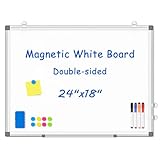
- 【Double-sided Whiteboard】- WALGLASS Whiteboard made of smooth and scratch-resistant surface, easy to write on and dry erase without stain. Double sides magnetic whiteboard design can meet all your needs to post messages and pictures on the white board with magnets.
- 【Durable & Lightweight】: WALGLASS Magnetic white board with aluminum frame is solidly builted, portable white board is lightweight enough to be held by tacks, which can be easily hanged on the wall horizontally and vertically as you like with 4 movable hanging hooks.
- 【Smooth Writing & Easy to Clean】: You'll love how easy it is to write on our smooth and durable writing surface, which is also easy to wipe clean with the included magnetic eraser. From making to do lists to brain storming with co-workers.it offers exceptional versatility and can be used again and again.
- 【Multiple Uses】: Package include 4 magnetic dry erase markers (include 4 color), 8 magnets, 1 movable tray, 1 dry eraser. WALGLASS Magnetic dry erase board is a good choice for home, school, office, small group instruction, kitchen, stores, dormitory and classroom etc. Perfect for using magnets to pin notes, messages, pictures, memos, calendars and more, without paper wasting.
- 【High Quality Assurance】: WALGLASS aims to create an emotional connection with our customers. Our after-sales team will reply to any questions about products, orders, and upgraded ideas within 24 hours. We are confident of our whiteboard and glad to talk and build a connection with our lovely customer.
Power Apps is appropriate for departmental applications, approval systems, CRM extensions, case management, field processes, and governed enterprise workflows. The decision requires more than comparing the headline subscription: map users, apps, premium connectors, Dataverse capacity, environments, administration, and any required professional development.
Microsoft’s Power Apps pricing page listed Premium at $20 per user per month paid yearly and showed an enterprise offer of $12 per user per month with a 2,000-seat minimum in the snapshot.
Power Apps is usually a poor fit for an independent founder building a public consumer app, especially when the product has many anonymous or occasional users. Power Fx, custom connectors, and enterprise configuration can also make advanced work less approachable for beginners.
Why is Retool a strong internal-tool choice?
Retool is designed for internal tools and operations applications that connect databases, APIs, business systems, permissions, and workflows. It is well suited to admin panels, CRUD interfaces, approval queues, monitoring dashboards, support tools, and operational consoles.
Retool is more developer-friendly than Glide or Softr. That makes it powerful for engineering and operations teams, but less suitable for a team with no technical support and less suitable for a polished consumer-facing product. External applications also use a different commercial model from internal tools.
Retool’s pricing table listed Team builders at $10 per month and internal users at $5 per month, while Business listed builders at $50 per month and internal users at $15 per month in the snapshot. External-user pricing and AI-credit economics are separate, so calculate builder, internal-user, external-user, and AI usage independently.
Retool’s pricing information also differentiates user types and describes SSO and permission controls for internal-user offerings. Confirm the exact security, hosting, self-hosting, audit, and compliance requirements for your plan rather than assuming every enterprise feature is included.
Independent reader supportYour contribution helps us test, update, and keep practical guides available for everyone.Is Zoho Creator a good SMB workflow platform?
Zoho Creator is a good fit for structured SMB workflows involving forms, reports, approvals, integrations, schedules, analytics, and departmental applications. It is particularly relevant to businesses already using Zoho products or organizations replacing manual processes with a coordinated business application.
Zoho Creator’s official pricing page advertises a free edition, Standard, Professional, Enterprise, and Flex plans, and says yearly billing saves more than 30%. The page also describes forms, reports, workflows, approvals, integrations, analytics, and native web, iOS, and Android deployment.
Exact paid price values were not exposed in the retrieved page text and must be manually checked before publication. Advanced customization may use Deluge or other platform-specific logic, and the wider Zoho ecosystem can affect licensing and administration.
Zoho Creator is less compelling for a design-led consumer social product or a team that requires unrestricted source-code ownership. It is more naturally a business-process platform than a consumer product studio.
Best Value

- CREATE AND COLLABORATE: Enhance your workspace and set ideas free with this 11" x 14" magnetic small whiteboard with modern white frame, perfect for planning, notes, and reminders in the home, office, classroom, dorm, or workspace
- VERSATILE AND MAGNETIC: This whiteboard is a magnet for creativity; its magnetic steel surface lets you write, erase, and display notes, photos, and reminders; perfect for students, home, office, classroom, fridge, or locker use; includes (1) dry erase marker with eraser cap and (1) white magnet
- HASSLE-FREE MOUNTING: Effortlessly hang this board vertically or horizontally with included hassle-free strong grip mounting strips; less time spent on installation means more time to jot down notes brainstorm and showcase your creativity
- STAIN-FREE SURFACE: Designed to resist stains and ghosting, free from messy marks or remnants of previous ideas, our premium painted steel whiteboard surface ensures a clean slate every time you write, draw, or erase; unleash your creativity without limitations
- DESIGNED BY U: We are a company of designers, innovators, and trendsetters; a team of individuals who greatly respect the process, we remain passionate about providing well-designed products that will help you feel inspired
Should beginners use Thunkable?
Thunkable may be appropriate for approachable mobile prototypes, education, and simple utilities, but current production pricing and publishing terms must be verified before making a buying decision.
Thunkable belongs on a beginner-mobile shortlist because its visual approach is aimed at people who want to create iOS and Android applications without conventional programming. However, the official pricing page could not be retrieved successfully during this research pass.
Before selecting Thunkable for production, verify the current plan structure, project limits, store-publishing requirements, native feature support, performance, support terms, and source-code export position at Thunkable’s official pricing page. Do not treat an unverified free or paid plan as evidence of production suitability.
Quick wins for a faster PC:
Repair Windows errors before they cause bigger problemsFix Now →Fix the driver behind crashes, sound loss and screen glitchesFind Drivers →How do the closest alternatives compare?
| Comparison | Choose the first platform when… | Choose the second platform when… | Decisive trade-off |
|---|---|---|---|
| Bubble vs FlutterFlow | You need an integrated, browser-first full-stack SaaS platform. | You need mobile-first development and source-code export. | Managed backend convenience versus portability and developer involvement. |
| Adalo vs FlutterFlow | You want simpler visual mobile development with less backend setup. | You can manage a backend and want an escape hatch into code. | Ease of use versus technical flexibility and handoff. |
| Glide vs AppSheet | You want the fastest structured-data internal app. | You need Google Workspace integration, offline processes, and enterprise administration. | Speed and simplicity versus ecosystem depth and per-user licensing. |
| Softr vs Retool | You are building a portal, intranet, or business-facing workspace. | You are connecting APIs and databases for technical internal users. | Accessible business presentation versus developer-oriented operations tooling. |
| Power Apps vs AppSheet | Your organization is standardized on Microsoft systems. | Your organization is standardized on Google Workspace. | Microsoft governance and Dataverse versus Google integrations and AppSheet workflows. |
| Bubble vs Softr | You need complex custom product behavior. | You need a portal or dashboard assembled around structured business data. | Application flexibility versus faster business-software assembly. |
| Adalo vs Thunkable | You want a database-driven app with a clearer verified commercial signal. | You want a beginner-oriented mobile prototype after verifying current terms. | Known product and pricing evidence versus an unverified current Thunkable offer. |
How should you choose a no-code app builder?
- Decide whether the product is web or native mobile. A browser app does not automatically become an App Store application. If native distribution is mandatory, test the actual iOS and Android build process before designing the whole product.
- Classify the audience. Internal employees, invited customers, paying subscribers, anonymous visitors, and public mobile users create different licensing and authentication costs.
- Identify the source of truth. Decide whether data will live in the platform, a spreadsheet, a business system, SQL, a hosted backend, or several synchronized systems.
- Map the hardest workflow. Do not choose based on the easiest screen. Model permissions, payments, approvals, scheduled jobs, webhooks, failed requests, background processing, and unusual states.
- Set the portability requirement. If a future developer must take over, require source-code export, database export, API access, media export, documentation, and a realistic migration test.
- Model pricing at expected usage. Count users, editors, apps, records, storage, automation runs, API requests, workload, AI credits, and external services rather than comparing only the cheapest advertised plan.
- Check governance. Businesses may need SSO, role-based access, audit logs, data residency, encryption information, backups, environment separation, and a security agreement.
- Build a time-boxed proof of concept. Use representative data and implement the hardest workflow before committing to a long subscription or major migration.
What are the hidden costs of no-code apps?
The subscription is only one component of total cost of ownership. A realistic budget can include:
- Platform subscription and annual-versus-monthly billing differences.
- Builder, editor, internal-user, external-user, or customer seats.
- Workload units, automation runs, API calls, database credits, and AI credits.
- Records, rows, projects, apps, file storage, image delivery, and bandwidth.
- External databases, authentication, email, payments, maps, analytics, search, and automation services.
- Apple and Google developer accounts, store submission work, privacy disclosures, and release testing.
- Specialist assistance for data modeling, security, integrations, performance, accessibility, and production deployment.
- Monitoring, backups, recovery testing, documentation, and eventual migration.
“Free” may mean development only. “Unlimited” may still leave limits on users, records, storage, actions, credits, workload, editors, or API calls. “No usage-based pricing” may remove one category of uncertainty while leaving plan caps and seat costs intact.
What should you test before committing?
Run this checklist on a realistic prototype, not a toy demo:
- Authentication: Test registration, password recovery, SSO if required, account deletion, session expiry, and multiple user roles.
- Permissions: Attempt to view and edit records as every role. Verify that hidden UI elements are backed by server-side authorization.
- Data: Import representative records, test relationships, export the data, and document how uploaded files and media can be recovered.
- Integrations: Test API authentication, rate limits, timeouts, retries, webhooks, duplicate requests, and service outages.
- Performance: Use expected record volumes and realistic concurrent activity. Measure slow queries, long workflows, image loading, and background jobs.
- Mobile behavior: Test push notifications, deep links, camera, location, offline mode, permissions, orientation, and authentication on real iOS and Android devices.
- Publishing: Confirm whether the platform creates builds, signs them, submits them, or merely provides files for you to submit.
- Operations: Test logs, alerts, backups, rollback, environment separation, and recovery from a deleted or corrupted record.
- Commercial limits: Simulate expected users, editors, records, storage, workload, automation, and AI usage at launch and at a later growth stage.
- Exit: Export source code if available, export the database, retrieve media, save API specifications, and record the steps required to rebuild outside the platform.
Final verdict: which no-code app builder is best?
There is no objectively best no-code app builder. Choose Bubble for a complex web SaaS product, Adalo for a straightforward native mobile app with a managed backend, FlutterFlow for mobile development with code-export potential, Glide for spreadsheet-driven internal tools, and Softr for portals and business workspaces.
Choose AppSheet when Google Workspace is central, Power Apps when Microsoft enterprise systems and governance are central, Retool for technical internal tools, and Zoho Creator for structured SMB workflows. Consider Thunkable for beginner mobile prototypes only after verifying its current production terms.
The most reliable selection process is to build the hardest workflow, test distribution and permissions, calculate total cost at realistic usage, and verify what can leave the platform. Ease of prototyping matters, but the best long-term builder is the one whose output, backend, pricing model, governance, and portability match the application you actually intend to operate.
Frequently Asked Questions
What is the best no-code app builder overall?
There is no single best no-code app builder for every project. Bubble is the strongest general recommendation for complex web SaaS, while Adalo, FlutterFlow, Glide, Softr, AppSheet, Power Apps, Retool, Zoho Creator, and Thunkable fit different mobile, internal, portal, enterprise, and prototype requirements.
Which no-code app builder is best for iOS and Android?
Adalo is the simplest recommendation for many straightforward native mobile apps, while FlutterFlow is better when the team needs source-code export and developer handoff. Confirm the platform’s actual build, signing, store-submission, device-feature, and offline capabilities before committing.
Recommended Free Tools
Which no-code app builder lets you export source code?
FlutterFlow’s paid plans advertise source-code download, including the Basic plan in the August 18, 2026 pricing snapshot. Source-code export reduces lock-in but does not remove the need to maintain the exported application and its backend.
Are no-code app builders really free?
Many no-code app builders have free development or entry plans, but production costs can include subscriptions, users, editors, records, storage, automation, workload, AI credits, external services, and app-store accounts. Check whether the free plan supports live deployment and whether its limits match your expected usage.
Quick Recap
Product prices and availability are accurate as of the date/time indicated and are subject to change. Any price and availability information displayed on Amazon at the time of purchase will apply.

