
Free tools Windows power users keep installed
One-click scans. No signup required.
iTechGuides is reader-supported. When you buy through links on our site, we may earn an affiliate commission. As an Amazon Associate I earn from qualifying purchases. Learn more
AI agents can help an on-caller correlate incident context, telemetry, deployments and past incidents, then suggest a diagnosis and checks. But an agent’s confidence score does not establish that its diagnosis is right, and opening a proposed fix is not the same as reviewing, merging or deploying it. Treat an agent team as an assistant behind a human review gate until its behavior has been verified in your environment.
What does it mean for agents to handle an on-call incident?
An agent team may investigate and recommend; that is different from owning the incident or safely resolving it. The headline’s three claims—diagnosing an incident, scoring confidence and opening a fix—need separate evidence. To judge a particular run, an on-caller would need to know what signals the agents inspected, what outcome was observed, how the score was produced, and exactly how far the proposed code change progressed.
Without that trail, those claims are not independently verifiable. A diagnosis should be reported as a hypothesis until checked against operational evidence. Likewise, “opened the fix” could mean a draft diff, a branch, or a pull request; it does not establish that tests passed, a person approved it, or production changed.
How should you verify an agent’s diagnosis?
Start with the user-visible symptom, then trace the agent’s explanation back to evidence. Google’s AI Engineering for Reliable Operations describes surfacing an incident hypothesis with suggested verification steps and links to operational evidence. That can help an on-caller investigate; it is not a guarantee that the hypothesis is correct.
#1 Best Overall

- [CPU] AMD Ryzen 7 5700G Processor (8 Cores, 16 Threads, 3.8 GHz Base Clock Speed up to 4.6 GHz Max Boost Clock Speed) for Gaming and Content Creation with 7nm Leading Edge Technology | [STORAGE] 1TB PCIe NVMe M.2 SSD - Experience Hyper-Fast Bootup and Data Transfer thats up to 30x Faster Performance than a Traditional Hard Drive.
- Graphics: Integrated AMD Radeon Graphics | [RAM] 32GB DDR4 RAM 3200 Gaming Memory for Seamless Multitasking from Multiple Web Pages to Playing Games Online Simultaneously | [OS] Windows 11 Pro x64
- 2x 3.5" Drive Bays | 4x Expansion Slots | mATX Motherboard | ATX PSU
- [BUY WITH CONFIDENCE] Empowered PCs are Assembled in the USA, Rigorously Stress-Tested Before Shipping, and Supported with Lifetime Technical and Diagnostic Support and 3-Year Limited Hardware Warranty.
Check the evidence behind the explanation
- Alerts and impact: Does the diagnosis fit the user-facing symptom and the alert’s timing?
- Telemetry: Which logs and metrics support the explanation, and do they cover the affected service and time window?
- Change history: Does the proposed cause line up with a deployment or configuration change, or is that connection only inferred?
- Verification: What observation would confirm or falsify the hypothesis? Check it before treating the cause as established.
- Alternatives: What other plausible causes remain, and what evidence would distinguish them?
Google’s on-call guidance in Being On-Call puts the principle plainly: “Intuition can be wrong and is often less supportable by obvious data.” That is general SRE guidance, not a claim about AI agents specifically. It is a useful standard for an agent’s answer too: ask for the data and a check, not just a persuasive explanation.
What does an agent’s confidence score tell you?
A self-reported score tells you what the agent says about its own answer. By itself, it does not tell you the probability that the answer is correct. The sources cited here do not establish that agent self-ratings are calibrated against known incident outcomes.
Rank #2

- 【Powerful Load-bearing】12U Network Rack Open Frame is constructed from durable cold rolled steel; Rack shelf supports enhance stability, wall-mounted capacity of 130lbs, the ground-mounted up to 260lbs
- 【Considerate Designs】Open-frame layout, including a top panel adding space, anti-slip shelf stops fixing devices and compatible racks for stack and expansion to meet requirements of home server rack
- 【Complete Accessories】A 12U open frame server rack, two ventilated shelves, four shelf stops, four velcro straps and a set of equipment mounting screws
- 【Versatile Application】Ideal for space-efficient multi-device setups in warehouses, retail, classrooms, offices and more; Excellent choices as AV Rack/IT Rack
- 【Effortless Setup】 Network Rack includes hardware, a comprehensive manual, mounting hole drilling template and an online assembly video to simplify setup
Before using a score to guide response decisions, define what it means and evaluate it against cases with known outcomes. Record the scoring method, the incidents assessed, the denominator, and the results—including confident mistakes. Until that validation exists, use the score as a triage signal at most, not as a substitute for checking evidence or deciding whether to act.
Do these 3 things before closing this tab:
1Fix the driver behind crashes, sound loss and screen glitches2Clear out junk files and repair common Windows errors3Scan for outdated or missing drivers - takes under a minuteWhen is a proposed fix actually a fix?
Code changes pass through distinct stages. Report the furthest stage reached rather than compressing them into “the agent fixed it.”
Rank #3
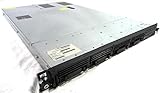
- Up to 2 Six-Core Intel Xeon CPUs 5600 Series
- 18 x slots DDR3 memory
- Up to four SFF Hot-Swappable Hard Drives 2.5" SAS or SATA
- HP Smart Array P410i-512MB FBWC RAID
- 4 x NC382i GigaBit NIC
| Stage | What it establishes | What it does not establish |
|---|---|---|
| Drafted a change | The agent proposed a code or configuration edit. | That the change is correct, tested or safe to apply. |
| Created a branch or pull request | The proposal was recorded for review in the repository workflow. | That CI passed, a human approved it, or it was merged. |
| Tests passed and a reviewer approved | The change cleared the checks and review actually performed. | That it was deployed or resolved the incident in production. |
| Merged or deployed | The change reached the corresponding repository or environment stage. | That the incident is resolved; post-change monitoring must confirm the result. |
Keep the incident open until the relevant symptom improves and monitoring confirms the outcome. A pull request is a handoff, not proof of remediation.
How should you introduce autonomy safely?
Begin with an agent that investigates and recommends, while a human approves consequential actions. Increase permissions only for bounded workflows after you have evidence about how the agent behaves and safeguards for failure.
Rank #4

- 【Powerful load-bearing】12U Network Rack Open Frame is constructed from durable Cold Rolled Steel; Rack Shelf Back Support enhances stability; load-bearing capacity of 260lbs
- 【Sliding&Considerate】Open-frame layout, including four wheels easy to move, a top panel adding space, anti-slip shelf stops fixing devices and compatible racks for stack and expansion to meet requirements of home server rack
- 【Complete Accessories】A 12U open frame server rack, two ventilated shelves, four shelf stops, four casters, four velcro straps and a set of equipment mounting screws
- 【Versatile Application】Ideal for space-efficient multi-device setups in warehouses, retail, classrooms, offices and more; Excellent choices as AV Rack/IT Rack
- 【Effortless Setup】Server rack with wheels includes hardware, a comprehensive manual, mounting hole drilling template and an online assembly video to simplify setup
Use review mode to learn the behavior
Microsoft’s Azure SRE Agent documentation distinguishes Autonomous operation from Review mode and recommends starting new response plans in Review mode to validate their investigation behavior. Its tutorial documents review approval for proposed actions, incident filtering and preview, and a configuration flow that connects services such as Azure Monitor, PagerDuty and ServiceNow. These are documented product behaviors, not an independent evaluation of the product or a guarantee for every configuration.
Windows Errors? Fix Them Before They Spread
Repair common Windows errors and clear accumulated junk for a smoother, more stable PC - no reinstall needed.Free scan · no reinstallOutdated Drivers Are Slowing You Down
One free scan finds every outdated or missing driver and matches the right update for your exact hardware.Free scan · exact hardware matchPut controls around actions
Google’s operations paper describes one approach to increasing autonomy: pre-flight checks, dry runs, confirming an action targets an open incident, checks for concurrent actions, risk-based downgrades to human approval, post-action monitoring, and emergency controls to pause or revoke actions. Those controls describe Google’s architecture; they are not a universal standard or evidence that every agent platform implements them.
Best Value

- Spacious Chassis: This massive 4U server case has 8 internal 3.5" HDD bays plus room for 3 additional 5.25" devices
- Expandable & ATX/CEB Compatible: 7 PCI expansion slots and ATX and CEB motherboard compatibility give you growth options for all of your needs
- Quiet Cooling: 4 pre-installed cooling fans provide excellent airflow and heat protection at reduced noise. 2 front 120mm PWM fans and 2 rear 80mm fans ensure your drives and chassis avoid overheating
- Desired Features: Front panel LED indicators for power, HDD, and LAN status monitoring allow quick, easy visual assessment. Additional utility with 2 x USB 3.0 port and built-in front panel lock provides extra security for your server case
- Rackmount Design: Standard 4U rackmount form factor allows easy installation in server racks and data center environments with included mounting hardware for professional deployment
For your own workflow, make the boundary explicit: which data can the agent read, which changes can it propose, which actions require approval, and who can stop it? Keep permissions narrow, log what the agent inspected and attempted, and define how to escalate when evidence is missing, actions conflict, or risk increases.
Independent reader supportYour contribution helps us test, update, and keep practical guides available for everyone.What still needs a human during the incident?
Diagnosis and code suggestions cover only part of incident response. Google’s Incident Management Guide emphasizes reliable, timely and actionable alerts based primarily on user-facing symptoms; current debugging and mitigation playbooks; practiced roles; coordination; regular stakeholder communication; and blameless postmortems. Automation can assist with common tasks, impact analysis, root-cause analysis and mitigation suggestions, but it does not remove those responsibilities.
Assign a human incident lead to coordinate the response, decide when to escalate, keep stakeholders informed and ensure that mitigation is verified. Afterward, review the evidence trail and any agent errors without turning the incident review into a search for someone to blame.
What’s actually slowing this PC down?
Pick the symptom - the matching free tool is one click away.
A practical first-run checklist
- Choose a bounded incident type. Start with a workflow where the agent can inspect relevant evidence and suggest reversible next steps, rather than broad production access.
- Run in review mode. Have a person inspect recommendations and approve any action that can change production.
- Capture the trail. Record the symptom, evidence consulted, hypothesis, verification steps, confidence method and proposed change.
- Track the change precisely. Note whether it was drafted, opened as a pull request, tested, approved, merged or deployed.
- Verify the outcome. Check service symptoms and monitoring after any mitigation; do not infer resolution from the existence of a code change.
- Review failures and near misses. Use known outcomes to assess diagnostic quality and confidence calibration before granting more autonomy.
The useful measure of a first AI SRE is not how confidently it narrates an incident. It is whether its evidence, recommendations and actions can be checked—and whether your response process remains safe when they are wrong.
Quick Recap
Product prices and availability are accurate as of the date/time indicated and are subject to change. Any price and availability information displayed on Amazon at the time of purchase will apply.

