
Recommended Free Tools
iTechGuides is reader-supported. When you buy through links on our site, we may earn an affiliate commission. As an Amazon Associate I earn from qualifying purchases. Learn more
A backend that runs on your machine has passed one useful test: a particular code path works in one local setup. It has not proved that the deployed build, production configuration, security boundaries, dependencies, real workload, or recovery plan will work. Before exposing a service to users, verify those parts in an environment and workload close enough to production to provide meaningful evidence.
What local success proves—and what it doesn’t
Local development is valuable for finding defects quickly, exercising core behavior, and iterating on code. But a local run reflects only its specific environment: its configuration, credentials, network access, dependency versions, data, and degree of concurrency.



Production adds a different set of conditions: deployment automation, service identities and secrets, network boundaries, external services, simultaneous requests, and people responsible for recognizing and responding to failures. A successful local run—or a green unit-test suite—does not establish that those conditions are safe or reliable.
What’s actually slowing this PC down?
Pick the symptom - the matching free tool is one click away.
There is no universal score that certifies every backend as production-ready. Readiness depends on what the service must do, the impact of failure, its users and workload, and the team’s ability to operate it.
#1 Best Overall
Follow the release path, not just the local test
Assess the same path the code will take to users. AWS’s CI guidance, written for MLOps, gives a concrete example of layered checks: unit tests, integration tests, security analysis, and load testing. Those categories are useful beyond MLOps, but the document is not a backend-specific standard. AWS CI guidance
- Run automated checks in CI. Include the unit and static or security checks appropriate to your stack. Confirm that the pipeline builds the artifact you intend to deploy, rather than relying only on a developer’s working directory.
- Exercise real dependencies. Test the service against the databases, queues, identity systems, and other integrations it relies on. Verify important interactions and failure behavior, not just isolated functions.
- Deploy through the intended path. Use the release process and configuration intended for production in a production-like environment. Check that deployment succeeds and that the deployed service starts and behaves as expected.
- Run a post-deployment smoke test. Check a small set of critical flows against the deployed service. A successful deploy command alone does not show that users can complete those flows.
Configuration and dependencies deserve explicit attention: confirm required settings are present, credentials are available to the right identities, and the service can reach its dependencies under the deployed network and access rules.
Review security boundaries explicitly
Security should be a set of controls the team can inspect and test, not an assumption based on a service working locally. OWASP’s Secure by Design checklist includes controls such as privileged-access MFA, least privilege, secret handling, health probes, timeouts, retry behavior, and rate limits. Select controls that fit the architecture and threat model, and record how they are addressed. OWASP Secure by Design checklist
Quick wins for a faster PC:
Scan for outdated or missing drivers - takes under a minuteDriver Scan →Clear out junk files and repair common Windows errorsFree Scan →- Privileged access: Protect administrator paths with MFA and restrict access to the people and systems that need it. A FIDO2 security key is one possible way to support MFA, but the right method depends on compatibility and your access setup.
- Service and CI identities: Grant each identity only the permissions needed for its job. Check that build and deployment credentials cannot perform unrelated administrative actions.
- Secrets: Keep secrets out of source code and logs. Verify how they are stored, supplied to the running service, rotated, and protected from unnecessary access.
- Transport and input: Protect communication across relevant boundaries, validate inputs, and check that authorization is enforced for each sensitive operation—not merely at the interface.
- Negative tests: Demonstrate that unauthenticated, unauthorized, or over-privileged requests are rejected. Test the denial behavior rather than inferring it from a successful authorized request.
- Failure and abuse controls: Review timeouts, retries, idempotency where repeated requests are possible, and rate limits. Ensure retries do not turn a dependency failure into a larger outage.
Test the workload and dependencies that matter
Start by writing down workload assumptions: expected traffic shape, peak concurrency, the most important request paths, and the latency or throughput objectives users and the business require. Then test the complete interactions behind those paths, including their dependencies. A single endpoint test cannot reveal every bottleneck or failure that appears when components work together.
Rank #3
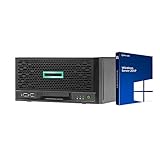
- HP MicroServer Gen10 Plus Tower Server for Business with Microsoft Windows Server 2019 OS!
- Intel Xeon E-2224 Quad-Core 3.4GHz 8MB CPU, Up To 4.6GHz Turbo
- 32GB (2 x 16GB) DDR4 PC4-21300 2666MHz Unbuffered Memory
- 16TB (4 x 4TB) 7.2K 6Gb/s SATA 3.5" HDDs in RAID
- Hard drives and memory upgrades included separately NOT installed, installation required.
Google’s launch checklist for Cloud Spanner recommends testing at scale, using realistic user journeys and parallel processes, and aligning tests with the intended production topology. Those are useful principles for integrated workload testing; the checklist’s database-specific recommendations apply to Spanner, not every backend. Google Cloud Spanner launch checklist
Record latency and throughput under the workload you tested, and compare the results with your service’s stated objectives. A result without its workload assumptions is difficult to interpret. Avoid adopting a generic threshold when the service’s requirements have not established one.
Rank #4
Make failures visible and define who responds
A release is only operationally manageable if the team can tell whether it is healthy, identify problems, and act on them. OWASP’s checklist calls out structured logs, metrics and SLOs, dashboards, and actionable alerts. AWS Well-Architected DevOps guidance also discusses health endpoints and phased deployments as ways to reduce the chance that a faulty change spreads across the system. OWASP Secure by Design checklist · AWS Well-Architected DevOps Guidance
Before launch, make sure the operational loop has the pieces your service needs:
Best Value
- Health checks that report useful service status rather than merely confirming that a process exists.
- Logs and service metrics that help narrow down failures; correlation or trace IDs can help follow a request across components.
- Defined service-level objectives (SLOs) and alerts tied to conditions that call for action.
- A named owner and a runbook explaining what to inspect and what response to take.
- Release-health signals and a clear way to halt or roll back a bad deployment.
Phased deployment can limit how widely a faulty change propagates, but it does not replace monitoring or a response plan.
Independent reader supportYour contribution helps us test, update, and keep practical guides available for everyone.Plan data changes and recovery before cutover
Database migrations need their own cutover and fallback plan. Document the sequence, identify how you will validate data and application behavior after switching, and decide what to do if validation fails. Do not assume that a rollback command can reverse a schema change or undo writes made after cutover.
Google’s Spanner-specific launch checklist recommends testing fallback procedures in staging and confirming data integrity and application capabilities after switchover. The transferable principle is to exercise the recovery route and validate the resulting state; the exact database procedure depends on your system. Google Cloud Spanner launch checklist
Choose production infrastructure against your requirements
Whether you use managed services, self-hosted components, or a mix, compare options against the demands of the service rather than selecting infrastructure by habit. Google’s Spanner launch checklist highlights considerations including workload, availability, latency, geography, security, monitoring, support, and cost; their relevance and weight vary by system. Google Cloud Spanner launch checklist
- Workload and peak capacity: Can the option handle the traffic shape and concurrency you expect?
- Latency and geography: Does its location and network path suit where users and dependent services are?
- Availability and recovery: Does it fit your acceptable interruption and data-recovery expectations?
- Security and access: Can you enforce the required identity, network, and data protections?
- Operations and expertise: Can your team monitor, maintain, and troubleshoot it reliably?
- Cost: Does the cost fit the workload and operating model, including the resources needed for the availability and recovery you require?
Use this go/no-go review before launch
This is a practical review, not a formal certification. Treat an unanswered question as a risk to resolve or explicitly accept—not as proof of readiness.
Quick Recap
- Can the release be built and deployed through the intended automated path?
- Do integration checks and post-deployment smoke tests pass against the deployed service?
- Have secrets, privileged access, authorization boundaries, and failure responses been reviewed and tested?
- Have realistic workload and dependency tests been run against stated objectives?
- Can the team detect a bad release and stop or reverse it?
- Are data recovery and migration fallback procedures documented and exercised?
- Is there an owner who knows what to inspect and do when an alert fires?
Product prices and availability are accurate as of the date/time indicated and are subject to change. Any price and availability information displayed on Amazon at the time of purchase will apply.

