
Free tools Windows power users keep installed
One-click scans. No signup required.
iTechGuides is reader-supported. When you buy through links on our site, we may earn an affiliate commission. As an Amazon Associate I earn from qualifying purchases. Learn more
The OPPO K13 Turbo Pro 5G is the stronger choice on paper for heavy gaming, a larger battery and faster wired charging. The Redmi Note 15 5G is the better fit if you want an ultrawide rear camera, a lighter phone and a stated four-year Android update commitment. On a 91mobiles India comparison page checked on 4 October 2026, the OPPO was listed ₹1,000 higher, but that is a single snapshot, not a fixed price gap.
Which models this comparison covers
This article compares the India 5G versions only: the Xiaomi Redmi Note 15 5G and the OPPO K13 Turbo Pro 5G (model CPH2731). It does not cover the Redmi Note 15 4G, other regional variants, or the standard OPPO K13 Turbo, which has a different specification set. Specifications and prices for one market or model should not be assumed for another.
Price difference
Current listing snapshot
A 91mobiles India comparison page, checked on 4 October 2026, showed ₹28,999 for the Redmi Note 15 and ₹29,999 for the OPPO K13 Turbo Pro, a difference of ₹1,000. The snapshot does not establish which storage and RAM configuration, seller or offer those prices applied to. Retailer stock, storage variant and bank or exchange offers all move the price, so treat the ₹1,000 figure as a reference point rather than a standing difference.
Windows Errors? Fix Them Before They Spread
Repair common Windows errors and clear accumulated junk for a smoother, more stable PC - no reinstall needed.Free scan · no reinstallCrashes, No Sound, or Screen Glitches?
Random freezes, missing sound and display glitches usually trace back to one bad driver. Find and replace yours safely.Free scan · under a minuteLaunch pricing
Xiaomi India announced the Redmi Note 15 5G at a starting price of ₹22,999, with sales beginning 9 January 2026 on mi.com, Amazon India and authorised retail partners, according to a Moneycontrol report from 2026. That is launch pricing, not the current listing price. This article did not find an official OPPO launch price from a primary source, so it does not claim a launch-to-launch difference between the two phones.
#1 Best Overall

- USA MARKET ONLY WORK ON TMOBILE MINT TELLO OR ANY UNDER TMOBILE NETWORK PHONE NEEDS A SIM CARD ALREADY ACTIVATED ,OUTSIDE USA WORKS ANY GSM CARRIER SIM GSM FCC ID: 2AFZZRAD4G
- nano SIM 1 + Hybrid (nano SIM or microSD) Dual standby , n1/2/3/5/7/8/12/20/26/28/38/40/41/48/66/77/78 4G : B1/2/3/4/5/7/8/12/13/17/18/19/20/26/28/32/66 4G: LTE TDD: B38/40/41/42/48 3G: WCDMA: Band 2/4/5/8 2G: GSM: Quad Band.
- 6.77" AMOLED displayResolution: 2392 × 1080Refresh rate: Up to 120HzTouch sampling rate: 240HzBrightness: 3200 nits peak brightness, 800 nits (typ)Colour depth: 12 bitContrast ratio: 8,000,000:1DCI- P3 wide color gamutSunlight displayReading mode3840Hz PWM dimming|16,000-level brightness adjustmentScreen-to-body ratio: 92%*Data obtained from Xiaomi Internal Labs. Actual results may vary.TÜV Rheinland Low Blue Light (Hardware Solution) Certified TÜV Rheinland Circadian Friendly Certified TÜV Rheinland Flicker Free Certified
- Snapdragon 6 Gen 3 Mobile Platform4nm manufacturing process technologyCPU: Octa-core processor, up to 2.4GHzGPU: Adreno
- Virtual proximity sensor | Ambient light sensor | Accelerometer | Electronic compass | IR blaster | Gyroscope / GPS: L1 | GLONASS: G1 | BDS: B1I | Galileo E1 / Wireless NetworksBluetooth 5.3Wi-Fi Protocol: 802.11a/b/g/n/ac Supports 2.4GHz Wi-Fi | 5GHz Wi-Fi Wi-Fi Direct / In-screen fingerprint sensorAI Face Unlock
How to check the price before you buy
- Confirm you are looking at the India 5G model, with the model number CPH2731 for the OPPO.
- Pick the same RAM and storage configuration on both listings. A price gap between different configurations says nothing about the phones themselves.
- Open each retailer’s product page and note the price shown at checkout, including any bank, card or exchange discount that applies to you.
- Write down the date. Prices on comparison sites can lag behind live listings.
Specifications at a glance
| Axis | Redmi Note 15 5G | OPPO K13 Turbo Pro 5G | What it means |
|---|---|---|---|
| Chipset | Snapdragon 6 Gen 3 | Snapdragon 8s Gen 4 | OPPO sits in the higher performance tier. See the benchmark section for what that does and does not show. |
| Display | 6.77-inch curved AMOLED, 2392 × 1080, 120Hz; Xiaomi advertises 3,200 nits peak brightness | 6.8-inch-class flat AMOLED, 2800 × 1280, 120Hz; OPPO lists 1,600 nits typical high brightness mode (HBM) | OPPO has more pixels. The brightness figures come from each brand and use different measurement conditions. |
| Rear cameras | 108MP main with OIS, 8MP ultrawide; Xiaomi promotes 4K recording | 50MP main with OIS, 2MP monochrome; OPPO lists 4K video support | Redmi has an ultrawide lens and a higher main-sensor resolution. Megapixel count alone does not show which phone takes better photos. |
| Battery | 5,520mAh | 7,000mAh typical (6,830mAh rated) | OPPO has the larger battery. Both are manufacturer figures. |
| Charging | 45W wired; 18W reverse charging | Up to 80W with SUPERVOOC and UFCS | OPPO has the higher maximum wired charging rating. Actual charge times depend on the adapter and protocol. |
| Cooling | Not mentioned in the Xiaomi product material consulted for this article | Variable-speed fan and vapour chamber | OPPO is designed around gaming. Absence of a fan in Xiaomi’s material is not proof of no cooling system. |
| Weight | 178g (per the comparison listing) | 208g (per OPPO specifications) | The Redmi is 30g lighter. |
| Water and dust resistance | IP65/IP66 described on Xiaomi’s product page | IP ratings listed on OPPO’s product page | Ratings apply under specific lab test conditions and are not a guarantee against everyday water exposure. |
| Storage expansion | microSD expansion listed by Xiaomi | Storage card not supported, per OPPO’s official specification | Only the Redmi offers a card slot. |
| Software | Four years of Android updates and six years of security updates, as announced at India launch | ColorOS 15; OPPO’s official support duration not established in this article’s sources | Redmi’s commitment is a launch announcement. Check OPPO’s current policy before comparing support lengths. |
Performance and benchmarks
Chipset tier
The Snapdragon 8s Gen 4 in the OPPO is a higher tier than the Snapdragon 6 Gen 3 in the Redmi. That tells you which phone should handle sustained demanding tasks more comfortably, but it does not measure how fast either phone will feel in your daily apps. Real-world gaming frame rates depend on game settings, thermal conditions and software, and this article has no controlled side-by-side test to report.
Benchmark figures
- Third-party comparison: the 91mobiles page lists AnTuTu scores of 868,311 for the Redmi Note 15 and 2,029,394 for the OPPO K13 Turbo Pro. These depend on benchmark version, software build and device configuration.
- Vendor test: OPPO’s product page cites a 2,200,000 AnTuTu score from its own lab tests and a 120fps gaming claim. OPPO states that results vary with conditions.
The two sets of numbers come from different sources and should not be read as a single test. The third-party figures show the same direction as the chipset tiers, which is the most that can be said from them.
Rank #2

- USA MARKET ONLY WORK ON TMOBILE MINT TELLO OR ANY UNDER TMOBILE NETWORK PHONE NEEDS A SIM CARD ALREADY ACTIVATED ,OUTSIDE USA WORKS ANY GSM CARRIER SIM GSM FCC ID: 2AFZZRAD4G
- nano SIM 1 + Hybrid (nano SIM or microSD) Dual standby , n1/2/3/5/7/8/12/20/26/28/38/40/41/48/66/77/78 4G : B1/2/3/4/5/7/8/12/13/17/18/19/20/26/28/32/66 4G: LTE TDD: B38/40/41/42/48 3G: WCDMA: Band 2/4/5/8 2G: GSM: Quad Band.
- 6.77" AMOLED displayResolution: 2392 × 1080Refresh rate: Up to 120HzTouch sampling rate: 240HzBrightness: 3200 nits peak brightness, 800 nits (typ)Colour depth: 12 bitContrast ratio: 8,000,000:1DCI- P3 wide color gamutSunlight displayReading mode3840Hz PWM dimming|16,000-level brightness adjustmentScreen-to-body ratio: 92%*Data obtained from Xiaomi Internal Labs. Actual results may vary.TÜV Rheinland Low Blue Light (Hardware Solution) Certified TÜV Rheinland Circadian Friendly Certified TÜV Rheinland Flicker Free Certified
- Snapdragon 6 Gen 3 Mobile Platform4nm manufacturing process technologyCPU: Octa-core processor, up to 2.4GHzGPU: Adreno
- Virtual proximity sensor | Ambient light sensor | Accelerometer | Electronic compass | IR blaster | Gyroscope / GPS: L1 | GLONASS: G1 | BDS: B1I | Galileo E1 / Wireless NetworksBluetooth 5.3Wi-Fi Protocol: 802.11a/b/g/n/ac Supports 2.4GHz Wi-Fi | 5GHz Wi-Fi Wi-Fi Direct / In-screen fingerprint sensorAI Face Unlock
Gaming and cooling
OPPO’s cooling design
OPPO’s India launch material for the K13 Turbo series, published in 2025, describes a fan running at up to 18,000 rpm and a claim that the phone runs 2 to 4 degrees Celsius cooler during BGMI play than without that cooling. This is OPPO’s own measurement, not an independent one, and the test conditions are not described in the material consulted here.
OPPO’s July 30, 2025 release describes the Turbo Pro and the standard K13 Turbo this way: “Both devices—the OPPO K13 Turbo Pro and the K13 Turbo—are engineered from the ground-up for users who demand consistent performance during long gaming sessions and peak-performance productivity throughout the day.” That is a company statement, not an independent verdict.
Rank #3
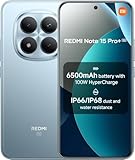
- USA MARKET ONLY WORK ON TMOBILE MINT TELLO OR ANY UNDER TMOBILE NETWORK PHONE NEEDS A SIM CARD ALREADY ACTIVATED ,OUTSIDE USA WORKS ANY GSM CARRIER SIM GSM FCC ID: 2AFZZRA8E
- Dual SIM (nano SIM + nano SIM or nano SIM + eSIM) (NoT MICRO SD SLOT) 5G: n1/2/3/5/7/8/20/28/38/40/41/48/66/77/78 / 4G: LTE FDD:1/2/3/4/5/7/8/12/13/17/18/19/20/26/28/32/66 -- 4G: LTE TDD:38/40/41/42/48 -- 3G: 1/2/4/5/6/8/19 -- 2G Quad Band - Bluetooth 5.4Wi-Fi: Wi-Fi 6/6E/Wi-Fi 5/Wi-Fi 4/802.11a/b/g Supports 2.4GHz Wi-Fi | 5GHz Wi-Fi Supports 2x2 MIMO,Wi-Fi Direct
- 6.83" CrystalRes AMOLED displayResolution: 1.5K (2772 x 1280)Refresh rate: Up to 120HzTouch sampling rate: Up to 480HzInstantaneous touch sampling rate: 2560Hz*Activated in Game Turbo modeBrightness: 3200 nits peak brightnessBrightness: HBM 1800 nitsColor depth: 12bitContrast ratio: 8000000:1DCI- P3 wide color gamut447PPICorning Gorilla Glass Victus 2Sunlight displayHDR10+ | Dolby Vision16,000-step automatic brightness adjustment3840Hz PWM dimming|TÜV Rheinland Low Blue Light (Hardware Solution) Certified | TÜV Rheinland Circadian Friendly Certified | TÜV Rheinland Flicker Free Certified
- Snapdragon 7s Gen 44nm manufacturing process technologyCPU: Octa-core processor, up to 2.7GHzGPU: Adreno GPU
- 200MP main cameraOptical Image Stabilization (OIS)0.56μm, 16in1, 2.24μmf/1.77P lens1/1.4" sensor size8MP ultra-wide cameraf/2.2Rear camera video recording4K at 30 fps1080p at 30/60 fps720p at 30 fps - 32MP front camera1/3.6" sensor sizef/2.24P lensFront camera video recording1080p at 30/60 fps720p at 30 fps
Redmi’s cooling
The Xiaomi material consulted for this comparison does not describe a cooling fan. Buyers who play long sessions should look for independent thermal tests of the Redmi Note 15 before deciding.
Battery and charging
The OPPO’s 7,000mAh figure is a typical value, and its rated capacity is 6,830mAh. Manufacturers often publish both, so the difference is normal, but the rated figure is the more conservative of the two. The Redmi’s 5,520mAh is listed as a single figure. Real-world battery life depends on screen brightness, refresh-rate settings, network conditions and temperature, so neither number is a runtime promise.
Rank #4

- USA MARKET ONLY WORK ON TMOBILE MINT TELLO OR ANY UNDER TMOBILE NETWORK PHONE NEEDS A SIM CARD ALREADY ACTIVATED ,OUTSIDE USA WORKS ANY GSM CARRIER SIM GSM FCC ID: 2AFZZRA29G
- Dual SIM (nano SIM + nano SIM or nano SIM + eSIM) NO MICRO SD SLOT. 5G: n1/2/3/5/7/8/12/20/26/28/38/40/41/48/66/77/78 - 4G: LTE FDD: 1/B2/B3/B4/B5/B7/B8/B12/B13/B17/B18/B19/B20/B26/B28/B32/B66 4G: LTE TDD: B38/B40/B41/B42/B48 - 3G: WCDMA: B1/B2/B4/B5/B6/B8/B19 - 2G: GSM: B2/B3/B5/B8
- 6.83" AMOLED displayResolution: 1.5K (2772 x 1280)Refresh rate: Up to 120HzTouch sampling rate: Up to 480HzInstantaneous touch sampling rate: 2560Hz*Activated in Game Turbo modeBrightness: 3200 nits peak brightnessBrightness: HBM 1800 nitsColor depth: 12bitContrast ratio: 8000000:1DCI- P3 wide color gamut447PPICorning Gorilla Glass Victus 2Sunlight displayHDR10+ | Dolby Vision16,000-step automatic brightness adjustment3840Hz PWM dimming|TÜV Rheinland Low Blue Light (Hardware Solution) Certified | TÜV Rheinland Circadian Friendly Certified | TÜV Rheinland Flicker Free Certified
- MediaTek Dimensity 7400-Ultra4nm manufacturing process technologyCPU: Octa-core processor, up to 2.6GHzGPU: Mali-G615
- 200MP main cameraOptical Image Stabilization (OIS)0.56μm, 16in1, 2.24μmf/1.77P lens1/1.4" sensor size8MP ultra-wide cameraf/2.2Rear camera video recording4K at 30 fps1080p at 30/60 fps720p at 30 fps / Front Camera 20MP front camera1/4" sensor sizef/2.24P lensFront camera video recording1080p at 30/60 fps720p at 30 fps
On charging, the Redmi supports 45W wired charging and 18W reverse charging. The OPPO supports up to 80W with SUPERVOOC and UFCS. Both phones use USB-C. The maximum rating only applies when the charger and cable match the phone’s supported protocol, so a faster rating on the box does not guarantee the phone will draw that power.
Cameras and display
Rear cameras
The Redmi’s 108MP main camera and 8MP ultrawide give it the more versatile lens set on paper. The OPPO has a 50MP main camera with OIS and a 2MP monochrome camera, which is a secondary lens rather than an ultrawide. Sensor resolution is only one part of image quality, and this article has no side-by-side photo tests to compare the two.
Best Value
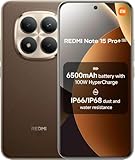
- USA MARKET ONLY WORK ON TMOBILE MINT TELLO OR ANY UNDER TMOBILE NETWORK PHONE NEEDS A SIM CARD ALREADY ACTIVATED ,OUTSIDE USA WORKS ANY GSM CARRIER SIM GSM FCC ID: 2AFZZRA8E
- Dual SIM (nano SIM + nano SIM or nano SIM + eSIM) (NoT MICRO SD SLOT) 5G: n1/2/3/5/7/8/20/28/38/40/41/48/66/77/78 / 4G: LTE FDD:1/2/3/4/5/7/8/12/13/17/18/19/20/26/28/32/66 -- 4G: LTE TDD:38/40/41/42/48 -- 3G: 1/2/4/5/6/8/19 -- 2G Quad Band - Bluetooth 5.4Wi-Fi: Wi-Fi 6/6E/Wi-Fi 5/Wi-Fi 4/802.11a/b/g Supports 2.4GHz Wi-Fi | 5GHz Wi-Fi Supports 2x2 MIMO,Wi-Fi Direct
- 6.83" CrystalRes AMOLED displayResolution: 1.5K (2772 x 1280)Refresh rate: Up to 120HzTouch sampling rate: Up to 480HzInstantaneous touch sampling rate: 2560Hz*Activated in Game Turbo modeBrightness: 3200 nits peak brightnessBrightness: HBM 1800 nitsColor depth: 12bitContrast ratio: 8000000:1DCI- P3 wide color gamut447PPICorning Gorilla Glass Victus 2Sunlight displayHDR10+ | Dolby Vision16,000-step automatic brightness adjustment3840Hz PWM dimming|TÜV Rheinland Low Blue Light (Hardware Solution) Certified | TÜV Rheinland Circadian Friendly Certified | TÜV Rheinland Flicker Free Certified
- Snapdragon 7s Gen 44nm manufacturing process technologyCPU: Octa-core processor, up to 2.7GHzGPU: Adreno GPU
- 200MP main cameraOptical Image Stabilization (OIS)0.56μm, 16in1, 2.24μmf/1.77P lens1/1.4" sensor size8MP ultra-wide cameraf/2.2Rear camera video recording4K at 30 fps1080p at 30/60 fps720p at 30 fps - 32MP front camera1/3.6" sensor sizef/2.24P lensFront camera video recording1080p at 30/60 fps720p at 30 fps
Display
Both screens are 120Hz AMOLED panels. The OPPO has more pixels at 2800 × 1280, against the Redmi’s 2392 × 1080. The Redmi’s screen is curved, while the OPPO’s is flat. Xiaomi’s 3,200-nit peak brightness and OPPO’s 1,600-nit typical HBM figure are measured differently, so they should not be compared as one number.
Build and weight
The Redmi weighs 178g according to the comparison listing, and the OPPO weighs 208g by OPPO’s own specification. For one-handed use over a long day, that 30g difference is noticeable to some buyers and not to others. Water and dust ratings are tested under defined conditions, so they describe resistance in those tests and do not mean the phone can be used underwater.
Software and update support
Xiaomi announced four years of Android updates and six years of security updates for the Redmi Note 15 5G at its India launch. The OPPO runs ColorOS 15. One secondary comparison reports a shorter support window for the OPPO, but OPPO’s own published support policy was not found in this article’s sources. If update length matters to you, check OPPO’s current policy directly before you decide.
Storage and expansion
The Redmi supports microSD expansion, so a card is a practical add-on if you buy the lower-storage configuration. Confirm that your exact model and SIM tray arrangement support a card before buying one. The OPPO’s official specification says it does not support a storage card, so its storage is fixed at purchase.
Which phone fits which buyer
- Choose the OPPO K13 Turbo Pro 5G if you play demanding games for long sessions, want the larger battery and faster wired charging, and do not need an ultrawide lens.
- Choose the Redmi Note 15 5G if you want an ultrawide camera, a lighter phone, a microSD slot and the longer Android and security update commitment Xiaomi announced.
- If the price gap is the deciding factor, compare the final checkout price for the same configuration on the day you buy. A ₹1,000 gap can disappear or reverse with an offer.
Neither set of specifications proves that one phone is better for every user, so your own priorities should decide.
Quick Recap
Product prices and availability are accurate as of the date/time indicated and are subject to change. Any price and availability information displayed on Amazon at the time of purchase will apply.

