
iTechGuides is reader-supported. When you buy through links on our site, we may earn an affiliate commission. As an Amazon Associate I earn from qualifying purchases. Learn more
The X-Micro WLAN 11g Turbo Mode Broadband Router and companion PCMCIA card are legacy 2.4 GHz 802.11b/g networking products. X-Micro advertised a Super G mode of up to 108 Mbps, but that is a wireless mode ceiling—not a promise of application speed. The router has one 100 Mbps WAN port and four 100 Mbps LAN ports; the card connects through CardBus, which limits compatibility to hosts with the appropriate slot.
What the X-Micro WLAN 11g Turbo products are
HotHardware’s December 3, 2004 review describes the router and companion card as 2.4 GHz 802.11b/g equipment. The specifications reproduced in that review list these wireless data-rate modes:

| Mode | Listed rate | How to interpret it |
|---|---|---|
| 802.11b | Up to 11 Mbps | Product mode rate, not expected file-transfer speed. |
| 802.11g | Up to 54 Mbps | Product mode rate, not expected file-transfer speed. |
| Super G enabled | Up to 108 Mbps | Advertised Turbo-mode ceiling; actual throughput depends on conditions and the devices communicating. |
These are product specifications, not independent measurements. Super G was a vendor-specific enhancement to standard 802.11g operation, so the 108 Mbps figure should not be treated as a universally interoperable 802.11g rate. HotHardware’s 2004 review explains the advertised mode and reports the reviewer’s test experience.
Router ports, configuration and features
Physical connections
The router has one 100BaseTX WAN port for the internet connection and four 100BaseTX LAN ports for wired devices. That makes its wired Ethernet links 100 Mbps Fast Ethernet, rather than Gigabit Ethernet. The reviewed unit also had an adjustable external antenna and measured 201 × 115.8 × 37 mm, according to HotHardware.
#1 Best Overall
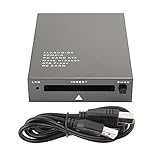
- USB 2.0 HIGH-SPEED PC CARD READER: PCMCIA card reader, 68-pin industrial flash memory card direct reading, used for ATA PCMCIA memory card PC card.
- LARGE-CAPACITY READING: Support 20MB-20G large-capacity memory card, strong chip anti-interference design, to ensure stable and high-speed data transmission, no jams, no delay.
- CARD READER TYPE SUPPORT: CF to PCMCIA, SD to PCMCIA, PC SD Card Adapter, PC CF Card Adapter, ATA Flash Storage, PC CARD ATA, Mass Storage Card, PCFLASHDISK, 64M/128M/256M ATA PC card, Type II 85.6mm x 54mm x 5mm/TYPE II 5mm thick PC ATA flash memory card, TYPE I 85.6mm x 54mm x 3mm.
- PLUG AND PLAY: USB 2.0 interface is hot-swappable, it is automatically recognized when the memory card is inserted, the blue indicator light is on, the indicator light flashes when data is being transmitted, and the push rod ejects the card at the same time, which is convenient to use.
- SYSTEM COMPATIBILITY: for Windows Vista/Windows 2000/Windows me/Windows XP/Windows 7/Windows 8/Windows 10, no need to install a driver, no drive to use.
Configuration and network functions
Configuration was through a web interface. Computerwoche’s historical review describes support for PPPoE and PPPoA, as well as static or dynamically assigned IP settings. It also lists firewall functions including DMZ and virtual hosts; HotHardware mentions MAC and IP filtering. These descriptions document features reported at the time, not verified behavior on every revision or current firmware.
For the review’s period, reported wireless security options included WEP at 64- and 128-bit settings and WPA/WPA-PSK. Computerwoche also mentions RADIUS integration. Those historical feature lists do not establish modern security protection or ongoing firmware maintenance, so they are not a basis for choosing the router as a present-day internet-facing primary router.
What the 108 Mbps Turbo claim means in practice
The 108 Mbps number is a maximum mode claim, not the speed a user should expect for downloads or file transfers. HotHardware’s reviewer reported that results did not match a wired network and that performance dropped when testing moved upstairs through floorboards and across the house. The review also discusses dynamic Turbo operation as a trade-off between performance and additional coverage. Computerwoche likewise reported better results with Turbo enabled than with standard-conformant 802.11g in its own historical evaluation.
Those findings describe particular period test setups. They do not establish a universal range or throughput figure: distance, obstructions, interference, compatible client hardware and operating mode can all affect wireless results. The reviews support the narrower conclusion that Turbo could improve performance in their tests, but did not make wireless equivalent to wired Ethernet.
Will the PCMCIA card work in a laptop?
The companion card is a CardBus card, not a USB adapter or a modern laptop’s built-in Wi-Fi module. A laptop needs a compatible CardBus slot, and the driver must also work with its operating system. The card’s chip antenna and dimensions—118 × 53.5 × 5 mm—are listed in HotHardware’s review.
Overclockers Online identifies related model numbers as XWL-11GRAG for the router and XWL-11GPAG for the PCMCIA card. It reproduces Windows 98, ME, 2000 and XP as supported systems for the card. These identifiers and operating-system claims can help when identifying historical hardware, but they do not confirm that every revision is identical or that drivers remain available today. Overclockers Online’s 2006 review provides those model-family clues.
Independent reader supportYour contribution helps us test, update, and keep practical guides available for everyone.Setup, package contents and power supply
What the period reviews say was included
HotHardware reports that the router package included an English/German manual, CAT5 patch cable and power supply. Its PCMCIA card package included a driver CD and brief installation guide; the review describes installing the driver before inserting the card. Computerwoche’s package summary lists a LAN cable, instructions, CD-ROM and antenna. These are accounts of reviewed packages, not a guarantee that a secondhand unit will include the same items.
What’s actually slowing this PC down?
Pick the symptom - the matching free tool is one click away.
Replacing a missing adapter
The reviewed specifications do not establish enough electrical detail to select a replacement power supply. Check the label on the exact router for its required voltage, polarity, connector and current rating before buying an adapter. Do not assume a generic 5 V supply is compatible based only on a specification table.
What remains unknown for a used unit
The available historical reviews do not verify current stock, the condition of any particular unit, current firmware support, or present-day driver downloads. They also do not settle the exact power-adapter requirements or establish that the model-family identifiers cover every hardware revision. Treat a listing’s photos, labels and included accessories as unit-specific evidence rather than assuming they match the reviewed package.
Computerwoche reported a German period price of €89.90; that is historical context, not a current price or indication of present availability. Computerwoche’s review describes its period feature and package information.
Frequently Asked Questions
Can the X-Micro router deliver 108 Mbps?
108 Mbps is the advertised maximum for its Super G/Turbo mode, not a guaranteed application throughput. The historical reviews report performance below wired Ethernet in their test conditions.
Can I use the PCMCIA card in a current laptop?
Only if the laptop has a compatible CardBus slot and a usable driver for its operating system. The historical Windows compatibility claims do not establish current driver availability.
Quick Recap
Product prices and availability are accurate as of the date/time indicated and are subject to change. Any price and availability information displayed on Amazon at the time of purchase will apply.

