
PC Slower Than It Used to Be?
A free scan shows the junk files, broken settings and background clutter dragging Windows down - then fixes them in one click.Free scan · Windows 10 & 11Outdated Drivers Are Slowing You Down
One free scan finds every outdated or missing driver and matches the right update for your exact hardware.Free scan · exact hardware matchiTechGuides is reader-supported. When you buy through links on our site, we may earn an affiliate commission. As an Amazon Associate I earn from qualifying purchases. Learn more
Possibly, but the headline needs a defined market and forecast. Gartner’s August 2026 forecast says worldwide revenue for AI-processing semiconductors will grow at a 26.8% compound annual growth rate through 2030. That signals rapid growth, but the public abstract does not give the full table needed to verify a precise “more than double” total. A separate McKinsey projection does forecast more than a doubling by 2030—but for the entire semiconductor market, not AI chips alone.
What does “AI chip market” mean in this forecast?
It is not a single self-explanatory market category. Gartner’s current public forecast is specifically for worldwide AI-processing semiconductor revenue over 2024–2030. Its abstract, published August 13, 2026, reports a 26.8% CAGR through 2030, but the detailed forecast is gated and the accessible summary does not expose its full figures or accounting boundaries. The headline alone does not identify a publisher, baseline, endpoint, or revenue measure, so it cannot establish which forecast it originally refers to.
“AI chips” can refer broadly to processors used to run or accelerate AI workloads, including GPUs, custom non-GPU accelerators and neural processing units (NPUs). These categories are not interchangeable: a GPU is one kind of processor used for AI, while an NPU is designed for neural-network tasks and custom chips may be built for a particular workload. The public Gartner summary does not provide a complete taxonomy or market-share breakdown.
Why different forecasts appear to disagree
Forecasts may measure different things. Before comparing a number with another, check whether it covers AI-specific chips or all semiconductors, worldwide or regional revenue, unit shipments or sales, and which base year and endpoint it uses. Also check the publication date: an older forecast is a dated prediction, not a current actual result.
#1 Best Overall
![Arduino® UNO™ Q 4GB [ABX00173]- Hybrid Board, Qualcomm Dragonwing QRB2210 microprocessor (MPU) & STM32U585 Microcontroller(MCU), AI Vision, Voice, IoT, Robotics, Linux Debian OS, Wi-Fi 5, USB-C](https://m.media-amazon.com/images/I/51cl4xygwGL._SL160_.jpg)
- Dual-Brain Hybrid Power: Combines the Qualcomm Dragonwing QRB2210 MPU (Quad-core Arm Cortex-A53 @ 2.0 GHz CPU, Adreno GPU, AI acceleration) and the real-time, low-power STM32U585 MCU for advanced applications like object recognition, voice commands, and motion detection.
- AI & Linux Capabilities: Unlocks AI-powered vision and sound solutions; runs Linux Debian OS for coding in Python and supports the Arduino ecosystem with libraries and Sketches; quick start with Arduino App Lab.
- Advanced Features: Equipped with 4 GB LPDDR4 RAM, 32 GB eMMC built-in storage, ideal for single-board computer (SBC) mode, running multiple simultaneous high-level processes, more complex AI or ML models, extensive logs. Dual-band Wi-Fi 5 (2.4/5 GHz), Bluetooth 5.1, and high-speed headers for vision, audio, and display peripherals.
- Seamless Expansion & Connectivity: Features the classic UNO form factor for shields compatibility, an 8x13 LED matrix, and a Qwiic connector for easy expansion with Modulino nodes; power and connect via the USB-C connector.
- Intended Use & Development: The perfect platform for prototyping robotics or IoT projects, empowering innovators with a unified development experience to mix Arduino Sketches, Python scripts, and containerized AI models in a single interface.
| Forecast | What it measures | Published figure | How to interpret it |
|---|---|---|---|
| Gartner, August 13, 2026 | Worldwide AI-processing semiconductor revenue | 26.8% CAGR through 2030 | AI-specific forecast; public abstract does not show the full forecast table or detailed methodology. Gartner forecast abstract |
| McKinsey, April 2, 2026 | Global semiconductor market | $775 billion in 2024 to $1.6 trillion in 2030; stated 13% CAGR | Broader than AI chips. The chart credits Omdia and McKinsey analysis. McKinsey analysis |
| Gartner, April 8, 2026 | AI semiconductors’ share of total semiconductor revenue | Approximately 30% in 2026 | A dated forecast of share, not a standalone AI-chip market size. Gartner semiconductor outlook |
| Gartner, May 29, 2024 | Worldwide AI semiconductor revenue | $71.252 billion in 2024; $91.955 billion in 2025 | Historical forecast, not current actuals and not a replacement for the 2026 forecast. Gartner 2024 forecast |
McKinsey’s chart says computing and data storage would contribute $460 billion, or 55%, of the overall semiconductor industry’s projected growth. That helps explain why AI-related computing is prominent in chip-industry forecasts, but it does not convert the broad-market projection into an AI-chip estimate.
What is driving demand for AI processors?
Hyperscaler data-center investment
Gartner’s August 2026 summary identifies continued hyperscaler capital expenditure as the foundation for demand for GPUs and AI accelerators. Its April 2026 semiconductor outlook also describes strong investment in AI infrastructure and demand for both GPUs and custom non-GPU chips. These are forecasts and market-context statements, not a guarantee that every chip category or supplier will grow at the same pace.
Rank #2
- Dual-Brain Hybrid Power: Combines the Qualcomm Dragonwing QRB2210 MPU (Quad-core Arm Cortex-A53 @ 2.0 GHz CPU, Adreno GPU, AI acceleration) and the real-time, low-power STM32U585 MCU for advanced applications like object recognition, voice commands, and motion detection.
- AI & Linux Capabilities: Unlocks AI-powered vision and sound solutions; runs Linux Debian OS for coding in Python and supports the Arduino ecosystem with libraries and Sketches; quick start with Arduino App Lab.
- Advanced Features: Equipped with 2 GB LPDDR4 RAM, 16 GB eMMC built-in storage, ideal to develop in PC-connected mode, running the OS, Python scripts, and basic network services (SSH) without a demanding GUI or heavy multitasking; great for lightweight AI and memory-optimized TinyML applications, needing local storage for basic OS and core libraries. Dual-band Wi-Fi 5 (2.4/5 GHz), Bluetooth 5.1, and high-speed headers for vision, audio, and display peripherals.
- Seamless Expansion & Connectivity: Features the classic UNO form factor for shields compatibility, an 8x13 LED matrix, and a Qwiic connector for easy expansion with Modulino nodes; power and connect via the USB-C connector.
- Intended Use & Development: The perfect platform for prototyping robotics or IoT projects, empowering innovators with a unified development experience to mix Arduino Sketches, Python scripts, and containerized AI models in a single interface.
Custom chips alongside GPUs
Large cloud providers have invested in custom AI chips as a way to optimize workloads and potentially reduce the cost of delivering AI services. Gartner described AWS, Google, Meta and Microsoft pursuing custom designs in its May 2024 release; that is historical context, not a newly verified roadmap for any company. Gartner quoted its VP Analyst Alan Priestley on May 29, 2024: “As the market shifts from development to deployment we expect to see this trend continue,” referring to hyperscalers’ investment in custom-designed AI chips.
Memory, networking and power in the wider buildout
AI infrastructure demand affects more than processors. Gartner’s April 2026 outlook also highlights data-center networking, power and memory. Its analyst Rajeev Rajput linked these demands and memory price inflation to the broader semiconductor industry’s growth outlook; that statement concerned semiconductors as a whole, not only AI chips.
Rank #3
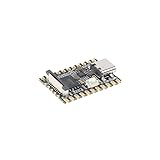
- Single core ARM Cortex-A7 32-bit core, integrated with NEON and FPU
- Built in Micro's self-developed 4th generation NPU, with high computational accuracy and support for mixed quantization of int4, int8, and int16. Among them, int8 has a computing power of 0.5 TOPS and int4 has a computing power of up to 1.0 TOPS
- Built in self-developed 3rd generation ISP3.2, supports 4 million pixels, and supports various image enhancement and correction algorithms such as HDR, WDR, and multi-level denoisin
- It has powerful encoding performance, supports intelligent encoding, adapts to save bit rates according to the scene, and saves more than 50% of the bit rate compared to conventional CBR mode, making the captured images high-definition, smaller in size, and doubling the storage space
- The design with built-in RISC-V MCU supports low-power fast startup, 250ms fast capture, and simultaneous loading of AI model library, enabling facial recognition to be completed within 1 second
Edge devices are not following the same pattern
Gartner’s August 2026 abstract says adoption of AI processing in edge devices weakened amid softer end markets. That is an important counterpoint to data-center investment: strong demand for server accelerators does not imply equally strong demand for AI processors in phones, PCs, cars and other edge devices.
Independent reader supportYour contribution helps us test, update, and keep practical guides available for everyone.What older forecasts can—and cannot—tell you
Gartner’s May 2024 release forecast AI semiconductor revenue of $71.252 billion in 2024, up from $53.662 billion in 2023, and $91.955 billion in 2025. It also forecast the value of AI accelerators used in servers at $21 billion in 2024 and $33 billion by 2028. All of those figures are forecasts from that 2024 release, not verified actuals or the latest market estimate. They are useful as evidence of what analysts expected at the time, but should not be presented as current realized revenue.
Rank #4

- 【POWERFUL ESP32‑S3 CONTROLLER】Built‑in Xtensa 32‑bit LX7 dual‑core processor, 512KB SRAM, 8MB PSRAM, 16MB Flash for stable AI voice computing and multitask processing.
- 【Preloaded Dual AI Platforms】Comespre-installed with complete Deepseek and OpenAI voice dialogue projects.Experience intelligent voice interaction instantly. (Note: OpenAI functionality requires your own API key.)
- 【STABLE WIRELESS & CLEAR AUDIO】Integrated 2.4GHz Wi‑Fi + Bluetooth 5 (LE); dedicated audio decoding module for natural, responsive voice interaction.
- 【USER‑FRIENDLY VISUAL & PLUG‑AND‑PLAY】2” TFT‑SPI color screen shows real‑time chat; modular design, no extra wiring, ready to use after setup.
- 【FULL LEARNING SUPPORT】45 programmable GPIOs, rich interfaces, online web tutorials, free technical support for beginners & developers.
The same release discussed AI PCs with NPUs and forecast adoption. Since that prediction is also dated 2024, it should not be treated as a current PC shipment outlook.
How to read the “more than double” claim
- For AI-specific chips: Gartner’s August 2026 forecast gives a 26.8% worldwide revenue CAGR through 2030. The accessible abstract does not establish a starting or ending dollar value, so the exact doubling claim cannot be independently confirmed from it.
- For all semiconductors: McKinsey’s April 2026 chart projects growth from $775 billion in 2024 to $1.6 trillion in 2030, more than double, at a stated 13% CAGR. This is a total-market forecast, not an AI-chip-only forecast.
- For market share: Gartner’s April 2026 forecast that AI semiconductors would account for about 30% of total semiconductor revenue in 2026 is a share estimate. It does not, by itself, say the AI-chip market will double.
The most defensible conclusion is that AI-processing semiconductor revenue is forecast to grow quickly through 2030, while the exact “more than double” wording cannot be validated as an AI-specific dollar comparison from the public Gartner abstract alone. The better-known doubling figure in the cited material applies to the broader semiconductor market.
Quick Recap
Product prices and availability are accurate as of the date/time indicated and are subject to change. Any price and availability information displayed on Amazon at the time of purchase will apply.

