
What’s actually slowing this PC down?
Pick the symptom - the matching free tool is one click away.
iTechGuides is reader-supported. When you buy through links on our site, we may earn an affiliate commission. As an Amazon Associate I earn from qualifying purchases. Learn more
The biggest economic problem with Tesla’s Cybercab is that its compelling per-mile story is still a projection, not a demonstrated business result. Tesla CEO Elon Musk estimated in October 2024 that operating the vehicle might cost about $0.20 per mile while a ride might be priced at roughly $0.30–$0.40 per mile. Public disclosures do not yet show Cybercab-specific costs, revenue, utilization, or profit to verify that picture.
What is the economic problem with Tesla’s Cybercabs?
The headline numbers sound as if they leave room for a healthy business. But comparing an estimated operating cost with an estimated fare does not establish profit. A robotaxi has to earn enough from paid trips to cover the vehicle and the whole fleet operation—not just the energy used while it is moving.
In the October 10, 2024, We, Robot event transcript, Musk said: “The operating cost is probably gonna be around $0.20 a mile, and price, including taxes and everything else, probably ends up being $0.30 or $0.40 a mile.” He was describing an expectation. The transcript does not establish that either figure has been measured in Cybercab service, nor does it provide a detailed accounting definition for the operating-cost estimate.
Free tools Windows power users keep installed
One-click scans. No signup required.
That distinction matters. Even if both estimates were eventually achieved, the fare is revenue, not profit, and a per-mile comparison does not reveal how many miles are paid, how long the vehicle sits idle or charges, or which costs are included. Treating the difference between the two estimates as an earned margin would turn a forecast into a result and leave major costs unaccounted for.
#1 Best Overall

- 1:24 SCALE MODEL: This collectible toy truck measures 9.1" x 3.03" x 2.4" Inches and weighs 18 ounces. Immerse yourself in the toy truck experience with stunning detail in 1/24 scale. These photos capture its realism perfectly, making it a must-have for all toy truck enthusiasts.
- HIGH QUALITY & DURABILITY: Crafted from zinc alloy and ABS plastic, this toy pickup truck boasts exceptional durability. The zinc alloy body ensures authenticity, while ABS plastic components guarantee longevity. Equipped with lights and sounds, simply press the front wheels or open the front door to activate engine sounds and lights.
- COLLECTIBLE GIFTS: Packaged in a beautifully designed color box, it makes for an ideal gift. Whether for play, desk decoration, or collection, this meticulously crafted toy truck is sure to impress. Its high-quality build makes it perfect for kids and collectors alike.
- DIVERSE FUNCTIONS: Enjoy the pull-back function of the rear wheels, allowing the truck to run forward after a short pull. Additionally, trigger sound and light effects by pressing the car body or opening the front door, creating an immersive experience that lasts.
- SERVICES: Rest assured with our comprehensive warranty. Should you encounter any issues with our Toy Model Car Toy Trucks, simply reach out through Amazon's messaging system. We offer a hassle-free refund or replacement within 24 hours.
How much will a Tesla Cybercab cost to operate per mile?
Tesla has not publicly established an audited Cybercab-specific cost per mile in the cited disclosures. The roughly $0.20 figure is Musk’s October 2024 estimate, not a reported operating result. Without a detailed definition of what the estimate includes, it is not possible to tell whether it accounts for costs such as vehicle financing or depreciation, cleaning, insurance, remote support, and fleet management.
There is a further denominator question: a cost per vehicle-mile is not necessarily the same as a cost per paid passenger-mile. A fleet can incur energy, wear, and staffing costs while driving to a pickup, repositioning between trips, or moving to and from charging. Those miles do not necessarily generate fares. Public reporting cited here does not provide Cybercab’s paid-mile share or enough operating inputs to calculate its verified cost per paid mile.
What would determine whether the fleet can make money?
A useful way to frame the business is:
Net fleet economics depend on fare revenue from paid use, minus vehicle capital costs and the costs of running, supporting, and maintaining the service.
Windows Errors? Fix Them Before They Spread
Repair common Windows errors and clear accumulated junk for a smoother, more stable PC - no reinstall needed.Free scan · no reinstallCrashes, No Sound, or Screen Glitches?
Random freezes, missing sound and display glitches usually trace back to one bad driver. Find and replace yours safely.Free scan · under a minuteFor a per-vehicle estimate, the relevant comparison is revenue from paid trips over time against all costs over that same period. Important inputs include:
- Fare yield: What the fleet actually collects per paid mile after discounts, taxes, fees, and changes in trip mix. Musk’s event figure is an estimate of price, not reported realized revenue.
- Paid utilization: How many miles and hours produce revenue compared with total vehicle availability and operation. Low paid use can spread fixed vehicle and fleet costs across fewer fares.
- Vehicle cost and life: The purchase or manufacturing cost, financing, depreciation, and useful service life. The cited public disclosures do not establish Cybercab-specific values for these inputs.
- Energy and charging: Electricity use, charging expense, time spent charging, and the effect of charging on the hours available for paid service.
- Service and support: Cleaning, maintenance, insurance, teleoperations, security, and fleet management. Tesla identifies these as operational infrastructure needs, but does not provide Cybercab-specific per-mile amounts for them.
- Deployment scale: Where the vehicles may operate, how quickly permits and service capacity expand, and how much infrastructure each operating area requires.
The sources cited here do not disclose enough of these inputs to calculate a verified Cybercab profit per vehicle, break-even utilization, or payback period. Nor do they establish an audited, directly comparable result against another rideshare or autonomous-vehicle fleet.
Rank #2
![Matchbox Tesla Model Y, 70 Years 89/100 [White]](https://m.media-amazon.com/images/I/51XQmx0TiDL._SL160_.jpg)
- Toy Vehicle Form: Car
- Theme: Car
Do Tesla’s Robotaxi miles prove the Cybercab model?
No. Tesla’s Q2 2026 update, published July 22, 2026, showed about 2.4 million cumulative paid Robotaxi miles through June 2026. That is a service-wide figure; the update does not identify those miles as Cybercab miles.
Tesla’s FY2025 Form 10-K says its Robotaxi service currently operates with Model Y vehicles and that Cybercab is expected to join over time. Tesla also reported that Cybercab production began during the first half of 2026. Production status and service economics are separate milestones: starting production does not demonstrate how much a Cybercab costs to operate or how much revenue it earns once deployed.
Do these 3 things before closing this tab:
1Fix the driver behind crashes, sound loss and screen glitches2Clear out junk files and repair common Windows errors3Scan for outdated or missing drivers - takes under a minuteTesla has described Cybercab as a purpose-built fleet vehicle and has said it expects the vehicle eventually to replace Model Y vehicles and become the largest-volume vehicle in its fleet. Those are forward-looking expectations, not evidence of achieved scale or returns. Until Tesla reports Cybercab-specific operating results, service-wide mileage cannot fill that gap.
Why fleet infrastructure and investment matter
The vehicle is only one part of the operating system. Tesla’s FY2025 filing identifies cleaning, maintenance, charging, security, teleoperations, and fleet management as infrastructure needs for the service. Each can affect cost, vehicle availability, or the number of paid trips a fleet can serve. The filing does not quantify their Cybercab-specific cost per mile.
Tesla projected more than $20 billion in company-wide capital expenditure for 2026. The filing describes spending across areas including AI, manufacturing, fleet assets, and service and charging infrastructure; it does not break out Cybercab’s investment or expected return. The company-wide figure therefore cannot be treated as Cybercab capex, or used on its own to calculate Cybercab’s economics.
Rank #3
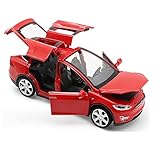
- Made of zinc alloy with ABS plastic parts
- 5.9 inch x 2.2 inch x 1.8 inch(size)
- The two sides of doors could be opened,front and back covercould be opened too
- You can pull back the car,then it can move forwards with Lights and Sound
- Very suitable as children 4 years and up toys for birthday,Christmas gift, new year. Also it can be a gift for your boyfriend
How permits and compliance affect the scale assumptions
Robotaxi economics depend in part on where and how quickly vehicles can be deployed. California’s autonomous-vehicle program distinguishes testing with a safety driver, driverless testing, and deployment permits. Tesla Robotaxi LLC appeared on the California DMV testing-permit-holder page as of September 17, 2026. That listing establishes a testing-permit status, not authorization for unrestricted commercial deployment.
On September 4, 2026, NHTSA announced an audit query into Tesla’s certification that Cybercab meets applicable federal motor vehicle safety standards. An audit query is an inquiry into the certification; it is not a finding that Cybercab is unsafe or noncompliant. It does, however, make compliance and timing relevant uncertainties in any assumption that the fleet can scale on a particular schedule.
What evidence would close the economic proof gap?
A convincing assessment would need Cybercab-specific operating disclosures rather than aggregate Robotaxi service mileage or company-wide spending. The most useful measures would include:
- Realized fare revenue per paid mile and the definition of a paid mile.
- Total vehicle-miles versus paid miles, along with rides and operating hours per vehicle.
- Vehicle acquisition or manufacturing cost, useful life, and depreciation or financing assumptions.
- Energy and charging costs, including charging time and non-revenue driving.
- Per-vehicle or per-mile costs for cleaning, maintenance, insurance, teleoperations, security, and fleet management.
- The operating locations and regulatory permissions associated with the reported results.
Without those figures, Tesla’s estimates are a useful description of the intended economic case, but not proof that Cybercab service has reached the projected costs, fares, or profitability.
Quick Recap
Product prices and availability are accurate as of the date/time indicated and are subject to change. Any price and availability information displayed on Amazon at the time of purchase will apply.

