
iTechGuides is reader-supported. When you buy through links on our site, we may earn an affiliate commission. As an Amazon Associate I earn from qualifying purchases. Learn more
Reliable sample storage helps preserve the material researchers need to measure, but it cannot rescue a sample compromised earlier or make an undocumented result interpretable. Research depends on a connected chain: collection, processing, storage, retrieval, and the records that describe each step. A weakness anywhere in that chain can affect what a downstream measurement means.
How storage affects research results
Biospecimens can change during collection, processing, and storage. Differences in those steps—and in how associated data are handled—can affect whether a specimen is useful and whether findings can be reproduced. The National Cancer Institute (NCI) identifies sample quality and consistency, alongside the quality and breadth of related clinical data, as factors in the reliability of molecular data derived from human biospecimens. NCI’s 2026 Best Practices for Biospecimen Resources treats storage as one part of a larger operational and quality system, not as a standalone guarantee of research success.
This matters because a measurement is only as interpretable as the sample history behind it. If a sample experienced an undocumented temperature excursion, for example, researchers may not know whether an observed difference reflects the biology under study or a change in handling. Consistent procedures and clear records help researchers assess that possibility; they do not eliminate every source of variation.
Do these 3 things before closing this tab:
1Clear out junk files and repair common Windows errors2Scan for outdated or missing drivers - takes under a minute3Repair Windows errors before they cause bigger problemsReliable storage depends on the whole sample lifecycle
Collection and processing set the starting conditions
Storage begins with a sample whose collection and processing history is known. Pre-analytical factors can influence a specimen before it reaches long-term storage. ISBER’s Standard PREanalytical Code (SPREC) provides a common way to record key parts of that history, including sample and primary-container type, cold and warm ischemia periods, centrifugation speed and temperature, and final storage temperature. SPREC v2.0 helps make these details more legible when samples are compared or transferred between repositories.
#1 Best Overall
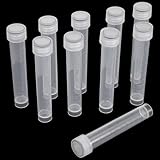
- Package Contents: You will receive 10 10 ml graduated test tubes
- Precision-Graduated Sample Containers: These 15mm diameter test tubes include clear 1-10ml measurement markings for accurate volume readings. The crystal-clear polypropylene walls offer excellent visibility while resisting clouding from repeated freezing/thawing cycles
- Leak-Proof 10ml Vials with O-Ring Seal: Our professional-grade plastic test tubes with caps feature integrated silicone O-rings that create an airtight seal, preventing sample evaporation and leakage even during long-term freezing
- Reliable Performance: Each 95mm (3.74") storage tube maintains perfect integrity from -80°C to 120°C for reliable laboratory performance
- Engineered for extreme conditions: Withstands ultra-low temperature freezing; Resists cracking under thermal shock; Maintains flexibility when frozen; Compatible with standard tube racks; Leakproof during transport
Storage conditions must fit the specimen and the intended analysis
There is no universal storage temperature, container, or duration that suits every sample and assay. The appropriate conditions depend on the biospecimen and the analyte or measurement the study intends to use. Use a protocol that is validated for that purpose, and revisit it when scientific needs or relevant evidence change. NCI’s 2026 guidance recommends documenting storage conditions and departures from standard operating procedures (SOPs), including temperature fluctuations, thaw-and-refreeze episodes, and equipment failures.
Retrieval and associated data complete the chain
A sample has little value if it cannot be located and retrieved with its history intact. Inventory tracking helps staff identify the correct specimen while minimizing disruption to the stable storage environment during retrieval. Records linking the specimen to its processing and storage history—and to relevant associated data—help researchers judge how it can be used and interpret results responsibly.
Rank #2
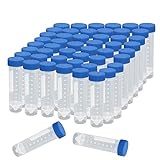
- Material: PP ( Polypropylene )
- Capacity: 50 ML, Graduated every 5ml and 2.5ml
- Dimension: 1.0 x 4.5inch / 25 x 114mm(DxL)
- Package Included: 50pcs 50ml Plastic Tubes
- Apply to loading solid, powder, seeds, pills, granular objects etc
Practical controls that protect sample integrity
- Use a sample- and assay-appropriate SOP. Define collection, processing, storage, retrieval, and handling procedures for the intended material and analysis rather than applying one condition to every sample.
- Keep handling consistent. Train staff to follow the SOP and record deviations so differences between samples are visible rather than hidden.
- Document excursions and equipment problems. Record temperature fluctuations, equipment failures, and other departures from procedure, along with relevant sample handling events.
- Limit avoidable thawing and refreezing. Plan aliquot size in advance when appropriate so a study can retrieve the amount it needs without repeatedly exposing the full sample to handling cycles.
- Maintain inventory and retrieval traceability. Make specimen identification and location reliable, and organize retrieval to limit disruption to stored material.
- Monitor and maintain storage equipment. Establish monitoring, maintenance, backup, and continuity arrangements suitable for the repository’s procedures and risks.
- Review procedures as needs evolve. Update protocols when scientific requirements or the evidence supporting a storage approach changes.
Container choice is one part of this system. Cryogenic storage vials or other sample storage vials should be selected only when their materials and specifications fit the specimen, storage conditions, and validated SOP. A container by itself does not establish that the entire storage process is appropriate.
What guidance and standards can—and cannot—do
NCI’s fourth edition of Best Practices for Biospecimen Resources, published in 2026, addresses governance and technical or operational practice, including collection, processing, storage, retrieval, dissemination, quality assurance, biosafety, and data management. NCI describes adoption as voluntary and says repositories should adapt the guidance to their scientific needs and mission; it is not a universal legal requirement.
Rank #3

- Made of high transparency plastics
- Each capacity: 5 mL
- Size: 14 x 41mm, D x L
- Package included: 50 pieces 5 ml plastic tubes
ISBER’s fifth-edition Best Practices for Repositories presents evidence- and consensus-based recommendations for specimen collection, long-term storage, retrieval, and distribution. ISBER describes the document as advisory, not a mandatory standard. A repository can use it to inform SOPs within its quality-management system, while still tailoring procedures to its specimens and purpose.
Standards such as SPREC support consistent description of pre-analytical history. They do not prove that a particular sample is fit for every analysis, nor do they replace study-specific procedures. Similarly, NIST describes its own biorepository as using standardized protocols and monitoring and security systems to support sample stability, quality control, and reproducible critical measurements. That is an institutional example, not a prescribed facility design for every laboratory. NIST’s biorepository description illustrates the role of coordinated controls without establishing a one-size-fits-all setup.
Rank #4

- 【Freezing/Sterilization】10ml plastic vials can store laboratory samples at a low temperature of -112°F, and can also be heated to 248°F for autoclaving.
- 【Wide application】Suitable for liquid solids, such as: essential oils, spices, dyes, model coatings, powder, seeds, pills, granular objects, etc.
- 【O-ring seal】Small bottles with caps have O-shaped silicone sealing rings to prevent liquid leakage. Even at the lowest storage temperature, it can ensure the sealing performance, and finally ensure the safety of the samples in the tube.
- 【SIZE】Length with lid 95mm (3.74inch), vial diameter 15mm (0.59 inch).
- 【Packaging】50pcs multi-purpose plastic bottles..
A checklist for evaluating a sample-storage process
- Are the storage conditions appropriate for this specimen and intended analyte or assay?
- Are collection, processing, and storage procedures defined and followed consistently?
- Can staff detect and document temperature excursions, equipment failures, and other SOP deviations?
- Are avoidable thaw-and-refreeze cycles limited, with aliquots planned where appropriate?
- Can the correct sample be found and retrieved while minimizing disruption to the storage environment?
- Are sample identity, handling history, and relevant associated data linked and accessible?
- Are monitoring, maintenance, and continuity arrangements in place for the equipment and repository?
These checks make sample handling more consistent and its history easier to evaluate. Storage can protect the value of a well-collected and well-documented specimen, but it cannot by itself guarantee sample quality, reproducibility, or a successful research outcome.
Free tools Windows power users keep installed
One-click scans. No signup required.
Quick Recap
Best Value
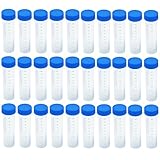
- Made of high transparency plastics
- Apply to loading solid, powder, liquid etc
- Each capacity: 50 mL
- Size: 32 x 117 mm, D x L
- Package included: 30 pieces 50 ml plastic tubes
Product prices and availability are accurate as of the date/time indicated and are subject to change. Any price and availability information displayed on Amazon at the time of purchase will apply.

