
Do these 3 things before closing this tab:
1Scan for outdated or missing drivers - takes under a minute2Clear out junk files and repair common Windows errors3Fix the driver behind crashes, sound loss and screen glitchesiTechGuides is reader-supported. When you buy through links on our site, we may earn an affiliate commission. As an Amazon Associate I earn from qualifying purchases. Learn more
During a fifty-minute incident, Sergey Shinder’s team asked its logs roughly seven questions because each search took six to eight minutes. A redesign of how they organized logs and opened incident views cut a request-ID lookup to about four seconds in their system. The case study’s lesson is not that one storage tier guarantees faster searches: the improvement combined narrower queries, service-specific views, and changes to data placement.
Why seven questions were all the team could ask
Shinder describes a June incident involving four people on a call. Logs from 40 services were stored in one index per day, with 30 days kept on hot nodes and no routing or service separation. A request-ID search from a saved view using its default 30-day range scanned roughly 1.4 terabytes. Searches took six to eight minutes, and the team asked about seven questions during the 50-minute incident. These are the author’s reported conditions and measurements, not independently audited results. Read Shinder’s case study.
That delay affected more than convenience. Each slow answer left a hypothesis untested while the incident was still active. As Shinder puts it, “Your tooling has a latency and it is spent inside the outage, at the moment when a person is holding a hypothesis they cannot check.”
Quick wins for a faster PC:
Repair Windows errors before they cause bigger problemsFix Now →Fix the driver behind crashes, sound loss and screen glitchesFind Drivers →What changed in the log setup
The redesign combined changes to storage organization with changes to the team’s incident workflow:
#1 Best Overall

- Multifunctional Network Cable Tester: TESMEN TLP-123A Supports RJ45 and RJ11, enabling rapid detection of line connectivity, short circuits, open circuits, miswiring, and cable shielding status. An essential tool for troubleshooting line faults and network maintenance, it effectively boosts your work efficiency
- Convenient and Efficient: Featuring one-button operation and a test speed adjustment gear on the main control unit for enhanced flexibility. Clear LED indicators provide intuitive test result displays, making it easy for both professionals and home users to operate
- Portable and Durable: Compact and lightweight design for easy portability. Constructed with high-quality plastic housing for robust structure, ensuring both durability and stability. Ideal for home wiring, IT equipment setup, electrical maintenance, and LAN DIY projects
- Detachable design: The main control unit and remote unit can be separated and used independently, allowing you to test both ends of long cables. This makes it ideal for wall-mounted ports, long-distance cabling, or structured cabling systems, perfect for homes, offices, or professional IT environments
- What you will get: 1 * TLP-123A Network Cable Tester, 1 * user manual, 2 * AAA batteries
- Route logs by service: Instead of putting all services together in daily indices, logs were organized into per-service indices.
- Separate data by age and access pattern: The team kept three days on fast local disk, 25 days on cheaper nodes, and older data in searchable snapshots.
- Narrow the default view: A service view opened on a one-hour time window and already applied the relevant service filter.
- Make recurring questions repeatable: Five incident queries became buttons, so responders could run bounded searches rather than rebuild broad queries under pressure.
The five recurring questions covered error counts by endpoint, failures for one customer ID, the slowest endpoints, the last ten deploys, and counts by error signature. Together, the changes reduced the amount of unrelated data a responder started by searching and made common investigations quicker to launch.
What the before-and-after numbers show—and what they do not
Shinder reports that a request-ID lookup took about four seconds after the changes. He also reports a median query time under ten seconds across the team’s last three incidents. Those figures describe one team’s experience with its particular system; they are not controlled benchmarks or a guarantee of performance elsewhere. The case study does not establish the Elasticsearch version or enough deployment detail to reproduce the results.
Rank #2
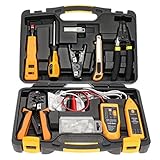
- Lightweight Hard Case : The tools are conveniently secured in place in a lightweight yet durable, high-quality portable case that is perfect for home, office, or even outdoor use. The user’s manual makes it easy to use by professionals and amateurs alike. No more fumbling around looking for the tools that you need
- High Quality Network Crimper: The RJ11/RJ45 crimper is ergonomically designed crimping/stripping/cutting/twisting tool that is perfect for Cat5E/Cat6A/Cat7/Cat7A/Cat8 connectors, shielded (STP) and unshielded (UTP) cables and other 20-30 gauge wires. Blade guard helps reduce risk for injury while still maintaining blade sharpness
- Electric Network Cable Data Tester: Easily tests for connection for LAN/ethernet Cat5/Cat6 cable that is necessary for any data transmission installation job (9 volt batteries not included)
- 66 110 Punch Down Installation Tool: This tool is professionally designed for work on high-volume punch downs of Cat5 to Cat6A cable installations
- Multifunction Screwdriver And Knife Set: The kit comes with a 2-in-1 screwdriver and a razor sharp utility knife ideal for a variety of uses
It also does not isolate the effect of any single change. The redesign changed both data placement and search behavior. It would be misleading to attribute the improvement solely to cheaper storage, service-specific indices, or saved queries.
What’s actually slowing this PC down?
Pick the symptom - the matching free tool is one click away.
Why colder storage is a trade-off, not a speed shortcut
Elastic describes hot and warm tiers as options for more recent or frequently searched time-series data, while cold and frozen tiers can reduce storage costs for data accessed less often. Searchable snapshots allow older data to remain searchable, but frozen-tier searches may be slower because Elasticsearch can fetch data from a snapshot repository. See Elastic’s data tiers documentation and searchable snapshots documentation.
Rank #3
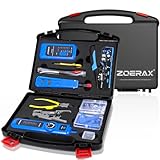
- ✅【All-in-One Professional Kit with Sturdy Case】This premium network tool kit comes in a lightweight yet heavy-duty case that keeps all tools securely organized. Perfect for easy transport and storage, it’s your go-anywhere solution for home, office, server rooms, engineering projects, and network installations.
- ✅【Complete Tool Set for Pros & DIYers】Equipped with a high-performance Cat6A/Cat6/Cat5e/Cat5 pass-through crimper, wire tracker, 110/88 punch down tool, network stripper, wire cutter, 10 Cat6 pass-through connectors, and RJ45 boots. Everything you need for reliable and lasting connections.
- ✅【Versatile Ethernet Crimper with Tool-Free Adjustment】Master cable making with this multi-function crimping tool. Works with both pass-through and non-pass-through RJ45/RJ11/RJ12 connectors. Also strips, cuts, and crimps metal dovetail clips & terminals. The unique rotating knob allows quick adjustments—no screwdriver needed!
- ✅【Ergonomic 110/88 Punch Down Tool】Features a comfortable grip and interchangeable, reversible blades for 110 and 110/88 standards. Makes clean terminations in one smooth action—ideal for Cat6a, Cat6, Cat5e, and Cat5 cables.
- ✅【Smart Wire Tracker & Cable Tester】Quickly locate breaks and identify wires across connected devices like routers, switches, and PCs. Supports tracking of RJ11, RJ45, and other metal cables (with adapter). Tests network and telephone lines for opens, shorts, miswires, and reversed connections.
That trade-off matters when designing incident searches: recent, actively investigated logs may warrant faster access, while older records may be retained more economically if they are searched less often. A colder tier does not inherently make a query faster. In Shinder’s account, the shorter default time range, service filter, and bounded incident queries were part of the same redesign as the storage changes.
Independent reader supportYour contribution helps us test, update, and keep practical guides available for everyone.Make incident searches useful before an outage
Set defaults around the first question responders need to answer
Open the relevant service view with a narrow, useful time range and the service filter already applied. Responders can expand the range or remove the filter when the evidence calls for it, rather than starting every investigation with a search across all services and a month of data.
Rank #4

- Automatically runs all tests and checks for continuity, open, shorted and crossed wire pairs. Visible LED status display.
- Cable state testing (2-wire): Line DC detecting, anode and cathode determination,Ringing signal detecting open, short and cross circuit testing
- Cable Type: RJ11 Telephone cable and RJ45 LAN cable
- Connectors: Ethernet Cat 5, Ethernet Cat 5e, Ethernet Cat 6, Ethernet Cat 7, RJ11 6P and RJ45 8P
- Power Source: DC9V Battery Required (not included)
Turn recurring hypotheses into bounded queries
Start with questions the team actually asks during incidents: which endpoints are returning errors, whether one customer is affected, which endpoints are slow, what changed in recent deploys, or which error signatures are rising. A saved query or button should make those questions easy to run while keeping its time bounds and filters visible.
Measure the delay at the right scope
Elastic distinguishes end-to-end request duration in query logs from shard-level execution time in slow logs. Query logs can help show how long a request takes from the application’s perspective; slow logs focus on shard execution. Elastic also notes that creating and storing query logs consumes resources. Its guidance is available in the query and slow logging documentation.
Best Value

- Used Book in Good Condition
For incident readiness, a team can track query duration and also record how long it takes responders to get their first useful answer. That second measure is Shinder’s incident-review practice, not a standard metric prescribed by Elastic. Together, the measures can reveal whether slow searches—or a confusing workflow—are limiting investigation.
Quick Recap
Product prices and availability are accurate as of the date/time indicated and are subject to change. Any price and availability information displayed on Amazon at the time of purchase will apply.

