
iTechGuides is reader-supported. When you buy through links on our site, we may earn an affiliate commission. As an Amazon Associate I earn from qualifying purchases. Learn more
NYT Connections is designed to make some words look as though they belong together in more than one way. The New York Times says each puzzle has exactly one solution: the challenge is to find the four groups that fit the whole board, not just a set of four words with a loose connection. Before submitting, state a precise rule for your group, check every word against it, and look for a competing interpretation.
Why do some Connections words fit multiple categories?
The game gives you 16 words and asks you to divide them into four groups of four. The New York Times Help Center explicitly says that each puzzle has one solution and is meant to be tricky because words can fit multiple categories. That means a plausible connection is not necessarily the intended one: the complete set of four groups must account for all 16 words.
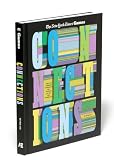


For example, four words may share a broad theme while one of them also fits a more specific category with other words on the board. The broader association can feel convincing in isolation but leave the intended partition incomplete. Read the board as a whole rather than treating each promising set as a separate mini-puzzle.
The color labels indicate relative difficulty: yellow is the easiest category, followed by green and blue, with purple the trickiest. They do not signal that multiple answers are equally valid. The official explanation and rules are on the New York Times Help Center Connections page.
#1 Best Overall
How do I know if my Connections group is right?
Use four checks before you submit: precision, consistency, exclusivity, and fit with the whole board.
- Precision: Can you describe the connection with a specific, testable rule, such as “words that precede the same word” or “names of fish”? “These are all kind of related” is too broad to check.
- Consistency: Does the same rule fit all four words? If one needs a different meaning or an exception, reconsider the set.
- Exclusivity: Could one of the words fit a more precise category with other words still on the board? A fifth plausible candidate is a reason to compare the alternatives, not proof that your group is wrong.
- Whole-board fit: Does your choice leave a sensible way to make the other three groups? A group that works alone may disrupt the unique four-group partition.
A practical routine for checking a candidate group
- Scan all 16 words first. Note words with multiple meanings, proper names, possible phrase completions, and visible letter patterns. This helps prevent the first plausible association from becoming an automatic answer.
- Write the rule in a short phrase. Prefer a falsifiable description—such as “words that follow ___”—over a general theme. Then test each of the four words against that exact rule.
- Check alternate readings and wordplay. Consider whether a word might be used in another sense, precede or follow a shared word, contain a hidden string, sound like something else, or fit a spelling pattern. These are possibilities to test, not guarantees about a particular color.
- Compare the strongest competing set. If an extra word appears to fit, ask which interpretation produces the more precise category and leaves the better-fitting groups elsewhere on the board.
- Submit the group you can defend most confidently. A correct group is revealed and removed, reducing the number of competing possibilities. An incorrect selection uses one of the game’s limited guesses, so avoid submitting a set solely because the words share a vague theme.
Why a vague connection can mislead
Semantic resemblance is a useful clue, but it is not enough to establish a category. A 2025 COLING paper by Iqbal and coauthors describes Connections as a deceptively simple text-classification task and explains how embedding-based clustering can group semantically related words from different intended categories. The authors compiled 358 archived puzzles and ran experiments on a 100-puzzle sample centered around median difficulty. Those figures describe the paper’s dataset and experiment, not all NYT puzzles or players; its findings apply to the models, configurations, and sample the authors tested. The paper is available at the Association for Computational Linguistics.
Rank #2
Where to play and what the feedback means
The Help Center lists the NYT Games app, the Connections web page, nytimes.com/theathletic, and the News app as places to play. It says a new daily game releases at midnight in the player’s timezone, and that Connections can be played free on all platforms without registration. An account can preserve progress across devices.
Quick wins for a faster PC:
Clear out junk files and repair common Windows errorsFree Scan →Fix the driver behind crashes, sound loss and screen glitchesFind Drivers →Repair Windows errors before they cause bigger problemsFix Now →When you submit a correct group, the game reveals its connection and removes the four words. An incorrect selection counts as a mistake. Use that feedback to guide your next check, but remember that a near-match does not make a loose category the intended answer.
Optional features include the Connections Companion community forum, where comments may contain spoilers, and Connections Bot, which offers personalized stats and guess-by-guess analysis to subscribers in specified tiers. The Connections archive is available to All Access and Games subscribers and includes puzzles dating back to June 12, 2023, according to the current Help Center page. None of these features is required to check a group in the daily puzzle.
Quick Recap
Product prices and availability are accurate as of the date/time indicated and are subject to change. Any price and availability information displayed on Amazon at the time of purchase will apply.

