
The Tool Desk
Outbyte Driver Updater FREEFix the driver behind crashes, sound loss and screen glitchesFind Drivers →Outbyte PC Repair FREEClear out junk files and repair common Windows errorsFree Scan →iTechGuides is reader-supported. When you buy through links on our site, we may earn an affiliate commission. As an Amazon Associate I earn from qualifying purchases. Learn more
A manufacturing computer-vision pilot can work in a controlled trial and still fail on the line because production changes the images, exposes gaps in defect data, and imposes timing and control requirements the trial may not have tested. A production-grade system therefore needs more than a capable model: it needs reliable imaging, representative data, line-ready decision logic, operator workflows, and ongoing monitoring.
Why a successful pilot can fail on the production line
A pilot usually answers whether a model can detect a defect in the images it receives. Production has to answer a harder question: can the complete inspection station capture, classify, and act on parts reliably as conditions vary? A model cannot recover visual evidence that the camera never captured, and a good offline score does not establish that a verdict will arrive in time or be handled correctly by the line.
Factory conditions change the image
Lighting, vibration, camera position, conveyor speed, surface finish, and part presentation can all change the input. A clean trial setup may hide sensitivity to those variables. The Machine Learning Society’s February 2026 field guide describes one engagement in which image histograms shifted by roughly 18 grey levels between shifts, alongside a YOLOv8 precision change. Those numbers are a single field-guide example, not an industry benchmark:
Recommended Free Tools
| Imagery in the example | Reported precision |
|---|---|
| Day-shift imagery | 0.94 |
| Night-shift imagery | 0.71 |
The same guide describes a lighting and retraining intervention. The practical lesson is not to expect those values on another line, but to evaluate performance by shift and investigate image changes rather than treating every failure as a model problem.
#1 Best Overall

- 1) Camera transfer speed is fast.
- 2) Provide SDK, easy to use and convenient.
- 3) Support external trigger and flash.
- 4) SDK supports Windows and Linux systems.
- 5) SDK supports VC/C++, VB6, VB.NET, Delphi, C#, JAVA, Python, OpenCV.
Imaging can also make a defect effectively undetectable. In a Faststream deployment case published in September 2026, a target defect was not visible under diffuse lighting but became visible with low-angle illumination. If the relevant contrast is absent from the image, changing model architecture or retraining on the same images is unlikely to solve the root cause.
Large image counts can still miss important defects
Manufacturing datasets often contain many repetitive examples of normal production and few examples of actual defects. The VISION Datasets paper discusses industrial inspection challenges involving data availability, data quality, and production requirements; a separate manufacturing robustness paper highlights repetitive normal data and scarce defect examples. Neither establishes a universally sufficient number of images.
Coverage matters more than a headline dataset size. A dataset can be large yet provide little evidence about a rare defect, a particular product variant, or a night shift. Labels can also be inconsistent when inspectors do not share clear defect definitions.
Crashes, No Sound, or Screen Glitches?
Random freezes, missing sound and display glitches usually trace back to one bad driver. Find and replace yours safely.Free scan · under a minuteWindows Errors? Fix Them Before They Spread
Repair common Windows errors and clear accumulated junk for a smoother, more stable PC - no reinstall needed.Free scan · no reinstallBenchmarks do not prove line readiness
Offline accuracy or average inference speed does not tell you whether the inspection station will finish the complete decision before a part reaches its reject point. A production result may depend on triggering, image acquisition, preprocessing, inference, communication, decision logic, and actuation. A late output can be operationally equivalent to no output at all.
Faststream’s case emphasizes worst-case latency because a late trigger can miss a part, and describes review queues and drift monitoring. An Axtra Labs case covering computer-vision quality control across factory lines describes an edge station, operator review for ambiguous cases, and PLC reject signaling. These are examples of deployment concerns, not universal reference designs or independently validated benchmarks.
Rank #2

- Ultra High Definition 8000x6000 Lightburn Camera for Laser Engraver, USB2.0 Machine Vision Industrial Camera for Computer,Raspberry Pi
- Super Image reality, real color reproduction, ultra crystal shooting image. The camera works like human eye, get sharp image and accurate color reproduction in every detail
- 5-50mm Zoom Lens, Pro industrial grade 12mp ultra hd optical zoom lens, manual focus, iris and zoom. Pefect for close-ups and quality inspection
- USB Plug & Play, UVC compliant usb camera, just connect the camera to PC, laptop, Android device or Raspberry Pi with the included USB cable without extra drivers to be installed.
- Wide Applications: Well used for industrial camera, Medical device, Quality Inspection, Scientific research and development, image processing, computer and machine vision.
What to establish before training or scaling
Prove the imaging setup on real parts
Test the actual camera, lens, illumination, exposure, field of view, focus, and part presentation on the production line. Include normal variation across shifts and operating conditions. Confirm that the target defects are visibly distinguishable before committing to model development; where they are not, adjust imaging geometry or illumination first.
Define what counts as a defect and what the data represents
Work with inspectors and quality staff to define the defect taxonomy and annotation rules. Record uncertainty or disagreement rather than hiding it in a single label. Collect examples across relevant batches, product variants, shifts, and operating states, and deliberately seek rare defect examples where possible. Keep evaluation images separate from training data and representative of the line conditions where the system will be used.
Version the datasets and retain their provenance so that changes to labels, examples, or product mix can be traced. The academic work supports treating data availability and defect scarcity as core engineering concerns; the exact collection process and acceptable coverage have to be established for the plant and task.
Choose the decision approach around the defect task
Determine whether inspection concerns a closed set of known, well-represented defects or must also help surface novel and rare conditions. That distinction affects what data and review process are needed. The sources here do not provide a controlled comparison of specific algorithms, so they do not establish one model type as the general winner. Evaluate candidate approaches on representative line data and the plant’s actual costs of missed defects and false rejects.
Design the whole inspection station, not just the model
Set timing and control requirements
Measure end-to-end and worst-case timing under realistic line conditions. The measurement should cover image acquisition, preprocessing, inference, network or I/O communication, decision logic, and the signal or action that follows. Compare the result with the available cycle time and the physical distance between inspection and reject points.
Rank #3
- 1) Camera transfer speed is fast.
- 2) Provide SDK, easy to use and convenient.
- 3) Support external trigger and flash.
- 4) SDK supports Windows and Linux systems.
- 5) SDK supports VC/C++, VB6, VB.NET, Delphi, C#, JAVA, Python, OpenCV.
Specify triggers, buffering, PLC or other production-system interfaces, and behavior when an image cannot be captured, a verdict is late, the model is uncertain, or a component is unavailable. Involve controls and operations engineers in defining these states; average inference latency by itself is not an acceptance test.
Do these 3 things before closing this tab:
1Repair Windows errors before they cause bigger problems2Scan for outdated or missing drivers - takes under a minute3Clear out junk files and repair common Windows errorsDefine pass, reject, uncertain, and fault behavior
For each output state, decide what happens to the part and who is notified. A pass, reject, uncertain result, and system fault should not be left to implicit assumptions. Set acceptable false-reject and missed-defect trade-offs with quality and operations teams for the specific process; the available cases do not establish a universal threshold.
For uncertain outputs, define what evidence an operator sees, how the operator records a decision or override, and how a suspected new defect is escalated. Make review workload part of the design: a queue that grows faster than staff can resolve it can undermine an otherwise effective detector.
Make monitoring and ownership part of handover
Track relevant input and output behavior by station, product variant, and other useful production segments. Monitor for image or process drift and review quality outcomes, not just model scores. Retain traceability between deployed model versions and the data used to build and evaluate them.
Assign an owner for reviewing uncertain cases, adjudicating new defect types, investigating performance changes, and approving retraining. Faststream’s case describes monitoring and a site-run retraining workflow; that is one deployment example, not a guarantee that retraining alone will fix a changed imaging or process condition.
Rank #4
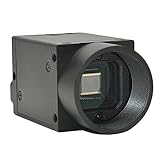
- Support VC/C++, C++builder, VB6, VB.NET, Delphi, C#, QT, JAVA, Python And Other Programming Languages.
- Support Python, OpenCV, LabView, Halcon Vision Software.
- Provide Camera SDK Development Interface.
- Supports Windows And Linux Operating Systems.
- Supports 100 Meters Transmission And Simultaneous Use Of Multiple Cameras.
How to validate the system before rollout
- Agree on the production decision. Define defects in scope, product variants, operating states, and the consequences of misses and false rejects with quality, operations, and controls teams.
- Run an imaging feasibility trial. Capture actual parts across relevant shifts and conditions. Confirm that defects are visible and that images remain usable as line conditions vary.
- Build and review representative data. Document label rules, class coverage, provenance, and uncertainty. Reserve a separate evaluation set that reflects production variation, including rare defects where examples are available.
- Test the integrated station. Exercise triggers, acquisition, processing, decision logic, communications, PLC signaling, and reject behavior under realistic conditions. Measure worst-case end-to-end timing against the line’s actual requirements.
- Exercise human and fault paths. Test uncertain results, operator reviews and overrides, late or missing verdicts, and unavailable components. Confirm that every path has an agreed response and owner.
- Review performance by relevant conditions. Examine outcomes by shift, product variant, station, and other meaningful groupings so aggregate results do not conceal a weak operating condition.
- Scale only after the first line is stable. Assess differences in imaging, product presentation, controls, and cycle time before copying the setup to another line. Axtra Labs reports piloting before extending its approach across three factory lines, but that is a case account rather than a prescribed rollout rule.
How to compare design options
Compare candidate setups against the constraints of the inspection task rather than selecting by model score alone. Useful questions include:
- Does the imaging geometry and lighting reveal the defects of interest?
- Are defects a known, well-represented set, or must the process handle novel and rare cases?
- How much data and annotation effort are needed to represent defect classes, shifts, and product variants?
- Can the complete system meet worst-case timing at the required line speed?
- What are the connectivity and data-handling constraints for edge versus centralized inference?
- How will the system connect to PLC, MES, or other controls, and what happens on uncertain results or faults?
- What review burden and maintenance ownership can the site support?
- What is the process-specific cost of a missed defect compared with a false reject?
These criteria help expose trade-offs, but the available sources do not establish a universal architecture or a winner among named vendors. A separate Faktion case page concerns rotor-manufacturing defect detection at Atlas Copco Airtec; its existence is an additional industrial example, not evidence here for a general performance figure or deployment blueprint.
What the evidence does—and does not—show
The published material supports recurring engineering concerns: production imagery varies, defect examples can be scarce, and latency, control integration, review, and monitoring matter after a pilot. The detailed field-guide numbers and deployment descriptions cited above come from organizational or vendor sources and should be read as examples, not independent industry-wide measurements. The academic papers establish data and robustness challenges but do not provide plant-specific acceptance thresholds or current vendor comparisons.
No generalizable statistic on manufacturing computer-vision pilot success or defect-detection performance is established by these sources. They also do not establish a single compliance requirement across industries and jurisdictions; any regulatory or standards question needs to be checked for the specific sector, process, and location.
What’s actually slowing this PC down?
Pick the symptom - the matching free tool is one click away.
Quick Recap
Product prices and availability are accurate as of the date/time indicated and are subject to change. Any price and availability information displayed on Amazon at the time of purchase will apply.

