
Do these 3 things before closing this tab:
1Clear out junk files and repair common Windows errors2Fix the driver behind crashes, sound loss and screen glitches3Repair Windows errors before they cause bigger problemsiTechGuides is reader-supported. When you buy through links on our site, we may earn an affiliate commission. As an Amazon Associate I earn from qualifying purchases. Learn more
Slow responses and weak answers have different causes, so diagnose them separately before changing settings. A pause before the first token may come from loading or prompt processing; slow token generation may point to compute or memory limits. Poor answers can instead reflect the model, prompt format, sampling settings or quantization. Measure the stage that is failing, then change one variable at a time.
Identify which part of the response is slow
“Slow” can describe several stages, and each calls for a different fix. Record these separately on the same representative workload:
- Load time: how long the runtime takes to make the model ready.
- Time to first token: the pause between submitting a request and seeing its first output.
- Prompt-processing time: the work required to read and process the input before generating an answer.
- Generation rate: how quickly the model produces tokens after output begins.
Compare a short prompt with the prompt you actually use, and note its length. A long prompt can increase processing work and KV-cache memory use. Keep the model, runtime, settings and test prompt consistent when comparing changes; otherwise, it is difficult to tell what helped.
Fix a long pause before the first answer
Separate loading from generation
A slow first request may reflect downloading the model, reading its weights from storage or setting up the runtime—not slow token generation. vLLM documents that large models can take a long time to load, that shared or network filesystems can be slow, and that CPU memory pressure can cause swapping. If the model files are on a slow network or shared filesystem, local storage may help.
#1 Best Overall

- 【High-Performance APU】The MS-S1 MAX features an AMD Ryzen AI Max+ 395 APU, integrating a Zen 5 architecture CPU (up to 5.1GHz, 16C/32T, 64M L3 Cache), an RDNA 3.5 GPU, and an NPU (50 TOPS). The total system output is 126 TOPS. It provides powerful parallel computing capabilities for demanding AI workflows. It is ideal for running local LLMs, multimodal models, and computationally intensive tasks
- 【128GB UMA Memory】Equipped with up to 128GB of LPDDR5x-8000MT/s unified memory, it enables the CPU and GPU to access a shared, high-bandwidth memory pool with extremely low latency. Ideal for large-scale AI inference, 3D workloads, and complex timelines in video editing. It eliminates traditional VRAM bottlenecks, ensuring smoother data transfer during high-intensity computations. The UMA design maximizes performance stability under high loads
- 【Flexible Expansion】The MS-S1 MAX features USB4 V2 (up to 80Gbps), dual 10GbE LAN, HDMI 2.1 (up to 8K60), a full-length PCIe x16 expansion slot, and dual M.2 slots supporting up to 16TB RAID 0/1. Wi-Fi 7 provides stronger signal coverage and a more stable wireless experience. The slide-out design facilitates upgrades and maintenance. It easily adapts to personal, studio, or rack-mount enterprise environments
- 【High-Efficiency Cooling System】Utilizing an aerospace-grade aluminum alloy chassis, copper base plate, six heat pipes, dual turbine fans, and advanced PCM thermal conductive material, it maintains stable cooling performance even under continuous load. This system supports 130W continuous power and 160W peak power operation, with a built-in 320W power supply. It boasts multiple global certifications including CCC, FCC, UL, CE, and UKCA, ensuring stable and reliable operation in various environments
- 【Cluster Design】Two MS-S1 MAX units can be configured as a dual-unit cluster to run a large 235B Q4 model locally, achieving an output speed of 10.87 tok/s. Supporting 2U rack deployment, multiple MS-S1 MAX units can be cascaded into a distributed cluster to create a high-efficiency AI computing center. A cluster of four MS-S1 MAX units successfully ran a DeepSeek-R1 671B Q4 large model. A reserved cluster power-on interface allows for unified start-up and shutdown
Ollama keeps models in memory for five minutes by default. Its keep_alive setting can retain a frequently used model longer and avoid repeated reload delays, but the resident model occupies memory that may be needed by other workloads. See Ollama’s FAQ.
Check what hardware is actually doing the work
Do not assume a model is running entirely on the GPU just because the computer has one. In Ollama, run ollama ps and inspect the processor column to see where the model is loaded. That placement is more useful than guessing from the machine’s specifications.
Memory has to accommodate more than model weights. Context state, including the KV cache, also consumes memory, and longer contexts or more concurrent work can reduce what remains available. vLLM documents that a model too large for a single GPU can produce an out-of-memory error; GPU memory utilization and KV-cache allocation are among the relevant controls. Its available GPU memory can also constrain the context length it can support. Consult the vLLM troubleshooting guide.
Free tools Windows power users keep installed
One-click scans. No signup required.
Rank #2

- Built for Local AI and Advanced Workflows – The BOSGAME M5 AI Mini PC is powered by AMD Ryzen AI Max+ 395 with 16 cores, 32 threads, up to 5.1GHz, 50 TOPS NPU performance and up to 126 TOPS total AI performance. It is designed for local AI inference, private AI assistants, coding, data analysis, virtualization, content creation and demanding multitasking while keeping sensitive data on the device.
- 128GB Unified Memory for Large Models and Creative Projects – M5 includes 128GB LPDDR5X-8000 unified memory, giving the CPU and Radeon 8060S graphics access to a large shared memory pool. This helps support memory-intensive AI workloads, large project files, multiple virtual machines, 3D work, video editing and complex professional applications without the capacity limits of typical 32GB or 64GB mini computers.
- Radeon 8060S Graphics for Creation, Rendering and Gaming – Integrated Radeon 8060S graphics with 40 RDNA 3.5 compute units delivers high-end visual performance without a separate graphics card. Use the M5 creator workstation for 4K video editing, 3D rendering, CAD, AI image workflows, high-resolution media and modern gaming, while maintaining a compact desktop footprint.
- 2TB PCIe 4.0 SSD and Flexible Expansion – A pre-installed 2TB NVMe PCIe 4.0 SSD provides fast access to models, datasets, media libraries and project files. A second M.2 2280 PCIe 4.0 slot allows additional storage expansion, while the SD 4.0 card reader supports efficient photo and video workflows for creators and production teams.
- Professional Connectivity and Four-Display Support – Dual USB4 ports, HDMI 2.1 and DisplayPort 1.4 support up to four displays and resolutions up to 8K@60Hz. WiFi 7, Bluetooth 5.4 and 2.5GbE deliver fast networking for cloud collaboration, NAS access and business deployment. Windows 11 Pro, performance-mode switching, Wake-on-LAN and auto power-on support flexible workstation use.
- If the model is split between CPU and GPU or has no GPU placement, check available memory, runtime support and model size before changing hardware.
- If you see an out-of-memory error, reduce memory demands or select a model and context that fit the available hardware.
- Consider a GPU upgrade only after measurements show GPU memory or compute is the bottleneck. Choose for the model and context you need, not a generic “AI” label.
NVIDIA’s guidance is to match the backend to the operating system, model format, GPU architecture and memory, API needs, and throughput target—not to assume one backend or card works best for everyone. Its hardware-selection guidance also recommends evaluating candidates against use-case requirements.
Reduce prompt work without cutting useful context
Long histories and irrelevant retrieved text make the runtime process more input and can consume memory needed for context state. Remove material that does not help answer the current question, while keeping the information the task genuinely requires.
In llama.cpp, increasing physical batch size with --ubatch-size may improve prompt processing, but it uses more memory. The right value depends on available memory and workload; a higher setting is not automatically better. llama.cpp also documents prompt caching for supported workflows that repeat prompts, which can speed startup with longer prompts. Cached state does not guarantee identical future output. See the llama.cpp server documentation.
Rank #3

- Built for Local AI Development: AMD Ryzen AI Halo is designed for local AI development and inference, featuring 128GB unified memory and support for up to 200B parameter models to build and run intensive AI workloads locally.
- 128GB Unified Memory: Features 128GB LPDDR5x unified memory at 8000 MT/s with 256 GB/s memory bandwidth, providing a shared memory pool across the CPU, GPU, and NPU to support larger AI models.
- AMD Ryzen AI Max+ 395 Processor: Features 16 cores, 32 threads, and Zen 5 architecture, paired with AMD Radeon 8060S integrated graphics featuring 40 RDNA 3.5 compute units and an AMD XDNA 2 NPU with up to 50 TOPS.
- Linux AI Developer Platform: Purpose-built for Linux-based AI development with full AMD ROCm software support and preloaded tools, models, and workflows optimized for local AI development.
- Compact, Connected Design: Includes a 2TB M.2 SSD, 10GbE LAN, Wi-Fi 7, Bluetooth 5.4, USB-C connectivity, and HDMI 2.1b.
For vLLM, maximum model length includes both the prompt and the generated output. Its command-line documentation describes automatic selection of the largest length accommodated by available GPU memory. That is a capacity setting, not a recommendation to use the maximum for every task; choose a context length that fits the actual workload. See the vLLM serve CLI documentation.
Quick wins for a faster PC:
Clear out junk files and repair common Windows errorsFree Scan →Scan for outdated or missing drivers - takes under a minuteDriver Scan →Repair Windows errors before they cause bigger problemsFix Now →Improve weak, irrelevant or erratic answers
Check task fit and prompt format
First check whether the selected model is suited to the job, then verify that the application is using the chat template and prompt format intended for that model. These are worthwhile checks, not proof that a formatting problem is the cause. Compare sampling parameters with the model’s documented recommendations rather than changing several values at once.
Check runtime defaults when using vLLM
vLLM’s troubleshooting page, version 0.17.0, describes a change in v0.8.0: generation defaults began coming from the model creator’s generation_config.json. The page warns that those values can sometimes degrade output and suggests testing vLLM defaults as a diagnostic. This is a vLLM-specific check, not a universal explanation for poor local-model answers. If you test it, hold the prompt and other settings constant so the result is interpretable. See the vLLM v0.17.0 troubleshooting guide.
Rank #4

- Unlock next-generation AI computing with AMD Ryzen AI Max+ 395 processor featuring 16 cores, 32 threads, up to 5.1GHz boost clock, and integrated Ryzen AI engine delivering up to 126 TOPS AI performance. EVO-X3 is designed for local AI models, content creation, development, and professional workloads.
- OCuLink External GPU Expansion – Upgrade Beyond a Mini PC: Take your graphics performance further with a dedicated OCuLink (PCIe 4.0 x4) interface. Connect an external GPU dock to add desktop-class graphics power for AAA gaming, AI acceleration, 3D rendering, video production, and advanced creative applications. EVO-X3 gives you the flexibility of a compact PC with workstation-level expansion capability.
- AI NPU with XDNA 2 ARCHITECTURE - Powered by 16 “Zen 5” CPU cores, 50+ peak AI TOPS XDNA 2 NPU and a truly massive integrated GPU driven by 40 AMD RDNA 3.5 CUs, the Ryzen AI MAX+ 395 is a transformative upgrade and delivers a significant performance boost over the competition. The Ryzen AI Max+ 395 excels in consumer AI workloads like the llama.cpp-powered application: LM Studio. Shaping up to be the must-have app for client LLM workloads, LM Studio allows users to locally run the latest language model without any technical knowledge required and unleash their creativity and productivity.
- AMD RADEON 8090S iGPU GAMING PC - The AMD Radeon RX 8060S offers all 40 CUs with up to 2.9 GHz graphics clock and uses the new RDNA 3.5 architecture. The powerful iGPU is positioned between an RTX 4060 and 4070 laptop GPU and therefore enables gaming in FHD at maximum details in most demanding games. The 8060S can also utilize the full 128GB pool, which is perfect for running LLMs such as Deepseek 70B Q8, which runs comfortably on this machine.
- EIGHT CHANNEL LPDDR5X - LPDDR5X is a new ground breaking memory small form factor installed on-board. With blazing speeds up to to 8000MT/s, it runs 1.5x faster than the DDR5 SODIMMs; 90% better performance over DDR5 SODIMMs in video conferencing and photo editing; 30% better performance in productivity apps; 12% better performance in digital content workloads.
Evaluate with representative tasks
Build a small set of prompts that reflects the work you actually expect the model to do, and compare answers for correctness and usefulness. NVIDIA recommends using a custom evaluation dataset and human evaluation; an LLM-as-judge can help scale evaluation. A faster model is not an improvement if its answers no longer meet the task’s needs.
Independent reader supportYour contribution helps us test, update, and keep practical guides available for everyone.Understand what quantization trades away
Lower-precision representations can reduce memory use, helping a model or its cache fit on constrained hardware. They do not guarantee unchanged answer quality, and results depend on the model and task. Distinguish weight quantization from KV-cache quantization: a claim about one does not automatically apply to the other or to every runtime.
Ollama’s documentation describes its KV-cache formats this way: q8_0 uses about half the memory of f16 with very small precision loss; q4_0 uses about one quarter the memory, with small-to-medium precision loss that may be more noticeable at higher context sizes. These are Ollama’s product-documentation descriptions, not independent benchmarks or guarantees for other cache formats, weight quantization or backends. Test candidate settings on representative prompts before accepting a more aggressive quantization. See Ollama’s FAQ.
Best Value
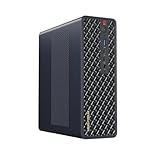
- 【Leading AI Mini Workstation】MINISFORUM AI MS-S1 Max Workstation comes with AMD Ryzen AI Max+ 395 processor, which uses AMD's latest generation Zen 5 architecture. It has 16 Cores and 32 Threads, the boost clock is up to 5.1GHz. The overall processor performance is up to 126 TOPS, and the NPU performance reaches up to 50 TOPS. AMD Ryzen AI enables improved productivity, advanced collaboration, and improved efficiency.
- 【AMD Radeon 8060S Graphics 】The MS-S1 Max Mini PC equipped with AMD Radeon 8060S Graphics which built on the new generation of RDNA 3.5 architecture AMD graphics, it brings ultra-high frame rate experiences and advanced content creation features anywhere and delivers staggering performance. It can handle all your computing and multimedia tasks efficiently.
- 【Five 8K Video Output】This MS-S1 Max Workstation comes with five video outputs, 1x HDMI (8K@60Hz), 2x USB4(40Gbps,Alt DP2.0,PD out 15W) and 2x USB4 V2(80Gbps,Alt DP2.0,PD out 15W) Outputs, which support multiple monitors display at the same time and provide a larger and wider filed of view and improve your work efficiency. It is used in fields that require high-performance computing and graphics processing, including digital signage and securities trading, as well as work that uses CAD, such as engineering design, scientific calculations, animation production, and post-production for movies and television
- 【 Fast and Stable Wire & Wireless Speed】It comes with Two 10G Lan Ports for wired connection and and Wi-Fi 7 / BT5.4 for wireless connection, which increased the network speed greatly and expand its functions and improved performance of computer to a large extent and allows you to use more networks such as software routers (OpenWRT / DD-WRT / Tomato etc.), firewalls, NAT, network isolation etc.
- 【Large Storage & Flexible Expandability】This Workstation equipped with 64GB LPDDR5-8000MHz + 2TB M.2 2280 PCIe4.0 SSD. There is another PCIe4.0 SSD slot available for up to 8TB, these SSD slots are compatible with RAID0 and RAID1, you can store movies, videos, photos, important files easily. What’s more, it also comes with 1x standard PCIex16 slot(PCIe4.0x4) inside.
Choose settings and models by the same workload
When comparing models, quantizations or backends, keep the workload consistent and judge the trade-offs that matter to you:
| What to compare | What to measure or verify |
|---|---|
| Answer quality | Correctness and usefulness on representative tasks. |
| Latency | Load time, time to first token, prompt-processing time and generation rate. |
| Memory fit | Whether weights and KV cache fit for the required context and concurrency. |
| Compatibility | Operating system, GPU architecture, model format and runtime features. |
| Operational needs | Single-user interaction or concurrent serving, API requirements and setup burden. |
There is no universal best model, quantization or backend. Use your measurements to identify the limiting stage, test one relevant change, and keep it only if it improves the outcome that matters without unacceptable losses elsewhere.
Quick Recap
Product prices and availability are accurate as of the date/time indicated and are subject to change. Any price and availability information displayed on Amazon at the time of purchase will apply.

