
iTechGuides is reader-supported. When you buy through links on our site, we may earn an affiliate commission. As an Amazon Associate I earn from qualifying purchases. Learn more
An FP8 tensor at the input or output of an XLA computation does not prove that the compiled convolution uses FP8 arithmetic. XLA’s current NVIDIA GPU compiler source describes a pass that can rewrite an FP8 cuDNN convolution fusion to BF16 when cuDNN has no usable FP8 plan for the target GPU and the BF16 replacement is supported. Whether this applies depends on the GPU, convolution configuration, and software versions.
The “half” measurement and the article title’s claimed one-line fix cannot be independently verified: the original article’s body, code, environment, and benchmark are unavailable. The documented compiler behavior supports a more precise takeaway: check the compiled path for your exact workload rather than infer it from graph-boundary dtypes.
Why an FP8 convolution may not execute as FP8
XLA lowers computations for a particular GPU and software stack. For NVIDIA GPUs, the available cuDNN execution plans depend on the target and convolution configuration. XLA’s current GPU compiler source includes a ConvFp8Fallback pass that rewrites FP8 cuDNN convolution fusions to BF16 when cuDNN has no FP8 plans for that target. The pass is positioned after convolution-fusion rewriting and before autotuning enumerates plans. OpenXLA compiler source
What’s actually slowing this PC down?
Pick the symptom - the matching free tool is one click away.
The change description says the pass probes cuDNN at compile time and rewrites only when the FP8 plan is unsupported and the BF16 replacement is supported. This fallback can preserve compilability, but it is not evidence that every unsupported FP8 convolution on every GPU or cuDNN release will use the same path. The description gives grouped convolutions on sm_120 with certain channels-per-group configurations as examples; those implementation details are revision-specific. OpenXLA change description
#1 Best Overall

- System Compatibility Note: This 2-slot card measures 271 x 112 x 39 mm and requires a single 12V-2x6-pin power connector. Please verify chassis and PSU compatibility before purchase.
- Dedicated Support: Please contact us directly through Amazon for any product questions or assistance you may require.
- Professional Intel Arc Pro B70 GPU: Built on the Intel Xe2-HPG architecture, it features 32 Xe cores and 256 XMX engines, designed to accelerate AI, rendering, and complex visualization workloads.
- Massive 32GB GDDR6 VRAM: Equipped with 32GB of high-speed GDDR6 memory on a 256-bit bus, running at 19 Gbps, which allows for handling large AI models and complex datasets locally.
- High-Performance Engine Clock: Delivers an engine clock of 2540 MHz, providing the compute power needed for demanding professional applications and AI inference.
FP8 plan available versus unavailable
When cuDNN has an applicable FP8 plan, this particular fallback condition is not met. When it does not, XLA may use the described BF16 replacement if that replacement is supported. Plan availability is specific to the compiled target and convolution parameters—not just the nominal FP8 dtype in model code.
What “fallback” means here
The cited convolution pass describes FP8-to-BF16 fallback, not a general rule that all unsupported FP8 convolutions run in f32. Other operations and compiler paths can behave differently. Keep the reported f32 claim distinct from the behavior directly documented for this pass.
Rank #2

- NVIDIA Volta GV100 Architecture — 4,608 CUDA Cores, 640 1st-Gen Tensor Cores delivering 14 TFLOPS FP32 and 112 TFLOPS deep learning performance for AI training, inference, HPC, and scientific computing workloads
- 32GB HBM2 ECC Memory — 900 GB/s Bandwidth — High-bandwidth memory on a 4096-bit bus with ECC error correction provides the memory capacity and throughput required for the largest AI models, simulations, and datasets
- PCIe 3.0 x16 Interface — 250W TDP — Standard PCIe Gen3 connectivity with passive cooling designed for enterprise rack server deployment in HPE ProLiant, Dell PowerEdge, and Supermicro platforms with adequate chassis airflow
- NVLink — Scale to 96GB Unified Memory — Connect two V100 GPUs via NVLink at 300 GB/s bi-directional bandwidth to scale GPU memory from 32GB to 96GB for larger AI training and HPC workloads
- Multi-Precision Computing — Supports FP64 (7 TFLOPS), FP32 (14 TFLOPS), FP16 (112 TFLOPS) and INT8 precision modes for flexible deployment across training, inference, and scientific simulation workloads
What FP8 tensor types do—and do not—tell you
An FP8 type in HLO at a convolution boundary establishes the graph’s boundary type. By itself, it does not identify the arithmetic type inside a fused operation, the cuDNN plan selected, or the implementation executed by the GPU.
A separate OpenXLA issue about a particular FP8 matmul scaling regression shows why boundary types can mislead: the reported HLO converts FP8 operands to BF16, performs a BF16 dot, then converts the result back to FP8. That is a matmul example, not proof that convolutions generally follow the same path. OpenXLA issue #17887
Rank #3

- Powered by Radeon AI PRO R9700 - Supercharge you workflow with the cutting-edge RDNA 4 Architecture and 2nd-gen AI Accelerators.
- 32GB GDDR6 with 256-bit memory bus - Tackle larger, more complex projects without limits.
- PCIe Gen 5 - Unlock lightning-fast data transfers with PCIe Gen 5 support.
- GIGABYTE TURBO Fan Cooling System - Indented metal cover and blower fan increase airflow intake, while the vapor chamber, all copper heat sink, and metal frame offer efficient heat dissipation. Optimized airflow design allows for easy multi-GPU scalability.
- Double Ball Bearing Fan - Delivers superior heat resistance and rotational efficiency for better performance and a longer lifespan compared to conventional sleeve fans.
XLA’s FP8 RFC provides broader design context: it describes recognizing scaled dot and convolution patterns for GPU-library rewrites, while noting that operations without appropriate native support may use higher-precision arithmetic. The RFC is not a guarantee that a particular shape, GPU, or current software release has an FP8 convolution plan. OpenXLA FP8 RFC
How to check the compiled convolution in your setup
- Record the full workload and environment. Note the XLA version and whether it is used through JAX or TensorFlow, plus CUDA and cuDNN versions, GPU model and compute capability, input and filter shapes, strides, padding, group count, and precision configuration. Plan availability can depend on these details.
- Dump compiler IR across passes. An OpenXLA discussion suggests setting
XLA_FLAGS=--xla_dump_hlo_pass_re=.*to inspect HLO changes. Confirm the accepted flag syntax for your installed build, then compile the exact workload and retain the relevant pass dumps. OpenXLA discussion - Trace the convolution through the dumps. Look for conversions around the convolution, the resulting convolution or fusion instructions, and any change in operand or result types. Compare the IR before and after relevant lowering passes rather than relying only on the initial graph.
- Check backend implementation evidence. Use the compiler’s final output and available execution diagnostics to establish which implementation or kernel was selected. An intermediate HLO type alone may not identify the final library plan.
- Separate dtype findings from performance findings. A BF16 rewrite would establish a precision-path change, not the speed impact or the fraction of a model affected. Measure performance on the same workload and environment if those are the questions you need to answer.
What is—and is not—verified about the “half” claim
The accessible DEV Community listing identifies Yehor Cherednichenko’s article with the title “Half of my FP8 convolutions were silently running in f32 – a one-line XLA fix” and dates it Sep 17. Its article body was not retrievable, so the exact fix, hardware and library versions, measurement method, denominator, and benchmark cannot be checked. The word “half” is therefore a claim in the title, not an independently verified statistic. DEV Community compiler topic listing
Rank #4
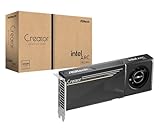
- System Compatibility Note: 2-slot card, 271x112x39mm, single 8-pin power, 200W TDP. Verify chassis clearance and PSU capacity before purchase.
- Dedicated Support: Please contact us directly through Amazon for any product questions or assistance you may require.
- 24GB GDDR6 on 192-Bit Bus: Massive 24GB memory with 456 GB/s bandwidth – ideal for LLMs, AI inference, 3D rendering, and generative design.
- Intel Xe2-HPG Architecture: Built on Intel's next-gen architecture with 20 Xe cores and 160 XMX engines for AI acceleration (197 INT8 TOPS).
- PCIe 5.0 Support: PCI Express 5.0 x16 interface for maximum bandwidth with the latest workstation platforms.
The available XLA sources establish that an FP8 convolution can be rewritten to BF16 under a documented set of plan-support conditions. They do not establish that the title author’s convolutions ran in f32 or identify a one-line change that fixes the author’s case. Verify the path in your own compiled executable before assigning a dtype or performance explanation.
Quick Recap
Best Value

- Professional AI & Creator Workstation: AMD Radeon AI PRO R9700 GPU with 32GB GDDR6 is engineered for AI development, professional content creation, and compute-intensive workloads.
- Massive 32GB Memory Capacity: 32GB of GDDR6 memory on a 256-bit bus provides ample bandwidth for large AI models, 8K video editing, and complex 3D rendering.
- Advanced RDNA 4 with AI Accelerators: 64 Compute Units with 3rd Gen Ray Tracing and dedicated 2nd Gen AI Accelerators for groundbreaking AI performance and visual computing.
- Professional Blower Cooling: Efficient single blower design exhausts heat directly out of the chassis, ideal for multi-GPU workstation and server configurations.
- Enterprise-Grade Thermal Solution: Vapor chamber heatsink with industrial Honeywell PTM7950 thermal interface material ensures reliable cooling under sustained professional loads.
Product prices and availability are accurate as of the date/time indicated and are subject to change. Any price and availability information displayed on Amazon at the time of purchase will apply.

