
Recommended Free Tools
iTechGuides is reader-supported. When you buy through links on our site, we may earn an affiliate commission. As an Amazon Associate I earn from qualifying purchases. Learn more
DRAM companies are earning more because AI demand is lifting sales of high-value memory while supply remains tight. Building and qualifying new production takes time, so capacity cannot catch up immediately. That combination supports prices and margins now—but a later supply wave could weaken pricing if it arrives faster than demand grows.
Why can DRAM prices and memory-company profits rise at the same time?
AI infrastructure is increasing demand for both high-bandwidth memory (HBM), used alongside AI accelerators, and server DRAM such as DDR5. These products can bring suppliers more value than undifferentiated memory, and manufacturers are directing scarce capacity toward products with stronger pricing and margins. When buyers want more memory than suppliers can deliver, tight availability also gives suppliers pricing power.
Company results illustrate the strength of that environment, although they are not a neutral measure of the entire DRAM market. Samsung Electronics said its Memory Business achieved record quarterly revenue and operating profit in Q4 2025, citing strong conventional DRAM demand, expanded HBM sales, higher market prices and high-value products including server DDR5. SK hynix reported FY2025 revenue of KRW 97.1467 trillion and operating profit of KRW 47.2063 trillion, a 49% operating margin; it said HBM revenue more than doubled year over year.
In its Q2 2026 results, SK hynix reported revenue of KRW 79.3187 trillion and operating profit of KRW 60.5426 trillion, a 76% operating margin. The company attributed the environment to AI-server demand and said customer demand exceeded its supply capability. These are reported company results, not a forecast that every DRAM supplier or product will earn the same margins.
#1 Best Overall

- Simple design to perfectly protect the cooling module with high thermal conductive adhesive
- Supports Intel & AMD motherboards
- Selected high-quality IC
- Supports XMP2.0
- Energy saving with ultra-low working voltage
How HBM and server DDR5 benefit from AI demand
| Product | Demand source described by the companies | Why it matters to suppliers | Important distinction |
|---|---|---|---|
| HBM | AI accelerators and AI infrastructure | Samsung and SK hynix identify HBM as a high-value product; SK hynix said its FY2025 HBM revenue more than doubled year over year. | HBM requires advanced packaging as well as memory production. The cited company announcements do not provide a neutral industry-wide unit-cost comparison with DDR5. |
| Server DDR5 | Servers, including AI-related server demand | Samsung included server DDR5 among high-value products, and SK hynix highlighted a 256GB DDR5 RDIMM. | Server modules such as RDIMMs are not interchangeable with ordinary desktop UDIMMs; system support matters. |
| Conventional DRAM | General server and device demand | Samsung said strong conventional DRAM demand also contributed to its Q4 2025 Memory Business results. | Not all conventional DRAM is commodity memory: product value and demand vary by application and specification. |
The practical distinction is that HBM is not a normal consumer memory upgrade. It is a specialized product used in AI systems, while DDR5 modules are bought for compatible PCs and servers. A server DDR5 RDIMM, in particular, requires a platform designed to support registered ECC memory.
Does HBM take capacity away from regular DDR5?
There is a trade-off, but the evidence supports a directional explanation rather than a precise industry-wide calculation. Allocating scarce production resources to HBM can limit how much capacity is available for conventional DRAM in the near term. HBM also relies on advanced packaging, which adds a separate capacity constraint. The cited company disclosures do not quantify how many conventional DRAM bits are displaced by a given amount of HBM output.
Rank #2
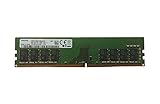
- Proven DRAM module solution in the global market Samsung's memory modules are designed for a wide range of applications to deliver the best performance with low power requirements.</p
That means a tight HBM market can coexist with pressure on regular DRAM availability, but it does not establish that every DDR5 product is short or that consumer RAM prices must move in lockstep with HBM. Product mix, customer demand and supplier allocation all matter.
Quick wins for a faster PC:
Scan for outdated or missing drivers - takes under a minuteDriver Scan →Repair Windows errors before they cause bigger problemsFix Now →Fix the driver behind crashes, sound loss and screen glitchesFind Drivers →Why new capacity cannot relieve the squeeze quickly
Capacity additions take more than a factory announcement. New facilities and cleanrooms must be built, production processes and equipment qualified, yields improved, and—in HBM’s case—packaging capacity brought online. These steps create multi-year lead times between investment decisions and meaningful shipments.
Rank #3

- Supports Intel Coffee Lake Processors and Intel Extreme Memory Profile (Intel XMP) Standards.
- Aluminum heat sink
- Speeds up to 3200 MT/s / Timing 16-18-18-38 / Voltage 1.35V / Unbuffered / 16GB based
- Backed by a lifetime warranty to promise complete services and technical support.
- Advertised speeds are reached via XMP/EXPO BIOS profiles. Actual performance varies by system configuration (Motherboard/CPU compatibility). Plug-and-play speeds follow JEDEC standards.
Micron has described AI-driven memory and storage growth as outpacing the industry’s ability to increase supply. Its plans illustrate the timing gap: the company said its Singapore HBM advanced-packaging investment would total approximately US$7 billion through the end of the decade, with meaningful capacity expansion beginning in calendar 2027. It also said its Taiwan site is expected to support meaningful shipments from mid-2027. Micron has said the pace of its Singapore ramp will track demand.
Those milestones are company plans, not a guarantee that the global DRAM market will be balanced in 2027. Capacity can arrive in stages, and the timing and yield of production affect how much usable supply reaches customers.
Rank #4

- Storage size: 8192MB
- Clock frequency: 2666 MHz
- Type: DDR4
- Memory latch: 1
- ECC: No
What could change the profitability picture?
The current conditions favor suppliers, but they also create a cycle risk. If multiple capacity additions become productive while AI demand grows more slowly—or if buyers shift spending away from high-value products toward lower-priced commodity DRAM—supply could catch up or exceed demand. That could reduce pricing power and margins. This is a market risk implied by the capacity-and-demand mismatch, not a forecast made in the cited company results.
For readers tracking the market, the useful signals are whether suppliers continue to report demand above supply capability, whether announced projects reach meaningful output on schedule, and whether demand remains concentrated in high-value HBM and server products. Company disclosures describe each supplier’s own results and plans; they do not provide a consolidated global DRAM capacity share or a complete HBM-versus-DDR5 cost model.
Best Value

- A-Tech 32GB RAM Kit (2 x 16GB Modules), DDR4 SO-DIMM 260-Pin, 2666MHz / 2667MHz PC4-21300 (PC4-2666V)
- Non-ECC Unbuffered, JEDEC DDR4 Standard 1.2V Operating Voltage
- Compatible with select DDR4 SODIMM capable Laptop, Notebook, Mini PC, and All-in-One (AIO) computer systems. Please verify your system's memory type, form factor, and maximum supported capacity before purchasing
- Not compatible with desktop (DIMM), DDR2, DDR3, DDR5, ECC Registered (RDIMM), ECC Load Reduced (LRDIMM), or ECC Unbuffered (ECC UDIMM) memory types
- Increases available memory capacity to enhance system responsiveness, application performance, and multitasking capabilities.
What this means if you are buying memory
For a PC upgrade, buy memory to match the device—not because HBM headlines imply an upgrade opportunity. Check the memory generation, supported capacity and speed, and the module type your system accepts. For a server, verify whether it needs an ECC RDIMM or supports a different module type; a server RDIMM is not a substitute for a desktop UDIMM unless the system explicitly supports it.
Quick Recap
Product prices and availability are accurate as of the date/time indicated and are subject to change. Any price and availability information displayed on Amazon at the time of purchase will apply.

