
iTechGuides is reader-supported. When you buy through links on our site, we may earn an affiliate commission. As an Amazon Associate I earn from qualifying purchases. Learn more
Delhi has used higher parking fees as a way to discourage private-car use during severe pollution, but past reports do not show a clear, lasting reduction in parking demand—and they do not establish an improvement in air quality. In 2017, a fourfold increase in MCD areas was rolled back after drivers shifted to illegal roadside parking. The central problem was not simply the price: coverage, enforcement, council and contractor constraints, and transport alternatives all affect whether the measure can work.
What happened when parking charges rose before?
In November 2017, parking charges in Municipal Corporation of Delhi (MCD) areas were quadrupled under the Graded Response Action Plan (GRAP), according to Hindustan Times. The report says the increase was rolled back after drivers avoided authorised lots and parked on nearby roads, disrupting traffic.
That episode illustrates a key weakness in a fee increase: if drivers can evade the charge by using illegal spaces and enforcement does not prevent it, the policy may move parking rather than reduce private-car use. It is evidence of an implementation problem, not proof that higher prices can never influence driving.
Do these 3 things before closing this tab:
1Repair Windows errors before they cause bigger problems2Fix the driver behind crashes, sound loss and screen glitches3Clear out junk files and repair common Windows errorsWhy has doubling parking fees not proved successful in the past?
Uneven authority and coverage
Delhi’s parking is managed by different agencies. Hindustan Times reports that MCD covers more than 96% of Delhi’s geographical area, but MCD increases have faced the need for elected-council approval and obligations in contracts with private parking operators. The report contrasts this with the New Delhi Municipal Council (NDMC), which does not have an elected wing and has implemented seasonal increases.
#1 Best Overall

- [New Wider Angle Upgrade] This updated product from Fosmon is perfect for a one or two car garage. The angle of the two lasers is widened up to 75 degrees, which can safely and efficiently assist two cars.
- [Park Correctly and Easily Every Time] Do you have trouble about parking in a garage? Are you often too close to the side, too far forward, or too far back? Fosmon's dual laser parking assistant will allow you to park in the correct spot every time. With its simple installation and setup, the garage parking aid will be ready to use in minutes. No more busted bumpers and doors.
- [Motion Activated Laser] The motion activated lasers have a detection range of 33 feet/10 meters, and will shut off after 30 seconds without motion.
- [Provides Individual Laser Control] The garage parking aid allows for individual laser control for use with one parking stall or two. Simply toggle the button located on the side of the unit to switch between one or two lasers. The lasers have a 360-degree adjustment, ensuring that no matter the vehicle or parking spot size, the laser will be able to hit the mark each and every time.
- [Battery Backup and Motion Activated] Even if the power goes out, the dual laser garage parking aid can use a 9v powered battery backup. NOTE: Battery not included.
When a measure applies inconsistently across a city, drivers may shift to an area or operator where the higher fee does not apply. A citywide pollution response therefore depends on clarity about which sites and operators are covered, not just the headline price.
Drivers can shift to illegal roadside parking
The reported 2017 rollback followed drivers leaving authorised lots for nearby roads. Without effective enforcement against illegal parking, a higher official tariff can make authorised parking less attractive without making car use itself less convenient. The result may be displaced parking and added disruption rather than a meaningful reduction in vehicle trips.
Dr S. Velmurugan, former chief scientist at the Central Road Research Institute, told Hindustan Times that agencies need stronger enforcement against illegal parking and a more comprehensive, uniform policy across the city.
Rank #2

- LED Indicator: Parking stopper for garage designed with LED indicator, can accurately judge position of car, when the car close to it, it will light up as warning, green for safe distance, yellow for close, red for stop, assist you to park car in right position, to avoid scratch and collision
- Setting Distance: Garage parking stops can set parking warning distance at will, park car in desired location, press middle red button firmly, LED will light up, distance is set successfully, you can repeat this step to adjust distance any time, red light warning distance is 6 inch-6.5 ft
- Dual Power Use: Garage stop sign parking aid supports dual power supply, you can choose two ways according to actual situation, you can use AAA battery power supply, note that package not include batteries, you need to buy, or use included USB cable, directly plugged into wall power to use
- Easy to Install: Parking sensors for cars comes with screws and adhesive strip for easy installation, you can either drill holes in wall and use screws to fix it to wall, or use adhesive strip to stick it to wall, either way keeps firmly fixing and quick installation, for your chioce
- Portable and Clutter-free: Parking aids tennis balls/laser devices/parking blocks may cause you trouble, our garage parking aids for cars, say goodbye to clutter of narrow space of garage, installed on wall, shelves and any position behind car, not take up much space, safe and portable
Past observations showed little change in lot occupancy
Hindustan Times reports that repeated spot checks found little reduction in congestion and quotes an NDMC official describing only a minimal dip in parking-lot occupancy during earlier increases. The account supplies no numerical estimate and is observational, not a controlled citywide evaluation.
Parking occupancy is also only one part of the question. A lower occupancy rate would not, on its own, show how many drivers switched modes, reduced trips, parked elsewhere, or changed their routes.
Do the available reports show that higher fees worsened or improved air quality?
No. The reviewed reports do not provide a controlled or quantified estimate of the effect of past parking-fee increases on traffic volumes, emissions, or Delhi-NCR’s Air Quality Index (AQI). The 2017 account describes a rollback after illegal roadside parking increased; the NDMC account describes limited observed change in lot occupancy. Neither establishes the policy’s causal effect on air quality.
Rank #3

- When the product is working, the sensor emits ultrasonic waves. When encountering an obstacle, the ultrasonic waves are reflected. The sensor receives the reflected signal and transmits it to the control box. Through calculation, the control box obtains the distance between the vehicle and the obstacle, and reminds the driver to pay attention through the display and sound, etc., to avoid danger. It is a good helper for us to drive the car!
- 1: When reversing, activate the rear 4 sensors and the front 2 sensors to detect and alarm. During normal driving, when braking, the 4 sensors in front of the car are activated to assist the driver to safely pass through narrow passages. When you release the brake, the parking sensor will work for about 15 seconds before stopping.
- 2: The product alerts the driver through sound, numbers, and light bars at the same time.
- 3: Probe behind the car to prevent collision, probe in front of the car to prevent rubbing.
- 4: On the display, there are 8 light bars representing each sensor, allowing the driver to distinguish the orientation of obstacles.
That distinction matters: a measure can be poorly implemented without its underlying demand-management idea having been tested adequately. Conversely, the fact that a fee is intended to discourage private vehicles does not establish that it reduced pollution.
What do Delhi’s current GRAP rules say about parking fees?
A Delhi government direction dated 4 February 2025 ordered existing fees at authorised parking sites to be doubled when GRAP Stage III or Stage IV is invoked, with the stated aim of discouraging private-vehicle use. The Delhi direction was amended on 3 December 2025 to exempt DMRC-owned and managed spaces that provide essential public-transport connectivity and park-and-ride facilities. The amendment is recorded in Delhi’s Economic Survey 2025–26.
GRAP is a staged NCR emergency-response mechanism based on Delhi’s average AQI. Parking charges are one possible demand-management measure within a broader response that can also include public-transport augmentation and restrictions on certain vehicles at higher pollution stages, as summarised by the Press Information Bureau’s account of the revised GRAP.
Rank #4
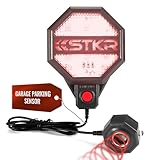
- PRECISE PARKING CONTROL: Ultrasonic sensor detects your car and signals green, yellow, or red for perfect stop placement.
- CUSTOM STOP DISTANCE: Adjustable stop zone from 6 inches to 6 feet with one-touch “Set Distance” button.
- DUAL POWER OPTIONS: Operates on 4 AA batteries or via optional USB power port (cable and charger not included).
- EASY INSTALLATION: Mounts easily with adhesive tape or Velcro—no tools or drilling required.
- RELIABLE & DURABLE: Backed by a 1-year warranty from STKR Concepts; built for years of garage safety.
What is planned for the coming winter?
On 28 September 2026, the Ministry of Environment, Forest and Climate Change announced a forthcoming winter protocol that includes doubled parking charges alongside staggered office timings, 50% work-from-home arrangements, vehicle restrictions, and measures concerning transport, dust, waste, industry, and pollution hotspots. The official announcement describes advance measures; it does not establish that the fee increase is already in force or specify a final operational schedule.
The announcement also reports last-mile connectivity at all 228 Metro stations and a bus fleet of 6,840, including 5,088 electric buses. These are government-reported figures, not an independent assessment of whether service is adequate for people who might otherwise drive.
Free tools Windows power users keep installed
One-click scans. No signup required.
Accordingly, the winter plan should be described as announced, not implemented, unless a final order and the actions of the relevant parking operators confirm its start date, covered areas, and applicable charges.
Best Value

- Garage Parking Aid Sensor: Utilizes advanced ultrasonic sensors to prevent over-parking or premature stopping. Accurately detects distances from 6" to 6.5ft. Calibrate the garage parking sensor within this range; exceeding it may cause button failure. Follow the adjustment steps in the manual to ensure reliable operation
- Smart Calibration: Position your vehicle at the ideal spot and press the “Set Distance” button. The system automatically saves your optimal parking position. The intelligent red/yellow/green LED display provides real-time parking status alerts, ensuring quick and precise parking every time
- Fits Any Garage & Vehicle Size: Easily adjust the parking stop point for compact cars, SUVs, pickups, and varying garage depths. Perfect for single-car, double-car, or narrow parking spaces, ensuring every driver parks precisely
- Dual Power Options: The parking sensor can be powered via the included power cord or 3 AAA batteries (not included), offering flexible configuration without complex wiring to easily adapt to different garage layouts
- Simple Installation: Quickly mount on walls, workbenches, or any surface in front of your vehicle using the included strong adhesive pads or plaster anchors. Eliminates the need for hanging tennis balls or laser devices, and avoids placing parking blocks or other tripping hazards on your garage floor
What would make a parking-fee increase more effective?
A workable design has to address the ways drivers can avoid the charge and make alternatives to driving practical. The relevant questions are:
- Coverage: Which authorised sites, agencies, and operators are included, and are there nearby gaps that allow drivers to shift?
- Enforcement: Can authorities prevent illegal roadside parking from becoming a no-cost substitute?
- Price and duration: What fee applies, for how long, and under which GRAP stage? Current tariffs and any seasonal rates need to be checked with the operator; past reported baseline rates are not the winter schedule.
- Transport alternatives: Can people reach useful public transport and complete the last mile without a car?
- Measurement: Do agencies publish before-and-after data on authorised-lot occupancy, illegal parking, traffic, and air quality, while accounting for other measures introduced at the same time?
Without those details and measurements, it is difficult to tell whether a policy reduced driving, displaced parked vehicles, or coincided with changes caused by other winter interventions.
Quick Recap
Product prices and availability are accurate as of the date/time indicated and are subject to change. Any price and availability information displayed on Amazon at the time of purchase will apply.

