
The Tool Desk
Outbyte Driver Updater FREEFix the driver behind crashes, sound loss and screen glitchesFind Drivers →Outbyte PC Repair FREERepair Windows errors before they cause bigger problemsFix Now →iTechGuides is reader-supported. When you buy through links on our site, we may earn an affiliate commission. As an Amazon Associate I earn from qualifying purchases. Learn more
Confidential computing helps protect AI data and code while they are actively being processed—not just while stored or moving across a network. For enterprises using sensitive prompts, customer records, training data, or proprietary models in cloud and shared infrastructure, that protection can reduce exposure to privileged infrastructure access. It is not a complete AI security or compliance solution: its value depends on the workload, hardware boundary, attestation and key-release policies, and the risks the deployment must address.
What confidential computing protects in an AI workload
Confidential computing performs computation inside a hardware-based trusted execution environment (TEE), an isolated boundary designed to protect data and code in use. Microsoft’s overview, reflecting the Confidential Computing Consortium definition, describes secure and isolated environments that prevent unauthorized access or modification of applications and data while they are in use: Azure Confidential Computing overview.

It covers a different state of data from conventional encryption:
Windows Errors? Fix Them Before They Spread
Repair common Windows errors and clear accumulated junk for a smoother, more stable PC - no reinstall needed.Free scan · no reinstallCrashes, No Sound, or Screen Glitches?
Random freezes, missing sound and display glitches usually trace back to one bad driver. Find and replace yours safely.Free scan · under a minute- At rest: data is stored, such as in a database or disk.
- In transit: data is moving between systems over a network.
- In use: data is being loaded into memory and processed.
Encryption at rest and in transit remains important, but it does not by itself protect active computation from every privileged infrastructure actor. Confidential computing adds hardware-backed isolation during processing; Google describes runtime encryption, hardware isolation, and attestation as core characteristics of its approach: Google Cloud Confidential Computing overview.
#1 Best Overall
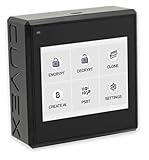
- Sovereign Self-Custody HSM: Personal hardware security module that encrypts secrets offline without relying on servers or third-party infrastructure
- Offline PSBT Signing: Sign Bitcoin PSBT transactions with deliberate human verification and dual air-gap security, minimizing attack surfaces
- No Telemetry, No Metadata Leakage: Designed with zero telemetry, zero balance auditing, and zero backend dependency for maximum privacy
- AES-256-GCM Cryptography: Seed phrases are encrypted offline with advanced AES-256-GCM; secrets never touch internet-connected systems
- Supports Any Wallet: Works seamlessly with existing wallets that expose recovery seeds (Ledger, Trezor, Coldcard, Jade, etc.)
AI assets that may need protection
Depending on the lifecycle stage, an AI workload can expose prompts and responses, private context retrieved for a prompt, training or fine-tuning datasets, intermediate computation, model weights, and other model intellectual property. Microsoft describes confidential AI across training, fine-tuning, and inference, including protection for training data and weights, private datasets and models, and inference requests, responses, and model IP: Confidential AI on Azure.
Why enterprise AI creates a distinctive data-protection problem
AI can be more useful when it can work with an organization’s private or domain-specific information. But processing that information in a third-party or multi-tenant environment raises questions about who can access it: infrastructure operators, privileged administrators, service providers, or other parties sharing the platform. A TEE changes the trust boundary by reducing reliance on those parties’ access controls alone. It does not eliminate every possible attack path.
Confidential computing can also support collaboration when organizations want to analyze combined information without giving one another their raw datasets. Relevant examples include healthcare analytics, fraud detection across financial institutions, and AI or federated-learning workflows. Microsoft and Google describe these as potential use cases, not guarantees that every implementation will protect every input or output: Microsoft’s confidential AI use cases and Google Cloud’s architecture guide for confidential computing in analytics, AI, and federated learning.
Rank #2

- Encrypt your data with the cloudAshur to ensure the ultimate protection of your data stored in the cloud, on your PC/MAC, transferred as an email attached or file sharing software
- Share your encrypted data security with authorised users in the cloud, via email and file transfer services using the cloudAshur KeyWriter (not included)
- Manage and monitor your cloudAshur devices centrally using the cloudAshur Remote Management Console (not included)
- cloudAshur eliminates data security vulnerabilities associated with cloud platforms, such as lack of control and unauthorised access to your confidential data.
- Take back control of your data - with the cloudAshur, you hold the KEY to your data!
How TEEs and remote attestation work for AI
1. Run the workload within a defined hardware boundary
A TEE isolates some combination of application code, data, and memory from the surrounding environment. The boundary varies: it may be an application enclave, a confidential virtual machine, a container within a protected environment, or a confidential GPU configuration. Those terms are not interchangeable. The important question is exactly which code, memory, data, and devices are protected—and which components remain outside the boundary.
2. Check evidence about the environment
Remote attestation provides signed evidence about a hardware environment or measured workload. A verifier checks that evidence against policy—for example, whether the expected software and configuration are present—before approving access to data or cryptographic keys. Attestation is useful only when the verification process, policy, and evidence are meaningfully connected to the intended workload.
3. Release data or keys only under the approved policy
A system can use an acceptable attestation result as a condition for releasing keys or sensitive data. This creates a gate between “the workload is running” and “the workload may use protected information.” The organization still needs to decide what measurements are acceptable, who operates the verifier, how policy changes are approved, and how keys are revoked or recovered.
Rank #3

- Tailored Motherboard Upgrade: Unlock the full potential of your PC with this 18pin TPM2.0 module, specifically designed for motherboards to seamlessly enable your system for the latest WIN11 upgrades and safety features.
- Enhanced System : Bring your hardware up to modern standards with this essential LPC card, providing the cryptographic foundation needed to safeguard your sensitive digital assets and personal data against malicious software.
- Adaptive Compatibility Range: Engineered for broad compatibility, this black module aligns beautifully with 100 series motherboards and newer, ensuring your desktop computer fully supports all critical TPM2.0 features.
- Effortless Hardware Setup: Skip the complicated workarounds and instantly pass strict operating system requirements by plugging this dedicated module directly into your board, instantly preparing your trusted machine for the future.
- Secure Data Management: Experience absolute peace of mind during your daily computing tasks with a robust hardware level system that securely stores your cryptographic keys, keeping your private information strictly confidential.
Google’s architecture guidance discusses attestation and confidential-computing hardware types, while NVIDIA’s AI design guide addresses confidential computing architecture and threat models: Google Cloud Architecture Center and NVIDIA Confidential Computing for AI design guide.
Where confidential computing fits in the AI lifecycle
| Workload stage | Potentially protected assets | What to verify |
|---|---|---|
| Training | Training data, model architecture, and weights while computation runs | Whether the training code, accelerator, data path, and relevant memory are inside the protected boundary |
| Fine-tuning | Private datasets and models used to adapt a model | Whether both the base model and private inputs are protected throughout the actual fine-tuning workflow |
| Inference | Prompts, private context, requests, responses, and model IP | Whether the full serving path—including retrieval, preprocessing, model execution, and output handling—is covered |
| Analytics or multi-party computation | Data contributed by one or more organizations | Which participants can see raw inputs, what the computation reveals, and how outputs are governed |
A cloud product name alone does not prove that a particular AI workflow is protected end to end. A pipeline may cross multiple services or hardware boundaries, so evaluate each stage that handles sensitive data.
How to evaluate an enterprise confidential AI deployment
- Define the threat model and assets. Identify which prompts, records, datasets, intermediate values, weights, and outputs are sensitive. Specify which actors or systems should not be able to access them.
- Map the complete workflow. List training, fine-tuning, inference, preprocessing, retrieval, analytics, and storage components in scope. Confirm which stages run within a TEE and which do not.
- Inspect the protection boundary. Determine whether the offering uses an enclave, confidential VM, container, or confidential GPU. Establish what code, memory, devices, and data paths are covered and what remains outside.
- Validate hardware and software compatibility. Check the exact CPU or GPU generation, drivers, runtime, model framework, and serving stack. For example, Google lists Confidential VMs with H100 GPUs; that product example does not establish support for every model workflow. Microsoft documentation for some offerings described limited-preview availability on the page reviewed. Check the provider’s current availability for the intended geography, configuration, and date: Google Cloud Confidential Computing products and Microsoft Confidential AI documentation.
- Review attestation and key release. Ask what is measured, who verifies attestation, how policy is expressed, and whether keys or data are withheld when evidence fails or changes.
- Check deployment and collaboration requirements. Compare managed services with customer-controlled workloads and multi-party designs. Include data residency, operational responsibility, and each participant’s access rules.
- Measure performance and operational fit. Benchmark the actual workload, not a generic vendor claim. Review monitoring, incident response, integration, and recovery procedures for the protected environment.
- Connect evidence to internal controls. Determine what attestation and audit records can be retained and whether they support contractual commitments and applicable legal requirements. Confidential computing alone does not establish compliance with a particular law.
What confidential computing does not solve
Confidential computing reduces exposure to certain privileged infrastructure actors; it does not make the whole AI system secure, private, or correct. It does not stop an authorized user or agent from accessing information they are permitted to use, fix application vulnerabilities, or prevent sensitive information from appearing in model outputs. Microsoft notes that differential privacy can be combined with confidential training to further reduce the risk of training-data leakage through inference.
Evaluate residual risks in the context of the specific deployment, including side channels, firmware and hardware trust, attestation-service governance, workload configuration, and key management. Continue to use authorization, data governance, secure software practices, safe model and agent design, and deployment-specific legal review.
The Confidential Computing Consortium announced IDC survey findings in 2025 based on more than 600 IT leaders across 15 industries. Its announcement reported that 75% of surveyed organizations were adopting confidential computing—57% piloting or testing and 18% already in production—and that respondents cited improved data integrity (88%), confidentiality with technical assurances (73%), and better regulatory compliance (68%) among reported benefits. These are findings as reported by the Consortium, not universal adoption rates or independent proof that a particular deployment achieves those outcomes: Confidential Computing Consortium 2025 announcement.
Quick Recap
Product prices and availability are accurate as of the date/time indicated and are subject to change. Any price and availability information displayed on Amazon at the time of purchase will apply.

