
Quick wins for a faster PC:
Fix the driver behind crashes, sound loss and screen glitchesFind Drivers →Repair Windows errors before they cause bigger problemsFix Now →Scan for outdated or missing drivers - takes under a minuteDriver Scan →iTechGuides is reader-supported. When you buy through links on our site, we may earn an affiliate commission. As an Amazon Associate I earn from qualifying purchases. Learn more
An AI system can ace a demo and still fail to be dependable in everyday use. A test score shows how it performed on particular data under particular conditions; reliability means it keeps working as required across expected conditions and over time. That makes monitoring and response after launch part of the problem, not optional cleanup.
Why a successful test can mislead
Before launch, teams can evaluate a model against a fixed dataset or controlled scenarios. That evidence is useful, but it cannot represent every input, operating condition, or human interaction the system will encounter. AI outputs may vary, and real-world conditions can change after evaluation. NIST’s March 2026 report, Challenges to the Monitoring of Deployed AI Systems, describes these challenges and the limits of relying on pre-deployment evaluation alone.
Consider an illustrative example: a model classifies support requests accurately in a test set. After launch, customers describe problems in new ways, product features change, and staff alter how requests are routed. The model may be unchanged, but the inputs and surrounding workflow are not. Its old test score cannot establish that it still performs well in this new setting.
Crashes, No Sound, or Screen Glitches?
Random freezes, missing sound and display glitches usually trace back to one bad driver. Find and replace yours safely.Free scan · under a minuteWindows Errors? Fix Them Before They Spread
Repair common Windows errors and clear accumulated junk for a smoother, more stable PC - no reinstall needed.Free scan · no reinstallWhat reliability means in practice
NIST’s AI Risk Management Framework describes reliability using the ISO/IEC definition: the “ability of an item to perform as required, without failure, for a given time interval, under given conditions.” The definition makes reliability contextual: teams need to specify what the system is supposed to do, under which conditions, and for how long. NIST also frames validity and reliability for deployed systems as qualities that often require ongoing testing or monitoring, rather than a one-time release check. See the NIST AI RMF trustworthiness characteristics.
#1 Best Overall

- Built for Local AI Development: AMD Ryzen AI Halo is designed for local AI development and inference, featuring 128GB unified memory and support for up to 200B parameter models to build and run intensive AI workloads locally.
- 128GB Unified Memory: Features 128GB LPDDR5x unified memory at 8000 MT/s with 256 GB/s memory bandwidth, providing a shared memory pool across the CPU, GPU, and NPU to support larger AI models.
- AMD Ryzen AI Max+ 395 Processor: Features 16 cores, 32 threads, and Zen 5 architecture, paired with AMD Radeon 8060S integrated graphics featuring 40 RDNA 3.5 compute units and an AMD XDNA 2 NPU with up to 50 TOPS.
- Linux AI Developer Platform: Purpose-built for Linux-based AI development with full AMD ROCm software support and preloaded tools, models, and workflows optimized for local AI development.
- Compact, Connected Design: Includes a 2TB M.2 SSD, 10GbE LAN, Wi-Fi 7, Bluetooth 5.4, USB-C connectivity, and HDMI 2.1b.
That scope is wider than whether an individual model answer is correct. NIST’s 2026 report organizes post-deployment monitoring across six categories:
- Functionality: “Measuring system functions, capabilities, and features to ensure the system works as intended.”
- Operations: Whether the deployed service behaves dependably in its operating environment.
- Human factors: How people interact with the system and respond to its outputs.
- Security: Whether security-related problems affect the system or its use.
- Compliance: Whether deployment continues to meet applicable requirements.
- Large-scale impacts: Effects that may emerge beyond individual model outputs.
The categories are a monitoring framework, not a claim that every AI application has the same risks or needs identical checks.
Rank #2

- EVOLUTION AMD RYZEN AI MAX+ 395 MINI PC - GMKtec EVO-X2 is the next evolution in AI mini PC Ryzen Strix Halo series. Thanks to AMD Simultaneous Multithreading (SMT) the core-count is effectively doubled, to 32 threads. Ryzen AI Max+ 395 has 64 MB of L3 cache and can boost up to 5.1 GHz, depending on the workload. The Ryzen AI Max+ 395 is currently rated as the "most powerful x86 APU" on the market for AI computing.
- AI NPU with XDNA 2 ARCHITECTURE - Powered by 16 “Zen 5” CPU cores, 50+ peak AI TOPS XDNA 2 NPU and a truly massive integrated GPU driven by 40 AMD RDNA 3.5 CUs, the Ryzen AI MAX+ 395 is a transformative upgrade and delivers a significant performance boost over the competition. The Ryzen AI Max+ 395 excels in consumer AI workloads like the llama.cpp-powered application: LM Studio. Shaping up to be the must-have app for client LLM workloads, LM Studio allows users to locally run the latest language model without any technical knowledge required and unleash their creativity and productivity.
- AMD RADEON 8090S iGPU GAMING PC - The AMD Radeon RX 8060S offers all 40 CUs with up to 2.9 GHz graphics clock and uses the new RDNA 3.5 architecture. The powerful iGPU is positioned between an RTX 4060 and 4070 laptop GPU and therefore enables gaming in FHD at maximum details in most demanding games. The 8060S can also utilize the full 64GB pool, which is perfect for running LLMs such as Deepseek 32B, which runs comfortably on this machine.
- EIGHT CHANNEL LPDDR5X - LPDDR5X is a new ground breaking memory small form factor installed on-board. With blazing speeds up to to 8000MT/s, it runs 1.5x faster than the DDR5 SODIMMs; 90% better performance over DDR5 SODIMMs in video conferencing and photo editing; 30% better performance in productivity apps; 4% better performance in digital content workloads.
- QUAD SCREEN 8K DISPLAY SUPPORT - EVO-X2 AI Mini PC support 4-screen 4K/8K output via HDMI 2.1 (8K@60Hz), DisplayPort 1.4 (4K@60Hz), and dual USB 4 40Gbps Transfer speed (supporting PD3.0/DP1.4/DATA). Ideal for gaming, video editing, and multitasking, it provides expansive and crisp multi-display support.
How to build a reliability feedback loop
NIST’s AI RMF Playbook measurement guidance describes practical actions for monitoring deployed systems. A useful operating loop is:
- Keep the pre-launch baseline. Record the evaluation measures and conditions used before release so production behavior can be compared with them.
- Observe the live system. Track relevant production metrics, anomalies, and changes in input or output patterns. A shift is a reason to investigate, not proof by itself that the system has failed.
- Check quality when evidence arrives. Compare outputs with ground truth as it becomes available; some applications cannot verify every result immediately.
- Assign human review. Give trained reviewers clear responsibility for examining unexpected cases and escalating issues. Human review needs an explicit role in the workflow rather than an assumption that someone will notice a problem.
- Investigate and respond. Use monitoring signals to determine whether the issue concerns output quality, operations, human interaction, security, compliance, or wider effects, then take an appropriate corrective action.
Why monitoring is not a solved problem
Monitoring helps teams find problems, but no single benchmark, drift detector, or reviewer guarantees reliability. NIST AI 800-4, published in March 2026 and based on practitioner workshops and a literature review, describes monitoring methods and terminology as nascent and scattered. It identifies practical barriers including drift detection, fragmented logging, and the difficulty of scaling human-driven monitoring.
Rank #3
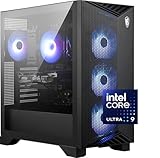
- Intel Core Ultra 9 285 Processor: Newly developed cores deliver ultra-smooth and responsive gameplay. AI accelerators prepare users for the next era of gaming on an AI PC.
- Simplistic Design: Enjoy the latest generation of Windows 11 Home for your everyday needs. *MSI recommends Windows 11 Pro for business use.
- NVIDIA GeForce RTX 5070 Ti GPU
- Cool While Gaming: In conjunction with an RGB CPU Air Cooler, the Aegis RS features four system cooling fans; three in the front and one in the rear to pull in cool air and push heat out of the PC.
- Turn on the Bright Lights: With the built-in RGB lighting, take your gaming experience to the next level by pressing the MSI LED button to cycle through lighting options. Customize lighting even further with MSI Center software.
The report also leaves important practice questions open: how often monitoring should occur; whether cadence should vary by risk or use case; how monitoring relates to auditing; and how automated checks should be balanced with human validation. Those are active questions, not a settled formula that applies to every deployment.
When this problem matters most
The challenge is especially important when inputs or workflows can change, when output quality is hard to verify immediately, or when people and organizations bear meaningful consequences from errors. In those settings, a strong pre-launch result remains useful evidence—but dependable operation requires teams to keep checking how the whole system behaves under its actual conditions.
Quick Recap
Product prices and availability are accurate as of the date/time indicated and are subject to change. Any price and availability information displayed on Amazon at the time of purchase will apply.
Free tools Windows power users keep installed
One-click scans. No signup required.

