
AI models built for robots, vehicles, and other physical systems can look capable in simulation and still fail on real hardware. Richard Ahlfeld, CoreWeave’s SVP for Physical and Scientific AI, argues that simulation is valuable for generating scenarios and speeding iteration—but it cannot replace evidence from real materials, sensors, and tests. The practical answer is a feedback loop: simulate broadly, test on the target system, and use what happens to improve the model and the next round of testing.
What makes physical AI different?
Physical AI must connect perception to action in an environment that does not behave like a clean software interface. A robot interprets sensor inputs and moves hardware; a vehicle makes decisions amid changing road conditions. In both cases, timing, sensor quality, hardware behavior, and safety constraints shape whether a model works.
That is why performance inside a designed simulation is not, by itself, proof that a system will work in the physical world. The model may have learned behavior that depends on assumptions built into the simulation rather than properties of the object or environment it will encounter.
Why can a model pass simulation and fail in the real world?
Simulated objects may omit important physical behavior
Ahlfeld’s example is a plastic water bottle. In a simulation, it may behave like a rigid object; a real bottle can deform or crumple when a robot grasps it. If the task depends on contact and deformation, a model trained only against the rigid version may not learn the handling behavior it needs.
Quick wins for a faster PC:
Repair Windows errors before they cause bigger problemsFix Now →Scan for outdated or missing drivers - takes under a minuteDriver Scan →Clear out junk files and repair common Windows errorsFree Scan →#1 Best Overall
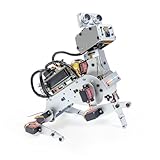
- AI-Powered Raspberry Pi Robot Dog — PiDog: Powered by Raspberry Pi (5/4B/3B+/3B/Zero 2W), OpenClaw, and multi-LLMs like ChatGPT, Gemini, Grok, DeepSeek, Qwen & Ollama. With 12 servos, camera, gyroscope, hearing & touch sensors, PiDog can see, listen, talk, move, and interact intelligently. Supports OpenCV, MediaPipe, TTS & STT, app control, FPV & Python. A great STEM robotics gift for students, makers & tech enthusiasts—perfect for birthdays and holidays. (Raspberry Pi not included)
- Realistic Dog-like Movements: PiDog's 12 powerful servos enable 32 dog-like actions, including walking, sitting, standing, shaking its head, wagging its tail, and performing playful tricks, closely mimicking a real dog and providing an engaging experience. This is an AI development robot product designed for engineers, suitable for ages 15 and above
- Rich Sensor Suite for Interactive Experiences: PiDog features ultrasonic, touch, gyroscope, sound, camera, speaker and microphone. These provide it with advanced hearing, vision, and touch, enabling it to see, detect obstacles, respond to touch, and recognize sounds, making interactions highly engaging
- AI-Powered Interactions with OpenClaw & Multi-LLMs. PiDog combines voice, vision, and gesture recognition for immersive AI experiences. Powered by OpenClaw and multi-LLMs like ChatGPT, Gemini, Grok, DeepSeek, Qwen, Doubao, and Ollama (local LLMs), it can understand questions, respond naturally through TTS & STT, recognize math problems, interpret hand gestures, and hold smart conversations. OpenClaw also enables customizable AI behaviors and personalized robotics development, helping users create their own intelligent robotic companion
- Comprehensive Learning Resources and Support: PiDog offers detailed online documentation, video tutorials, prompt technical support, and an active forum community, ensuring beginners can easily complete all projects and enjoy a great experience
Ahlfeld describes putting a robot in a lab to practice with a real bottle and collect physical feedback. The point is not that simulation cannot represent deformable objects, but that a simulation may simplify or miss the specific properties that matter to the task. Ahlfeld summarized his view in CoreWeave’s May 14, 2026 interview: “simulations are good, but they will never be as good as the real world.” That is a conversational judgment, not a formal scientific conclusion. Listen to the interview.
Real settings include variation and failures that are hard to anticipate
In a September 2026 IZON interview, Ahlfeld cited robot grasping mechanics, liquids, chaotic human behavior, and sensor or hardware failures as examples that are difficult to capture completely in simulation. These are challenges of fidelity and coverage: a simulation can model many of them, but the result depends on how accurately the model represents the relevant behavior and how well its scenarios reflect real conditions. Read the IZON interview.
What synthetic data and simulation are good for
Simulation helps teams vary conditions and generate labeled examples without physically recreating every situation. It can make it easier to explore edge cases that would be expensive, slow, or unsafe to stage repeatedly in the real world. Synthetic data can also support training and analysis at a scale that physical collection alone may not provide.
Rank #2

- Optimized AI Arm Kit for LeRobot & Hugging Face Projects – The SO-ARM101 is an upgraded low-cost robotic arm servo motor kit designed for AI robotics enthusiasts and developers. Fully compatible with LeRobot and Hugging Face frameworks, it supports imitation learning and reinforcement learning, making it ideal for real-world robotics applications. (3D-printed parts not included.)
- Enhanced Wiring & Performance – Compared to the SO-ARM100, the SO-ARM101 features improved wiring to prevent disconnection at joint 3 and eliminates range-of-motion limitations. The leader arm uses optimized gear ratio motors for smoother performance—no external gearboxes required.
- Real-Time Leader-Follower Functionality – New real-time tracking allows the leader arm to follow the follower arm, enabling human intervention and correction during reinforcement learning (RL) training. Perfect for hands-on AI robotics development and research.
- Open-Source, DIY-Friendly & Nvidia-Compatible – Developed by TheRobotStudio, this open-source AI Arm kit integrates seamlessly with the LeRobot platform, offering PyTorch-based datasets, simulation, training, and deployment tools. Fully compatible with Nvidia Jetson edge devices, including reComputer Mini J4012 Orin NX 16 GB.
- Comprehensive Learning Resources – Includes detailed open-source assembly and calibration guides, testing tutorials, and deployment instructions. From wiring to AI training, get everything you need to start building, teaching, and optimizing your robotic arm for grasping and placing tasks.
Those advantages do not make synthetic data a universal substitute for physical data. The value of a simulated scenario depends on whether its physics and assumptions are credible for the task. A large number of runs can improve coverage of the scenarios represented; it cannot show that unmodeled effects are harmless or that a model will transfer safely to a real system.
Windows Errors? Fix Them Before They Spread
Repair common Windows errors and clear accumulated junk for a smoother, more stable PC - no reinstall needed.Free scan · no reinstallOutdated Drivers Are Slowing You Down
One free scan finds every outdated or missing driver and matches the right update for your exact hardware.Free scan · exact hardware matchWhat physical testing adds
Physical tests reveal how the complete system behaves on actual materials, sensors, and hardware. They can expose mismatches in contact, deformation, timing, sensing, and failure behavior that a simulation did not capture. That evidence is especially important when the consequences of an error are serious.
Ahlfeld also described a Nissan chassis-testing example: he said historical hardware and physical test data were used to predict results in real chassis tests, and reported that Nissan could reduce testing across its chassis by 17%. He immediately qualified that result: many tests were safety-critical and could not simply be removed. This is Ahlfeld’s reported case-study outcome, not an independently audited figure or a result that can be assumed for other teams. See the interview discussion.
Rank #3
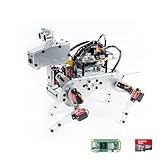
- Raspberry Pi AI Robot: powered by Raspberry Pi (5/4B/3B+/3B/Zero 2W), features 12 servos and sensors for vision, hearing, and touch. Integrated with ChatGPT-4o, it responds to complex queries. With app control and FPV, users can manage and see its view in real-time. It supports Python programming
- Realistic Movements: 12 powerful servos enable 32 actions, including walking, sitting, standing, shaking its head, wagging its tail, and performing playful tricks, closely mimicking a real and providing an engaging experience
- Rich Sensor Suite for Interactive Experiences: features ultrasonic, touch, gyroscope, sound, camera, speaker and microphone. These provide it with advanced hearing, vision, and touch, enabling it to see, detect obstacles, respond to touch, and recognize sounds, making interactions highly engaging
- Engaging Interactions with ChatGPT-4o: with ChatGPT-4o enables voice interactions and visual recognition, making it smarter and more responsive. Users can have natural conversations, solve math problems via the camera, and interpret gestures, creating diverse and fun interactions
- Comprehensive Learning Resources and Support: offers detailed online documentation, video tutorials, prompt technical support, and an active forum community, ensuring beginners can easily complete all projects and enjoy a great experience
How to combine simulation and real-world checks
A useful development process is iterative rather than a one-time choice between synthetic and physical data. CoreWeave describes a workflow that combines simulation-generated training data with multimodal sensor fusion, inference, retraining, and staged validation. See CoreWeave’s workflow description.
- Collect observations from the target system. Use relevant sensor, hardware, and physical-test data to understand the conditions the model must handle.
- Generate scenarios in simulation. Vary conditions to broaden coverage and investigate cases that are difficult to reproduce physically, while checking that the simulated physics are appropriate to the task.
- Train and evaluate the model. Test behavior against both simulated scenarios and physical evidence; a successful run in one does not establish success in the other.
- Test in stages on real systems. Use prototypes and progressively more representative conditions to find mismatches and failures before broader deployment.
- Feed outcomes back into the next cycle. Use real observations to refine the model, improve simulation assumptions, and choose further tests.
The right balance depends on what can go wrong, how faithfully the simulation represents that failure mode, and what evidence is required before deployment. Simulation supports scalable coverage; physical testing checks whether the assumptions hold on the actual system.
Do these 3 things before closing this tab:
1Clear out junk files and repair common Windows errors2Fix the driver behind crashes, sound loss and screen glitches3Repair Windows errors before they cause bigger problemsWhat do large simulation counts prove?
CoreWeave has published examples of simulation workloads run in particular setups. They indicate throughput for those workloads, not a cross-platform benchmark, deployment guarantee, or proof of real-world safety.
Rank #4
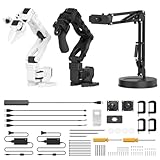
- 【End-to-End Imitation Learning】Hiwonder SO-ARM101 robot arm is an embodied intelligent hardware platform compatible with the Lerobot open-source framework. It provides developers with streamlined access to shared code, templates, and pre-trained models to explore the latest advancements in AI research.
- 【Dual-Camera Vision System】Equipped with both a gripper-mounted camera and an external camera, the system supports both precise manipulation and environmental awareness for accurate imitation learning.
- 【Hiwonder High-Performance Bus Servos】Featuring 12 high-torque bus servo motors with magnetic feedback, the Hiwonder SO-Arm101 robotic arm delivers smooth, stable motion, eliminating issues like power deficiency and jitter.
- 【Professional Control & Debugging】Integrated with the Hiwonder BusLinker V3.0 debugging board, the system supports servo scanning, real-time status monitoring, and trajectory control. The professional PC software simplifies device calibration and debugging, making it accessible for both researchers and hobbyists.
- 【Open-Source Compatibility】The SO-ARM101 robotic arm is designed to be fully compatible with the LeRobot open-source project. We acknowledge the contributions of the open-source community; all trademarks and copyrights belong to their respective owners.
| Workload reported by CoreWeave | Reported run | What the figure establishes |
|---|---|---|
| Robotic manipulation simulations in MuJoCo | 4,800 in 85 minutes | Throughput for this reported workload; not proof that a robot will handle physical objects reliably. |
| Randomized warehouse samples using NVIDIA Isaac Sim | 10,000 in 21 minutes | Scenario generation at the stated scale and duration; not evidence of transfer to a real warehouse. |
| Isaac Sim episodes | 113,000 in just under eight hours | Throughput for this reported workload; not a safety or deployment result. |
| Autonomous-vehicle simulations in CARLA | 1.25 million in approximately 12 hours | Simulation volume in the reported setup; not evidence that all important road conditions were represented. |
| AlpaSim rollouts | More than 1,600 in under four hours | CoreWeave says these support failure triage before road testing; the company explicitly says this is not safety certification by itself. |
These examples are from CoreWeave’s published workloads, with the 1.25 million CARLA figure also discussed in the September 2026 IZON interview. They should be read as company-reported demonstrations in specific configurations, not as comparable rankings or evidence that a system is ready for deployment. See CoreWeave’s workload examples; see the IZON report.
What should teams look for before deployment?
Simulation volume is only one part of a validation case. Engineers need evidence tied to the behavior and system they intend to deploy.
- Relevant coverage: Do the scenarios exercise important operating conditions and plausible failure modes, rather than simply produce a high run count?
- Physical fidelity: Does the simulation represent the material, contact, liquid, or human behavior the task depends on?
- Target-system evidence: Has the model been evaluated on the actual or representative hardware and sensors, including their limitations?
- Failure learning: Can test outcomes identify what went wrong and feed into changes to the model, simulation, or operating procedure?
- Safety evidence: Are safety-critical checks retained and documented rather than inferred from simulation throughput?
CoreWeave says its Physical AI Field Engineering engagements can begin with an on-site scoping workshop and involve simulation infrastructure, test and sensor data analysis, and applications or models for customer workflows. That describes the company’s service and stated approach; it is not independent validation of a customer’s system. Ahlfeld has also said teams adopt a method after seeing it hold up on their own systems, rather than because a vendor demonstrated it once. Read CoreWeave’s service description; read Ahlfeld’s statement.
Recommended Free Tools
Quick Recap
Product prices and availability are accurate as of the date/time indicated and are subject to change. Any price and availability information displayed on Amazon at the time of purchase will apply.

