
Recommended Free Tools
iTechGuides is reader-supported. When you buy through links on our site, we may earn an affiliate commission. As an Amazon Associate I earn from qualifying purchases. Learn more
AI agents retry because iteration can help them recover, refine an answer, or complete a multi-step task. The problem begins when a run keeps repeating without a reliable signal that it is making progress or a limit that forces it to stop. Preventing that requires more than a better prompt: define observable completion and failure conditions, cap execution time and work, and record enough trace data to tell a useful retry from a loop.
What makes an agent retry loop different from a normal loop?
A retry is not automatically a failure. An agent may need another attempt after a temporary tool outage, or a revised attempt after changing its inputs or strategy. A loop becomes problematic when the system continues along a feedback path without an effective bound or a dependable way to recognize completion.
That path may span model calls, tool execution, workflow transitions, state updates, retries, and handoffs between agents. It need not appear as a conventional while loop in application code. In their 2026 arXiv preprint, Xinyi Hou, Shenao Wang, Yanjie Zhao, and Haoyu Wang describe the broader failure mode as an Infinite Agentic Loop (IAL): “IALs are not ordinary programming loops; they arise from the interaction between agent logic, framework semantics, runtime observations, and termination mechanisms.”
What’s actually slowing this PC down?
Pick the symptom - the matching free tool is one click away.
Google Cloud describes multi-agent workflows as repeated sequences governed by an exit condition, such as a maximum iteration count or a custom state. Iterative refinement and critic loops can be intentional; they become unsafe when the exit condition is incorrectly defined or never reached.
#1 Best Overall
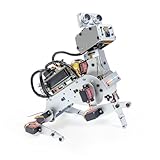
- AI-Powered Raspberry Pi Robot Dog — PiDog: Powered by Raspberry Pi (5/4B/3B+/3B/Zero 2W), OpenClaw, and multi-LLMs like ChatGPT, Gemini, Grok, DeepSeek, Qwen & Ollama. With 12 servos, camera, gyroscope, hearing & touch sensors, PiDog can see, listen, talk, move, and interact intelligently. Supports OpenCV, MediaPipe, TTS & STT, app control, FPV & Python. A great STEM robotics gift for students, makers & tech enthusiasts—perfect for birthdays and holidays. (Raspberry Pi not included)
- Realistic Dog-like Movements: PiDog's 12 powerful servos enable 32 dog-like actions, including walking, sitting, standing, shaking its head, wagging its tail, and performing playful tricks, closely mimicking a real dog and providing an engaging experience. This is an AI development robot product designed for engineers, suitable for ages 15 and above
- Rich Sensor Suite for Interactive Experiences: PiDog features ultrasonic, touch, gyroscope, sound, camera, speaker and microphone. These provide it with advanced hearing, vision, and touch, enabling it to see, detect obstacles, respond to touch, and recognize sounds, making interactions highly engaging
- AI-Powered Interactions with OpenClaw & Multi-LLMs. PiDog combines voice, vision, and gesture recognition for immersive AI experiences. Powered by OpenClaw and multi-LLMs like ChatGPT, Gemini, Grok, DeepSeek, Qwen, Doubao, and Ollama (local LLMs), it can understand questions, respond naturally through TTS & STT, recognize math problems, interpret hand gestures, and hold smart conversations. OpenClaw also enables customizable AI behaviors and personalized robotics development, helping users create their own intelligent robotic companion
- Comprehensive Learning Resources and Support: PiDog offers detailed online documentation, video tutorials, prompt technical support, and an active forum community, ensuring beginners can easily complete all projects and enjoy a great experience
How can you tell a useful retry from stagnation?
Look for evidence that the run’s approach or state changes from one attempt to the next. A transient error may justify trying again; replaying an unchanged request after a permanent error usually does not. JetBrains’ practical guidance treats repeated tool calls with identical inputs, unchanged artifacts, and rising model or tool activity while resolved work stays flat as warning signs—not as proof of a particular cause.
Inspect the trace, not just the final answer
For each iteration, capture the selected action, exact tool inputs and outputs, state changes, retry count, elapsed time, and stop reason. Comparing these fields reveals whether the agent is adapting, repeating a failed action, or claiming progress without changing the result.
Choose an external progress measure
Define movement in terms of the task’s observable result. For a coding task, that might mean changed files, fewer errors, or completed subtasks; for another workflow, choose an equivalent measure in its environment. A model’s own statement that it improved is not a substitute for checking the artifact or world state when that state can be checked independently.
The Tool Desk
Outbyte Driver Updater FREEScan for outdated or missing drivers - takes under a minuteDriver Scan →Outbyte PC Repair FREERepair Windows errors before they cause bigger problemsFix Now →Why do agents repeat the same mistake?
A retry mechanism can faithfully repeat an action without changing the conditions that caused it. If the error is permanent, the tool inputs stay the same, or the orchestration layer treats every unsuccessful result as a reason to try again, another attempt may reproduce the same failure. A prompt can clarify the task, but it cannot by itself guarantee that framework transitions, retry rules, or runtime termination conditions will stop.
Rank #2

- Optimized AI Arm Kit for LeRobot & Hugging Face Projects – The SO-ARM101 is an upgraded low-cost robotic arm servo motor kit designed for AI robotics enthusiasts and developers. Fully compatible with LeRobot and Hugging Face frameworks, it supports imitation learning and reinforcement learning, making it ideal for real-world robotics applications. (3D-printed parts not included.)
- Enhanced Wiring & Performance – Compared to the SO-ARM100, the SO-ARM101 features improved wiring to prevent disconnection at joint 3 and eliminates range-of-motion limitations. The leader arm uses optimized gear ratio motors for smoother performance—no external gearboxes required.
- Real-Time Leader-Follower Functionality – New real-time tracking allows the leader arm to follow the follower arm, enabling human intervention and correction during reinforcement learning (RL) training. Perfect for hands-on AI robotics development and research.
- Open-Source, DIY-Friendly & Nvidia-Compatible – Developed by TheRobotStudio, this open-source AI Arm kit integrates seamlessly with the LeRobot platform, offering PyTorch-based datasets, simulation, training, and deployment tools. Fully compatible with Nvidia Jetson edge devices, including reComputer Mini J4012 Orin NX 16 GB.
- Comprehensive Learning Resources – Includes detailed open-source assembly and calibration guides, testing tutorials, and deployment instructions. From wiring to AI training, get everything you need to start building, teaching, and optimizing your robotic arm for grasping and placing tasks.
Self-evaluation is also an imperfect stopping signal. In the 2026 arXiv preprint “When Do Agent Loops Mistake Stagnation for Progress?”, the authors report a 54-cycle evaluation in which 56 percent of cycles had measured delta at zero or below. In that study’s setup, its strongest in-band judge accepted 44 percent of real-world regressions and rejected 38 percent of real improvements. These are results from that evaluation, not general error rates for agents or a prediction for a particular product. The paper also reports that judge performance depended on where the success signal resided.
When success can be checked externally, make that check part of the stopping logic. When it cannot, state the uncertainty and use conservative limits or human review instead of treating the agent’s confidence as verification.
What can an unbounded loop cost or affect?
A run without an effective exit may continue model and tool execution, consume resources, grow its context or state, or hang. If tools have external effects, repeated actions can also repeat those effects. Google Cloud warns of excessive operational cost, resource use, and hangs when a loop’s exit condition is wrong or unreachable. These are possible consequences described by the sources, not estimates of how often loops occur in production.
How should you stop agents from running away?
Set hard limits at the runtime layer
Cap agent turns or workflow iterations, and set wall-clock and per-tool timeouts. A hard limit bounds execution even when the agent cannot identify stagnation. The OpenAI Agents SDK documents a max_turns setting and raises MaxTurnsExceeded when the configured limit is exceeded; setting max_turns=None disables that limit. A turn cap does not necessarily bound every other kind of work, so identify what each limit actually counts.
Rank #3
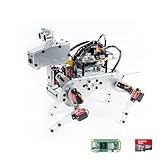
- Raspberry Pi AI Robot: powered by Raspberry Pi (5/4B/3B+/3B/Zero 2W), features 12 servos and sensors for vision, hearing, and touch. Integrated with ChatGPT-4o, it responds to complex queries. With app control and FPV, users can manage and see its view in real-time. It supports Python programming
- Realistic Movements: 12 powerful servos enable 32 actions, including walking, sitting, standing, shaking its head, wagging its tail, and performing playful tricks, closely mimicking a real and providing an engaging experience
- Rich Sensor Suite for Interactive Experiences: features ultrasonic, touch, gyroscope, sound, camera, speaker and microphone. These provide it with advanced hearing, vision, and touch, enabling it to see, detect obstacles, respond to touch, and recognize sounds, making interactions highly engaging
- Engaging Interactions with ChatGPT-4o: with ChatGPT-4o enables voice interactions and visual recognition, making it smarter and more responsive. Users can have natural conversations, solve math problems via the camera, and interpret gestures, creating diverse and fun interactions
- Comprehensive Learning Resources and Support: offers detailed online documentation, video tutorials, prompt technical support, and an active forum community, ensuring beginners can easily complete all projects and enjoy a great experience
Make continuation depend on state and outcomes
Define success, failure, and escalation conditions in the orchestration layer. If an attempt produces the same error with unchanged inputs and state, route to a revised plan, a failure state, or a human rather than blindly retrying. Where possible, base continuation on canonical task or environment state and an independent progress check, not just the agent’s claim that it made progress.
Bound recovery work separately
Recovery may have its own retry or repair path, so consider giving it a separate budget. Cloudflare Agents documents a finite maxRecoveryWork backstop and a maxAlarmMemoryLimitStrikes guard. These are version-sensitive implementation examples, not universal defaults; the documentation notes that earlier package releases counted recovery units differently.
Protect actions with side effects
Use approval checkpoints when an action’s consequences matter. Google Cloud describes human-in-the-loop checkpoints for review or correction. The OpenAI Agents SDK documentation lists durable integrations for workflows that span waits, retries, or process restarts. Durable execution can help preserve workflow state through interruptions, but it does not replace loop exit conditions.
Free tools Windows power users keep installed
One-click scans. No signup required.
Return partial work honestly
When a limit is reached, preserve completed work and report a clear stop reason and any unfinished tasks. Do not silently label an incomplete run as successful; make the boundary between verified completion and partial progress visible to whoever or whatever handles the result next.
Rank #4
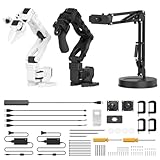
- 【End-to-End Imitation Learning】Hiwonder SO-ARM101 robot arm is an embodied intelligent hardware platform compatible with the Lerobot open-source framework. It provides developers with streamlined access to shared code, templates, and pre-trained models to explore the latest advancements in AI research.
- 【Dual-Camera Vision System】Equipped with both a gripper-mounted camera and an external camera, the system supports both precise manipulation and environmental awareness for accurate imitation learning.
- 【Hiwonder High-Performance Bus Servos】Featuring 12 high-torque bus servo motors with magnetic feedback, the Hiwonder SO-Arm101 robotic arm delivers smooth, stable motion, eliminating issues like power deficiency and jitter.
- 【Professional Control & Debugging】Integrated with the Hiwonder BusLinker V3.0 debugging board, the system supports servo scanning, real-time status monitoring, and trajectory control. The professional PC software simplifies device calibration and debugging, making it accessible for both researchers and hobbyists.
- 【Open-Source Compatibility】The SO-ARM101 robotic arm is designed to be fully compatible with the LeRobot open-source project. We acknowledge the contributions of the open-source community; all trademarks and copyrights belong to their respective owners.
Which control fits which failure?
| Control or pattern | What it can bound or support | What to verify |
|---|---|---|
| Google Cloud loop exit condition | Repeated workflow iterations, using a maximum count or custom state; refinement loops can also use a quality threshold. | Confirm the exit condition is reachable and reflects real completion. The guide does not establish one universal iteration limit. |
OpenAI Agents SDK max_turns |
Agent turns; exceeding the configured limit raises MaxTurnsExceeded. Setting max_turns=None disables the limit. |
Check whether a turn limit alone covers the tool work and elapsed time you need to constrain; other limit values are not stated here. |
| Cloudflare Agents recovery guards | Recovery work and alarm memory-limit strikes through documented runtime guards. | Check the current package documentation for defaults and counting behavior because these details can vary by release. |
| Durable workflow integrations listed by the OpenAI Agents SDK | Long-running execution that may involve waits, retries, restarts, or human approval; named integrations include Dapr, Temporal, Restate, and DBOS. | Durability addresses workflow persistence, not whether the loop has a correct exit condition. The documentation does not establish that an integration eliminates loops. |
These are documentation examples and design patterns, not controlled vendor benchmarks or endorsements. Choose controls based on which resource or action needs a bound: model turns, tool retries, recovery work, elapsed time, or the whole workflow. Also check whether state survives a restart, whether human approval is supported where needed, and whether logs record why a run stopped.
What does loop-detection research show?
Hou and colleagues report evaluating 6,549 LLM-agent repositories with IAL-Scan. The tool reported 74 potential findings; the authors confirmed 68 IAL failures across 47 projects and report 91.9% precision in that evaluation. These results describe that paper’s detection study, not the overall prevalence of loops in deployed agents or the expected performance of another system.
Detection can help identify risky paths, but runtime safeguards still matter: a static finding does not itself stop a live run. For an individual workflow, the practical test is whether traces show changing actions or state, whether an independent check confirms progress, and whether a finite limit provides a stop when those signals fail.
Quick Recap
Product prices and availability are accurate as of the date/time indicated and are subject to change. Any price and availability information displayed on Amazon at the time of purchase will apply.

