
Do these 3 things before closing this tab:
1Repair Windows errors before they cause bigger problems2Fix the driver behind crashes, sound loss and screen glitches3Clear out junk files and repair common Windows errorsiTechGuides is reader-supported. When you buy through links on our site, we may earn an affiliate commission. As an Amazon Associate I earn from qualifying purchases. Learn more
A slower pace in hot weather, by itself, does not show that you have lost fitness. Heat and humidity make your body work harder to regulate temperature while running, so a pace that felt manageable in cooler conditions may demand more effort. Garmin puts it cautiously: “Struggling to keep your normal pace during a heat wave doesn’t necessarily mean your cardiorespiratory fitness (VO2 max) has dropped.”
Why does running pace slow down in summer?
Running pace is only a useful fitness comparison when the conditions are reasonably comparable. Heat and humidity add thermoregulatory strain, which can make a familiar pace feel harder and reduce the pace you can sustain. A hot-weather run and a cool-weather run are therefore not a clean, like-for-like test of fitness.
There is no universal seconds-per-mile adjustment that can reliably convert a summer pace into a cool-weather equivalent. The available evidence establishes the direction of the effect, not an individual formula.
Quick wins for a faster PC:
Fix the driver behind crashes, sound loss and screen glitchesFind Drivers →Repair Windows errors before they cause bigger problemsFix Now →Does running slower in the heat mean you’re losing fitness?
Not necessarily. Garmin says that struggling to hold a normal pace in a heat wave does not necessarily mean cardiorespiratory fitness, or VO2 max, has dropped. That is not a guarantee that fitness cannot change; it means pace alone, when conditions differ, is insufficient evidence of a decline.
#1 Best Overall

- Athletic mesh upper with durable leather overlays for added dimension & midfoot support
- Charged+ midsole cushioning provides unmatched softness & all-day comfort
- Durable rubber outsole provides traction & durability with strategically-placed flex grooves for proper toe-off
- Upper contains at least 30% recycled content
- Weight: 10.2 oz , Lace type: Standard tie, NEUTRAL: For runners who need a balance of flexibility & cushioning
For a more useful personal comparison, look at effort and performance across runs with similar conditions. Also consider route and training history rather than treating one hot run—or a watch estimate—as a verdict. This is practical guidance, not a validated diagnostic protocol.
What does Garmin’s heat-acclimation feature measure?
Garmin describes acclimation status as drawing on environmental and performance data. The feature may add context to supported watch metrics, but it is not a direct diagnosis of fitness. What it displays depends on the watch model and the data available to it.
Rank #2

- Athletic mesh upper with durable leather overlays for added dimension & midfoot support
- Charged+ midsole cushioning provides unmatched softness & all-day comfort
- Durable rubber outsole provides traction & durability with strategically-placed flex grooves for proper toe-off , Upper contains at least 30% recycled content
- Weight: 10.2 oz , Lace type: Standard tie
- NEUTRAL: For runners who need a balance of flexibility & cushioning
For one specific example, the Forerunner 945 LTE Owner’s Manual, revision 6 (February 2024), documents heat-acclimation notifications and corrections to VO2 max or training status above 22°C (72°F). On that model, the feature is available only for GPS activities and requires weather data from a connected phone. These requirements and the temperature threshold should not be assumed to apply to every Garmin watch.
How long does it take to acclimate to running in the heat?
A review by K. B. Pandolf reports that nearly complete exercise-heat acclimation takes about 7 to 10 days, with roughly two-thirds to 75% of physiological adjustments and performance improvements occurring within 4 to 6 days. These are review-level summaries, not a promise that every runner will adapt on the same schedule.
Rank #3

- Men's stylish, slip-on sneakers
- SNUG FIT: Adjustable laces provide a secure fit
- FLEXIBLE UPPER: Soft textile upper is stretchy and comfortable
- CUSHIONED MIDSOLE: Cloudfoam midsole for step-in comfort and superior cushioning
- MADE IN PART WITH RECYCLED CONTENT: This product features at least 20% recycled materials. By reusing materials that have already been created, we help to reduce waste and our reliance on finite resources and reduce the footprint of the products we make
In a controlled 2017 study, James and colleagues assigned 17 participants to five days of heat acclimation (10 participants) or work-matched control training (7 participants). Testing compared cool conditions of 13°C and 50% relative humidity with hot conditions of 32°C and 60% relative humidity. The acclimation group’s hot 5-km time-trial performance improved by an average of 6.2%, compared with 0.6% in controls; the reported group difference was statistically significant (p = 0.029). Because the study was small and controlled, its result should not be treated as an expected gain for an individual recreational runner.
Pandolf’s review also notes that retention varies and that studies of acclimation decay had methodological weaknesses. The evidence does not establish a universal number of days after which heat acclimation disappears.
Quick Recap
Best Value
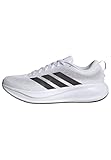
- Shoes with Cloudfoam midsole cushioning for comfort and support.
- Regular fit
- Laces
- Textile and synthetic upper
- Ortholite sockliner
Rank #4
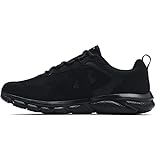
- Lightweight mesh upper with 3-color digital print delivers complete breathability
- Durable leather overlays for stability & that locks in your midfoot
- EVA sockliner provides soft, step-in comfort
- Charged Cushioning midsole uses compression molded foam for ultimate responsiveness & durability
- Solid rubber outsole covers high impact zones for greater durability with less weight
Sources
- Garmin, “Heat and Altitude Acclimation”
- James et al., “Short-term heat acclimation improves the determinants of endurance performance and 5-km running performance in the heat,” Applied Physiology, Nutrition, and Metabolism (2017)
- Garmin, Forerunner 945 LTE Owner’s Manual, “Heat and Altitude Performance Acclimation”
- Pandolf, “Time course of heat acclimation and its decay,” International Journal of Sports Medicine (1998)
- Garmin, “VO2 Max” Running Science page
Product prices and availability are accurate as of the date/time indicated and are subject to change. Any price and availability information displayed on Amazon at the time of purchase will apply.

