
iTechGuides is reader-supported. When you buy through links on our site, we may earn an affiliate commission. As an Amazon Associate I earn from qualifying purchases. Learn more
A log entry that says your watcher died tells you what happened at one moment. It does not tell you whether the watcher came back. When the upstream system recovers and the watcher still does nothing, the most likely explanation is that nothing in the watcher’s own recovery path restarted its work. The fix starts with checking each layer separately instead of trusting the log file.
Why a log cannot prove a watcher is alive
A log is a record of events that were written at some point in the past. A process can stop writing while the file stays readable, permissions stay intact, and the host stays healthy. That is why a “watcher stopped” line, or the absence of new lines, is evidence of a past failure and not a status check. Once you read the log, the question changes from “did it fail?” to “is it doing its job right now?”, and the log cannot answer the second question on its own.


The same gap applies to recovery. A dependency coming back online says nothing about whether the component that watches it has reconnected, re-subscribed, or resumed evaluating new input.
Four ways a watcher stays down after the system recovers
The title’s incident is not identified in the available evidence, so treat the following as hypotheses to test rather than a diagnosis of your system. Each one matches a documented pattern in how watchers, subscriptions, and supervisors behave.
#1 Best Overall
1. The connection recovered, but the subscription was never re-created
Network failures often break a long-lived connection while the network itself is down. When the network returns, the connection object may still be in a disconnected state. In one example, the aioaquarite changelog describes a watch that remained disconnected after the network recovered, and the fix was to use a later healthy tick to re-establish it. The lesson is general: a recovered network does not by itself create a new subscription. Something has to notice the disconnect and open a new one.
2. The retry loop exited instead of waiting
Many clients retry a fixed number of times and then give up. If the outage lasted longer than the retry budget, the loop ends, the process may log a final error, and nothing is left running to try again. A recovered dependency then has no one to reconnect. Check whether your retry logic has a maximum attempt count, whether it uses backoff, and whether a retry exhaustion is treated as terminal.
3. The watch exists but is not active
Some watcher frameworks separate defining a watch from registering it with the component that fires triggers. Elastic’s documentation for Watcher describes a watch in terms of a trigger, an input, a condition, and actions. It states that “A watch must have a trigger.” Elastic also documents that an inactive watch is not registered with the trigger engine and cannot ordinarily trigger. A watch can therefore look defined in configuration and still be inert after a restart, deactivation, or failed registration.
Do these 3 things before closing this tab:
1Scan for outdated or missing drivers - takes under a minute2Repair Windows errors before they cause bigger problems3Fix the driver behind crashes, sound loss and screen glitches4. The supervisor only checks health when something new fails
A supervisor that restarts failed workers can miss a worker that is silently stopped. If health checks run only in response to a new error, a watcher that died quietly during an outage has no trigger for a check. Recovery then depends on an unrelated future failure, which may never come.
Rank #3

- 2 Years of Cellular Service Included – Necto offers the most affordable cellular-enabled sensor with 2 full years of 4G LTE service included—no hidden fees, contracts, or WiFi required. With a built-in multi-network SIM card, you can remotely monitor conditions 24/7 and receive real-time alerts. After 2 years, you can renew the subscription from the app for only $6.99 a month.
- Instant Alert & 24/7 Monitoring - Keep tabs on your Home, RV, Car, or Pets from anywhere with the 3-in-1 temperature, humidity & power outage monitor. Customize the high and low temp/humidity thresholds and add up to 5 contacts for unlimited text and email alerts. Receive real-time alerts if critical changes in temp/humidity or a power loss occurs.
- Rechargeable Internal Battery - The Necto smart RV and pet monitor has a 3 day long-lasting rechargeable battery. Unlike WiFi sensors, Necto provides continuous monitoring in the event of a power outage, via its built-in battery and cellular technology. Receive instant alerts on your phone when battery power is low or if the device disconnects from the network.
- Intuitive Mobile App & Easy Setup - Our user-friendly mobile app gives you remote access to your sensor from anywhere. Use your smartphone or PC to customize alert thresholds, view past readings, and manage device settings with ease. The sensor takes minutes to install and requires no technical expertise. Simply activate the device through the app and plug it into any standard wall outlet.
- Fast Refresh & Free Data Storage - The industrial built-in temperature and humidity sensor takes readings every 10 seconds to make sure the temp/humidity are within the safe range. Every 10 minutes the most recent reading is updated on the online portal. Readings are stored on our servers for 1 year and can be downloaded anytime on a CSV file.
Why the alert may still not fire after the watcher runs
Suppose you confirm the watcher is running and evaluating input. A missing page can still come from the alerting layer. Two cases are documented in cloud alerting products and are worth checking.
- Policy state. Google Cloud’s log-based alerting documentation notes that a snoozed or disabled policy may not create an incident. Check whether the policy was snoozed during the outage and never un-snoozed, or disabled during troubleshooting.
- Existing incidents. The same documentation notes that repeated matching log entries for an already-open incident do not necessarily create a new incident. If an old incident is still open, a fresh failure may appear to be silent.
- Evaluation problems. AWS alerting documentation describes an EVALUATION_FAILURE state and a PARTIAL_DATA state. An alarm in either state may not reflect a clean healthy or unhealthy result, so a watcher producing incomplete data can look fine while the alert logic is not evaluating normally.
- Notification configuration. AWS also documents notification-specific requirements. An alert can evaluate correctly and still reach no one if the destination, permissions, or channel configuration is wrong.
A stage-by-stage diagnostic procedure
Record a timestamp at each stage. “Recovered” only has a testable meaning when each stage has evidence attached to it.
Rank #4
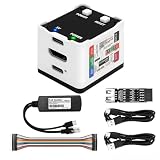
- 【Remote Control Operations Server】Sipeed NanoKVM is an IP-KVM solution based on the LicheeRV Nano RISC-V Linux single-board computer, inheriting the Nano's compact form factor and powerful capabilities. Breaking free from traditional host requirements for network connectivity and system software, NanoKVM functions as an external hardware device directly providing remote control capabilities.
- 【Powerful Interfaces】Sipeed NanoKVM features one HDMI input port that can be recognized by a computer as a display to capture screen content. One USB 2.0 port connects to the computer host, functioning as a HID device (e.g., keyboard, mouse, touchpad). It also utilizes spare TF card storage space, mounting it as a USB flash drive device.
- 【100Mbps Ethernet Support】Sipeed NanoKVM features a 100Mbps Ethernet port for network transmission of video and control signals. The Full version additionally includes an ATX power control interface (USB-C) for remote host power status monitoring and control. The Full version housing also incorporates an OLED display showing the device's IP address and KVM-related status.
- 【Server Management】Sipeed NanoKVM enables real-time monitoring and control of server operations. Supports remote desktop access and host power cycling: NanoKVM overcomes limitations requiring the host to be networked or specific system software, functioning as external hardware to provide direct remote control capabilities.
- 【Supports Remote Installation】Sipeed NanoKVM emulates a USB flash drive device, enabling mounting of installation images for system deployment or access to computer BIOS settings. The NanoKVM Lite features two serial ports for use with IPMI or connection to other development boards via web-based serial terminal interaction. Users may also expand functionality with additional accessories.
- Confirm the watcher process or task is running. On Linux with systemd, run
systemctl status <your-service>and note the active state and last start time. For a container, rundocker psand check the status column. For an in-process task, expose or log a heartbeat that records when the loop last completed one iteration. - Confirm it is receiving new input. Compare the timestamp of the newest input item the watcher processed against the time it should have seen new data. A stale timestamp means the subscription or reader is dead even if the process is alive.
- Confirm it evaluates its condition. Trigger a known test event in the input source and check that the condition is evaluated. If your framework logs evaluation results, look for one after the test event, not only at startup.
- Confirm the action runs. Check the action’s own log or output. An action that fails silently will look like no alert.
- Confirm the notification arrives. Send a deliberate test alert through the same route the production alert uses, and confirm receipt at the destination and acknowledgement in the alert tool.
If step 1 passes and step 2 fails, focus on reconnect and retry behavior. If step 2 passes and step 5 fails, the problem is in alert policy state, evaluation health, or the notification channel.
Choosing a liveness signal
No single signal covers every failure. The table compares common options by what each one actually proves.
| Signal | What it proves | What it misses | Independent of the watcher? |
|---|---|---|---|
| Process or service status | The process exists and has not exited | A loop that is running but no longer receives input | Yes, if checked by the host supervisor |
| Heartbeat from the watcher loop | The loop completed an iteration recently | Whether the iteration processed real new data | No, if written by the watcher itself |
| Work-completion timestamp | New input was processed up to a recent time | Whether the alert route delivers the result | Partly, depending on where the timestamp is stored |
| Synthetic test event | The whole pipeline from input to action works | Only the path the test event takes | Yes, if the test event is injected from outside |
| Alert route test | The notification reaches its destination | Whether the watcher would have fired on a real event | Yes, if sent through a separate channel |
The most useful combination for this failure is a work-completion timestamp checked from outside the watcher, paired with a periodic synthetic event. That pair detects a watcher that is alive but stale, which a process check alone will not catch.
Hardening the recovery path
- Treat a watcher that exhausts its retries as a failure that needs a supervisor restart, not a final state.
- Use backoff with a ceiling, and keep retrying indefinitely at the ceiling rather than stopping.
- After any reconnect, verify that a new subscription is active by checking for a fresh item or a healthy tick, not just the absence of an error.
- Have the supervisor check work-completion freshness on a schedule, not only when an error appears.
- Keep a separate path that alerts when the watcher’s own alert is overdue, so the alerting system does not depend solely on the component that failed.
- Review snoozes, disabled policies, and open incidents after every outage as part of the postmortem checklist.
What the log did and did not prove
The log proved that the watcher failed at one time. It did not prove that the watcher stayed failed, and it did not prove that recovery was absent. What was missing was a signal tied to present work: a timestamp of the last processed input, a synthetic event that exercised the full path, and a test alert that reached a person. Without those, a dead watcher and a silent-but-working watcher look the same in a log file, and the difference only shows up when you check the current state of each stage.
Quick Recap
Product prices and availability are accurate as of the date/time indicated and are subject to change. Any price and availability information displayed on Amazon at the time of purchase will apply.
The Tool Desk
Outbyte PC Repair FREEClear out junk files and repair common Windows errorsFree Scan →Outbyte Driver Updater FREEFix the driver behind crashes, sound loss and screen glitchesFind Drivers →
