
Quick wins for a faster PC:
Fix the driver behind crashes, sound loss and screen glitchesFind Drivers →Clear out junk files and repair common Windows errorsFree Scan →iTechGuides is reader-supported. When you buy through links on our site, we may earn an affiliate commission. As an Amazon Associate I earn from qualifying purchases. Learn more
A reboot clears memory temporarily, but it does not identify what was using it. To find the cause, compare the right memory measurements over time: Task Manager’s process list is only part of the picture, and high RAM use by itself does not prove a leak. Start with the symptom and a trend, then use RAMMap for system-wide physical memory or VMMap and Windows Performance Toolkit when evidence points to a particular process.
Why Task Manager’s numbers may not add up
Task Manager is a useful first stop, but its process memory column and Windows’ overall memory figures answer different questions. Microsoft cautions that the default process-list memory figure represents private memory backed by physical RAM—the process working set. When checking system virtual-memory use, including memory backed by either RAM or the pagefile, Microsoft says to verify Commit size. These measurements are not interchangeable, and adding up process working sets will not necessarily account for all physical memory.
That distinction explains why a process list that looks modest may not explain the system’s physical-memory pressure. Memory can also be assigned to file data, the kernel, or drivers. A high reading alone does not tell you which category is responsible.
How to investigate memory pressure
-
Record what happens before changing anything
Note when the slowdown starts, what work is running, and whether the PC remains responsive. If Windows logs Event ID 2004, Microsoft identifies it as a low virtual-memory condition; the event details include the top memory consumers at that moment. Use those details as a clue about the incident, not proof of a leak.
#1 Best Overall
Sale CORSAIR Vengeance LPX DDR4 RAM 32GB (2x16GB) Up to 3200MHz CL16-20-20-38 1.35V Intel XMP AMD EXPO Computer Memory – Black (CMK32GX4M2E3200C16)
- Disclaimer: Maximum Speed requires overclocking/PC BIOS adjustments. Maximum speed and performance depend on system components, including motherboard and CPU
- Hand-sorted memory chips ensure high performance with generous overclocking headroom
- VENGEANCE LPX is optimized for wide compatibility with the latest Intel and AMD DDR4 motherboards
- A low-profile height of just 34mm ensures that VENGEANCE LPX even fits in most small-form-factor builds
- A solid aluminum heatspreader efficiently dissipates heat from each module so that they consistently run at high clock speeds
-
Check the relevant Task Manager measurement
Open Task Manager and review the process list for obvious consumers. When the question is virtual-memory use, inspect Commit size rather than treating the default memory column as a system-wide total. Compare readings in the same units and under comparable workloads.
-
Look for persistent growth
A single high reading or a temporary spike does not establish a memory leak. Microsoft describes a leak pattern as memory use that continues to increase over time without being released; the increase need not be a straight line. Observe the machine through the workload that produces the problem. If the reading rises and later falls, that is different evidence from repeated growth that remains allocated.
Rank #2
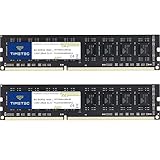 Timetec 16GB KIT(2x8GB) DDR3L / DDR3 1600MHz (DDR3L-1600) PC3L-12800 / PC3-12800 Non-ECC Unbuffered 1.35V/1.5V CL11 2Rx8 Dual Rank 240 Pin UDIMM Desktop PC Computer Memory RAM(SDRAM) Module Upgrade
- [Color] PCB color may vary (black or green) depending on production batch. Quality and performance remain consistent across all Timetec products.
- DDR3L / DDR3 1600MHz PC3L-12800 / PC3-12800 240-Pin Unbuffered Non-ECC 1.35V / 1.5V CL11 Dual Rank 2Rx8 based 512x8
- Module Size: 16GB KIT(2x8GB Modules) Package: 2x8GB ; JEDEC standard 1.35V, this is a dual voltage piece and can operate at 1.35V or 1.5V
- For DDR3 Desktop Compatible with Intel and AMD CPU, Not for Laptop
- Guaranteed Lifetime warranty from Purchase Date and Free technical support based on United States
Performance Monitor can help determine whether a leak pattern exists before you trace its source. Confirm a persistent trend before moving to more advanced investigation.
Special offer. See more information about Outbyte and uninstall instructions. Please review EULA and Privacy policy. -
Use RAMMap when the process list does not explain physical RAM
RAMMap is Microsoft’s advanced physical-memory analysis utility. Its views show usage by type, process working sets, priority and standby summary, physical-page use, and file data held in RAM. It can refresh the display and save or load snapshots.
Rank #3
 G.SKILL RipjawsV Series DDR4 RAM (XMP) 16GB (2x8GB) Up to 3200MT/s* CL16-18-18-38 1.35V Intel AMD Desktop Computer Memory U-DIMM - Black (F4-3200C16D-16GVKB)
- Requires overclocking/BIOS adjustments. Maximum speed and performance depends on system components, including motherboard and CPU.
- G.SKILL RipjawsV Series DDR4 U-DIMM Memory Kit, Model: F4-3200C16D-16GVKB
- Non-ECC, DDR4 U-DIMM, 288-pin, for Desktop PC & Gaming
- Includes JEDEC default profile, and Intel XMP memory overclock profile
- Do not mix memory kits. Memory kits are sold in matched kits that are designed to run together as a set. Mixing memory kits will result in stability issues or system failure.
Take a snapshot during normal operation and another during the slowdown. Record the time and active workload with each snapshot so you can compare which allocation categories changed. RAMMap helps locate where physical memory is assigned; it does not, by itself, prove that a particular allocation is a leak.
Microsoft lists RAMMap for Windows Vista and later client editions and Windows Server 2008 and later server editions on its page, last updated March 26, 2026. Check the live page for current support and interface details.
Rank #4
 Crucial 32GB DDR5 RAM Kit (2x16GB), 5600MHz (or 5200MHz or 4800MHz) Laptop Memory 262-Pin SODIMM, Compatible with Intel Core and AMD Ryzen 7000, Black - CT2K16G56C46S5
- Boosts System Performance: 32GB DDR5 RAM laptop memory kit (2x16GB) that operates at 5600MHz, 5200MHz, or 4800MHz to improve multitasking and system responsiveness for smoother performance
- Accelerated gaming performance: Every millisecond gained in fast-paced gameplay counts—power through heavy workloads and benefit from versatile downclocking and higher frame rates
- Optimized DDR5 compatibility: Best for 12th Gen Intel Core and AMD Ryzen 7000 Series processors — Intel XMP 3.0 and AMD EXPO also supported on the same RAM module
- Trusted Micron Quality: Backed by 42 years of memory expertise, this DDR5 RAM is rigorously tested at both component and module levels, ensuring top performance and reliability
- ECC Type = Non-ECC, Form Factor = SODIMM, Pin Count = 262-Pin, PC Speed = PC5-44800, Voltage = 1.1V, Rank And Configuration = 1Rx8
-
Investigate a process only when evidence points to one
If the trend implicates an application or service, VMMap can help determine which types of memory that process is using. For deeper analysis, Microsoft recommends Windows Performance Toolkit: Windows Performance Recorder (WPR) collects data, and Windows Performance Analyzer (WPA) analyzes it.
Special offer. See more information about Outbyte and uninstall instructions. Please review EULA and Privacy policy.Tracing allocation behavior is advanced troubleshooting, not a routine first step. Microsoft’s application and service guidance covers supported Windows client and Windows Server systems. Some deeper tracing examples require administrator access, and heap tracing may require a registry setting. Follow the relevant Microsoft instructions carefully rather than changing tracing settings speculatively.
-
Keep application and kernel or driver investigations separate
Microsoft distinguishes user-mode leaks in applications from kernel-mode leaks involving drivers or Windows components. A high memory reading does not identify which path applies. Use the process evidence and system-wide allocation data to narrow the investigation, then follow the matching troubleshooting path. Do not disable random services or drivers based on suspicion alone.
Which Windows tool answers which question?
| Tool | Use it to |
|---|---|
| Task Manager | Get an initial process and resource view; inspect Commit size when checking virtual-memory use. |
| Performance Monitor | Check whether a leak pattern exists before tracing its source. |
| RAMMap | Examine system-wide physical-memory allocation, including process working sets and file data. |
| VMMap | Inspect memory types for a process already implicated by evidence. |
| Windows Performance Toolkit (WPR and WPA) | Collect and analyze process allocation traces for deeper investigation. |
What to do once you have evidence
- For ordinary, avoidable load: close apps or browser tabs you genuinely do not need, then check whether memory pressure improves.
- For a likely application or service leak: use the process-focused tools to identify the kind of memory growing and collect trace data if needed. Escalate advanced tracing carefully, especially when it requires administrator access or a registry change.
- For a suspected driver or kernel issue: pursue the kernel-mode troubleshooting path rather than assuming the largest visible app is at fault.
- For broader slowdowns: consider other causes Microsoft lists, including startup activity, outdated software, low storage, malware, or older hardware. Memory is not the only reason a PC can feel slow.
- For a possible RAM upgrade: consider it only if the normal workload exceeds available memory and the specific device supports an upgrade. Compatibility depends on the PC; without its make and model, no particular memory module can be identified. Microsoft notes that an upgrade may be a long-term option for older PCs whose hardware no longer meets current performance needs, not a diagnosis of a leak.
Microsoft’s performance guidance notes that Windows 10 support ended on October 14, 2025. Check the current support status for your Windows version when following OS-specific instructions.
Quick Recap
Product prices and availability are accurate as of the date/time indicated and are subject to change. Any price and availability information displayed on Amazon at the time of purchase will apply.

