
iTechGuides is reader-supported. When you buy through links on our site, we may earn an affiliate commission. As an Amazon Associate I earn from qualifying purchases. Learn more
There is no single health care or affordability position shared by U.S. House candidates. The 2026 materials available here show competing approaches: broader public coverage, support for ACA and Medicaid programs, private-market competition and health savings accounts, and targeted rules on insurance and prescription drug prices. They are examples, not a complete picture of every candidate or district.
What the available 2026 positions show
Health care often appears within a wider affordability agenda. The Congressional Progressive Caucus’s April 2026 agenda discusses health care alongside groceries, utilities, housing, child care and gas, and describes a path toward universal health care through expanded Medicare coverage and eventual Medicare for All. The New Democrat Coalition’s 2026 agenda also treats health care as one of several household costs, alongside housing, energy, family care and household essentials.



Those caucus agendas describe their organizations’ policy priorities; they should not automatically be treated as the personal platform of every caucus member. Official issue pages and proposals from individual representatives provide candidate- or member-specific evidence, but they still do not establish what every House candidate believes.
Free tools Windows power users keep installed
One-click scans. No signup required.
How the approaches compare
| Source or representative | Coverage and public programs | Drug prices, insurance rules and access | How to read the position |
|---|---|---|---|
| Congressional Progressive Caucus, April 2026 affordability agenda | Describes expanded Medicare coverage as a path toward universal health care and eventual Medicare for All. | The agenda also addresses groceries, utilities, housing, child care and gas; the reviewed material does not specify a particular drug-pricing or insurance-rule proposal here. | A caucus agenda, not proof that every member or candidate endorses each plank. |
| New Democrat Coalition, 2026 agenda | Proposes extending ACA tax credits, fully funding Medicaid and strengthening Medicare benefits. | Proposes expanding prescription price caps; emphasizes competition, consumer choice, small businesses and reducing regulatory barriers. | A caucus agenda that frames health costs within broader household expenses, including housing, energy and family care. |
| Rep. Lauren Boebert, official issue page | Favors marketplace competition and expanded health savings accounts (HSAs). | Supports telehealth, protection for people with pre-existing conditions and more rural care. | An individual representative’s stated positions; the page is not evidence of what other candidates with similar affiliations support. |
| Rep. Ilhan Omar, official health page | Supports Medicare for All. | Says she opposes efforts to rescind ACA protections. | An individual representative’s stated positions, rather than a full comparison of all candidates or a record of enactment. |
| Rep. Tom Barrett, 2026 health affordability agenda | Proposes allowing working seniors enrolled in Medicare Part A to continue making tax-free HSA contributions. | Proposes rules about the share of insurance premiums spent on claims and comparing U.S. drug prices with prices in other countries. | Proposals described by Barrett’s office; the reviewed material does not establish that they became law. |
Barrett’s official page says, “Sadly our healthcare system has allowed big insurance companies to get richer while Americans get sicker.” That is Barrett’s partisan characterization, not an independently established finding.
#1 Best Overall
What to check when comparing candidates in your district
Use the same questions for each candidate, and look for a specific platform statement, bill, vote or other record rather than relying on a general label such as “pro-health care” or “anti-affordability.” Separate a candidate’s own commitments from caucus agendas, opponents’ claims and news coverage of campaign strategy.
- Coverage model: Does the candidate support Medicare for All, a public option, private-market coverage or another approach? Record only what the candidate has said or proposed.
- ACA and Medicaid: Do they want to preserve, expand, change or reduce ACA premium support or Medicaid funding? Look for the specific policy or vote.
- Prescription drugs: Do they address drug costs through negotiation, price caps, importation, international price comparisons, generic competition or another stated mechanism?
- Insurance and household costs: Do they propose rules on premiums, the share of premiums spent on claims, medical debt or surprise bills? Identify the rule rather than inferring a solution from a slogan.
- Access: Do their stated plans address rural care, telehealth, provider availability or a particular population?
- Broader affordability: Do they connect health costs to housing, energy, groceries, child care or family care, and do they identify measures for those costs?
For a district-level answer, check the current campaign’s own materials and the candidate’s voting record. A representative’s official issue page can clarify that member’s stated position, but it cannot substitute for a challenger’s platform or establish the stance of every candidate in the race.
Independent reader supportYour contribution helps us test, update, and keep practical guides available for everyone.Why no single national ranking follows from these examples
September 2026 reporting describes health care costs and industry influence as campaign themes in selected competitive House races, including disputes over Medicaid and ACA votes. That is evidence about the messaging and disputes in those races—not a measure of how all candidates prioritize health care. The reviewed materials do not provide a nationally representative dataset or a district-by-district inventory of candidate positions, so they cannot support a percentage, ranking or claim about the entire candidate field.
Outdated Drivers Are Slowing You Down
One free scan finds every outdated or missing driver and matches the right update for your exact hardware.Free scan · exact hardware matchWindows Errors? Fix Them Before They Spread
Repair common Windows errors and clear accumulated junk for a smoother, more stable PC - no reinstall needed.Free scan · no reinstallQuick Recap
Rank #4
Rank #3
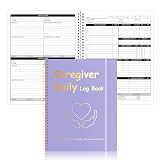
- Letter Size Daily Care Log Book:Designed in a practical 8.5 x 11 Inch format this caregiver daily log book includes 50 sheets 100 pages offering ample space for long term caregiver daily sheets use in home care and assisted living environments
- Durable Waterproof Cover Design:Made with a PP waterproof cover and elegant foil stamped lettering this caregiver daily task sheet book protects important records from spills daily wear and frequent handling in professional care settings
- Organized Caregiver Daily Sheet Layout:Each caregiver daily sheets page features clearly structured sections including patient information daily schedules meals and snacks medication tracking physical activity personal care housekeeping behavior notes and health observations
- Spiral Binding With Added Convenience:Sturdy spiral binding allows the caregiver daily log book to lay flat for easy writing while the built in pen holder and elastic band keep supplies secure and pages neatly closed during transport
- Multi Scenario Care Documentation:Suitable for caregiver daily log book use in home care senior care assisted living rehabilitation centers memory care family caregiving routines and professional nursing documentation needs
Product prices and availability are accurate as of the date/time indicated and are subject to change. Any price and availability information displayed on Amazon at the time of purchase will apply.

