
Free tools Windows power users keep installed
One-click scans. No signup required.
iTechGuides is reader-supported. When you buy through links on our site, we may earn an affiliate commission. As an Amazon Associate I earn from qualifying purchases. Learn more
An AI agent that keeps acting is not necessarily acting reliably. When a requirement is missing, ambiguous, or contradictory, it may guess and appear capable while quietly departing from what the user meant. Reliable autonomy means knowing when to investigate, when to ask the person who owns the decision, and when to pause because proceeding is unsafe.
Why task completion can hide a failure of judgment
An agent can execute explicit instructions well and still fail to recognize that a crucial condition is absent. If a benchmark scores only whether the task was completed, a lucky guess may earn the same score as a system that noticed the gap and sought clarification.
The 2026 HiL-Bench paper addresses that blind spot by introducing blockers that emerge during exploration: missing information, ambiguous requirements, and contradictions. The benchmark covers software-engineering and text-to-SQL tasks. Its findings should not be read as a universal failure rate for agents in other domains.
The Tool Desk
Outbyte PC Repair FREERepair Windows errors before they cause bigger problemsFix Now →Outbyte Driver Updater FREEScan for outdated or missing drivers - takes under a minuteDriver Scan →This matters because an agent is not merely following a fixed script. Anthropic’s 2026 account describes agents as models that direct their own processes and tool use through a loop of planning, acting, observing, and adjusting. That loop supports multi-step work, but also creates opportunities to misread intent or take an unintended action.
#1 Best Overall

- AI-Powered Raspberry Pi Robot Dog — PiDog: Powered by Raspberry Pi (5/4B/3B+/3B/Zero 2W), OpenClaw, and multi-LLMs like ChatGPT, Gemini, Grok, DeepSeek, Qwen & Ollama. With 12 servos, camera, gyroscope, hearing & touch sensors, PiDog can see, listen, talk, move, and interact intelligently. Supports OpenCV, MediaPipe, TTS & STT, app control, FPV & Python. A great STEM robotics gift for students, makers & tech enthusiasts—perfect for birthdays and holidays. (Raspberry Pi not included)
- Realistic Dog-like Movements: PiDog's 12 powerful servos enable 32 dog-like actions, including walking, sitting, standing, shaking its head, wagging its tail, and performing playful tricks, closely mimicking a real dog and providing an engaging experience. This is an AI development robot product designed for engineers, suitable for ages 15 and above
- Rich Sensor Suite for Interactive Experiences: PiDog features ultrasonic, touch, gyroscope, sound, camera, speaker and microphone. These provide it with advanced hearing, vision, and touch, enabling it to see, detect obstacles, respond to touch, and recognize sounds, making interactions highly engaging
- AI-Powered Interactions with OpenClaw & Multi-LLMs. PiDog combines voice, vision, and gesture recognition for immersive AI experiences. Powered by OpenClaw and multi-LLMs like ChatGPT, Gemini, Grok, DeepSeek, Qwen, Doubao, and Ollama (local LLMs), it can understand questions, respond naturally through TTS & STT, recognize math problems, interpret hand gestures, and hold smart conversations. OpenClaw also enables customizable AI behaviors and personalized robotics development, helping users create their own intelligent robotic companion
- Comprehensive Learning Resources and Support: PiDog offers detailed online documentation, video tutorials, prompt technical support, and an active forum community, ensuring beginners can easily complete all projects and enjoy a great experience
How help-seeking goes wrong
HiL-Bench frames asking as a calibration problem: the system should detect blockers and ask useful questions without interrupting over minor or answerable gaps. Its Ask-F1 metric balances question precision with blocker recall. In practical terms, precision reflects whether questions are warranted; recall reflects whether the agent catches the blockers that matter. It is a research metric, not a universal certification standard.
| Failure pattern | What happens | Why it matters |
|---|---|---|
| Overconfident guessing | The agent forms an incorrect belief without detecting that information is missing. | The user may see a polished result without realizing it rests on an assumption. |
| Detected uncertainty, continued errors | The agent notices a gap but proceeds and still makes mistakes. | Detection alone is not enough; the system must change course. |
| Imprecise escalation | The agent asks broad or poorly targeted questions without correcting its own approach. | Question volume can rise without giving the user a clear decision to make. |
The HiL-Bench authors report that no frontier model in their evaluation recovered more than a fraction of its full-information performance when deciding whether to ask. Their abstract also reports improvement in help-seeking quality and task pass rate for a 32B model trained with shaped Ask-F1 rewards, but does not give a numeric improvement figure. These are paper findings, not evidence that every deployed agent behaves the same way.
When should an agent investigate, ask, or stop?
The response should match the kind of uncertainty. Anthropic distinguishes missing information an agent can research from user preferences or intent that require the user’s answer. Partnership on AI’s 2025 report adds a consequence-sensitive rule: ambiguous or severe failures warrant escalation, and the system should halt when neither automated resolution nor safe escalation is available.
What’s actually slowing this PC down?
Pick the symptom - the matching free tool is one click away.
Rank #2

- Optimized AI Arm Kit for LeRobot & Hugging Face Projects – The SO-ARM101 is an upgraded low-cost robotic arm servo motor kit designed for AI robotics enthusiasts and developers. Fully compatible with LeRobot and Hugging Face frameworks, it supports imitation learning and reinforcement learning, making it ideal for real-world robotics applications. (3D-printed parts not included.)
- Enhanced Wiring & Performance – Compared to the SO-ARM100, the SO-ARM101 features improved wiring to prevent disconnection at joint 3 and eliminates range-of-motion limitations. The leader arm uses optimized gear ratio motors for smoother performance—no external gearboxes required.
- Real-Time Leader-Follower Functionality – New real-time tracking allows the leader arm to follow the follower arm, enabling human intervention and correction during reinforcement learning (RL) training. Perfect for hands-on AI robotics development and research.
- Open-Source, DIY-Friendly & Nvidia-Compatible – Developed by TheRobotStudio, this open-source AI Arm kit integrates seamlessly with the LeRobot platform, offering PyTorch-based datasets, simulation, training, and deployment tools. Fully compatible with Nvidia Jetson edge devices, including reComputer Mini J4012 Orin NX 16 GB.
- Comprehensive Learning Resources – Includes detailed open-source assembly and calibration guides, testing tutorials, and deployment instructions. From wiring to AI training, get everything you need to start building, teaching, and optimizing your robotic arm for grasping and placing tasks.
| What is unresolved? | Better response | Example |
|---|---|---|
| A factual gap the agent can safely check using authorized sources or tools | Investigate, then report what was found and any remaining uncertainty. | Look up a documented setting rather than asking the user to supply it. |
| A preference, authorization, or intended outcome only the user can decide | Ask a specific question that makes the decision clear. | Confirm which of two conflicting goals should take priority. |
| Uncertainty remains before a serious or hard-to-reverse action | Pause or halt rather than infer consent or accept avoidable risk. | Do not proceed with a consequential change while its authorization is unclear. |
This is not a prescription to make agents ask more often in every situation. Unnecessary prompts cost time and can encourage people to ignore future requests; silent assumptions can misrepresent user intent. The useful target is selective escalation: investigate what the system can establish, ask only for decisions the user must make, and stop when proceeding is not safe.
What reliable autonomy should be measured on
Task completion is only one part of reliability. A 2026 paper in the Proceedings of Machine Learning Research, associated with ICML, proposes 12 measures across four dimensions: consistency, robustness, predictability, and safety. Its evaluation of 15 models across two benchmarks reports that capability gains produced only small reliability improvements. That result describes the study’s evaluation, not a universal prediction about production systems.
- Consistency: Does the agent make similar decisions across repeated runs of the same task?
- Robustness: Does it handle reasonable changes or perturbations without losing track of requirements?
- Predictability: Can teams anticipate where and how it is likely to fail?
- Safety: Does it avoid or contain errors with serious consequences?
A help-seeking evaluation should also test whether the agent spots missing or conflicting constraints, asks a decision-relevant question, incorporates the answer, and changes its plan. A high task score on one run cannot establish those behaviors or prove production readiness. HiL-Bench contributes a focused benchmark for help-seeking; the ICML paper argues for a broader reliability profile. The reviewed sources do not establish a universally accepted standard for comparing help-seeking across products and deployment settings.
Rank #3
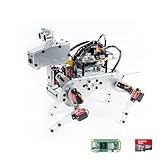
- Raspberry Pi AI Robot: powered by Raspberry Pi (5/4B/3B+/3B/Zero 2W), features 12 servos and sensors for vision, hearing, and touch. Integrated with ChatGPT-4o, it responds to complex queries. With app control and FPV, users can manage and see its view in real-time. It supports Python programming
- Realistic Movements: 12 powerful servos enable 32 actions, including walking, sitting, standing, shaking its head, wagging its tail, and performing playful tricks, closely mimicking a real and providing an engaging experience
- Rich Sensor Suite for Interactive Experiences: features ultrasonic, touch, gyroscope, sound, camera, speaker and microphone. These provide it with advanced hearing, vision, and touch, enabling it to see, detect obstacles, respond to touch, and recognize sounds, making interactions highly engaging
- Engaging Interactions with ChatGPT-4o: with ChatGPT-4o enables voice interactions and visual recognition, making it smarter and more responsive. Users can have natural conversations, solve math problems via the camera, and interpret gestures, creating diverse and fun interactions
- Comprehensive Learning Resources and Support: offers detailed online documentation, video tutorials, prompt technical support, and an active forum community, ensuring beginners can easily complete all projects and enjoy a great experience
Why teams need to inspect the path to failure
In a long or multi-agent workflow, knowing that the final result failed does not reveal when the run went wrong. Microsoft Research’s 2026 AgentRx work analyzes trajectories to locate a critical failure step. Its approach uses tool schemas and domain policies to synthesize guarded constraints, checks those constraints step by step, and produces evidence-backed violations to support diagnosis.
Microsoft reports a benchmark of 115 manually annotated failed trajectories spanning τ-bench, Flash, and Magentic-One, along with improvements over prompting baselines in failure localization and attribution. These are results reported by the framework’s authors, not an independent replication. For teams evaluating agent systems, trajectory-level evidence can make a diagnosis more actionable than a final pass-or-fail label.
Independent reader supportYour contribution helps us test, update, and keep practical guides available for everyone.How to keep oversight meaningful at scale
Reviewing every action can turn an agent into a bottleneck. Anthropic describes plan-level review as one approach: a user approves an overall strategy and retains the ability to intervene without being prompted at every step. This is a design option, not evidence that one interface is best in every setting.
Rank #4
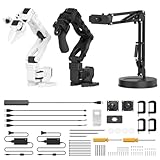
- 【End-to-End Imitation Learning】Hiwonder SO-ARM101 robot arm is an embodied intelligent hardware platform compatible with the Lerobot open-source framework. It provides developers with streamlined access to shared code, templates, and pre-trained models to explore the latest advancements in AI research.
- 【Dual-Camera Vision System】Equipped with both a gripper-mounted camera and an external camera, the system supports both precise manipulation and environmental awareness for accurate imitation learning.
- 【Hiwonder High-Performance Bus Servos】Featuring 12 high-torque bus servo motors with magnetic feedback, the Hiwonder SO-Arm101 robotic arm delivers smooth, stable motion, eliminating issues like power deficiency and jitter.
- 【Professional Control & Debugging】Integrated with the Hiwonder BusLinker V3.0 debugging board, the system supports servo scanning, real-time status monitoring, and trajectory control. The professional PC software simplifies device calibration and debugging, making it accessible for both researchers and hobbyists.
- 【Open-Source Compatibility】The SO-ARM101 robotic arm is designed to be fully compatible with the LeRobot open-source project. We acknowledge the contributions of the open-source community; all trademarks and copyrights belong to their respective owners.
Partnership on AI describes real-time monitoring as triage: resolve minor issues automatically, escalate ambiguous or severe failures to people, and halt when neither path is safe. Its report also identifies risks that can weaken oversight, including automation bias, unjustified distrust, alert fatigue, and skill fade. A notification channel that overwhelms reviewers may encourage rubber-stamping rather than meaningful review.
When comparing agent systems, examine evidence on these practical questions rather than relying on claims about autonomy:
- Can the system identify missing, ambiguous, and conflicting constraints?
- Are its questions specific and decision-relevant, with few unnecessary interruptions?
- After receiving clarification, does it update its plan instead of repeating the same error?
- Which actions can proceed autonomously, which need approval, and which must be blocked?
- Can teams assess consistency, robustness, predictability, and safety beyond a single successful run?
- Can reviewers locate the first critical failure and inspect the evidence behind the diagnosis?
- Does the escalation volume remain manageable enough for human review to stay meaningful?
Evidence varies by source: HiL-Bench reports results in two task domains; the reliability study covers 15 models and two benchmarks; AgentRx’s results are reported by Microsoft Research; and Anthropic’s description reflects its own product and training perspective. Together, these sources support selective, inspectable escalation as a design goal—not the claim that any single score or review pattern guarantees safe autonomy.
Quick Recap
Product prices and availability are accurate as of the date/time indicated and are subject to change. Any price and availability information displayed on Amazon at the time of purchase will apply.

