
Outdated Drivers Are Slowing You Down
One free scan finds every outdated or missing driver and matches the right update for your exact hardware.Free scan · exact hardware matchWindows Errors? Fix Them Before They Spread
Repair common Windows errors and clear accumulated junk for a smoother, more stable PC - no reinstall needed.Free scan · no reinstalliTechGuides is reader-supported. When you buy through links on our site, we may earn an affiliate commission. As an Amazon Associate I earn from qualifying purchases. Learn more
The first influential artificial-neuron model was the McCulloch–Pitts neuron, proposed by Warren S. McCulloch and Walter Pitts in 1943. It represented neural activity with logical rules and threshold-based firing. It was a theoretical model, not a modern neural-network unit trained on data.
What does “first AI neuron” mean?
“First AI neuron” is shorthand for the earliest influential formal model of an artificial neuron in the standard history of neural networks. McCulloch and Pitts introduced their account in “A Logical Calculus of the Ideas Immanent in Nervous Activity,” applying propositional logic to neural events and their relationships. The milestone concerns artificial-neuron and computational models of nervous activity; it does not mean that all of artificial intelligence began in 1943.
The authors’ abstract states: “Because of the ‘all-or-none’ character of nervous activity, neural events and the relations among them can be treated by means of propositional logic.” Read the 1943 paper.
How did the McCulloch–Pitts neuron work?
The model described neural activity through logical relationships, including excitatory and inhibitory inputs and assumptions about when activity occurs. A simplified textbook diagram represents inputs as binary values, sums them, and compares the result with a threshold. The unit then produces a binary output: firing or not firing. That diagram is a useful introduction, not a complete specification of every detail in the original account.
#1 Best Overall
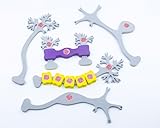
- Distinguish between multipolar, bipolar, unipolar neurons and interneurons
- Add myelin sheath pieces to explore two types of neuroglia in our nervous systems
- Examine the overall effect on neuronal firing at excitatory and inhibitory synapses
This threshold-and-binary-output picture helps explain why the model is often called a threshold logic unit. Its purpose was to formalize patterns of neural activity, rather than to describe a present-day system learning its connection weights from a dataset.
How was the perceptron different?
The perceptron is a later, related artificial-neuron model, not another name for the 1943 McCulloch–Pitts unit. A scholarly review dates Frank Rosenblatt’s perceptron to 1958. The distinction matters because the perceptron belongs to a later development in which learning and adjustments to model parameters play a role; the earlier McCulloch–Pitts account is commonly presented with predefined logical rules and thresholds.
Rank #2

- 2,500X Enlarged Model of a typical Neuron
- An excellent model to study the internal structures of the cell body
- The myelin sheath with nodes of Ranvier and Schwann cells can be revealed by removing a part of the dendrite
- Mounted on a base
- Perfect for students and teachers
| Feature | McCulloch–Pitts neuron | Perceptron |
|---|---|---|
| Historical date | 1943 | 1958, according to a scholarly review |
| Basic role | Formal logical model of neural activity | Later related model associated with learning |
| Threshold and parameters | Often described with a predefined threshold | Later development with learning-related adjustment |
| Common introductory output | Binary: firing or not firing | Depends on the particular presentation; introductory diagrams are not a full specification |
These are historical distinctions, not a claim that one introductory diagram fully captures either model. For context on neural-network history, see the review “Neural networks for perceptual processing: from simulation tools to theories” and the historical account “Modeling the Evolution of Complex Genetic Systems: The Gene Network Family Tree.”
Free tools Windows power users keep installed
One-click scans. No signup required.
Why is the 1943 model still important?
The McCulloch–Pitts neuron showed how a formal unit could represent neural events through logic and threshold behavior. It became a foundational reference point for later artificial-neuron models. Its historical importance should be kept in perspective: neural networks as understood today were not already in place in 1943, and the later perceptron represents a distinct step in that development.
Rank #3

- 【Design】: The neuron model under the electron amplification consists of two parts: the neuron body and the magnified nerve fiber structure
- 【Occasion】: Neuron Anatomy Model is great for teaching tool, learning display, and collectibles
- 【Teaching aids】: The anatomical model is great for science education, medical neuron teaching display, student learning, communication
- 【Neuronal Model】:The Neuronal Model also shows the structure of nerve axons, dendrites, neurofilaments and microtubules
- 【Material】: The upgraded imported PVC material is selected, which is not fragile, light, and sturdy
For further context on artificial-neuron models, consult the university-hosted “Deep Learning” thesis and the Boron thesis on computational tools and artificial neurons.
Quick Recap
Best Value
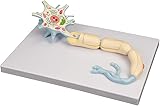
- Magnified more than 2500 times and fully three-dimensional, a neuron model is depicted in its natural setting.
- With the membranous envelope cut away, the cytological ultrastructure, organelles and inclusions within the cell body are depicted in contrasting colors.
- A section of the axon lifts off to expose the enveloping myelin sheath and neuro-lemma, as well as the Schwann cell that formed them.Dendrites of the neuron extend into the background, and synaptic vesicles carrying neurotransmitters can be seen via a cutaway view.
- Adopt Environmentally Friendly Pvc, Imported Paint, Computer Color Matching, Hand-painted, 2500 Times, 38cm High, 53m Wide, 13cm Deep.
- Educational tools products provide quality education for students / teachers / professors to use them effectively and quickly and help to better understand and practice.
Rank #4

- The Axis Scientific Two-Part Neuron Model offers an in-depth, enlarged view of a single neuron, including clearly defined dendrites, axon, and synapse. Designed for students and instructors, this model simplifies the complexities of neural function, making it ideal for biology classes, neuroscience courses, and anatomy labs.
- This scientifically accurate neuron model features a two-part design that highlights the internal and external anatomy of a nerve cell, including the cell body, nucleus, myelin sheath, axon terminals, and dendritic structure. It's an essential tool for neuroscience professionals, medical students, and researchers studying the nervous system at the cellular level.
- Built for hands-on learning and visual demonstrations, the Axis Scientific Neuron Model allows users to explore and identify neuron anatomy in detail. The removable parts make it perfect for interactive lessons, anatomy skill labs, or training workshops focused on neural communication and synaptic function.
- Help students and patients visualize how nerve cells work with this easy-to-understand, two-part neuron model. With enlarged features and labeled components, it's ideal for explaining topics such as signal transmission, neurodegenerative conditions, or brain-to-body communication in a clear and accessible way.
- Enhance your classroom, clinic, or exhibit with this durable and detailed neuron figure. The Axis Scientific Two-Part Neuron Model offers a striking visual aid to support lessons on the nervous system, making it an excellent addition to any educational or medical display setup.
Product prices and availability are accurate as of the date/time indicated and are subject to change. Any price and availability information displayed on Amazon at the time of purchase will apply.

