
Crashes, No Sound, or Screen Glitches?
Random freezes, missing sound and display glitches usually trace back to one bad driver. Find and replace yours safely.Free scan · under a minutePC Slower Than It Used to Be?
A free scan shows the junk files, broken settings and background clutter dragging Windows down - then fixes them in one click.Free scan · Windows 10 & 11iTechGuides is reader-supported. When you buy through links on our site, we may earn an affiliate commission. As an Amazon Associate I earn from qualifying purchases. Learn more
Photograph the specimen, record exactly where and how you found it, and arrange an in-person examination by a local geology or mineral expert. A striking appearance or online photo cannot reliably establish what a specimen is—or what it is worth. Before removing, keeping, or selling it, check the rules for the location and type of find.
What should you do first?
- Leave it unchanged for now. Avoid breaking, polishing, acid testing, or otherwise altering a specimen that might be unusual. An expert may need to examine its original surfaces and condition.
- Photograph it carefully. Take clear pictures of the entire specimen and close-ups of distinctive features. Add a ruler or other size reference, use indirect natural light, and place it against a plain, neutral background. These are among the image tips provided by the California Geological Survey’s Ask Rocky service.
- Write down the context. Record the exact location and date, what material or exposure was nearby, and whether the specimen was loose or embedded. Location details can help with identification, according to the California Geological Survey.
- Check access and collecting rules before moving it. The rules may depend on the country or region, land ownership, protected status, and whether the find is geological or falls into a separately regulated category.
How can someone identify a rock or mineral?
Ask someone who can examine the specimen in person. The U.S. Geological Survey says that rocks and minerals “must be examined in person from all perspectives for accurate identification; they are extremely difficult to identify through photographs.” A photo is useful for an initial enquiry, but it is not a dependable substitute for hands-on examination.
Possible local contacts include a state geological survey, natural science museum, college or university geology department, rock shop, gem and mineral or rockhounding club, or vendors at a gem and mineral show. These are examples listed by the U.S. Geological Survey. Check each organization’s current intake instructions before visiting or mailing a specimen: policies vary, and some accept only online enquiries or have restrictions on submissions. The California Geological Survey, for example, accepts questions through its Ask Rocky portal.
A 10× jeweler’s loupe or geology hand lens may help you inspect surface details, but it cannot confirm a specimen’s identity or value. Treat any close visual inspection as a way to gather observations for an expert, not as a definitive test.
#1 Best Overall

- Mineral and Rock Collection Box for Kids: Dive into geology with this rocks and minerals kit featuring 30 real specimens, perfect for young explorers eager to learn while building their very own collection through hands-on discovery and observation.
- Hands-On Geology Adventure: Spark a love for science with this rock and mineral kit, equipped with tools to test, classify, and identify samples, transforming learning into an engaging rock science kit experience for curious minds.
- Interactive Educational Experience: Discover geology using a rock identification kit and mineral identification kit with streak plate, hardness tools, and viewer, making it easy to compare specimens and understand their unique properties.
- Effortlessly Organized Collection: Use this mineral testing kit and rock and mineral identification kit to sort and store specimens in durable trays, keeping materials accessible while supporting structured learning and repeated exploration.
- Perfect for Young Geologists: Designed for ages 8–12, this mineral science kit for kids supports home and classroom learning, ideal for rock samples for science classroom activities and interactive group education environments.
Is identification the same as an appraisal?
No. Identification addresses what a specimen may be; an appraisal or valuation estimates its worth for a relevant purpose. A geological identification alone does not establish a market price. Value may depend on factors such as quality, size, condition, rarity, and provenance, and the appropriate evaluator depends on what the specimen turns out to be.
The California Geological Survey says it cannot estimate specimen values or provide appraisals. The South Australian Museum likewise says it cannot value stones or jewellery and directs gemstone valuation enquiries to a jeweller. If an expert identifies your specimen as a gemstone, seek a qualified jeweller or gem professional for a separate valuation where appropriate.
Rank #2

- PROFESSIONAL GEOLOGY TOOLS: Complete mineral identification kit includes streak plates, glass plate, dropper bottle, magnet, nail, and hand lens for comprehensive rock and mineral analysis.
- MOHS HARDNESS TEST KIT: Essential geology kit enables accurate hardness testing, streak color analysis, magnetic properties assessment, and effervescence testing for field identification.
- ROCKHOUNDING TOOLS: Professional-grade equipment perfect for rock hounding enthusiasts, geology students, and educators conducting mineral classification demonstrations.
- COMPLETE GEOLOGY KIT: 7 precision instruments support comprehensive rocks and minerals identification in classroom settings, field work, and educational demonstrations.
- ROCK HOUNDING EQUIPMENT FOR ADULTS: Durable lapidary supplies designed for serious collectors, geology professionals, and science educators requiring reliable testing tools.
Do not assume that a similar-looking online listing establishes your specimen’s price. A photograph may not show whether two items match in mineral identity, quality, size, treatment, or provenance.
The Tool Desk
Outbyte Driver Updater FREEScan for outdated or missing drivers - takes under a minuteDriver Scan →Outbyte PC Repair FREERepair Windows errors before they cause bigger problemsFix Now →Do you need to report the find or get permission to keep it?
That depends on where it was found, who owns or manages the land, and what kind of object it is. Before collecting or offering it for sale, identify the country and local jurisdiction and check applicable rules. Protected land, private property, archaeological contexts, and certain historic finds may have requirements that do not apply to ordinary geological specimens. Without the find location and circumstances, no general permission or ownership conclusion can be made.
Rank #3

- YOUR FIRST ROCK COLLECTION KIT: A one-of-a-kind 54 PCS geology set featuring 9 polished gemstones, 45 raw crystals, rocks, and minerals sourced globally. Each gem stone is distinct and handpicked, 1-1.5 inches (approx. 2.5cm) in size, ensuring no two pieces are alike—an excellent starter set for rock collectors, geoscience learners, or anyone looking to kickstart a mineral rock collection.
- FUN & EDUCATIONAL ROCK GAME CARDS: Includes 54 vividly illustrated cards that function as both a rock identification kit and game cards for family time or classroom activities. This unique feature combines fun with learning, making it a perfect STEM gift idea for geological discovery.
- PROFESSIONAL MINERAL DISPLAY CASE: The organized compartment storage box with a transparent lid ensures easy sorting and showcases rocks and gemstone rocks for tumbling. A beginner-friendly, easy-to-use rock study kit, ideal for educational presentations, outdoor adventures, or creating classroom exhibits.
- COMPREHENSIVE GEOLOGY EDUCATION GUIDE: The colorful reference book breaks down each geology sample's origins, hardness, and global mining locations. This rock science kit is ideal for beginners and aligns with earth science curriculum standards while sparking curiosity through engaging visuals and detailed explanations.
- PREMIUM ROCKS & MINERALS GIFT COLLECTION: Whether you’re starting a new hobby or fueling a passion for STEM learning, this rock collection box is perfect for special occasions like birthdays and holidays. PIBEX delivers high-quality science toys designed to inspire exploration. Unsatisfied? Let us know, and we'll make it right.
For example, in England and Wales, GOV.UK’s treasure guidance says qualifying treasure must be reported to a local Finds Liaison Officer within 14 days. Wreck material follows a separate reporting process and deadline. These rules apply to defined categories, not to every rock or mineral; Scotland and Northern Ireland have different rules.
Independent reader supportYour contribution helps us test, update, and keep practical guides available for everyone.What if you think it might be a meteorite?
Keep the identification tentative and seek in-person examination. A magnet, apparent heaviness, surface shape, holes or voids, or a photograph may provide observations, but none confirms that an object is a meteorite. The U.S. Geological Survey says potential meteorites need in-person examination for proper identification; the South Australian Museum describes visual and magnetic clues as preliminary observations rather than confirmation.
Rank #4
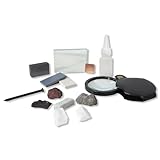
- Complete Mineral Testing Kit: Includes 13 essential tools like a dropper bottle, streak plate, glass plate, nail, copper sheet, retractable hand lens, magnet, and mineral samples (talc, coal, magnetic iron ore, gypsum, hematite, calcite) for hands-on geology experiments.
- Test Hardness & Streak Colors: Use talc, gypsum, and calcite with the glass streak plate to perform Mohs hardness tests. Scratch coal and hematite on the streak plate to reveal distinct
- Magnet & Effervescence Tests: Detect magnetic properties with the included magnet and magnetic iron ore. Conduct acid reaction tests using the dropper bottle and calcite (add vinegar or diluted hydrochloric acid* for fizzy results).
- Portable & Detailed Analysis: Retractable hand lens allows for close-up mineral inspections, while the foldable design and durable materials make this kit ideal for fieldwork, classrooms, or home labs.
- Perfect for Learning: Designed for students, teachers, and rock hounds! Includes rocks, tools, and step-by-step guidance to explore geology principles like luster, cleavage, and mineral reactions.
When asking for help, share the specimen’s photographs, exact find location, date, and whether it was loose or embedded. Do not perform destructive tests before an expert has had a chance to examine it.
What’s actually slowing this PC down?
Pick the symptom - the matching free tool is one click away.
Quick Recap
Best Value

- Explore the wonders of the natural world and unlock the mysteries of common minerals with the Toysmith Mineral Science
- Encourage youthful curiosity in geology with this hands-on natural science activity
- Identify 15 different mineral specimens using a magnifying glass and detailed identification guide
- The kit includes 15 mineral specimens, a magnifying viewer and an identification guide
- Recommended for ages 8 and up
Product prices and availability are accurate as of the date/time indicated and are subject to change. Any price and availability information displayed on Amazon at the time of purchase will apply.

