
Quick wins for a faster PC:
Fix the driver behind crashes, sound loss and screen glitchesFind Drivers →Clear out junk files and repair common Windows errorsFree Scan →Scan for outdated or missing drivers - takes under a minuteDriver Scan →iTechGuides is reader-supported. When you buy through links on our site, we may earn an affiliate commission. As an Amazon Associate I earn from qualifying purchases. Learn more
Do not enter a flood-damaged home until local authorities or qualified professionals say it is safe. Once you have the all-clear, document damage and contact your insurer before cleanup, then protect people, remove water and unsalvageable materials, dry and clean the home, and follow local instructions before moving back in.
1. Wait for the all-clear before returning
Follow evacuation orders and wait until authorities or qualified professionals confirm that returning is safe. An apparently calm home can still have unstable floors or walls, damaged electrical or gas systems, or contaminated water and sewage.
- Look for sagging floors or ceilings, leaning walls, shifting debris, and other signs of structural damage from a safe location. Do not enter if the building appears unstable; ask local officials or a qualified professional to assess it.
- Do not touch wet electrical equipment, switches, or wiring, and do not stand in water near electrical equipment. If power may be on or electrical systems were flooded, contact the utility or a qualified electrician before entry or use.
- If you smell gas or suspect a damaged gas line, leave the area and contact emergency services or the gas utility from a safe location. Do not operate switches or use a flame.
- Do not wade through floodwater. It may contain sewage, chemicals, and hidden debris, and damaged electrical lines can make it dangerous.
- Ask local officials and utility providers about water and sewer safety, utility restoration, waste disposal, permits, and any continuing evacuation restrictions.
FEMA’s flood safety guidance and the EPA’s flooded-homes cleanup guidance describe hazards to check for, but local incident instructions take priority.
Free tools Windows power users keep installed
One-click scans. No signup required.
2. Document damage and contact your insurer
Before removing damaged property or starting cleanup, contact your insurer and ask what documentation and claim steps your policy requires. Coverage and claim decisions depend on the policy. Ready.gov notes that standard homeowners insurance does not cover flooding; some homeowners have separate flood insurance, including through the National Flood Insurance Program.
#1 Best Overall

- 【Powerful Motor with High Suction Performance】Equipped with a robust 1200W high-efficiency motor, this industrial wet/dry vacuum cleaner delivers strong 16.5 kPa vacuum pressure and 1.7 m³/min airflow (60 CFM) for rapid cleanup of water, dust, debris, sawdust, and liquid spills. Perfect for workshop, garage, auto shop, construction site, farm, and home use, it outperforms standard shop vacs with reliable, continuous-duty power. A true heavy-duty commercial vacuum built to handle demanding cleaning tasks daily
- 【Extra-Large Metal Tank 】Featuring a spacious 20 gallon / 75L heavy-duty steel bucket, this metal tank wet dry vacuum offers extended runtime without frequent emptying—perfect for large-scale cleanups. Unlike plastic tanks, the rust-resistant metal construction ensures long-term durability in harsh environments like workshops, garages, basements, and job sites. Ideal for flood cleanup, post-renovation mess, woodworking dust, and automotive spills
- 【Advanced HEPA Filtration System】Includes a premium HEPA filter that traps 99.97% of particles as small as 0.3 microns, including fine dust, pollen, and drywall powder. Ensures cleaner exhaust air and safer indoor operation—ideal for allergy sufferers, cleanrooms, or sensitive environments. Makes this HEPA shop vac perfect for home, workshop, and commercial use where air quality matters
- 【Complete 5-Piece Accessory Kit】Comes with a full set of professional tools: 1.5m hose, FB28 wet/dry floor brush, FB25 plastic brush with wheels, FC19 crevice nozzle, FC18 round brush, and FD38 metal extension tube. Easily switch between surfaces—from floors and corners to ceilings and car interiors. Plus, a 2.3-meter UL-listed power cord and 1.8M net hose inlet provide wide reach without moving the unit. One of the most versatile multi-surface wet dry vacs on the market
- 【Perfect for Home, Workshop & Commercial Use】Designed for real-world use with large rubber wheels, ergonomic handle, and low noise level (78 dB)—quieter than most industrial vacuums. The all-terrain wheels roll smoothly over concrete, gravel, and uneven floors. Operates on standard 110–120V outlet (50/60Hz)—no special voltage needed. Whether you're tackling basement floods, garage oil spills, or workshop sawdust, this commercial-grade shop vac is ready to work
- Photograph and, where useful, video each affected room, building materials, appliances, and belongings before moving or discarding them, if it is safe to do so.
- Make an itemized list of damaged or lost property. Include descriptions and any purchase information you have; do not delay urgent safety work to find receipts.
- Keep photographs of belongings you must discard, and record what was removed and when. Ask your insurer whether it needs an inspection before particular repairs or disposal.
- Save claim correspondence and receipts for emergency work or purchases. Follow the instructions and deadlines your insurer gives you.
See Ready.gov’s flood insurance information and the National Flood Insurance Program. Neither a general guide nor a photograph guarantees coverage.
3. Decide whether cleanup is safe to do yourself
Do-it-yourself cleanup may be reasonable only when the home has been cleared for entry, utilities are safe, contamination is not suspected, and the work is manageable for the people doing it. Leave hazardous, contaminated, extensive, or difficult work to qualified professionals.
Rank #2
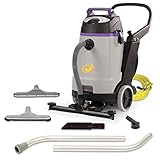
- INNOVATIVE - Wet and dry vacuum includes a front mount squeegee for easy water removal and floor stripping applications; the tip-and-pour drain port allows for quick draining
- EASY TO TRANSPORT - Unique variable wheel pattern and smooth casters allow for increased maneuverability and improved productivity on the jobsite
- LARGE MESSES - Large 20-gallon drum ensures large volume liquid pickup and durability while the Qwik Lock technology makes filter changes fast and easy without any tools
- PRODUCTIVE - Extra long 50-foot power cord and 10-foot hose help the wet dry shop vac cover more ground and clean more floor in a single pass without having to unplug
- Ideal for schools, office buildings, warehouses, bathrooms, restaurants, emergency/flood cleanup, and hard floor refinishing
| Situation | Safer next step |
|---|---|
| Sewage, chemical, or other contaminated water | Use an experienced water-damage restoration professional; consult local public-health officials about affected materials and disinfection. |
| Extensive water damage or mold covering more than about 10 square feet | Consult an experienced professional and the EPA’s more extensive remediation guidance. |
| Unsafe structure, electrical or gas hazards, or work beyond your ability | Do not proceed; get the relevant authority, utility professional, or qualified contractor to assess the hazard. |
| Small, manageable cleanup after the all-clear, with no suspected contamination | Follow protective steps, document the damage, and remove and dry materials promptly. |
The EPA’s mold remediation guidance uses about 10 square feet as a threshold for consulting more extensive guidance; it is not a guarantee that smaller jobs are safe to handle yourself. EPA does not certify flood-cleanup contractors or keep an official contractor list. When evaluating a provider, ask about relevant training, flood and mold cleanup experience, references, and how the proposed work addresses contamination and drying.
4. Protect people and set up before cleanup
Keep children out of cleanup work. People with asthma or other lung conditions, allergies, or weakened immune systems should not clean mold or enter moldy areas; seek advice from a healthcare professional if you are unsure about a health risk.
Rank #3

- RUGGED PERFORMANCE - Powerful 2-stage motor and commercial grade tools to work even in the toughest environments
- PORTABLE - Durable construction with smooth casters and ergonomic carry handle for easy transport and storage from jobsite to jobsite
- EFFICIENT - 10-gallon roto-molded drum ensures large volume liquid pickup and durability while the Qwik Lock technology makes filter changes fast and easy without any tools
- INCREASE PRODUCTIVITY - Extra long 50-foot cord, 10-foot hose and the included accessories help you cover more ground with your wet and dry vacuum cleaner
- Ideal for schools, office buildings, warehouses, bathrooms, restaurants, retail spaces, emergency/flood cleanup and other messes
For cleanup that is safe to undertake, CDC and EPA guidance recommends protective equipment such as an N95 respirator, goggles without vent holes, gloves, covered skin, and suitable waterproof boots or work shoes. PPE reduces exposure; it does not make unsafe entry or contaminated cleanup safe.
- Keep fuel-powered generators outdoors and at least 20 feet from buildings, doors, windows, and other openings. Keep them away from wet areas and follow the manufacturer’s instructions to prevent carbon monoxide poisoning.
- Never mix cleaning products or add bleach to other chemicals. Follow product labels and local public-health advice on whether disinfection is appropriate.
- Gather basic cleanup supplies such as detergent, a bucket, and a stiff-bristle brush. A wet/dry vacuum may be useful for some tasks, but do not use it to remove contaminated standing water.
See the CDC’s after-a-flood guidance and EPA’s home mold cleanup advice for protective measures and cleanup basics.
Rank #4

- ❤【LARGER CAPACITY】Stanley SL18116P Wet / Dry Vacuum has a larger capacity over 22 L, makes small clean-up jobs a breeze for you as you don’t have to empty the bucket frequently any more.Runtime: 300.0 hours
- ❤【VERSATILE & POWERFUL】Thanks to the 4 peak HP motor, this vac offers powerful enough suction needed to almost any cleanup jobs in vehicle, jobsite, workshop, garage, basement, van, house, etc
- ❤【3 in 1 FUNCTION】With this versatile vac you can vacuum both wet liquid spills and dry debris, dust, saw, dirt or blow leaves away(use blower port), just organize the hose and power cord on top handle and side wraps after using, conveniently
- ❤【FARTHER CLEANUP】With over 16 ft of cleaning reach(6 ft hose, 10 ft power cord and 3 pieces of extension wands) it’s easy to do a farther cleanup for you without unplugging the unit, while it has four swivel casters for convenient and easy manoeuvrability
- ❤【WHAT YOU GET】Stanley SL18116P Wet / Dry Vac x 1, 1-1/4"x6’ super flexible hose x 1,extension wands x 3, gulper nozzle, floor nozzle x 1,crevice nozzle x 1,foam filter x 1, dust bag x 1, reusable dry filter x 1, 12-Month Warranty
5. Remove water-damaged materials and dry promptly
After entry and utilities are safe, remove standing water and wet contents as soon as conditions allow. Dry the home and salvageable items completely and quickly. CDC advises drying the home and contents within 24–48 hours if possible; EPA warns that wet materials left for more than 24 hours can develop mold. Treat this as an urgency window, not a guarantee: materials may remain wet inside even when surfaces look dry.
- Remove standing water using a method appropriate to the water source and local guidance. Do not handle potentially contaminated water without professional advice.
- Move salvageable belongings to a safe, dry place and dry them thoroughly.
- Remove materials that cannot be cleaned and dried completely. Porous items such as carpet and ceiling tile may retain contamination or mold in their absorbent spaces and may need to be discarded.
- Photograph items before disposal when feasible, and keep a record for your insurance claim.
CDC’s floodwater cleanup fact sheet gives the 24–48-hour drying guidance. If drying cannot be completed promptly, or the affected area is extensive, consult a restoration professional.
Best Value

- LARGE CAPACITY - 15-gallon drum ensures large volume liquid pickup and durability and features a tip-and-pour drain port for quickly draining liquids
- MANEUVERABLE - Wet and dry vacuum features a unique variable wheel pattern and smooth casters allow for increased portability and improved productivity
- DURABLE - Mechanical float shut-off breaks down foam and protects motor from debris/damage for worry-free operation on the jobsite
- INNOVATIVE - Wet dry vac is loaded with accessories to tackle any job; Qwik Lock Technology makes filter changes fast and easy without tools
- Ideal for schools, office buildings, warehouses, bathrooms, restaurants, emergency/flood cleanup, and hard floor refinishing
6. Clean surfaces and assess what remains
For surfaces that can be salvaged, EPA advises cleaning with water and detergent, then drying promptly. Follow local public-health guidance for disinfection, especially if floodwater may have contained sewage or other contaminants. Do not assume an absorbent or porous item is safe to keep simply because its surface appears clean.
Once cleanup and drying are complete, inspect for visible contamination, dust, persistent musty odors, and problems with heating, ventilation, or air conditioning. Mold sampling is not usually recommended as a substitute for careful inspection; if contamination remains or you cannot tell whether the home is safe, ask a qualified professional or local health department for advice.
7. Move back in only when it is safe
Reoccupation depends on local orders and the condition of the home, not just the absence of standing water. EPA says a home is likely ready for safe reoccupation when materials that cannot be cleaned and dried have been removed, essential equipment has been replaced, the home and its contents have dried, and remaining surfaces are clean. Confirm utility safety and follow any inspections, permits, water-use advisories, or other requirements set by local officials before returning to normal use.
For incident-specific instructions, contact your local emergency-management office, health department, utility providers, and insurer. Their directions govern when hazards, water safety, waste handling, repairs, or claim procedures differ from general guidance.
Quick Recap
Product prices and availability are accurate as of the date/time indicated and are subject to change. Any price and availability information displayed on Amazon at the time of purchase will apply.

