
Outdated Drivers Are Slowing You Down
One free scan finds every outdated or missing driver and matches the right update for your exact hardware.Free scan · exact hardware matchWindows Errors? Fix Them Before They Spread
Repair common Windows errors and clear accumulated junk for a smoother, more stable PC - no reinstall needed.Free scan · no reinstalliTechGuides is reader-supported. When you buy through links on our site, we may earn an affiliate commission. As an Amazon Associate I earn from qualifying purchases. Learn more
Before your city buys or expands automated license plate reader (ALPR) cameras, ask what problem the system is meant to solve, what information it records, who can search or share it, how its use will be audited, and what the full contract costs. Request the proposed policy, contract, camera map, impact assessment, and outcome reports before the public vote. Laws and approval processes vary by jurisdiction, so local rules—not another city’s policy—determine what your city may do.
Start with what the system records and what it is for
An ALPR system can create timestamped, location-linked records of vehicle movements. Cupertino’s 2024 policy describes collecting plate images and numbers, date and time, location, and vehicle details. Alexandria says users can search by plate number or broader characteristics such as make, model, color, damage, or stickers. Those are examples of local systems, not a complete description of every product.
Questions to ask about purpose, placement, and scale
- What specific problem is this purchase or expansion intended to address?
- What evidence supports the proposed number of cameras and each proposed location?
- How will the city assess whether camera placement concentrates surveillance in particular neighborhoods? What community or equity review informed the map?
- How often will the city reconsider locations, and what evidence would lead it to move or remove a camera?
Alexandria says it considered crime patterns, transportation networks, connections to nearby jurisdictions, public-safety needs, community feedback, and race and social equity mapping when evaluating its deployment. That describes Alexandria’s stated approach; it does not guarantee that another city will use the same method or reach the same result.
Ask how the city will define and measure results
Request a written use case and a measurement plan before approval. A count of scans, alerts, or searches is not by itself evidence that a system achieved its stated public-safety goal. Ask the city to define the outcome, its denominator, the reporting period, and how it will distinguish ALPR’s contribution from other investigative work.
#1 Best Overall
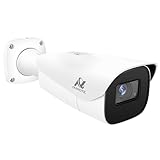
- Compatibility-- Only Work With ONWOTE TD Series NVR (PNT-808, PNA-8016-T, PNT-1232).
- LPR-- License Plate Recognition IP Network PoE Camera.
- 4MP Resolution-- 2592×1520 @30fps for sharp and fluid video.
- 1/1.8" Low-Light Image Sensor-- Ensuring clear images even in dim conditions.
- 8-32mm Motorized Varifocal Lens @F1.6 for adjustable field of view.
Questions about effectiveness
- Which outcomes will the city measure—for example, investigative leads, arrests, stolen-vehicle recovery, or missing-person cases?
- For each figure, what is the denominator: total queries, alerts, investigations, calls, or something else?
- How will the city decide whether ALPR directly contributed to an outcome rather than merely being used during an investigation?
- Will annual reporting include costs, negative or inconclusive findings, and changes to the program as well as favorable results?
How to read two cities’ reported figures
Alexandria Police Department reported 20,914 ALPR queries for August 1, 2025, through August 31, 2026. It reported that ALPR directly resulted in the recovery of 35 of the 161 stolen vehicles recovered, the seizure of 4 of the 35 firearms recovered in criminal cases, and the location of 3 missing persons. The department cautioned that these results reflect ALPR alongside other public-safety strategies.
Alameda Police Department’s 2025 report listed 649 investigative leads, 43 arrests, and 24 stolen vehicles recovered. It also reported that 36 fixed and 21 mobile cameras scanned 115,878,492 plates. These figures use different definitions and reporting periods from Alexandria’s; they should not be used to rank the cities without aligning those differences.
Get the rules for retention, access, and sharing in writing
The policy and contract should state what data the system collects, how long it is kept, who can search it, what purposes are permitted, and whether it is shared with other agencies or networks. Ask to see the operative documents rather than relying on a presentation or a general assurance about responsible use.
Questions about data and permissions
- Besides plate images, what information is collected, such as time, location, vehicle attributes, or other data?
- How long are non-hit records retained? What exceptions allow longer retention, who approves them, and how are exceptions audited?
- Which city employees, other law-enforcement agencies, state or federal agencies, and private entities can search or receive the data?
- Is the system connected to a regional, national, or vendor-operated network? Can the city disable sharing or revoke access, and how quickly?
- Can the vendor access, retain, or use city data for its own purposes? Who owns the data, and what must happen to it when the contract ends?
- Which uses are allowed or prohibited? Must users provide a reason, case number, or other authorization before searching?
Cupertino’s Resolution No. 24-094, adopted October 1, 2024, is one example of a policy specifying authorized uses and collected data. It states, “All other uses not referenced above are prohibited.” That rule is Cupertino’s policy, not a rule that automatically applies elsewhere.
Alexandria reports that Virginia law requires data to be purged after 21 days unless it is associated with an active case, and that retained investigative data is transferred out of the Flock network. The 21-day rule is described in the context of Virginia law and Alexandria’s system; it is not a nationwide retention standard. The ACLU’s 2026 guidance identifies retention, data sharing, law-enforcement use, vendor data rights, and broader network connections as policy and contract issues to examine. These are the organization’s advocacy concerns, not a statement of what every jurisdiction’s law requires.
Rank #2

- LICENSE PLATE RECOGNITION CAMERA - Features 8mm - 32mm lens for an 15° - 40° Viewing Angle. F1.6 Max Aperture, 1/1.8" 4-Megapixel CMOS Image Sensor and License Plate Recognition Distance 26.25ft - 98.43ft. Supports recognizing vehicle type, vehicle color, and license plate details. Supports IVS, Tripwire & Intrusion as well as displaying vehicle plate, vehicle path & loitering detection.
- SMARTER SECURITY – Query and review license plate details professionally on a PC using a web browser. Works with most standard web browsers however for an optimal experience it is recommended to use Microsoft Edge in IE mode as the camera may require the use of a .exe plugin. Supports storage to a MicroSD Card (up to 256GB), PC/Windows only supports SFTP, IE mode in Microsoft Edge, Firefox, Chrome (limited query options).
- ACTIVE DETERRENTS – This outdoor POE IP LPR camera features a heavy-duty metal weatherproof IP67 housing as well as 4 IR LEDs for night vision up to 98 feet, includes red/blue warning LEDs which can be used as an active deterrent. Dual H.265/H.264 compression allows for maximum encryption with the latest technology as well as backwards compatibility with legacy platforms.
- SIMPLE, RELIABLE, SECURE – This Amcrest POE camera features a secure connection. At Amcrest, we want to ensure the safety of our customers, their loved ones, homes and businesses. Compatible with the following Amcrest AI NVR's for live view purposes only: B0C381YK91, B0CDHDHPR8, B0CBL8W9NY, B0D464HMBB, B0D47X8WJJ
Ask what happens when a plate is misread or an alert is wrong
The reviewed city materials do not establish one independent accuracy rate that applies across ALPR vendors or cities. Ask for the city’s own validation and correction procedures, and do not treat a match as self-verifying.
- How does the system validate plate reads and hot-list records, and how are stale records updated?
- How are misreads and false matches reported, corrected, and communicated to affected users?
- Must an officer independently verify a match before a stop or arrest? What verification is required?
- Does the city track errors and corrections, and will it publish that information?
Make auditability specific
Ask whether every search and user action is logged, who reviews those logs, what patterns prompt follow-up, and what the public will be told. A policy that promises oversight is more useful when it names the reviewer, frequency, records checked, and possible corrective action.
- Are all searches and users logged, including searches by external agencies?
- How often are logs reviewed, and are searches checked against a case or incident record?
- Do reviews look for repeated queries, unusually high activity, or searches unrelated to assigned duties?
- Who reviews the results independently of the people operating the system?
- What errors or violations are reported to the council and public, and what corrective actions can follow?
Alexandria says an internal unit reviews employee activity every 30 days, checking search documentation and patterns such as repeated queries, unusually high volume, or activity outside assigned duties. The department states, “The ALPR system maintains a systemwide audit log documenting user activity.” Alameda describes randomly selecting at least 10 detective browsing inquiries for its annual audit and publishing a report with audit summaries and program information. These are local examples, not a uniform audit standard.
Alameda’s 2025 audit found that 9 of 10,413 searches lacked a crime code or report/incident number, an error rate of 0.086%. The city said the identified employees received training and corrective action. Ask your city whether it will publish comparable measures and explain what counts as a violation; this Alameda result does not establish another city’s error rate.
Request the full cost, contract terms, and exit plan
The purchase price alone may omit recurring services and the staff time needed to train users and oversee compliance. Request the full multiyear cost and the actual contract, including how the city can end or change the arrangement.
Rank #3

- 𝐄𝐧𝐡𝐚𝐧𝐜𝐞𝐝 𝐃𝐮𝐚𝐥-𝐂𝐚𝐦𝐞𝐫𝐚 𝐂𝐥𝐚𝐫𝐢𝐭𝐲 𝐚𝐭 𝐔𝐩 𝐭𝐨 𝟒𝟎 𝐟𝐭 (𝟏𝟐 𝐦): Capture every event around your home in ultra-clear 3K resolution. Enjoy sharp, detailed visuals with 8× zoom to see what matters most.
- 𝐒𝐨𝐥𝐚𝐫-𝐏𝐨𝐰𝐞𝐫𝐞𝐝, 𝐈𝐧𝐬𝐭𝐚𝐥𝐥 𝐎𝐧𝐜𝐞 𝐚𝐧𝐝 𝐢𝐭 𝐑𝐮𝐧𝐬 𝐅𝐨𝐫𝐞𝐯𝐞𝐫: Experience constant peace of mind with this solar-powered security camera that's easy to set up and always on, thanks to its removable solar panel.
- 𝟑𝟔𝟎° 𝐆𝐮𝐚𝐫𝐝𝐢𝐚𝐧, 𝐍𝐨 𝐁𝐥𝐢𝐧𝐝 𝐒𝐩𝐨𝐭𝐬: Say goodbye to blind spots with full home coverage by installing the product vertically. Enjoy 360° Pan & Tilt Surveillance , check your front porch, monitor your backyard, and keep an eye on the driveway with ease.
- 𝐕𝐞𝐫𝐬𝐚𝐭𝐢𝐥𝐞 𝐈𝐧𝐬𝐭𝐚𝐥𝐥𝐚𝐭𝐢𝐨𝐧, 𝐄𝐟𝐟𝐨𝐫𝐭𝐥𝐞𝐬𝐬 𝐒𝐞𝐭𝐮𝐩: Experience the convenience of a 7-minute installation with its compact size and wire-free design.
- 𝐑𝐞𝐬𝐭 𝐚𝐬𝐬𝐮𝐫𝐞𝐝 𝐬𝐞𝐫𝐯𝐢𝐜𝐞: you can enjoy a worry-free experience, all backed by our professional customer service team.
- What are the costs for installation, cameras, licensing, storage, maintenance, upgrades, training, staff time, and independent oversight?
- What are the contract length, renewal terms, price-increase provisions, cancellation rights, and data-export and deletion terms?
- If the city ends the relationship, how will it preserve records it must keep and verify that the vendor deleted data it must not retain?
- What procurement alternatives were considered, and what privacy and operational criteria were used to compare them?
Alameda reported $171,236.67 in 2025 for maintenance, upgrades, licensing, and training. Alexandria’s city page says it may stop service from its current vendor at any time, while a transition to another provider requires procurement, legal, fiscal, and implementation coordination. These examples illustrate which costs and terms to request; they do not establish another city’s price or contract rights.
Quick wins for a faster PC:
Fix the driver behind crashes, sound loss and screen glitchesFind Drivers →Repair Windows errors before they cause bigger problemsFix Now →Find out what public approval and community review apply
Approval requirements differ by city. Ask which ordinance, procurement rule, or council process governs the proposal, and whether residents will see the policy and contract before a decision is made.
- What local approval or surveillance-technology review is required before purchase or expansion?
- Will the city publish the proposed policy, impact assessment, contract, and camera map before the vote?
- How much time will residents have to comment, and will the city publish responses to substantive concerns?
- Can the council or an oversight body require changes, pause deployment, or terminate the program?
Oakland’s council record describes a local surveillance-technology review and authorization process, with policy elements covering access, sharing, retention, security, monitoring, reporting, and training. The ACLU’s Local Automatic License Plate Reader Privacy Model Bill, dated May 1, 2026, is a template for local policy discussion; it does not determine the law in another jurisdiction.
Records to request before the vote
Ask the clerk or relevant department for records in their current form, and check local public-records rules for request procedures and exemptions. A focused request can include:
- The proposed ALPR policy, impact assessment, and any revisions or related council materials.
- The draft or signed contract, including service descriptions, renewal and cancellation provisions, data ownership, sharing, export, and deletion terms.
- A map and inventory of existing and proposed cameras, with the city’s placement rationale and review criteria.
- Data-retention schedules, lists of authorized users and external recipients, and descriptions of network connections and sharing settings.
- Training materials, query-authorization rules, audit procedures, audit results, and records of corrective action in a form the city can lawfully release.
- Outcome reports with definitions, denominators, dates, and methodology, plus the full lifecycle budget and any alternatives analysis.
If the city is comparing vendors or system designs
Compare the actual proposed configurations and contract terms, not just vendor names. A change of vendor by itself does not settle how searches, retention, sharing, or deletion will work.
Do these 3 things before closing this tab:
1Clear out junk files and repair common Windows errors2Scan for outdated or missing drivers - takes under a minute3Repair Windows errors before they cause bigger problems| Compare | What to establish |
|---|---|
| Data and capabilities | What is collected and searchable, including plate images, time, location, and vehicle attributes. |
| Retention | Default retention, exceptions, approval authority, and how deletion is verified. |
| Sharing and vendor rights | Local-only or external access, network connections, controls to revoke access, and vendor use or retention of data. |
| Search controls | Permitted purposes, required authorization or case details, and prohibited uses. |
| Audits | Log availability, review frequency, reviewer independence, corrective actions, and public reporting. |
| Accuracy safeguards | Validation, independent verification, correction of false matches, and error reporting. |
| Placement and public review | Camera-location rationale, community review, and how locations will be reconsidered. |
| Lifecycle terms | Full cost, contract length, renewal, cancellation, data export and deletion, and hardware disposition. |
The ACLU’s 2026 guidance characterizes vendors including Flock, Axon, and Motorola as pursuing broader network models. Treat that as the organization’s analysis, and ask the city to document the connections and sharing settings in its own proposed system.
Quick Recap
Product prices and availability are accurate as of the date/time indicated and are subject to change. Any price and availability information displayed on Amazon at the time of purchase will apply.

