
iTechGuides is reader-supported. When you buy through links on our site, we may earn an affiliate commission. As an Amazon Associate I earn from qualifying purchases. Learn more
The 2020 U.S. Geological Survey map highlights geologic units across the conterminous United States where pyrrhotite may occur. It can help screen for possible risk, but it cannot tell you whether a particular home’s foundation or a particular aggregate source contains harmful pyrrhotite. That requires site-specific characterization and quality control.
Why pyrrhotite can damage concrete foundations
Pyrrhotite is an iron sulfide mineral. When pyrrhotite-bearing crushed stone is used as concrete aggregate, the mineral may be exposed to water and oxygen inside the concrete. It can weather and form sulfuric acid and secondary minerals, including gypsum. Those products occupy more volume than the original mineral, contributing to cracking and deterioration.
Chemistry World reported in 2020 that thousands of homes in Massachusetts and Connecticut had been damaged, attributing the estimate to the National Institute of Standards and Technology. The cited passage does not identify the underlying NIST publication, so the figure is best understood as the report’s attributed estimate rather than a verified count from a named NIST study.
What the USGS map shows
The map identifies geologic units that may host pyrrhotite across the conterminous United States. It is a national screening resource: a highlighted area indicates possible host geology, not confirmed pyrrhotite at every location or a harmful concentration in every rock source.
#1 Best Overall

- PROFESSIONAL GEOLOGY TOOLS: Complete mineral identification kit includes streak plates, glass plate, dropper bottle, magnet, nail, and hand lens for comprehensive rock and mineral analysis.
- MOHS HARDNESS TEST KIT: Essential geology kit enables accurate hardness testing, streak color analysis, magnetic properties assessment, and effervescence testing for field identification.
- ROCKHOUNDING TOOLS: Professional-grade equipment perfect for rock hounding enthusiasts, geology students, and educators conducting mineral classification demonstrations.
- COMPLETE GEOLOGY KIT: 7 precision instruments support comprehensive rocks and minerals identification in classroom settings, field work, and educational demonstrations.
- ROCK HOUNDING EQUIPMENT FOR ADULTS: Durable lapidary supplies designed for serious collectors, geology professionals, and science educators requiring reliable testing tools.
The USGS published the fact sheet on March 26, 2020, and accompanying data on June 2, 2020. These are 2020 resources; the dates alone do not establish whether a later map or update has been released.
How USGS selected candidate geologic units
USGS combined national geologic mapping data with mineral-occurrence records, then sought input from state geologists to refine candidate units. The approach considered rock descriptions and geological characteristics associated with potential host rocks, including sulfide attribution and moderate-to-high metamorphic grade. The team also compared candidate units with known occurrence locations in USGS and Mindat databases.
Rank #2
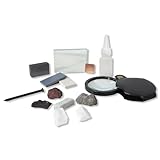
- Complete Mineral Testing Kit: Includes 13 essential tools like a dropper bottle, streak plate, glass plate, nail, copper sheet, retractable hand lens, magnet, and mineral samples (talc, coal, magnetic iron ore, gypsum, hematite, calcite) for hands-on geology experiments.
- Test Hardness & Streak Colors: Use talc, gypsum, and calcite with the glass streak plate to perform Mohs hardness tests. Scratch coal and hematite on the streak plate to reveal distinct
- Magnet & Effervescence Tests: Detect magnetic properties with the included magnet and magnetic iron ore. Conduct acid reaction tests using the dropper bottle and calcite (add vinegar or diluted hydrochloric acid* for fizzy results).
- Portable & Detailed Analysis: Retractable hand lens allows for close-up mineral inspections, while the foldable design and durable materials make this kit ideal for fieldwork, classrooms, or home labs.
- Perfect for Learning: Designed for students, teachers, and rock hounds! Includes rocks, tools, and step-by-step guidance to explore geology principles like luster, cleavage, and mineral reactions.
The underlying records have important limits. In the relevant geologic map database, pyrrhotite appeared by name 13 times, while “sulfide” or “sulfidic” appeared 106 times among more than 2,000 records. These are counts of descriptions in the database—not estimates of pyrrhotite prevalence in rock, affected homes, or harmful mineral abundance. Incomplete mapping, limited rock descriptions, and inconsistent reporting of rare minerals constrain what the map can establish.
What a map location means for a home or quarry
| Evidence | Geographic scope | What it can support |
|---|---|---|
| USGS map | National-scale geologic units | Identifies areas where host geology may occur; does not confirm mineral presence or abundance at a property or aggregate source. |
| Site-specific characterization and quality control | A particular property or aggregate source | Can assess the material or site directly; the USGS fact sheet says this work is needed to judge suitability for a particular purpose. |
A mapped unit near a home does not diagnose a foundation, and a location outside a highlighted unit is not a guarantee about the material used in that home. Likewise, the map cannot determine whether stone from a specific quarry is suitable for concrete. USGS cautions that its map and fact sheet “are no substitute for site-specific characterization and quality control programs designed to ensure that aggregate used in concrete is of appropriate quality for its intended purpose.”
Rank #3
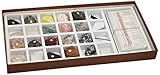
- Mineral collection contains 20 samples
- Set also includes a magnifier, streak plate, magnet, iron nail, index (sort) cards, sorting needle, and a lab manual
- Samples are 1" to 2" in size and are individual marked with numbers for easy identification
- Sorting (index) cards use a process of elimination to assist in identification
- Samples are packaged in a plastic tray
What homeowners should do with the information
- If you are assessing a particular foundation: Treat the map as regional context, not a diagnosis. Seek qualified, site-specific evaluation of the foundation and relevant materials.
- If you are evaluating an aggregate source: Ask for appropriate characterization and quality-control evidence for that source and intended use. The map does not supply a testing protocol or contaminant threshold.
- If you are interpreting a mapped area: Read it as a signal of possible host geology, not proof that pyrrhotite is present or harmful locally.
Chemistry World quoted civil engineer Sergio Cavalaro of Loughborough University: “this valuable information alone is not enough to judge the suitability of a particular aggregate, which requires appropriate testing and verification against clear limits for contaminant contents”. The map can direct attention to a possible geological concern; it does not replace the direct evidence needed for decisions about a home or aggregate source.
Quick Recap
Best Value

- Mineral and Rock Collection Box for Kids: Dive into geology with this rocks and minerals kit featuring 30 real specimens, perfect for young explorers eager to learn while building their very own collection through hands-on discovery and observation.
- Hands-On Geology Adventure: Spark a love for science with this rock and mineral kit, equipped with tools to test, classify, and identify samples, transforming learning into an engaging rock science kit experience for curious minds.
- Interactive Educational Experience: Discover geology using a rock identification kit and mineral identification kit with streak plate, hardness tools, and viewer, making it easy to compare specimens and understand their unique properties.
- Effortlessly Organized Collection: Use this mineral testing kit and rock and mineral identification kit to sort and store specimens in durable trays, keeping materials accessible while supporting structured learning and repeated exploration.
- Perfect for Young Geologists: Designed for ages 8–12, this mineral science kit for kids supports home and classroom learning, ideal for rock samples for science classroom activities and interactive group education environments.
Rank #4

- Explore the wonders of the natural world and unlock the mysteries of common minerals with the Toysmith Mineral Science
- Encourage youthful curiosity in geology with this hands-on natural science activity
- Identify 15 different mineral specimens using a magnifying glass and detailed identification guide
- The kit includes 15 mineral specimens, a magnifying viewer and an identification guide
- Recommended for ages 8 and up
Product prices and availability are accurate as of the date/time indicated and are subject to change. Any price and availability information displayed on Amazon at the time of purchase will apply.

