
iTechGuides is reader-supported. When you buy through links on our site, we may earn an affiliate commission. As an Amazon Associate I earn from qualifying purchases. Learn more
A university is a good fit when its courses, learning environment, costs, location, support services, and community work for your goals and needs. No single class size or campus style is right for everyone. Start by deciding what you need most, then verify how each school actually delivers it.
What should you consider when choosing a university?
Compare schools across several parts of daily student life rather than relying on a single label, ranking, or campus impression. Before you research, separate your non-negotiables from preferences you could compromise on. Your priorities might include a particular major, staying within a certain distance from home, housing availability, or access to a specific support service.
- Academic fit: Check whether the university offers your intended major, required courses, relevant electives, and academic support for your field.
- Learning environment: Look into the size and format of classes you would take, as well as how students reach instructors.
- Practical and financial fit: Compare tuition and living costs, financial aid, housing, transportation, location, and distance from home.
- Support: Check tutoring, writing help, counseling, health resources, and career services, including who can use them and when.
- Community and campus life: Explore student groups, activities, campus atmosphere, identity-related support, and the surrounding town or city.
EducationUSA’s advice is to “pick a university that matches you,” rather than trying to match yourself to a university: EducationUSA’s guidance on choosing a school.
How can you judge whether class sizes will suit you?
Do not use total enrollment or a student-faculty ratio as a shortcut for predicting the experience in your classes. A university may have different settings in introductory courses, advanced seminars, and classes within your intended program. Ask about those specific settings and how students get help from instructors.
#1 Best Overall

- 12 IN 1 Surge Protector Power Strip: Features 8 AC outlets, 2 USB-C port, and 2 USB-A ports to give everything you need to power up all of your electrical appliances. The 4-side layout prevents power outlet obstruction, allowing simultaneous use of multi USB outlets and AC ports. Designed with extra space (1.65 inch) between outlets to accommodate even the largest plugs.
- Flat Extension Cord 10 ft: With an ultra thin flat head (only 0.3 inches), our flat plug power strip can easily fit in tight spots and hide behind furniture (sofa / bed / nightstand) with wall-flush alignment; The 45° right angle plug creates extra space for other receptacles below without blocking.
- 8-Point Safety Protection System: Combines 1050 Joules surge protection, 1382℉ fire retarding, 1250W overload protection, 10A over-current protection, and more to protect your appliance and electronics, providing you a safe and reliable indoor charging environment.
- Power Strip with USB C: 2 USB-A (5V/2.4A) and 2 USB-C (5V/3A), with a total USB output up to 15W. This USB charging station can auto-detect charged devices’ power draw and deliver optimal charging speed, compatible with all USB-powered devices like cell phones, earphones, tablets, smart watches, etc.
- Mountable Power Strip Outlet Extender: 2 mounting holes on the back enable this white extension cord for secure wall / desk / counter installation. The space-saving compact design, optimized for apartment / dorm room / home office use with UL-recognized cable and V-0 fire-retardant casing.
There is no universal ideal class size established by the sources reviewed for this guide. EducationUSA also cautions against assuming that institutional size alone determines professor access or social life. When published figures are unclear, ask the admissions office or relevant department what the numbers describe and whether it can provide class-size information by subject or course level. EducationUSA’s school-choice advice offers broader questions to consider.
How do you check whether courses and academic resources are available?
Use the official course catalog and department pages to investigate the program you might pursue. Look for required courses, electives, class formats, and how often relevant courses are offered. A course appearing in a catalog does not by itself tell you how frequently it runs or whether it will fit your schedule, so ask the department about details that matter to your plan.
Rank #2
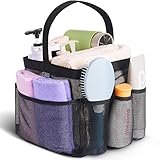
- 🎓【MUST-HAVE DORM ESSENTIALS】Perfect for college dorm life, this dorm shower caddy keeps your toiletries organized and easy to carry to shared bathrooms. A convenient essential for students.
- ✨【WIDE APPLICATION & PORTABLE】This shower caddy portable keeps toiletries organized on the go. Perfect for dorms, gyms, beaches, camping, travel, and more.
- 🗂【9-POCKET DESIGN & LARGE CAPACITY】With 8 outer pockets and 1 large center pocket, this mesh shower caddy keeps your essentials organized. Store small items in the side pockets and larger toiletries in the spacious main pocket.
- 💧【QUICK DRY & EASY CLEAN】Breathable mesh fabric allows quick drainage and fast drying, while easy washing and air drying make maintenance simple.
- 💎【HIGH QUALITY】The mesh shower caddy portable features durable, tear-resistant mesh material to hold full-sized toiletries. The reinforced handle allows easy hanging and quick access to your essentials.
Also check what academic help exists for students in your program, such as tutoring or writing assistance. The College Board and Jed Foundation’s guide discusses student support and campus well-being: College Board’s college-fit guidance.
How can you tell whether support services will work for you?
A service listed on a university website is not necessarily available to every student, free, or accessible at the time you need it. Check the service’s own page and ask about:
Rank #3

- 【Extra Heavy Duty】Made of upgraded 180 GMS extra thick coated PE fabric, Fygrip moving bags with fully wrap around handles, strong zipper and reinforced stitching promise to safely hold more than 65 lbs loading.
- 【Extra Large Capacity】Sized at 29"L x 14"W x 13"H, these extra large storage bags offers more than 23 gallon volume, perfect packing bags for the moving of college student.
- 【Easy Packing & Storage】No more hassles to assemble and unpack the moving boxes. These large packing bags features a wide open zipper design, you can easily pack your large bedding right into the bags. And you can also easily folded them after use for easy storage.
- 【Fygrip Comfortable Grip】Equipped with wide webbing handles, it can relieve the burden while carrying by hand or on the shoulder, bringing you a more comfortable using experience.Perfect storage bags storage bins storage totes cubes containers for closet organizers and storage.
- 【No Puncture & Waterproof】These sturdy packing bags are puncture-free and waterproof, they can easily withstand the rough journey of moving, camping, travel, closet organization and storage.
- Eligibility and how to make an appointment.
- Hours, wait times, and whether help is available remotely.
- Fees, session limits, or other restrictions.
- Whether the service can address your specific needs.
Include counseling, health resources, career services, tutoring, and writing support in your checks. If a service is important to your well-being or academic progress, seek a direct answer from the relevant office rather than relying on a general campus description. The College Board and Jed Foundation college-fit guide includes support and well-being among the considerations for choosing a school.
How can you assess campus life and belonging?
Look beyond promotional descriptions. Review listings of clubs and organizations, housing options, student activities, and identity-related support. Consider whether the campus community and its offices seem likely to respect and support you, and ask current students or staff about their experiences.
Rank #4

- 【 LED Desk Lamp 】 - Features 4 color temperatures and 5 adjustable brightness with 6500k illumination, enabling you to customize the light you want. This desk light can be easily controlled by the integrated touch buttons. It can be used as an ambience lamp, reading lamp, nail lamp, night light, study lamp, desk lamp for home office, bedroom, college dorm room, living room and gaming room
- 【 Deskop Power Strip with USB Ports 】- The small desk lamp for college dorm room is also equipped with 2 USB-C port, 2 USB-A ports and 3 3-prong AC outlets, making your phone, tablet, kindle, watch, humidifier and other electronic devices are charged whether the lamp is on or off, building your own working station. Fully save your time and space
- 【 Multi-Angle Adjustable Table Lamp 】 - The lamp for desk can 180° adjustable up and down, right and left, allowing you to fine-tune the light direction for greater lighting range and flexibility. With 90° foldable lamp arm, fully foldable, small footprint, space-saving.
- 【 Eye Protection LED Lamp】- No flicker, no glare, no blue light, no ghosting. The office desk lamp is an eco-friendly eye protection desk lamp, designed to minimize eye strain during long reading or working sessions. Home office desk essentials you must haves!
- 【 Plug In and Use 】 This usb c power strip with 45° low profile right angled flat plug and 5 feet extension cord, you can carry it anywhere. It not only a table lamp, but also a multi-function desktop power strip wtih usb charging station.
A visit or virtual tour can help you picture the setting, but it is only a snapshot. Pair it with official information and conversations with students, alumni, admissions staff, or counselors. EducationUSA provides guidance on evaluating schools and campus life: EducationUSA’s school-choice resource. College Board also describes factors such as activities, campus atmosphere, and distance from home: College Board’s college-fit page.
Free tools Windows power users keep installed
One-click scans. No signup required.
How should you compare universities on a shortlist?
Use the same questions for every school so that a polished website or memorable tour does not outweigh the factors you care about. A simple comparison can keep your priorities visible:
| Area | What to check | Where to verify |
|---|---|---|
| Academic fit | Major, required courses, electives, course frequency, class formats, faculty access, and program-specific academic help. | Official catalog, department pages, and direct questions to the department. |
| Learning environment | Class size and format in introductory, advanced, and program-specific courses; what any student-faculty ratio measures. | Department or admissions office; published class data where available. |
| Cost and logistics | Tuition, living costs, financial aid, housing, transportation, location, and distance from home. | Current official university information and direct confirmation for details that affect your plans. |
| Support | Services offered, eligibility, hours, cost, limits, and fit for your needs. | Official service pages and the offices that provide the support. |
| Community | Clubs, activities, campus atmosphere, belonging, identity-related support, and the surrounding community. | Official listings, visits or tours, and conversations with students or staff. |
| Evidence quality | Whether a claim comes from current official information, a direct answer, a visit, or an individual’s experience. | Cross-check important details rather than treating a tour or one conversation as definitive. |
Costs, course availability, housing, class sizes, and service rules vary by school and can change. Confirm consequential details directly with each university. College Board offers a broader set of questions for comparing how a college might fit: College Board’s college-fit guidance.
What does a good-fit decision look like?
A good-fit decision is one you can explain in terms of your own priorities and evidence about the schools you are considering. There is no universal best campus size, class format, or social environment. Luis Martínez-Fernández, a history professor at the University of Central Florida, told College Board that a student from a small high school may thrive at a large institution: College Board’s college-fit guidance. Treat that as a reminder to assess your own needs, not as a rule that one setting is better.
Quick Recap
Product prices and availability are accurate as of the date/time indicated and are subject to change. Any price and availability information displayed on Amazon at the time of purchase will apply.
Recommended Free Tools

