
iTechGuides is reader-supported. When you buy through links on our site, we may earn an affiliate commission. As an Amazon Associate I earn from qualifying purchases. Learn more
Quantum sensors can detect very small changes, but sensitivity alone does not guarantee an accurate measurement. In real use, accuracy depends on environmental noise and loss of quantum coherence, detector and readout behavior, and whether the full measurement system is calibrated for the conditions in which it operates. The dominant limit varies with the sensor, the quantity being measured, and the measurement protocol.
Does higher sensitivity mean a quantum sensor is more accurate?
No. Sensitivity describes how well a sensor can detect a change; accuracy concerns how close its reported value is to the value of the quantity being measured. A sensor may produce highly repeatable readings yet retain a systematic bias. A theoretical precision limit also assumes a measurement model and specified resources; it does not, by itself, establish accuracy in a real environment.

To judge a result, first identify the measurand—the particular quantity intended to be measured—and the conditions of use. Then consider whether relevant systematic effects and uncertainty have been characterized. NIST’s Quantum Sensing Explained provides an overview of quantum-sensing principles; its implications for a particular measurement still depend on the instrument and setup.
Why are quantum sensors affected by noise?
Noise can come from the quantity being sensed, the surroundings, the apparatus, or the readout. Temperature changes and stray magnetic fields are examples of environmental disturbances discussed by NIST. They can obscure the signal, and they can damage coherence—the quantum behavior that some sensing protocols rely on. There is no single noise source that limits every type of quantum sensor.
#1 Best Overall

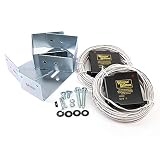
- Wayne Dalton Wired Photoelectric Safety Sensors.
- For Torsion iDrive models: 3651-372, 370-372.
- For Quantum/Classicdrive models 3012, 3014, 3016, 3018, 3212, 3213, 3214, 3312, 3313, 3314, 3316, 3412, 3414, 3512, 3514.
- For DoorMaster models: 3660-372, 3661-372, 3662-372, 3760-372, 3751-372.
- Kit includes sensors with wire mounting brackets, fasteners, and installation instructions.
The practical question is whether the signal remains distinguishable over the actual measurement duration and in the actual operating environment. The standard quantum limit discussed in a 2024 review applies to nominally identical, uncorrelated systems; a theoretical limit is not a substitute for evaluating performance under the intended conditions. See the review in Nature Physics.
How do calibration and systematic errors affect measurements?
A calibration result applies to a defined measurand under stated conditions. If temperature, field, geometry, or another operating condition changes, the calibration may not fully describe the new use. NIST’s paper A Careful Consideration of the Calibration Concept discusses measurands, uncertainty, systematic error, and reproducibility as parts of calibration practice.
Rank #2
In practical terms, ask what was measured, under what conditions the instrument was calibrated, and which influences are included in the uncertainty statement. Repeatability or stability does not alone show that readings are unbiased. Nor does using stable atomic or other quantum properties remove the need to characterize the complete measurement system and its use conditions.
Recommended Free Tools
What detector and readout limits matter?
Detector performance cannot always be described by one headline figure. For single-photon detectors, NIST notes that an accurate response model may need parameters beyond detection efficiency and noise, including dead time and afterpulsing. Depending on the setup, timing, signal processing, and other response characteristics can also affect how the measurement is interpreted. These are detector-specific examples, not universal bottlenecks for all quantum sensors.
NIST reports approximately 0.15% uncertainty (k = 1) for metrological verification of a correlated-photon method for measuring photon-counting detection efficiency. That figure applies to the verification method and quantity described, not to the accuracy of quantum sensors generally. Further detail appears in Sources, detectors and metrology.
Can quantum error correction make a sensor less accurate?
It can, if the correction introduces an unaccounted bias. A 2022 paper, Bias in Error-Corrected Quantum Sensing, warns that bias in realistic settings can systematically reduce experimental performance and mislead estimates of the minimum detectable signal. Error-corrected therefore does not automatically mean unbiased or more accurate.
Rank #4

- One set contains 37 different sensor modules that give you a comprehensive understanding of the basics of Arduino and sensors.
- A complete set of the most common and practical electronic components of the Arduino is the perfect choice for electronics enthusiasts.
- Arduino enthusiasts can easily control and use these modules.
- Including temperature sensors, water level sensors, pressure sensors,,infrared receiver modules, etc., to meet your different needs.
- Whether you are learning Arduino or other controllers, sensors are a must, because we have to control the data, such as photoresistors, temperature sensors, infrared receiver modules, etc. are often used. This time, we put the sensors that most learners need in a suit, so that everyone can get 37 sensors at a time, which is convenient for everyone to use and learn.
A NIST report published September 10, 2025 describes a theoretical proposal to correct selected errors rather than every error. The approach aims to improve robustness to environmental noise at the cost of some potential sensitivity. Cheng-Ju (Jacob) Lin, an author of the work and a former postdoctoral fellow at the Joint Center for Quantum Information and Computer Science, said: “Usually in quantum error correction, you want to correct the error perfectly,” NIST explains the proposal and its tradeoff. This is a proposed strategy, not evidence of a universal or commercially available capability.
What’s actually slowing this PC down?
Pick the symptom - the matching free tool is one click away.
How should real-world quantum-sensor claims be evaluated?
Compare sensors only when the target quantity and operating scenario are meaningfully matched. A useful evaluation asks:
Quick Recap
Best Value
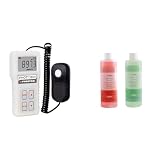
- Product 1: ACCURATE and COST EFFECTIVE: The Phantom PHOTOBIO Advanced Quantum PAR Meter provides measurement for any light source used in horticultural applications.
- Product 1: MEASURES BROAD SPECTRUM: The Advanced Quantum PAR meter is designed to measure PAR (Photosynthetically Active Radiation) flux in wavelengths ranging from 400 to 700nm.
- Product 1: MAXIMIZE CROP YIELDS: There is a positive proportional relationship between the number of photons absorbed in 400 to 700nm band and the rate of photosynthesis.
- Product 1: COMPACT and COMPLETE main unit, remote sensor, two connection cables (short-coiled & 12’ long-straight), AAA batteries and protective carrying case.
- Product 2: Reported values are accurate to +/- 0.01 pH at 25 °C and are traceable to NIST Standard Reference Materials (SRMs).
- What is being measured? Specify the target quantity and relevant conditions, such as temperature, field, frequency, geometry, measurement duration, and stand-off distance.
- Which noise sources matter? Identify environmental and apparatus noise, and whether the protocol remains useful in their presence.
- What does the readout measure well? Check the detector’s relevant response parameters rather than relying only on a headline efficiency or noise figure.
- What does calibration cover? Confirm the measurand, conditions, systematic effects, and uncertainty statement.
- What is the quantum benchmark? Check the benchmark and resource assumptions. A theoretical precision advantage alone does not establish a real-world accuracy advantage.
Product prices and availability are accurate as of the date/time indicated and are subject to change. Any price and availability information displayed on Amazon at the time of purchase will apply.

