
Do these 3 things before closing this tab:
1Clear out junk files and repair common Windows errors2Scan for outdated or missing drivers - takes under a minute3Repair Windows errors before they cause bigger problemsiTechGuides is reader-supported. When you buy through links on our site, we may earn an affiliate commission. As an Amazon Associate I earn from qualifying purchases. Learn more
UL 248-14 is the safety standard for supplemental fuses rated 60 A or less. These fuses provide supplementary overcurrent protection inside equipment or electronic circuits; they are not substitutes for branch-circuit fuses or circuit breakers. The active third edition was published and ANSI approved on March 4, 2026.
Because the title does not identify a manufacturer or catalog family, UL 248-14 alone cannot identify a usable part. You must match the exact fuse’s ratings, construction, approvals, dimensions and the equipment manufacturer’s requirements.

What UL 248-14 covers
UL 248-14, Low-Voltage Fuses – Part 14: Supplemental Fuses, is intended for supplemental overcurrent protection. Its stated scope is:
Free tools Windows power users keep installed
One-click scans. No signup required.
“This Part applies to supplemental fuses rated 60 A or less intended only for supplementary overcurrent protection where branch circuit or equivalent applications are not involved.”
#1 Best Overall
Sale Bussmann BP/TL-20 20 Amp Time Delay, Loaded Link Edison Base Plug Fuse, 125V UL Listed Carded, 1 Blister pack of 3 fuses
- Quantity: 1 Pack
- 20A Type TL Plug Fuse
- Time Delay Fusetron
- Time-Delay Plug Fuse
- Will withstand typical motor starting surges
In practical terms, a compliant fuse may protect an internal power supply, control board, appliance component or other equipment branch after the building or appliance branch-circuit protection has already been provided.
What “supplemental” excludes
The standard expressly excludes branch-circuit and equivalent applications. A fuse carrying a UL 248-14 design claim should therefore not be selected as the sole protective device for premises wiring or another application that requires branch-circuit protection.
Current edition and related standard
- Edition: Third edition, active.
- Publication and ANSI approval: March 4, 2026.
- Maximum scope rating: 60 A or less.
- DC ratings: Optional; a particular fuse may or may not have a DC rating.
- Canadian harmonized designation: CSA C22.2 No. 248.14-2026.
The third edition listing describes editorial renumbering and reformatting to align with current UL style. It does not characterize those changes as new technical requirements.
Quick wins for a faster PC:
Repair Windows errors before they cause bigger problemsFix Now →Scan for outdated or missing drivers - takes under a minuteDriver Scan →Rank #2
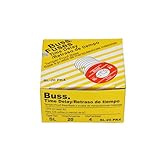
- ATTENTION: This fuse design works with a rejection base that prevents installing a higher amp fuse than the circuit was designed to handle. Be certain that the fuse you are replacing is an TYPE SL, 20A, Plug Fuse or it will not thread in to the base.
- Has ability to withstand typical motor starting surges
- Used in residential or light-duty motor circuits
- These fuses thread into SA adaptors
- The fuse size is 1.25" in diameter and 1.25" tall
How Part 14 works with UL 248-1
UL 248-14 is not a standalone replacement for the general fuse requirements. It is read together with UL 248-1. Requirements in Part 1 apply unless Part 14 modifies them for supplemental fuses.
That relationship matters when reviewing a datasheet or certification record: a manufacturer’s statement that a family is designed to UL 248-14 indicates the applicable supplemental-fuse framework, but it does not list every performance value for every catalog number.
Manufacturer examples of UL 248-14 fuse families
Eaton provides two examples of families described as designed to UL 248-14 for electronic-circuit overcurrent protection. They illustrate the type of product covered, not the identity of the unspecified family in the title.
Rank #3

- 【Product Specifications】MEGA/AMG 125A fuse, 32V DC. Dimensions: 2.71" L x 0.75" W x 0.37" H. Hole Spacing: 2", Hole Diameter: 0.35" (M8)
- 【UL Recognized Component (E543339)】Housing made of PA46 high-temperature nylon with a UL 94 V-0 flame-retardant rating, engineered for demanding electrical safety requirements
- 【Premium Copper Alloy】Made of quality copper alloy material, stable riveted connection structure, not easy to break
- 【Reliable Circuit Protection】Fast-acting MEGA fuse prevents damage from overloads and short circuits. Once blown, simple replacement restores system protection
- 【Wide Compatibility】Ideal for high-current protection in RVs, boats, trucks, trailers, solar battery banks, electric vehicles, forklifts, and heavy equipment
| Family | Construction and response | Manufacturer-stated information | What still must be checked |
|---|---|---|---|
| SR-5F | Round-body, radial-lead, fast-acting fuse | Eaton identifies a 250 Vac UL design and provides product-support and datasheet links. | Exact current rating, interrupting rating, dimensions, approvals and circuit suitability for the selected catalog number. |
| SS-5F | Square-body, radial-lead, fast-acting fuse | Eaton describes the family as designed to UL 248-14 for electronic-circuit overcurrent protection. | Exact electrical ratings, physical fit, approval markings and equipment requirements for the selected catalog number. |
The different body styles mean SR-5F and SS-5F should not be assumed interchangeable. Even two fuses with the same nominal current and voltage can differ in lead spacing, body dimensions, interrupting capacity or time-current behavior.
Recommended Free Tools
What a UL 248-14 designation does—and does not—tell you
It tells you the intended protection category
The designation points to a supplemental-fuse standard with a scope limited to 60 A or less and to applications other than branch-circuit or equivalent protection.
It does not establish a complete part specification
The standard reference by itself does not identify:
Rank #4

- Fast-acting, low breaking capacity
- Optional axial leads available
- 5mm x 20mm physical size
- Glass tube, nickel-plated (500mA-15A) brass end cap construction
- Designed to UL/CSA 248-14
- the exact current and voltage rating;
- AC, DC or both ratings;
- interrupting capacity;
- fast-acting, time-delay or another time-current characteristic;
- body shape, dimensions, lead spacing or terminal arrangement;
- the certification mark on a particular catalog number; or
- whether the fuse is acceptable for a specific appliance, power supply or circuit.
Those details come from the exact manufacturer datasheet, product marking, certification information and the equipment documentation.
How to choose a replacement or new supplemental fuse
- Identify the exact original part. Record the manufacturer, complete catalog number, current and voltage markings, body style and any approval marks.
- Confirm the circuit role. Verify that the device is supplemental protection and not the branch-circuit or equivalent protective device for the installation.
- Match electrical ratings. Check the required ampere rating, AC or DC application, voltage rating and interrupting capacity. Never infer a DC rating from an AC-only marking.
- Match time-current behavior. A fast-acting replacement can nuisance-trip where a time-delay design was specified, while a slower fuse can fail to protect sensitive components.
- Check mechanical fit. Compare body dimensions, lead diameter and spacing, orientation and clearance. Round- and square-body radial-lead families are not automatically interchangeable.
- Verify approvals and equipment instructions. Use the current datasheet and the equipment manufacturer’s service information for the exact catalog number.
- Investigate the cause of operation. Replacing a blown fuse without correcting an overload, short circuit or failed component can produce another failure or a safety hazard.
Using Eaton family documentation correctly
For an Eaton SR-5F or SS-5F application, start with Eaton’s current product page and datasheet, then compare the selected catalog number with the fuse removed from the equipment. The family-level statement that the series is designed to UL 248-14 is useful evidence of intended use, but it is not a substitute for the part-level table.
Do not choose between SR-5F and SS-5F solely by ampere value. Their body geometry differs, and the retrieved family descriptions do not establish that every rating or physical option in one series is available in the other.
Best Value
Why the exact equipment application controls the decision
Fuse selection is a coordination problem: the fuse must open quickly enough to limit damage, withstand normal inrush and operating current, interrupt the available fault current safely and physically fit the equipment. UL 248-14 establishes the supplemental-fuse framework, but the equipment designer determines the required rating and response.
If the application is building wiring, a panel, a motor branch or another branch-circuit-equivalent use, stop and use the protective-device standard specified for that application instead of treating UL 248-14 as sufficient.
Bottom line
“Built to meet UL 248-14 specifications” means a fuse family is designed for the supplemental-fuse requirements in the active third edition of UL 248-14, normally for circuits rated 60 A or less and not for branch-circuit protection. It does not, by itself, prove that a particular fuse fits or is safe in your equipment. Select the exact catalog number only after checking its datasheet, markings, dimensions, ratings and the equipment manufacturer’s requirements.
The Tool Desk
Outbyte Driver Updater FREEScan for outdated or missing drivers - takes under a minuteDriver Scan →Outbyte PC Repair FREERepair Windows errors before they cause bigger problemsFix Now →Quick Recap
Product prices and availability are accurate as of the date/time indicated and are subject to change. Any price and availability information displayed on Amazon at the time of purchase will apply.

