
iTechGuides is reader-supported. When you buy through links on our site, we may earn an affiliate commission. As an Amazon Associate I earn from qualifying purchases. Learn more
The oldest dated material known from Earth is a tiny zircon mineral grain from the Jack Hills of Western Australia. Researchers reported its age as 4,404 ± 8 million years. It is not an intact 4.4-billion-year-old rock: the grain formed long before it was eroded and preserved in younger sedimentary rock.
What is the oldest material found on Earth?
The record-holder is a detrital zircon grain—a mineral crystal that was carried from its original source into younger sediment. In a 2001 paper, Wilde and colleagues reported the grain’s age as 4,404 ± 8 million years. The uncertainty is part of the result: it should not be shortened to a more precise-sounding age without qualification. The original Nature paper describes the grain and its dating.
USGS gives the broader description that single zircon crystals in younger Western Australian sedimentary rocks have radiometric ages of up to 4.3 billion years. That rounded wording and the original paper’s uncertainty-bearing measurement are different ways of presenting the evidence; the original reported value is the appropriate figure when naming the oldest dated grain. USGS: Geologic Time—Age of the Earth.
Quick wins for a faster PC:
Clear out junk files and repair common Windows errorsFree Scan →Scan for outdated or missing drivers - takes under a minuteDriver Scan →Is the zircon the oldest rock?
No. The zircon is a mineral grain, not an intact rock unit. Its age dates when the crystal formed, not when the younger sedimentary rock containing it formed. The grain survived the breakdown and transport of older material before becoming part of that sediment.
#1 Best Overall

- Fluorescent Terminated Red Zircone Crystal Specimen
- Size : 56 mm x 51 mm x 36 mm
- Weight : 146 gram
- Natural
- You will get the actual stone as pictured.
This distinction matters because a date attached to a mineral cannot automatically be applied to the rock around it. The Jack Hills zircon records an ancient crystal preserved in younger material; it does not show that the host sedimentary rock is itself 4.4 billion years old.
How do scientists determine the zircon’s age?
Uranium decays into lead
Zircon can incorporate uranium as it crystallizes. Over time, uranium isotopes decay through radioactive chains into lead isotopes. Measuring the relationships between uranium and lead isotopes in the crystal lets researchers estimate how long ago it formed.
Rank #2
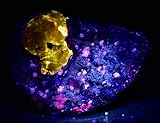
- Zircon
- Dimension : 40 x 29 x 19 mm
- Weight : 122 Carat
- Natural
- You will get the actual stone as pictured.
Measurements are made in the crystal
For the Jack Hills grains, researchers used ion-microprobe analyses to examine uranium–lead isotope ratios. The resulting date is a crystallization age inferred from those measurements, not a direct measurement of the age of the surrounding sediment. NASA’s account describes the ion-microprobe work and uranium–lead dating of the zircons. NASA Astrobiology Institute: Earth’s oldest mineral grains.
Free tools Windows power users keep installed
One-click scans. No signup required.
Does this tell us exactly when Earth formed?
No. The zircon date is evidence about very early terrestrial history, but it is not Earth’s formation date. The planet’s age is estimated using a broader isotopic argument that considers Earth and meteorites as parts of a shared evolving system. USGS explains that this estimate relies on changes in lead isotopes associated with uranium decay, rather than simply dating an individual terrestrial rock. USGS: Geologic Time—Age of the Earth.
Rank #3

- Fluorescent Terminated Red Zircone Crystal Specimen
- Size : 36 mm x 24 mm x 16 mm
- Weight : 20 gram
- Natural
- You will get the actual stone as pictured.
| What is being dated | What the age means | Example |
|---|---|---|
| A mineral grain | When the crystal formed | Jack Hills detrital zircon: 4,404 ± 8 million years, as reported by Wilde and colleagues in 2001. Nature paper. |
| A rock unit or its components | The age of the rock’s formation or of specified minerals within it; it is not automatically the age of an older grain later incorporated into sediment | The 2001 paper gives about 4,030 million years for the oldest known components of the Acasta Gneiss in its comparison with surviving rock material. Nature paper. |
| Earth as a planet | An age inferred from isotopic evidence about Earth and meteorites as a shared evolving system | USGS describes this as a broader estimate, not the date of the Jack Hills zircon. USGS overview. |
What does the ancient zircon tell us—and what does it not?
The grain establishes that very old mineral material formed and survived to be preserved in younger sediment. It helps constrain the history of early Earth, but the date alone does not establish when oceans, life, or plate tectonics began. Those claims require evidence beyond the zircon’s age.
Quick Recap
Best Value

- Fluorescent Red Zircone Crystal Specimen
- Size : 54 mm x 53 mm x 36 mm
- Weight : 136 gram
- Natural
- You will get the actual stone as pictured.
Rank #4
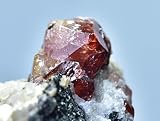
- Zircon
- Dimension : 47 x 37 x 28 mm
- Weight : 66 Gram
- Natural
- You will get the actual stone as pictured.
Product prices and availability are accurate as of the date/time indicated and are subject to change. Any price and availability information displayed on Amazon at the time of purchase will apply.

