
Outdated Drivers Are Slowing You Down
One free scan finds every outdated or missing driver and matches the right update for your exact hardware.Free scan · exact hardware matchWindows Errors? Fix Them Before They Spread
Repair common Windows errors and clear accumulated junk for a smoother, more stable PC - no reinstall needed.Free scan · no reinstalliTechGuides is reader-supported. When you buy through links on our site, we may earn an affiliate commission. As an Amazon Associate I earn from qualifying purchases. Learn more
The Internet of Things (IoT) is a broad term for physical devices and other “things” that use sensors, software, and network connections to collect or exchange data, and in many cases to act on the physical world. A temperature sensor measures a room, a connected thermostat or hub passes that reading to an app or service, and a person or a software rule decides what happens next, such as adjusting the heating or sending an alert. Wearables, appliances, lighting, cars, and home security devices are common examples. The same connectivity that makes these systems useful also raises security and privacy questions, which are covered near the end of this guide.
What the term covers
IoT does not have one definition that every agency or standards body uses. NIST’s Cybersecurity for IoT Program says so directly: “There is no one widely accepted definition of the Internet of Things.” (NIST Cybersecurity for IoT FAQ). Different sources draw the boundary in different places, as the table shows.
| Source | What it describes | Emphasis |
|---|---|---|
| NIST CSRC glossary | A network of devices with hardware, software, firmware, and actuators that connect, interact, and exchange data. The glossary gives context-specific definitions. | Devices as networked systems |
| NIST Cybersecurity for IoT FAQ | A growing number of devices connected to each other and/or to the Internet. | A plain working description |
| NIST cybersecurity program device scope | A device with at least one transducer (a sensor or actuator) and at least one network interface. It may work on its own or rely on other devices or cloud systems for some functions. | A test for deciding what is in scope for security work |
| ITU-T Y.4000, as quoted in ITU-T Y.4814 (September 2025) | A global infrastructure that interconnects physical and virtual things using interoperable information and communication technologies. | Infrastructure, including virtual things |
The ITU definition reads: “A global infrastructure for the information society, enabling advanced services by interconnecting (physical and virtual) things based on existing and evolving interoperable information and communication technologies.” In that framework, a “thing” is an object in the physical or information world that can be identified and integrated into communication networks.
For everyday use, IoT means connected devices that gather data about the world, share it, and sometimes influence what happens next. The standards definitions are wider because they also count virtual things, and the NIST device test is narrower because it is designed for security work.
#1 Best Overall
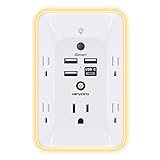
- 【Versatile 10 in 1 Outlet Extender】- 4 usb charging ports, 5 wide spaced outlets, 3 side power stip provides large space and saves you another charger head space. 360°night light around makes it easy for you to see the outlets in dark corners or at night. With the removeable screw and the plastic prong, the multi plug outlet is firmly attach to your DUPLEX and DECOR outlets, and perfect for bedroom, dorm room etc
- 【Smart & Soft Night Light】- With the light sensor, the outlet extender will automatically turns on only when ambient lighting becomes dim. With sensitive touch sensor on the top logo, you could also choose to turn on/off the nightlight manually. The night light is soft, warm and does not dazzling, will not disturb to your sleep
- 【USB C Fast Charge & Wide Space】- 1.7 inches large space beetween 5 adapter outlets on the side which can easily fit for big head chargers. The 4 usb ports total 3.1A, and the USB C ports built in smart technolohy, can detect and charge your devices quickly, up to max 5V/3A,compatible with most type c devices.(NOTE: The UCB-C port doesn't support any other devices which need 14-22V charging voltage)
- 【Surge Protector Outlet】- This product is made of safe and reliable fireproof material and 3 level complementary Surge Protector Circuit, which can effectively provide protection for your equipment, with minimum 1050J energy absorbing capacity. ("SURGE PROTECTED" indicator light on to show your devices are protected)
- 【Super Safety & After Sale Service】- ETL Certified. This plug extender has overload protection, short-circuit protection, over current protection, over-voltage protection and overheating protection. It will automatically cut power to protect connected devices when voltage surge is overwhelming
How an IoT system works
The following four-stage loop is a teaching model, not a universal architecture. Real products vary in where each stage happens.
1. Sense or identify
A sensor measures something such as temperature, motion, location, or energy use. A device may also identify itself or the object it is attached to. Sensing is the stage that connects a digital system to the physical world.
2. Process and communicate
The device may do some processing on its own, then sends data through a network interface. Depending on the product, that connection can be direct, run through a hub or gateway, or pass through another connected system.
Do these 3 things before closing this tab:
1Clear out junk files and repair common Windows errors2Scan for outdated or missing drivers - takes under a minute3Repair Windows errors before they cause bigger problemsRank #2

- 【Easy Setup, One Control】With Matter, Skip the step of downloading and registering multiple manufacturers' apps every time you buy a new device. Instead, head straight to certified smart home platforms like Apple Home, Alexa, Google Home, SmartThings, or AiDot to control all your Matter devices.【TIP】Matter-certified hub or controller (HomePod, Echo Dot, Nest, SmartThings Hub) is required for Apple Home/Alexa/Google Home/SmartThings platforms. Alternatively, the AiDot app can be used without hub
- 【Offline-Ready Control】Once you've set up your Matter-certified devices on your LAN, they'll be able to communicate with each other directly, using the Matter protocol. This means that if your home internet connection goes offline, your Matter-certified devices will still be able to communicate and be controlled within your LAN, without relying on the internet or cloud services.
- 【Remote Control from Anywhere】Use the app to turn electronics on before you arrive home and off after you leave, no matter where you are. Using the smart plug that work with alexa manage your power usage and save money.
- 【Hands-free Voice Control】Control linkind homekit plug using simple voice commands through Apple HomeKit, Siri, Amazon Alexa, Google Assistant, and SmartThings, without the need for physical input such as buttons or switches.
- 【Flexible Scheduling & Timer】Effortlessly reduce energy usage with automatic device shutdown after a set time. For example Chrismas Tree, TV, Lamp, Fan, Humidifier,Blenders, Lightbulbs
3. Interpret
An app, a local controller, or a cloud service stores, displays, or analyzes the information. Some systems decide locally whether to act; others depend on a remote service to make that call.
4. Respond
A person may see an alert or a dashboard and act on it, or software may trigger an actuator, such as switching a light on or changing a thermostat setting. A response closes the loop, and it is the step that gives IoT its physical effect.
A worked example: a connected thermostat
This is an illustration of a familiar pattern, not a description of any specific product:
Rank #3

- Your favorite music and content – Play music, audiobooks, and podcasts from Amazon Music, Apple Music, Spotify and others or via Bluetooth throughout your home.
- Alexa is happy to help – Ask Alexa for weather updates and to set hands-free timers, get answers to your questions and even hear jokes. Need a few extra minutes in the morning? Just tap your Echo Dot to snooze your alarm.
- Keep your home comfortable – Control compatible smart home devices with your voice and routines triggered by built-in motion or indoor temperature sensors. Create routines to automatically turn on lights when you walk into a room, or start a fan if the inside temperature goes above your comfort zone.
- Do more with device pairing – Fill your home with music using compatible Echo devices in different rooms, or create a home theatre system with Fire TV.
- Say goodbye to drop-offs and buffering - With eero Built-in, Echo Dot doubles as a mesh wifi extender, adding up to 1,000 sq. ft. of wifi coverage to your existing eero network.
- A sensor in the thermostat reads 19 °C in a room where the target is 21 °C.
- The thermostat sends that reading to the homeowner’s app or to a service that the app uses.
- A rule in the app or service tells the heating system to run.
- The homeowner can see the temperature history and change the target from a phone.
In this chain, the sensing and actuation happen on the device, while the rule and the history may live on a phone, a hub, or a remote service, depending on the product.
Examples readers can recognize
CISA’s Internet of Things tip sheet (published in 2019) lists cars, appliances, smart watches, lighting, home assistants, and home security among connected “things.” It gives concrete cases, summarized below.
| Category | What CISA describes | What is sensed or controlled |
|---|---|---|
| Cars | Devices that direct a driver to an open parking spot | Parking availability information |
| Household energy | Mechanisms that manage household energy | Energy use in the home |
| Wearables and smart watches | Tools that track eating, sleeping, and exercise | Personal activity and health-related habits |
| Appliances, lighting, home assistants, home security | Listed as connected things; the source gives no further detail | Not stated in the source |
These examples show that IoT covers consumer and everyday products, not only factory sensors and industrial equipment.
Rank #4
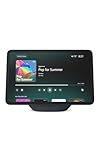
- New size, more viewing area: The 11“ smart display features a vibrant Full-HD touchscreen with 60% more viewing area versus Echo Show 8 (2025 release), built-in smart home hub, AZ3 Pro chip for powerful performance, and Omnisense technology for highly personalized experiences.
- Content looks and sounds incredible: Watch shows on Prime Video, Netflix, and more on the vibrant Full-HD 11" screen and enjoy room-filling spatial audio, crisper vocals, wider sound stage, and up to 2x bass versus Echo Show 8 (2023 release). With Alexa+, find the name of that song you love and discover new shows based on your preferences.
- Your everyday assistant: The 11" display makes it easy to see recipes and calendars at a glance, find meal inspo, and manage your shopping lists. With Alexa+, find recipes based on foods you love, make reservations, order groceries, and more.
- Simple Smart Home control: Pair and control thousands of devices that work with Alexa without needing a separate smart home hub. Easily view your camera feeds. Manage lights, thermostats, and more using the display or your voice. With Omnisense technology, you can activate routines via temperature, presence, or visual ID detection.
- Crystal-clear video calls: Video calls feel natural on the vibrant 11" screen with a centered, auto-framing camera, 3.3x zoom, and noise reduction technology. Use live view to check in on your family, pets, and more while you're away.
Is a particular product an IoT device?
Use the NIST device-scope test as a checklist:
- Does it have at least one sensor or actuator that interacts with the physical world?
- Does it have at least one network interface for the digital world?
- Does it run alone, or does it depend on a hub, app, or cloud service for some functions?
A smart home product that passes the first two checks fits NIST’s device description. The third question matters for security and maintenance, because it tells you which other systems you are trusting, but it does not by itself decide whether the product is an IoT device.
Independent reader supportYour contribution helps us test, update, and keep practical guides available for everyone.Why architectures differ
Several design choices vary from product to product, and none of them is mandatory:
Quick wins for a faster PC:
Repair Windows errors before they cause bigger problemsFix Now →Scan for outdated or missing drivers - takes under a minuteDriver Scan →Clear out junk files and repair common Windows errorsFree Scan →- Cloud or local processing: some devices send data to a remote service, while others make decisions on a local controller.
- Hubs and gateways: some devices connect directly to a network, while others rely on a hub to bridge their connection.
- Wireless protocols: the radio technology and communication standard differ across products, so do not assume a particular one.
When you evaluate a product, check the specific device’s documentation rather than assuming a standard setup.
Best Value

- Voice control: Kasa smart plugs that work with Alexa and Google Home Assistant. Enjoy the hands free convenience of controlling any home electronic appliances with your voice via Amazon Alexa or Google Assistant. Compatible with Android 5.0 or higher and iOS 10.0 or higher
- Smart Outlet Control from anywhere: Turn electronics on and off your smart home devices from anywhere with your smartphone using the Kasa app, whether you are at home, in the office or on vacation
- Scheduling: Use timer or countdown schedules to set your wifi smart plug to automatically turn on and off any home electronic appliances such as lamps, fan, humidifier, Christmas lights etc. The Kasa app is free and compatible with iOS 10.0 or later.
- Easy set up and use: 2.4GHz Wi-Fi connection required. Plug in, open the Kasa app, follow the simple instructions and enjoy
- Trusted and reliable: Designed and developed in Silicon Valley, Kasa is trusted by over 5 Million users and being the reader’s choice for PCMag 2020. UL certified for safety use.
Security and privacy
Why IoT risk differs from conventional IT
NIST says IoT devices can interact with the physical world, connect extensively to other systems, have limited processing capacity, and depend on cloud services. Together, those traits introduce cybersecurity and privacy risks beyond those commonly associated with conventional IT systems (NIST IR 8228, 2019). Because a compromised device can affect both data and physical equipment, the consequences of a breach can extend beyond a leaked file.
Basic steps to take with a connected device
- Replace the factory password. CISA’s tip sheet advises: “Change your device’s factory security settings from the default password.” (CISA Internet of Things tip sheet)
- Check what the device collects. Identify the types of data it records and who can access that data through the app or service.
- Review connected accounts. Remove apps, linked accounts, and services you no longer use.
- Check support before buying. Confirm whether the manufacturer publishes updates and how long it plans to support the product.
These steps reduce exposure but do not guarantee security. A single setting does not make a device secure, and convenience features do not establish that a product is private or supported indefinitely.
Optional: build a simple IoT project
If you want hands-on practice, Arduino’s Starter Kit is a beginner kit with an UNO R4 WiFi board, components, a project book, and guided learning that introduces IoT projects. It is a learning aid rather than a requirement for understanding the subject. Arduino also publishes IoT courses and projects for its cloud platform, described in its Arduino Cloud courses and projects help article. Check the manufacturer’s page for current contents and availability before buying.
Quick Recap
Product prices and availability are accurate as of the date/time indicated and are subject to change. Any price and availability information displayed on Amazon at the time of purchase will apply.

