
iTechGuides is reader-supported. When you buy through links on our site, we may earn an affiliate commission. As an Amazon Associate I earn from qualifying purchases. Learn more
The “AI memory tax” is an informal name for the cost pressure AI infrastructure demand can put on memory and storage buyers. It is not a government tax or a fixed surcharge on every computer, phone, or SSD. AI data centers need high-bandwidth memory (HBM), server DRAM, and enterprise SSDs; when suppliers prioritize those products and supply cannot quickly catch up, prices can rise in related markets too. How much of that pressure reaches shoppers depends on the product, inventory, contracts, and manufacturers’ pricing decisions.
How AI demand can push memory prices up
AI infrastructure uses several kinds of memory. GPUs use HBM, while servers also need conventional DRAM for system memory. Enterprise SSDs provide storage for data used by AI services, including inference workloads. As demand for these products grows, memory makers have incentives to direct production toward high-value server and AI products.
| # | Preview | Product | Price | |
|---|---|---|---|---|
| 1 |

|
Corsair Vengeance RGB RS DDR5 16GB (2 x 8GB) Up to 6000MHz AMD Intel RAM | $285.99 | Buy on Amazon |
| 2 |
|
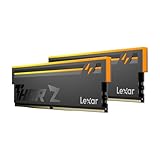
Lexar Thor Z RGB DDR5 RAM 32GB Kit (2x16GB) 6000MHz CL38 DRAM 288-Pin UDIMM | $479.99 | Buy on Amazon |
That shift does not create an equal amount of extra memory for other buyers. HBM production uses more wafer input than conventional DRAM, so allocating capacity to HBM does not translate one-for-one into additional total DRAM bits. Production, packaging, and testing capacity also take time to expand. The result can be competition for available supply across products, even though the exact effects differ by memory type and customer.
What’s actually slowing this PC down?
Pick the symptom - the matching free tool is one click away.
TrendForce’s 30 September 2026 market outlook described advanced-process capacity being prioritized for high-performance server products and limited flexibility in production, packaging, and testing. It also noted that some customers have long-term agreements, so contract outcomes can vary by supplier and customer.
#1 Best Overall
- Disclaimer: Maximum Speed requires overclocking/PC BIOS adjustments. Maximum speed and performance depend on system components, including motherboard and CPU
- AMD EXPO & Intel XMP 3.0 Compatible Only: Dual memory profiles allow you to easily select optimized settings for your platform, whether you’re running an AMD or Intel processor
- Dynamic RGB Lighting: Individually addressable RGB lighting delivers vibrant effects through a sleek, understated panoramic diffuser
- Onboard Voltage Regulation: Onboard voltage regulation for reliable power at high frequencies
- Maximum Bandwidth and Tight Response Times: Optimized for peak performance on the latest AMD and Intel DDR5 motherboards
What the latest 4Q26 price forecasts mean
TrendForce’s 30 September 2026 forecast projected conventional DRAM contract prices to rise 10–15% quarter over quarter in 4Q26 and NAND Flash contract prices to rise 15–20%. These are forecasts for memory-industry contract markets, not measured increases in retail prices for a RAM kit, phone, laptop, or SSD.
| Market | TrendForce 4Q26 forecast | What it measures |
|---|---|---|
| Conventional DRAM | Up 10–15% quarter over quarter | Contract-price forecast, not a retail-device price change (TrendForce, 30 September 2026). |
| NAND Flash | Up 15–20% quarter over quarter | Contract-price forecast, not a retail-device price change (TrendForce, 30 September 2026). |
These figures are estimates for one quarter. They do not say how much a given retailer will charge or how much of a device’s price is attributable to memory. Retail prices also depend on existing inventory, purchasing agreements, other component costs, and whether a device maker absorbs or passes on higher costs.
Why DRAM and NAND are following different paths
DRAM: HBM and server demand add pressure
AI servers need both HBM and other server memory. TrendForce’s 30 July 2026 outlook cited HBM allocation, strong AI-server demand, CPU memory procurement, and production timing as constraints on DRAM supply. It estimated a 2026 DRAM sufficiency ratio of approximately -1% to -2% and expected the supply-demand gap to widen in 2027. Those are TrendForce estimates and projections, not settled outcomes; it said meaningful production contributions from new capacity might not arrive until 2028.
NAND: enterprise SSD demand is strong, but consumer demand matters
AI inference can increase demand for enterprise SSDs used to store and retrieve data. TrendForce’s 2026 outlook projected enterprise SSD bit demand to grow by more than 80% year over year as cloud service providers expanded inference infrastructure. That is a forecast for enterprise SSD demand, not a forecast that every consumer SSD will rise by the same percentage.
The same market is segmented. TrendForce’s 30 September 2026 outlook expected enterprise SSDs to be the NAND category with accelerating price growth in 4Q26, while weaker consumer demand, client SSD inventories, and reduced SSD capacities in mainstream PCs limited demand and pricing power in consumer-facing segments.
What the 2027 outlook says—and what it does not
TrendForce’s 30 July 2026 outlook expected DRAM to remain tight in 2027, while NAND supply conditions could ease in the second half of 2027 as new capacity enters production and consumer demand remains weak. It anticipated NAND’s supply-demand balance turning positive during 2027, but warned that faster adoption of agentic AI could absorb additional supply.
This is a conditional market outlook, not a promise that NAND retail prices will fall on a particular date. New capacity, demand, and product mix can change, and contract-market shifts do not necessarily reach retail shelves at the same time or to the same degree.
Rank #2
- Unleash Next-Gen Dominance: Experience Lexar DDR5 RAM performance with the Lexar THOR Z Series RGB DDR5 RAM 32GB Kit (2x16GB). Clocking at a blistering 6000MHz with low CL38 latency, this DDR5 desktop memory delivers up to 6000 MT/s for a full-throttle advantage. Whether you're building a high-end gaming rig or a professional workstation, this Lexar 32GB RAM kit ensures your system keeps pace with next-gen titles
- Sleek & Robust Thermal Design: Engineered for both aesthetics and endurance, this Lexar DDR5 RAM 6000MHz features an all-new streamlined design. The solid, sandblasted aluminum heatsink fuses a minimalist, razor-sharp aesthetic with uncompromising thermal control. This Lexar THOR Z Series armor ensures your DDR5 memory stays cool under pressure, delivering sustained peak performance during intense gaming sessions
- Game in Style with Brighter RGB Lighting: Elevate your build's aesthetics with the enhanced customizable RGB lighting on this Lexar RGB DDR5 RAM. Brighter and more vibrant than previous generations, the Lexar THOR Z Series RGB DDR5 RAM allows you to synchronize lighting effects with your components, creating a truly immersive gaming atmosphere that stands out from the crowd
- On-die ECC & PMIC for Rock-Solid Stability: Go beyond speed with reliability. This Lexar DDR5 RAM kit integrates On-die Error Correction Code (ECC) to automatically correct data errors, vastly improving stability and reliability for your critical tasks. The onboard Power Management Integrated Circuit (PMIC) ensures efficient power delivery, boosting the overall power efficiency of your DDR5 desktop memory for a longer-lasting, more stable system
- Seamless Compatibility with Intel & AMD: Worry-free upgrade guaranteed. The Lexar THOR Z Series DDR5 RAM is built for broad compatibility with the latest platforms. It fully supports Intel XMP 3.0 and AMD EXPO one-click overclocking, making it effortless to achieve the rated speeds. Trust Lexar DDR5 RAM to deliver seamless performance with mainstream DDR5 motherboards
Why memory revenue forecasts are not consumer price forecasts
Gartner’s 24 August 2026 forecast put worldwide memory revenue at $837.3 billion in 2026, compared with $220.1 billion in 2025. It forecast DRAM revenue growth of 246.6% and NAND Flash revenue growth of 371.9% in 2026. These are revenue forecasts, which combine prices, sales volumes, and product mix. They do not mean household RAM or SSD prices are forecast to rise by those percentages.
Gartner analyst Shrish Pant said, “AI infrastructure has fundamentally changed the dynamics of the memory market.” That is an attributed industry assessment, not a measure of the price change facing an individual shopper.
What shoppers may notice
Higher component costs can affect device makers’ choices as well as prices. TrendForce’s 30 September 2026 outlook said PC notebook inventories reflected higher component costs and that PC makers were reducing SSD capacities in mainstream models to manage bill-of-material costs. It also described rising memory costs and depleted low-cost inventory as factors weighing on smartphone production. These observations support the possibility of configuration changes or added price pressure; they do not establish that AI alone caused a specific laptop or phone price increase.
- A contract-price forecast is not a quote for a retail product: compare the actual model and configuration you are considering.
- Check the amount of installed RAM or SSD storage; a lower-capacity configuration may be one way a manufacturer manages component costs.
- For a PC upgrade, verify compatibility with your system and compare current prices and warranty terms. A market forecast by itself cannot show whether a particular RAM kit or SSD is good value.
How to read claims about an “AI memory tax”
Different kinds of evidence answer different questions. TrendForce provides market estimates and forecasts; company statements describe individual suppliers’ operations and priorities; Gartner’s figures here are annual revenue forecasts. None alone establishes the exact AI-attributable cost in a retail device.
The Tool Desk
Outbyte Driver Updater FREEFix the driver behind crashes, sound loss and screen glitchesFind Drivers →Outbyte PC Repair FREERepair Windows errors before they cause bigger problemsFix Now →| Claim or figure | How to interpret it |
|---|---|
| DRAM or NAND contract-price movement | A forecast or measurement for supplier-buyer markets, not necessarily a matching retail change. |
| Annual memory revenue growth | A combination of price, volume, and product mix, not a household purchase-price increase. |
| Supplier statements about AI or server demand | Useful context about that company’s business and product priorities, not a neutral market-wide price series. |
| Retail device price or capacity | A product-level outcome shaped by memory costs alongside inventory, contracts, other components, and manufacturer decisions. |
For example, SK hynix reported in its 29 July 2026 second-quarter results that demand from expanding AI infrastructure investments had increased demand for high-performance server products. It also reported quarter-over-quarter price rises for DRAM and NAND, highlighted HBM, AI-server DRAM, and enterprise SSDs as high-value products, and said it had finalized long-term agreements with around ten customers. Those company-reported details illustrate supplier priorities and contracting, but they are not a market-wide price index.
Samsung Electronics’ FY2025 results likewise described limited supply and priorities including HBM, server DDR5, and enterprise SSDs; it also said it planned to address AI-related inference demand with high-performance TLC NAND. That product emphasis does not mean every NAND product is equally scarce.
Quick Recap
Product prices and availability are accurate as of the date/time indicated and are subject to change. Any price and availability information displayed on Amazon at the time of purchase will apply.

