
What’s actually slowing this PC down?
Pick the symptom - the matching free tool is one click away.
iTechGuides is reader-supported. When you buy through links on our site, we may earn an affiliate commission. As an Amazon Associate I earn from qualifying purchases. Learn more
Sub-1 GHz Wi-Fi is Wi-Fi networking that uses radio frequencies below 1 GHz. The term generally refers to IEEE 802.11ah, marketed as Wi-Fi HaLow: a Wi-Fi technology designed to bring IP-based networking to IoT devices over sub-1 GHz spectrum. The exact frequencies available depend on local regulations.
What does sub-1 GHz Wi-Fi mean?
“Sub-1 GHz” describes the radio-frequency range: below 1 gigahertz. It does not name one worldwide frequency or a single operating channel. In Wi-Fi discussions, the phrase usually means IEEE 802.11ah, a Wi-Fi amendment for license-exempt operation below 1 GHz, excluding TV White Space bands. The Wi-Fi Alliance uses the name Wi-Fi HaLow for its related technology and certification program.
The IEEE describes 802.11ah as an extension of Wi-Fi for these lower-frequency bands. Its purpose includes supporting IoT use cases that need IP-based Wi-Fi connectivity. The Wi-Fi Alliance overview provides additional context on HaLow’s positioning: What is Wi-Fi HaLow?
Is 802.11ah the same as Wi-Fi HaLow?
They are closely related terms, but they refer to different things. IEEE 802.11ah is the technical standard amendment; Wi-Fi HaLow is the Wi-Fi Alliance designation and certification program for products implementing it. A product’s certification record can help confirm what capabilities that particular product has been certified to support.
#1 Best Overall

- 【𝗘𝘅𝘁𝗲𝗻𝗱 𝗧𝗵𝗲 𝗥𝗮𝗻𝗴𝗲 𝗼𝗳 𝗪𝗶𝗿𝗲𝗹𝗲𝘀𝘀 𝗡𝗲𝘁𝘄𝗼𝗿𝗸】REUMAR AH-WiFi Extender is a device designed to extend the range of your wireless network. It acts as a relay for your existing wireless router, boosting the signal and transmitting it to areas with weaker coverage. Usally for extending network for IP Camera.
- 【𝗙𝗮𝘀𝘁 𝗮𝗻𝗱 𝗦𝘁𝗮𝗯𝗹𝗲 𝗖𝗼𝗻𝗻𝗲𝗰𝘁𝗶𝗼𝗻】REUMAR WiFi Extender supports 2.4GHz frequency only, allowing for faster and more reliable connections. It features built-in antennas that enhance signal strength and stability.
- 【𝗘𝗮𝘀𝘆 𝘁𝗼 𝗦𝗲𝘁𝘂𝗽 &𝗨𝘀𝗲】Setting up the AH-WiFi Extender is effortless. Simply plug usb into the power adapter and network cable to the router,then it will connect it to your existing wireless network, and you're ready to go.
- 【𝗟𝗼𝗻𝗴-𝗱𝗶𝘀𝘁𝗮𝗻𝗰𝗲 𝘁𝗿𝗮𝗻𝘀𝗺𝗶𝘀𝘀𝗶𝗼𝗻】REUMAR WiFi Extender built-in Omni-directional antenna,The transmission distance is considerable, with a visual range of up to 1000 meters, Easily penetrate through three walls.
- 【𝗠𝘂𝗹𝘁𝗶𝗽𝗹𝗲 𝗗𝗲𝘃𝗶𝗰𝗲𝘀 𝗖𝗮𝗻 𝗯𝗲 𝗦𝘂𝗽𝗽𝗼𝗿𝘁𝗲𝗱】The REUMAR WiFi Extender operates at a frequency of 902-928MHz, the bandwidth is only 8M, The maximum transmission rate is 16Mbps, which depends on your devices and network environment. It is important to note that the actual speed may be affected by interference, distance, and other wireless signals. The REUMAR WiFi Extender can support a maximum of 8 connected devices.
The IEEE’s official entry identifies 802.11ah-2016 as “Sub 1 GHz License Exempt Operation” and describes the amendment’s scope, including its stated range and data-rate capabilities: IEEE 802.11ah-2016. The page currently marks that edition as superseded, so the entry is useful for understanding the amendment, not as a claim that it is the latest active standard edition.
What frequencies does Wi-Fi HaLow use?
There is no single global HaLow frequency. National and regional rules determine which spectrum, power levels, and channel arrangements are permitted. An IEEE working-group draft from October 2020 gives 902–928 MHz in the United States and 863–868 MHz in Europe as examples; these are historical technical examples, not current regulatory guidance. Check the rules that apply in the place where a device will operate.
Rank #2
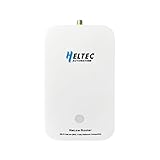
- 【Superior Range for Outdoor Connectivity】This point-to-point wireless bridge outdoor delivers an exceptional transmission distance of up to 2 km in open areas, making it ideal for connecting buildings, farms, and industrial sites without the need for costly cabling. Operating in the 902–928MHz band, it provides strong signal penetration and reliable long-range communication even in challenging environments
- 【Advanced Technology for Stable Transmission】Equipped with Wi-Fi HaLow (802.11ah) technology, this wireless bridge offers superior coverage and interference resistance compared to traditional Wi-Fi. It ensures stable, low-latency data transmission—perfect for video surveillance, industrial controls, and IoT systems requiring consistent long-distance connectivity.
- 【Easy Setup and Flexible Operation】Designed for user-friendly installation, this point-to-point wireless bridge supports plug-and-play functionality. It works seamlessly with IP cameras, computers, and network devices, allowing quick deployment without complex configuration.
- 【Built for Versatile Outdoor Use】Engineered to withstand varying conditions, this wireless bridge operates reliably in temperatures from -5°F to 120°F (-20℃ to 48℃). Its durable construction makes it suitable for outdoor applications such as construction sites, warehouses, farms, and smart agriculture—where long-range and stable communication are essential.
- 【High Performance Across Applications】Whether extending Wi-Fi, enabling remote surveillance, or supporting industrial automation, this wireless bridge delivers high-speed data transfer. It is an ideal solution for drones, USVs, robotics, and smart city projects—providing a robust link for demanding communication needs over long distances.
The same draft describes OFDM and a minimum 1 MHz channel spacing. Wi-Fi Alliance certificates show certified products with some combinations of 1, 2, 4, and 8 MHz channels, but not every device supports every width. See the IEEE 802.19 Working Group material for draft context and the Wi-Fi Alliance product finder for certification records.
What range and speed does the standard describe?
The IEEE 802.11ah-2016 entry describes a transmission range of up to 1 km and a minimum data rate of at least 100 Kb/s. These are capability descriptions in the standard’s scope, not a promise that every HaLow device will achieve those figures in a particular installation.
Rank #3
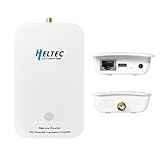
- Ultra-Long Range Wi-Fi HaLow 802.11ah Gateway: Adopts sub-1GHz low-frequency RF to achieve 1km+ transmission distance, stronger penetration through obstacles, max 32.5Mbps throughput, perfect for remote agricultural, industrial monitoring IoT sensors.
- Dual-Band + Multi-Interface Integration: Dual wireless: 802.11ah HaLow + 2.4GHz Wi-Fi; comes with RJ45 Ethernet, USB-C, SMA antenna port, high-speed MT7628 core, sufficient memory for heavy-duty IoT networking.
- High-Density Node Access & Mesh Networking: Handles far more connected devices than regular Wi-Fi routers; supports AP/STA/Mesh three core modes to construct large-area wireless sensor networks without extra bridging hardware.
- Browser-Based Setup & Remote OTA Upgrade: Intuitive web configuration page for all network parameters; remote OTA firmware update function avoids field visits, simplifies long-term network management for commercial IoT projects.
- Industrial-Grade Reliable Hardware: Wide -20~70℃ working temperature, wall-mount compact casing, visible LED status lights, low power consumption, stable 24/7 operation for smart agriculture, manufacturing, smart city applications.
Actual link distance and throughput depend on factors such as radio and antenna design, channel configuration, obstacles, interference, and local operating limits. A useful evaluation should therefore focus on the conditions at the intended site and the application’s data needs rather than treating the standard’s figures as field-test results.
How should you compare HaLow with other wireless options?
Sub-1 GHz Wi-Fi is best assessed against the requirements of a specific deployment, not by assuming that a lower frequency guarantees a particular advantage. The available sources establish HaLow’s sub-1 GHz positioning and the standard’s capability descriptions, but do not provide controlled, directly comparable benchmarks against named Wi-Fi or IoT products.
Rank #4
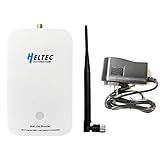
- Advanced Wi-Fi HaLow Technology: Powered by Wi-Fi HaLow (IEEE 802.11ah), operating in the sub-1GHz unlicensed band for superior penetration and extended coverage compared to traditional WiFi traditional WiFi.
- Outstanding Transmission Performance and Device Capacity: Dual-band support for Wi-Fi HaLow and 2.4GHz, with a range of up to 1km. Maintains a speed of 150Kbps at the maximum distance and up to 32Mbps at close range.
- Flexible Networking and User-Friendly Setup: Supports multiple network modes, including AP, STA, and Mesh. Quick setup via Web UI and OTA upgrades. Two wireless bridges can automatically pair within a minute, requiring no computer configuration.
- Compact Design and Versatile Applications:Lightweight, stylish wall-mounted design for easy installation. Suitable for diverse IoT applications such as intelligent manufacturing, smart agriculture, and smart cities.
- Powerful Hardware and Seamless Integration:Equipped with a high-performance MCU, advanced RF capabilities, and flexible interfaces for seamless integration with existing networks. Provides a reliable and robust IoT solution.
- Permitted spectrum: Confirm the band and channel use legal in the deployment region.
- Distance and obstacles: Consider the path between devices, building materials, antenna placement, and interference.
- Application traffic: Determine whether the application needs occasional sensor updates or higher sustained data rates.
- Power and sleep behavior: Check the selected device’s power budget and supported operating modes; do not infer battery life from the technology name alone.
- Network scale: Verify the capacity and topology supported by the access point and endpoints for the planned number of devices.
- Hardware compatibility: Confirm local-band support, certification details, and whether the device role and channel options match the rest of the network.
What to check before choosing HaLow hardware
For an implementation, a Wi-Fi HaLow 802.11ah development kit can be a way to evaluate hardware, but the kit’s specifications and compatibility need to be checked individually. Wi-Fi Alliance certification records include HaLow modules and stations; certification details may identify sub-1 GHz capabilities and channel-width support.
Do these 3 things before closing this tab:
1Scan for outdated or missing drivers - takes under a minute2Repair Windows errors before they cause bigger problems3Fix the driver behind crashes, sound loss and screen glitches- Check the manufacturer’s specification and the Wi-Fi Alliance certificate for the exact model, supported regional band, channel widths, and device role.
- Confirm that the device’s regional configuration complies with current local regulations.
- Verify that the access point and client devices are compatible with one another and with the application’s coverage, throughput, power, and network-scale requirements.
The Wi-Fi Alliance’s announcement explains the HaLow designation and its introduction: Wi-Fi Alliance Introduces Low Power, Long Range Wi-Fi.
Quick Recap
Best Value

- What is HaLow Dongle: It is a plug-and-play network bridge designed to significantly extend the transmission range of traditional networks, offering lower power consumption and improved penetration capabilities. Just like a type of ultra-long-range Wi-Fi.
- Flexible and convenient: It seamlessly integrates with traditional Wi-Fi networks and is designed for ease of deployment. Whether for home use or IoT development, this device can drastically reduce wiring costs while enhancing networking flexibility.
- Application scenarios: Simple configuration process, and versatile operating modes make it an excellent choice for a wide range of applications. Such as, Remote Locations and Outdoor Connectivity, Home Networking and Smart Home Applications etc.
- Four bandwidth modes: It offers four bandwidth modes (1/2/4/8 MHz), with a maximum transmit power of 21±1 dBm and data rates of up to 32.5Mbps@8M.
- Operating frequency: 902-928MHz. Utilizing Wi-Fi HaLow technology and adhering to the IEEE 802.11ah standard, HT-HD01 operates in the unlicensed SUB-1G frequency band (902-928MHz).
Product prices and availability are accurate as of the date/time indicated and are subject to change. Any price and availability information displayed on Amazon at the time of purchase will apply.

