
Do these 3 things before closing this tab:
1Repair Windows errors before they cause bigger problems2Scan for outdated or missing drivers - takes under a minute3Clear out junk files and repair common Windows errorsiTechGuides is reader-supported. When you buy through links on our site, we may earn an affiliate commission. As an Amazon Associate I earn from qualifying purchases. Learn more
Internet telephone service carries voice calls over an internet connection, usually using Voice over Internet Protocol (VoIP). Depending on the service, you may call from a computer, an IP phone, or a traditional telephone connected through an adapter. In the United States, the FCC’s term interconnected VoIP refers to a narrower category that generally supports calls to and from ordinary telephone numbers.
What is internet telephone service?
Internet telephone service is phone service that sends voice over an internet connection rather than relying on the traditional phone network for the entire connection. VoIP is the technology commonly used to carry that voice.
People often use “internet phone service” broadly for calls made online. The FCC’s regulatory category, interconnected VoIP, is more specific: under the U.S. regulation, it “enables real-time, two-way voice communications,” requires broadband from the user’s location and compatible customer equipment, and generally allows users to receive calls from and place calls to the public switched telephone network (PSTN), the network used for conventional telephone calls. See the FCC definition in 47 CFR § 9.3. This regulatory definition is U.S.-specific; not every app that can make a voice call online is interconnected VoIP.
How does internet phone service work?
During a VoIP call, the customer’s equipment converts voice into internet protocol (IP) data packets and sends them over the broadband connection toward the telecommunications network. The FCC describes interconnected VoIP as using IP packet format between customer equipment and the network. That equipment might be an IP phone or a converter that connects telephone equipment to IP service. The FCC contrasts this with traditional local exchange telephone service, where ordinary wired or cordless phones use time-division multiplexing (TDM) between the customer and network; its guidance says one customer service is not classified as both. See the FCC broadband technology guidance.
#1 Best Overall
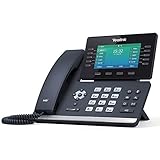
- Mid-level phone, ideal for professionals and managers with moderate call load
- Ergonomic design with adjustable display
- Built-in Bluetooth, Wi-Fi
What equipment can you use?
The available setup depends on the provider and service. Possible equipment includes:
- A computer: Some services let you make calls using a computer and compatible audio equipment.
- An IP or VoIP phone: This phone is designed to connect to an IP-based service.
- A traditional telephone with an adapter: An analog telephone adapter or other compatible converter can connect some conventional phones to VoIP service.
Do not assume that every provider supports every device or setup. Check the provider’s compatibility and installation requirements before choosing equipment. The North Carolina Department of Justice VoIP guide describes these equipment options and consumer considerations.
Rank #2
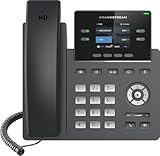
- Supports 4 SIP accounts and 4 multi-purpose line keys
- Swappable faceplate to allow for easy logo customization
- GRP2612W includes built-in dual-band Wi-Fi support. Ethernet cord must be disconnected to enable Wi-Fi capability
- HD audio supporting all major codecs, including wideband codecs G.722 and Opus Up to 16 digital BLF Keys
- Enterprise-level protection including secure boot, dual firmware images, and encrypted data storage
Does VoIP need an internet connection and power?
The interconnected VoIP definition requires broadband from the user’s location. Calls can also depend on local power for the modem, router, adapter, or phone, as well as the provider’s network. A power failure, internet disruption, or equipment problem may interrupt calling; whether a service has backup arrangements depends on the provider. Ask what continues to work during an outage and review the service terms rather than assuming VoIP will behave like a separately powered landline.
How does 911 work with an internet phone?
Register the service’s physical address with the provider so emergency calls can be associated with the correct location. If you move the phone or equipment, contact the provider to update the registered address. 911.gov warns that a call center cannot locate a VoIP caller unless the device has been registered to a physical address through the provider; see its 911 calling guidance.
Rank #3

- Make more natural and life-like calls with Polycom HD Voice
- 2. 8” color display: an engaging experience offering visual information at a glance
- Two Gigabit Ethernet ports offer cost savings and performance benefits
- USB port enables users to move data around more quickly
- Integrates with more than 60 industry leading call control platforms
Emergency-calling features and limitations vary by service. Before relying on VoIP for 911, confirm how the provider handles the registered location, what steps to take after a move, and what limits apply. The North Carolina DOJ guide also recommends confirming these details with the provider.
Independent reader supportYour contribution helps us test, update, and keep practical guides available for everyone.What should you check before signing up?
Service terms and equipment compatibility differ by provider. Use this checklist when comparing plans:
Rank #4

- NOT LANDLINE PHONE: PROFESSIONAL VOIP PHONE ONLY! This device is a Voice over IP (VoIP) Phone and is NOT compatible with standard home landline/PSTN connections (RJ11). It REQUIRES a subscription to a SIP Service Provider (e.g., VoIP.ms, RingCentral, ) or an Active PBX System (e.g., 3CX, Asterisk, FreePBX) and network configuration to function.
- CRYSTAL CLEAR HD AUDIO & NOISE REDUCTION: Featuring advanced noise reduction technology and wideband codecs like G.722 and Opus, this VoIP phone ensures high-definition voice transmission. The HD handset and speaker provide stable, professional-grade communication even in busy or noisy office environments.
- ENHANCED 6-PARTY CONFERENCING: Boost team collaboration with built-in 6-party conference support, allowing real-time multi-party communication without external bridges. Designed for busy professionals, it streamlines workflows and provides an efficient collaboration experience.
- VIBRANT COLOR DISPLAY & ERGONOMIC DESIGN: Equipped with a 2.4-inch 320x240px color display with an adjustable backlight for high-resolution graphics. The versatile stand adjusts to 60° and 45° for desk use or a 15° wall-mount angle to suit any workspace layout.
- SEAMLESS CONNECTIVITY & POE SUPPORT: This T52P model supports 2 SIP accounts and features dual 100M Ethernet ports. It is powered via Power over Ethernet (PoE) for a clean setup, and unlike many competitors, it includes a dedicated 5V/1A power adapter for flexible installation.
- Can you place calls to and receive calls from ordinary telephone numbers?
- Which computers, IP phones, traditional phones, or adapters are supported?
- What happens to calling during a power outage, broadband failure, or equipment problem?
- How do you register and update the 911 service address, and what emergency-calling limits apply?
- What are the contract length, cancellation or early termination fees, automatic-renewal terms, and trial-period dates?
- Are there usage limits or other conditions on plans described as “unlimited”?
These are questions to verify in the current provider’s terms, not fixed features of internet telephone service.
Quick wins for a faster PC:
Repair Windows errors before they cause bigger problemsFix Now →Fix the driver behind crashes, sound loss and screen glitchesFind Drivers →Quick Recap
Product prices and availability are accurate as of the date/time indicated and are subject to change. Any price and availability information displayed on Amazon at the time of purchase will apply.

