
iTechGuides is reader-supported. When you buy through links on our site, we may earn an affiliate commission. As an Amazon Associate I earn from qualifying purchases. Learn more
A distributed storage network is a system that stores and serves data across many connected computers, called nodes, instead of keeping it on one central server. In peer-to-peer and decentralized designs, each participant holds part of the overall data and the nodes coordinate through shared network protocols. The word “distributed” describes where the data sits. It does not, by itself, promise that the data will be kept permanently, stay private, or remain reachable at all times.
The core definition
A distributed storage network spreads storage across networked machines. A single provider does not hold the whole dataset, and no single machine is required for the data to be found. Ethereum.org describes decentralized storage as a peer-to-peer network of user-operators, each holding portions of the overall data (Ethereum.org, “Decentralized Storage,” last updated May 13, 2026). Swarm describes itself as a peer-to-peer storage and communication network (Swarm Documentation, “What is Swarm?”).
The terms are used loosely, so it helps to separate them:
The Tool Desk
Outbyte Driver Updater FREEScan for outdated or missing drivers - takes under a minuteDriver Scan →Outbyte PC Repair FREERepair Windows errors before they cause bigger problemsFix Now →- Distributed storage network is the broad term for any storage architecture spread across networked machines.
- Decentralized storage usually emphasizes independently operated peers and less dependence on one controlling server. How much control is actually spread out varies between implementations, including who runs the nodes and who sets policy.
- Blockchain-based storage is one design choice within this category, not a requirement. Many distributed storage systems do not use a blockchain for their data.
Storage network versus distributed ledger
People often confuse a storage network with a distributed ledger. A ledger records commitments, payments, or pointers to data, while the bulk data itself usually lives elsewhere. Ethereum.org notes that Ethereum was not designed to store large amounts of data directly on-chain. In a contract-based arrangement, the chain may hold a hash of the data’s location while the nodes hold the data itself.
#1 Best Overall

- Value NAS with RAID for centralized storage and backup for all your devices. Check out the LS 700 for enhanced features, cloud capabilities, macOS 26, and up to 7x faster performance than the LS 200.
- Connect the LinkStation to your router and enjoy shared network storage for your devices. The NAS is compatible with Windows and macOS*, and Buffalo's US-based support is on-hand 24/7 for installation walkthroughs. *Only for macOS 15 (Sequoia) and earlier. For macOS 26, check out our LS 700 series.
- Subscription-Free Personal Cloud – Store, back up, and manage all your videos, music, and photos and access them anytime without paying any monthly fees.
- Storage Purpose-Built for Data Security – A NAS designed to keep your data safe, the LS200 features a closed system to reduce vulnerabilities from 3rd party apps and SSL encryption for secure file transfers.
- Back Up Multiple Computers & Devices – NAS Navigator management utility and PC backup software included. NAS Navigator 2 for macOS 15 and earlier. You can set up automated backups of data on your computers.
ITU-T F.751.2, a reference framework for distributed ledger technologies published in 2020, describes layered architecture for ledger applications. It is useful background for DLT systems, but it is not a general definition of distributed storage.
How a distributed storage network handles data
Most systems follow a similar sequence, although the details differ:
- A client submits a file or dataset to the network.
- The system assigns identifiers to the data and may split it into smaller pieces.
- A placement or routing layer distributes those pieces among nodes.
- An index or addressing mechanism makes the pieces findable later.
- A client retrieves the data through a network interface, gateway, or API.
Many systems add redundancy so that data can still be recovered when a node fails or goes offline. How much protection this gives depends on the specific design and on how nodes behave in practice. The sources reviewed do not establish a universal redundancy level for the category.
Do these 3 things before closing this tab:
1Repair Windows errors before they cause bigger problems2Scan for outdated or missing drivers - takes under a minute3Clear out junk files and repair common Windows errorsRank #2
- Value NAS with RAID for centralized storage and backup for all your devices. Check out the LS 700 for enhanced features, cloud capabilities, macOS 26, and up to 7x faster performance than the LS 200.
- Connect the LinkStation to your router and enjoy shared network storage for your devices. The NAS is compatible with Windows and macOS*, and Buffalo's US-based support is on-hand 24/7 for installation walkthroughs. *Only for macOS 15 (Sequoia) and earlier. For macOS 26, check out our LS 700 series.
- Subscription-Free Personal Cloud – Store, back up, and manage all your videos, music, and photos and access them anytime without paying any monthly fees.
- Storage Purpose-Built for Data Security – A NAS designed to keep your data safe, the LS200 features a closed system to reduce vulnerabilities from 3rd party apps and SSL encryption for secure file transfers.
- Back Up Multiple Computers & Devices – NAS Navigator management utility and PC backup software included. NAS Navigator 2 for macOS 15 and earlier. You can set up automated backups of data on your computers.
A concrete example: Swarm’s architecture
Swarm is one implementation, and its documentation describes four layers: a peer-to-peer underlay that handles connections and routing, an overlay network with a distributed immutable store, a data-access and API layer, and an application layer. Its overlay uses Kademlia-style distributed hash table routing. Data is stored as fixed-size 4 KB chunks, each with a unique address, distributed across the network (Swarm Documentation, “What is Swarm?”). The 4 KB chunk size and this layout belong to Swarm alone. Other distributed storage networks use different chunking, placement, and addressing approaches, or none of these.
Persistence: keeping data available over time
A network needs a persistence mechanism if users expect data to remain available over months or years. Ethereum.org describes several models, and each one answers the question of who keeps the data differently.
Blockchain-based persistence
Here every node accounts for the chain and the data embedded in it. Ethereum.org says this approach runs into scalability and cost constraints when the data is large, which is why it is generally not used for bulk storage.
Rank #3
- Value NAS with RAID for centralized storage and backup for all your devices. Check out the LS 700 for enhanced features, cloud capabilities, macOS 26, and up to 7x faster performance than the LS 200.
- Connect the LinkStation to your router and enjoy shared network storage for your devices. The NAS is compatible with Windows and macOS*, and Buffalo's US-based support is on-hand 24/7 for installation walkthroughs. *Only for macOS 15 (Sequoia) and earlier. For macOS 26, check out our LS 700 series.
- Subscription-Free Personal Cloud – Store, back up, and manage all your videos, music, and photos and access them anytime without paying any monthly fees.
- Storage Purpose-Built for Data Security – A NAS designed to keep your data safe, the LS200 features a closed system to reduce vulnerabilities from 3rd party apps and SSL encryption for secure file transfers.
- Back Up Multiple Computers & Devices – NAS Navigator management utility and PC backup software included. NAS Navigator 2 for macOS 15 and earlier. You can set up automated backups of data on your computers.
Contract-based persistence
Multiple nodes agree to hold data for a set period. The contract may require renewal, and funds may be refunded when it expires. The chain can store the location hash instead of the data, so the agreement is recorded on-chain while the bytes sit with the storage nodes. Someone must renew the contract, or the storage commitment ends.
IPFS with pinning or another persistence arrangement
IPFS supports storing and accessing files, websites, applications, and other data. It does not include an incentive scheme of its own. Ethereum.org names pinning services and running a node as ways to help keep content available. Content that nobody pins or stores may not stay available, so the persistence question moves to whoever takes on that role.
Retention challenges
Some networks use cryptographic challenges to ask nodes to prove they still hold the data. Ethereum.org cites Arweave as an example where failed challenges carry penalties. A challenge shows that a node held the data when it was tested. It does not guarantee that the data will still be there next year unless the challenge schedule and penalties are designed for that goal.
Rank #4

- This Micro NAS is Powered by Intel 12th Gen Alder Lake-N processor i3-N305(8C/8T,up to 3.8GHz,Smart Cache 6MB),which can greatly improve the performance of the computer while reducing energy consumption.Pre-installed Win11/10, is a ideal computer for data storage.
- Support 1*SO-DIMM DDR5 4800MHz Max 48GB and 4*M.22280 NVMe PCle3.0x1 ,comes with 2 * HDMI2.0 (4K 4096 x 2160@60Hz),2 * Intel i226-V(2.5GbE)and 2 * USB3.2 Gen2 (10Gbps),M.2 B_KEY Slot supports BT5.4/WiFi6/WiFi7 module.
- With M.2 PCIe3.0 x4 signal of this motherboard,this pocket NAS,through the adapter board, it splits out four 4*M.2 2280 NVMe SSD hard drives, enabling you to have large-capacity and high-speed storage space. This NAS is a great helper for storing documents, photos and data.
- This NAS is equipped with an advanced cooling system. Heat is conducted by copper sheets to aluminum profiles for heat dissipation. It has a built-in 7010 ball bearing fan(PMW temperature-controlled silent fan). Additionally, a optional 7015 USB cooling fan can be installed on the outer casing of the machine to ensure its continuous, stable and reliable operation.
- A compact and portable NAS server with a size of only 100mm × 100mm × 58.5mm,it can be directly put into the pocket, which is convenient for you to carry it around and conduct mobile office work in different workplaces.
Mechanisms are not guarantees
Each model above is a mechanism, not a promise. Saying “the network distributes data” is different from saying “a named provider commits to keep it for a stated term.” For any service, you should be able to answer who handles renewals, who is responsible for recovery, and who can grant or block access.
| Persistence model | Who holds the data | Retention enforcement | Renewal or ongoing duty | Main stated limitation |
|---|---|---|---|---|
| Blockchain-based | Every node that keeps the chain and embedded data | Not stated as a separate mechanism in Ethereum.org’s description | Not stated | Scalability and cost for large data |
| Contract-based | Nodes that agreed to hold data for a period | Set by the contract terms | Contract may require renewal; refund on expiry | Upkeep is required; data lapses if the contract is not maintained |
| IPFS with pinning | Whoever pins or runs a node holding the content | Not stated; IPFS has no built-in incentive scheme | Depends on the pinning arrangement | Availability depends on someone keeping the content pinned |
| Challenge-based (e.g., Arweave, as cited) | Nodes that answer retention challenges | Cryptographic challenges with penalties | Not stated in the cited description | A passed challenge shows possession at the time of testing |
What to check before relying on one
- Distribution is about placement. Spreading data across nodes can reduce dependence on one server. It does not remove single points of failure in gateways, software, governance, or access paths.
- Redundancy depends on design. Replication and erasure coding are different ways to add resilience. Ask how many copies or fragments exist, and what happens when nodes leave.
- Persistence has to be funded and operated. Look for the retention period, renewal obligations, incentives, and what happens if a node disappears.
- Privacy and security are separate questions. Distribution does not establish encryption, access control, or safe configuration. NIST SP 800-209, “Security Guidelines for Storage Infrastructure” (final October 26, 2020), covers authentication and authorization, configuration control, data protection, restoration assurance, and encryption for storage infrastructure.
- Usability depends on retrieval. Check the API, gateway, addressing scheme, and recovery process. A network that stores data is not automatically the same as consumer cloud sync or a conventional backup service.
Comparing two or more systems
When you evaluate options, compare them on the same points:
What’s actually slowing this PC down?
Pick the symptom - the matching free tool is one click away.
- Persistence and incentives: on-chain replication, storage contracts, provider commitments, or user-run pinning.
- Retention enforcement: proof or challenge design, contract terms, renewal duties, and remedies for failed storage.
- Placement and redundancy: what is replicated or chunked, and how retrieval works when a node fails.
- Decentralization and governance: who operates nodes and who controls gateways or policy. Ethereum.org cautions that measuring decentralization is difficult.
- Access and performance: the APIs and retrieval path differ by system. The sources reviewed do not establish comparative latency or throughput figures, so no system should be called faster without current, independent measurements.
- Security and operations: access control, encryption, configuration, incident response, and restoration assurance, as emphasized in NIST SP 800-209.
- Cost and term: separate the initial upload cost, ongoing storage, retrieval charges, and renewal. Ethereum.org notes that mainnet storage costs can make large data impractical, and that contract-based storage requires upkeep.
Why distribution alone is not a safety guarantee
NIST notes that more complex storage management increases the chance of configuration errors and the security threats that follow from them. Its recommendations cover general IT security controls as well as storage-specific ones such as data protection, isolation, restoration assurance, and encryption. A distributed system can spread infrastructure across machines while still exposing users to misconfiguration, weak access control, compromised endpoints, unreliable retrieval, or governance risks. The sources reviewed do not provide comparative breach rates or measured availability for any system, so the risk of any particular network cannot be quantified from them.
Best Value
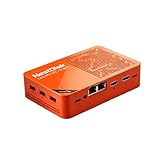
- [Plug and Play Private Cloud Experience] YOUYEETOO Nest Disk NAS Mini PC is a pre-installed with the OpenMediaVault system, requiring no complex configuration. Simply power it on and connect to the network to activate full NAS functionality. It supports multi-language operating systems, including Windows 11, Ubuntu, and Linux. Its plug-and-play capability enables use as private cloud storage, easily transforming into an HTPC (Home Theatre PC) or software-defined router to meet diverse needs for home entertainment, light office work, and network management.
- [Four-Bay NVMe Storage Architecture] YOUYEETOO Nest Disk NAS Mini PC Network Attached Storage NAS Kit supports up to four NVMe SSDs, delivering high-speed, stable and massive storage capacity. It ensures rapid internal network transfers and multi-device access speeds. Users can establish team project repositories, complemented by Wi-Fi 6 and Bluetooth 5.2 wireless connectivity, enabling efficient data sharing and multi-device synchronisation.
- [12GB DDR5 Multitasking Engine] YOUYEETOO Nest Disk Mini PC NAS Kit features 12GB of DDR5 RAM memory, leveraging its high bandwidth and low latency to effortlessly handle multiple concurrent tasks. It not only manages multitasking and virtual machine operations with ease but also supports light gaming and 4K video streaming. Consequently, it fulfils the entertainment and work requirements of home office professionals.
- [Compact All-in-One Office Mini PC] YOUYEETOO Nest Disk NAS mini computer features an ultra-compact design measuring just 146×97.5×32 millimetres, allowing it to be discreetly positioned behind a monitor. Once connected to a keyboard, mouse and display, it transforms into a fully functional office computer—ideal for document editing, online learning and other daily tasks. This makes it the perfect mobile office solution for space-constrained environments.
- [Triple 4K Collaborative Workspace] YOUYEETOO Nest Disk NAS Supports triple 4K 60Hz signal output via dual HDMI & Type-C ports, compatible with 4K monitors for multi-screen productivity and entertainment. Operates as a Theatre Media Centre for seamless playback of high-definition content, catering to financial multi-screen operations, audio-visual editing, and multilingual interface requirements. An efficient assistant for creative professionals and office users alike.
Ethereum.org and Swarm’s documentation describe how their systems are designed. They do not establish how any given network performs in practice, so test retrieval and recovery against your own requirements before storing anything important.
Digital technical documentation is the main reference for this topic. The sources reviewed do not establish a particular physical hardware product as necessary for a distributed storage network, so this article does not recommend one.
Ethereum.org’s own list of providers is a snapshot, and naming current providers in any evaluation should start from the provider’s own documentation.
PC Slower Than It Used to Be?
A free scan shows the junk files, broken settings and background clutter dragging Windows down - then fixes them in one click.Free scan · Windows 10 & 11Crashes, No Sound, or Screen Glitches?
Random freezes, missing sound and display glitches usually trace back to one bad driver. Find and replace yours safely.Free scan · under a minuteHardware: general storage media such as HDDs and SSDs appear in NIST’s description of storage infrastructure, but no specific drive, server, or NAS is required.
Quick Recap
“
Product prices and availability are accurate as of the date/time indicated and are subject to change. Any price and availability information displayed on Amazon at the time of purchase will apply.

