
A recused Supreme Court justice does not participate in that case. The Court can usually continue: it needs at least six participating justices for a quorum. If the participating justices split evenly, the judgment being reviewed remains in place, but the Court gives no reasons and creates no merits precedent. If fewer than six justices can participate, the Court may be unable to act; what follows depends on the case’s procedural posture.
What does it mean when a Supreme Court justice recuses?
Recusal means that a justice does not take part in a particular matter. It is not a decision about whether the case is right or wrong, and it does not by itself resolve the case. The Supreme Court’s Code of Conduct says a justice should participate in matters assigned unless disqualified. The Code and federal law, including 28 U.S.C. § 455, provide guidance on disqualification. The Court’s Code of Conduct was published in 2023.

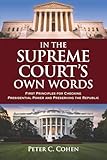

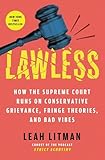

A docket may record that a justice “took no part” and sometimes identify a legal or Code provision. A party may suggest that a justice recuse, but such a request does not automatically require recusal; the Court’s docket records the Court’s disposition and stated grounds.
Can the Supreme Court still decide a case if a justice recuses?
Yes, if at least six justices remain able to participate. The Court’s General Information FAQ states that a quorum of six justices is required to decide a case. So one recusal does not, on its own, prevent the Court from proceeding.
#1 Best Overall
Justices may participate after listening to recordings of oral argument and reading the transcripts, as the Court’s FAQ explains. Whether the participating justices reach a majority or an even split determines the result.
What happens if the justices tie?
If the participating justices divide evenly, the Court affirms the judgment it took up for review. That leaves the lower court’s judgment in force in that case. The Supreme Court does not explain its reasoning in an equal-division disposition, and the disposition does not count as precedent resolving the underlying legal issue.
Rank #2
Justice Sonia Sotomayor described this effect in a July 22, 2011 speech: “When that happens, we announce that the judgment we took up for review is affirmed by an equally divided Court. We state no reasons and the disposition does not count as precedent.” She also reported that two of 78 argued cases ended in an even division during the 2010–2011 Term; that historical count is not a measure of how often ties occur today. Read the speech.
What happens if the Court does not have a quorum?
If fewer than six justices can participate, the Court may lack authority to decide the matter. The consequences are not identical in every case: they can depend on whether the matter is a petition for review, a pending merits case, or a direct appeal, as well as on the applicable law.
Rank #3
One example is In re Yi Tai Shao, No. 25-1345. The docket states that all eight justices were recused, the Court lacked a quorum and could not act on the petition, and the case was considered closed on June 29, 2026. That is an example of what happened in that petition, not a universal rule for all cases without a quorum. View the docket.
Section 2109 appears in Court docket language and court-filed discussion of certain no-quorum situations, including a limited route involving remitting a direct appeal to a court of appeals. It should not be understood as a remedy available in every case or procedural posture.
Rank #4
How are potential conflicts checked?
The Court announced revised Rules on February 17, 2026, supporting automated checks for potential conflicts. The software compares case-party and attorney information with lists maintained by each justice’s chambers and supplements existing chamber conflict-checking procedures. The revisions took effect March 16, 2026. The software helps identify potential conflicts; it does not itself decide whether a justice must recuse. Read the Court’s announcement.
Quick Recap
Best Value
Product prices and availability are accurate as of the date/time indicated and are subject to change. Any price and availability information displayed on Amazon at the time of purchase will apply.
Quick wins for a faster PC:
Fix the driver behind crashes, sound loss and screen glitchesFind Drivers →Clear out junk files and repair common Windows errorsFree Scan →Scan for outdated or missing drivers - takes under a minuteDriver Scan →
