
iTechGuides is reader-supported. When you buy through links on our site, we may earn an affiliate commission. As an Amazon Associate I earn from qualifying purchases. Learn more
When a footballer cannot continue, the referee manages the stoppage and the player’s exit; the coach decides whether to use an available replacement under that competition’s rules. A suspected concussion is different: the player must be removed for medical assessment, and a quick check on the touchline is not proof that they are safe to return.
What happens on the pitch when a player is injured?
If a player is only slightly injured, the referee may allow play to continue until the ball is out of play. For a serious injury, the referee stops play and ensures the player is removed from the field, subject to the exceptions in Law 5. The referee controls the stoppage; medical staff assess the player, and the coach decides whether to make an available substitution.
Treatment and return to the field are governed by the Laws of the Game. In general, an injured player may re-enter only after play has restarted. See IFAB Law 5: The Referee.
Quick wins for a faster PC:
Clear out junk files and repair common Windows errorsFree Scan →Fix the driver behind crashes, sound loss and screen glitchesFind Drivers →Repair Windows errors before they cause bigger problemsFix Now →How does an ordinary substitution work?
- The team informs the referee of the proposed substitution.
- The outgoing player leaves the field. Under the 2026/27 IFAB changes, a substituted player must leave within ten seconds of the substitution board being displayed or the referee giving the signal.
- During a stoppage, the substitute enters at halfway after the outgoing player has left and once the referee signals permission.
- The substitution is complete when the substitute enters. The replaced player then takes no further part, except where return substitutions are permitted.
These are the general steps in IFAB Law 3: The Players. The ten-second exit requirement is a 2026/27 change; check whether and how the relevant competition has implemented it.
#1 Best Overall
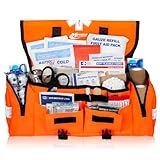
- Complete Youth Sports First Aid Kit for Coaches & Trainers - Be ready for any field emergency with this 326-piece athletic first aid kit, designed specifically for youth sports, soccer teams, and football. Trusted by professionals for comprehensive first aid for sports.
- Emergency Sports Kit with Portable Design - Adjustable shoulder straps and a durable orange EMT-style bag make this coach first aid solution easy to carry. Ideal first aid kit for soccer team, youth football, and all sporting events.
- Comprehensive First Aid Supplies for Sports - Packed with high-quality sports first aid supplies—bandages, antiseptics, cold packs, wraps, and more. An all-in-one first aid emergency kit that covers injuries from bruises to cuts and strains.
- Tailored Athletic Medical Kit for Coaches - The MFASCO first aid kit for coaches is purpose-built for fast and effective response. Whether you're on the sidelines of a youth game or in training, this kit ensures reliable care on the spot.
- High-Visibility Coach’s First Aid Kit Bag - Stay visible and accessible in any sports emergency. The bright orange soccer first aid kit bag is instantly recognizable, making it easy to locate when every second counts.
How many substitutions are allowed?
There is no single number that applies to every match. IFAB permits national associations, confederations and FIFA to allow up to five substitutes in official competitions, with conditions and limits on substitution opportunities governed by Law 3 and the competition’s rules. Check the rules for the specific league or tournament rather than assuming that every team has the same allowance. See IFAB Law 3.
What changes under the 2026/27 injury rules?
Under IFAB’s 2026/27 changes, a player who receives an on-field injury assessment, or whose injury causes play to be stopped, must leave the field and remain off it for one minute of running time after play restarts. This is distinct from the ten-second exit timing for a substituted player: the one-minute period concerns a player who has received the specified injury assessment or whose injury caused the stoppage, not every substitution.
Rank #2

- Comprehensive First Aid Kit for Sports Teams: Includes adhesive bandages, antibiotic ointments, BZK antiseptic towelettes, butterfly closures, gauze roll and pads, gloves, scissors, tweezers, sting relief wipes, anti-itch cream, and elastic bandages
- Convenient Duffel Bag: Easy to transport from home to the field, this first aid bag features a shoulder strap to keep your hands free with plenty of pockets and compartments to keep you organized
- Easy Access: A front buckle and multiple zip compartments keep it easy to access the first aid supplies you need in an emergency, on or off the field
- Compact Size: Measuring 14.25 x 8.25 x 6.5 inches, this emergency kit will sit neatly under any bench as a soccer first aid kit, basketball first aid kit, football first aid kit, volleyball first aid kit, or baseball first aid kit
- Great for Coaches and Parents: This ideal set of basketball, baseball, soccer, and football coaching supplies also makes a great set of sports parents' essentials for anyone helping a young athlete practice at home or recover from an injury
These are IFAB changes, and their adoption or implementation may depend on the competition. For the current wording, see the IFAB Laws of the Game and the relevant competition rules.
What happens if a player might have a concussion?
Suspected concussion calls for immediate removal from play and medical assessment. FIFA describes FOCUS as an on-pitch tool for clinicians to identify a player who needs formal concussion assessment; it is not a reason to treat a brief sideline check as a diagnosis. FIFA advises that an on-pitch medical assessment follow its Emergency Care Manual, and that a life- or limb-threatening injury takes priority. Its public guidance says a person with symptoms should see a doctor as soon as possible and within 24 hours, with return to play following medical advice. See FIFA concussion guidance and the FIFA Concussion Awareness Campaign.
Rank #3

- Great for Team Sports like Football, Baseball & Soccer
- Includes over 290 Pieces of Necessary First Aid Supplis Including extra Cold Packs and Extra Elastic Bandages for Sprains and Strains
- Packed in A Bright Orange EMT Style Bag with Adjustable & Removable Shoulder Straps
- Easy To Refill And Reuse for Next Season - Includes Necesaary Sporting Supplies such as nosebleed plugs, moleskin, and athletic tape
- Includes Supplies to Treat Outdoor injuries not typically included with most sports first aid kits like sting relief, sunburn gel and lip guard
Symptoms may not be obvious immediately. FIFA says they can take up to 72 hours to appear. Its listed signs include headache or pressure, nausea or vomiting, balance problems, dizziness, visual disturbance, sensitivity to light or noise, memory problems, drowsiness, confusion and difficulty focusing. Warning signs requiring urgent attention include a worsening headache, repeated vomiting, seizure, weakness or numbness, and difficulty waking. These signs can help prompt recognition, but they do not diagnose concussion. See FIFA signs and symptoms.
When a competition permits a concussion substitution
IFAB’s additional permanent concussion substitution protocol applies only when the competition permits it. Under that protocol, a team may use a maximum of one concussion substitute, regardless of how many ordinary substitutes it has already used. The player with actual or suspected concussion cannot take any further part in the match, including a penalty shoot-out, and the opposing team is offered an additional substitute and substitution opportunity.
Rank #4

- Comprehensive 73-pc kit designed to treat various sports-related injuries. Ideal to clean, treat and protect your team’s cuts, abrasions and muscle sprains
- Lightweight roll up bag with adjustable and removable shoulder strap-versatile to wear over your shoulder or across body. Dimensions are 4.5in x 10in x 4.25in
- 4 clear PVC pockets with zippers for easy use and organization. Built in hanging hook for convenient portability and storage
- Manufactured by the #1 Leading Brand in First Aid kits and Emergency Essentials in the USA
- Meets US FDA Regulatory Standards
A concussion substitution may follow an on-field or off-field assessment, or be made if concussion is suspected later—even if the player previously returned to the field. These rules do not apply automatically in every competition. Check the event’s regulations and the IFAB Law 3 concussion protocol.
Crashes, No Sound, or Screen Glitches?
Random freezes, missing sound and display glitches usually trace back to one bad driver. Find and replace yours safely.Free scan · under a minuteWindows Errors? Fix Them Before They Spread
Repair common Windows errors and clear accumulated junk for a smoother, more stable PC - no reinstall needed.Free scan · no reinstallOrdinary substitution and concussion substitution: what is different?
| Question | Ordinary substitution | Concussion substitution |
|---|---|---|
| Does it depend on competition rules? | Yes. The competition sets the available number and relevant limits. | Yes. The competition must permit the protocol. |
| Does it use an ordinary substitute? | Yes; it is subject to ordinary substitution limits and opportunities. | The protocol allows a maximum of one concussion substitute regardless of ordinary substitutions already used. |
| Can the outgoing player return? | Generally no, except where return substitutions are permitted. | No. The player cannot take further part, including in a penalty shoot-out. |
| Does the opposing team receive an additional option? | No additional option is specified for an ordinary substitution. | Yes. The opponent is offered an additional substitute and substitution opportunity. |
What does the coach decide when a player is forced off?
For an ordinary injury, the coach chooses whether to use a remaining substitution and which available player best fits the match. The decision may involve the replacement’s role, the team’s formation, the score and the match situation, as well as substitutions and opportunities remaining. Those are tactical considerations, not medical rules. An early exit alone does not establish the player’s diagnosis or recovery timeline.
Quick Recap
Best Value

- TEAM SPORTS: This mobile first aid kit is built specifically with athletes and outdoor enthusiasts in mind. Our sports first aid kit comes stocked with the essentials and organized in our high quality foam carry case for easy portability.
- FIRST AID KIT FOR SPORTS TEAM: While other companies may build their kits specifically for certain activities like a specific first aid kit for soccer, we have taken a holistic approach to combine elements that should cover all sports teams needs.
- FIRST AID KIT FOR SPORTS: Whether you're playing baseball, basketball, tennis, soccer, or volleyball, we've got you covered with our team oriented first aid kit for school. Perfect as a college kit for intercollegiate sports activities as well.
- THE RIGHT SAFETY COMPONENTS: While other imitation team kits are really just first aid kits dressed up as team safety kit, our kits are specifically built by people who know sports and play sports and know what a true team first aid pack should hold
- COMPONENTS THAT MATTER: Our sports first aid kits have the essntials like various sizes of bandages, but in addition to this contain ice packs, finger splints, adhesive tape and co-flex elastic wrap, in addition to many more essential safety items
Product prices and availability are accurate as of the date/time indicated and are subject to change. Any price and availability information displayed on Amazon at the time of purchase will apply.

