
iTechGuides is reader-supported. When you buy through links on our site, we may earn an affiliate commission. As an Amazon Associate I earn from qualifying purchases. Learn more
What does i7 mean? It is Intel’s Core i-series performance-tier label—not a complete specification or a guarantee that one processor will outperform another. To judge an i7, check its full model name, generation or series, suffix, desktop or laptop segment, and specifications relevant to your workload.
What does i7 mean?
In Intel’s Core i-series naming, “i7” identifies a performance tier. It helps distinguish a product’s broad place in that family, but it does not tell you the exact processor, its age, power class, or how it will perform in a particular computer.
Intel’s comparison guidance groups processors by generation and tier, and points readers to product briefs and specifications for meaningful comparisons. Treat the tier as a starting clue; the full model identifier and its specifications are what you need to compare. Intel’s processor naming guide explains the naming families and conventions.
Quick wins for a faster PC:
Scan for outdated or missing drivers - takes under a minuteDriver Scan →Repair Windows errors before they cause bigger problemsFix Now →Is i7 better than i5?
Within a relevant Intel Core family, i7 is a higher performance tier than i5. But the label alone cannot rank processors from different generations, model lines, or power classes. A particular i5 and i7 may differ in ways that matter more to your task than the tier name suggests.
#1 Best Overall

- Game Without Compromise. Play harder and work smarter with Intel Core 14th Gen processors
- 20 cores (8 P-cores plus 12 E-cores) and 28 threads. Integrated Intel UHD Graphics 770 included
- Up to 5.6 GHz with Turbo Boost Max Technology 3.0 gives you smooth game play, high frame rates, and rapid responsiveness
- Compatible with Intel 600-series (with potential BIOS update) or 700-series chipset-based motherboards
- DDR4 and DDR5 platform support cuts your load times and gives you the space to run the most demanding games
Compare the exact model numbers and specifications for the workload you care about, such as the capabilities your software needs. For desktop Core processors, Intel’s comparison guidance directs readers to generation-specific briefs when comparing i3, i5, i7, and i9 models. Intel’s desktop Core tier comparison guidance is a useful starting point.
How to read the full processor name
Start with the complete name shown in the computer’s specifications or by an Intel processor identification tool. Do not decode every Intel name using one universal formula: Intel has multiple product families, including Core Ultra, newer Core processors, and older Core i-series chips.
Rank #2
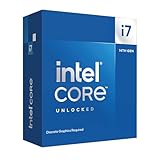
- Game Without Compromise. Play harder and work smarter with Intel Core 14th Gen processors
- 20 cores (8 P-cores plus 12 E-cores) and 28 threads. Discrete graphics required
- Up to 5.6 GHz with Turbo Boost Max Technology 3.0 gives you smooth game play, high frame rates, and rapid responsiveness
- Compatible with Intel 600-series (with potential BIOS update) or 700-series chipset-based motherboards
- DDR4 and DDR5 platform support cuts your load times and gives you the space to run the most demanding games
In older names such as Core i7, the tier appears as “i7,” followed by a model identifier that helps distinguish the processor. The model identifier and product specification page are needed to establish the specific generation and capabilities.
Newer Core naming uses a different convention. Intel says Core Series processors use a three-digit system, with the first digit indicating the series—for example, a leading 1 indicates Series 1, a leading 2 indicates Series 2, and so on. That system should not be applied to older Core i7 names. Intel’s Core Series naming guidance describes the newer format.
Rank #3
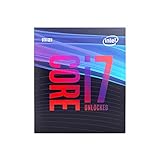
- 8 Cores / 8 Threads
- 3.60 GHz up to 4.90 GHz / 12 MB Cache
- Compatible only with Motherboards based on Intel 300 Series Chipsets
- Intel Optane Memory Supported
- Intel UHD Graphics 630
What do the letters after i7 mean?
Suffixes offer clues about a processor’s product segment and intended characteristics. Intel describes these categories as follows; they are not a substitute for comparing the specifications of the exact chips.
- K: High-performance desktop processor with an unlocked SKU.
- F: Requires discrete graphics.
- HX and HK: Highest-performance mobile options; Intel identifies unlocked SKUs in these categories.
- H: Highest-performance mobile category.
- P: Performance-optimized category for thin-and-light laptops.
- U: Power-efficient category.
These suffixes describe broad categories, not guaranteed results in a specific computer. For the complete suffix list and Intel’s definitions, see the processor naming guide.
Rank #4

- 4 Cores / 8 Threads
- 3.60 GHz up to 4.20 GHz Max Turbo Frequency / 8 MB Cache. Sockets Supported: FCLGA1151, Max Memory Size: 64 GB, Memory Types: DDR4-2133/2400, DDR3L-1333/1600 at 1.35V
- Compatible only with Motherboards based on Intel 100 or 200 Series Chipsets
- Intel Optane Memory Supported
- Intel UHD Graphics 630
Why desktop and laptop i7 processors are different comparisons
Desktop and mobile processors belong to different product contexts. Intel says boxed desktop CPUs are sold through retailers for system builders, while mobile processors are supplied to computer manufacturers and sold in laptops and 2-in-1 PCs. A laptop i7 and a desktop i7 should therefore not be assumed to be interchangeable or directly comparable from the tier name alone.
Do these 3 things before closing this tab:
1Fix the driver behind crashes, sound loss and screen glitches2Repair Windows errors before they cause bigger problems3Scan for outdated or missing drivers - takes under a minuteTo identify a specific processor’s segment, Intel recommends checking the “Vertical Segment” field on its product specification page. For laptop models, Intel provides comparison charts that can be filtered by generation and tier; the listed coverage spans Core processors starting with Series 1 and older Core i processors through 5th generation. For older processors beyond that coverage, Intel directs readers to a separate side-by-side specification resource. Intel’s laptop processor comparison chart describes its comparison scope.
Best Value
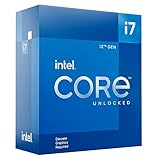
- Intel Core i7 3.60 GHz processor offers more cache space and the hyper-threading architecture delivers high performance for demanding applications with better onboard graphics and faster turbo boost
- The Socket LGA-1700 socket allows processor to be placed on the PCB without soldering
- 11 MB L2 and 25 MB L3 cache offers supreme performance for computation intensive apps
- Intel 7 Architecture enables improved performance per watt and micro architecture makes it power-efficient
How to compare two i7 processors
- Write down each full model name. A tier label such as i7 is not precise enough to identify a processor.
- Identify the naming family and generation or series. Distinguish older Core i-series names from newer Core series and Core Ultra names.
- Check desktop versus mobile status and suffix. Use the product specification page’s Vertical Segment field and Intel’s suffix definitions.
- Compare specifications tied to your intended use. Use the relevant Intel comparison chart or generation-specific brief, then check the individual product specifications.
- For a desktop upgrade, verify platform compatibility. Do not choose a replacement CPU based on i7 alone; the available naming and comparison guidance does not establish motherboard or socket compatibility for a particular computer.
Intel’s laptop chart is intended for supported laptop comparisons, while its desktop guidance points to generation-specific briefs for desktop Core tiers. The right comparison resource depends on the processor segment and age.
What i7 means historically
Intel introduced Core i7 in 2008 as the first member of its Nehalem processor-design family. The launch announcement included contemporary specifications and a vendor-reported SPECint_base_rate2006 score of 117 for the launch part. That is a dated launch-era result, not a benchmark for current i7 processors or a basis for comparing modern models. Intel’s announcement also cautioned that actual performance may vary. Intel’s 2008 Core i7 launch announcement provides the historical context.
Quick Recap
Product prices and availability are accurate as of the date/time indicated and are subject to change. Any price and availability information displayed on Amazon at the time of purchase will apply.
The Tool Desk
Outbyte PC Repair FREEClear out junk files and repair common Windows errorsFree Scan →Outbyte Driver Updater FREEScan for outdated or missing drivers - takes under a minuteDriver Scan →
