
The Tool Desk
Outbyte Driver Updater FREEFix the driver behind crashes, sound loss and screen glitchesFind Drivers →Outbyte PC Repair FREEClear out junk files and repair common Windows errorsFree Scan →iTechGuides is reader-supported. When you buy through links on our site, we may earn an affiliate commission. As an Amazon Associate I earn from qualifying purchases. Learn more
Building AI products keeps bringing the same practical lessons into view: remember useful context, turn demo failures into tests, remove friction from real tasks, show the product working, and treat speed as part of the user experience. These are reflections from OCTYN’s DEV Community article, not results from a measured study; the accessible listing shows a September 28 posting date but does not establish the year.
Why does memory matter in an AI product?
When a system forgets useful context between sessions, the user has to provide it again. OCTYN frames persistent memory as a core product feature because it can reduce that repeated work: without it, the user effectively becomes the integration layer connecting one interaction to the next.
The practical design question is not simply whether to store information. It is whether the system can retain and reuse the context that makes a later interaction more useful, rather than making the user reconstruct it. As the article puts it, “If your system can’t remember, the user’s job becomes remembering for it.”
How should teams turn demo failures into tests?
A live demo can expose fragile inputs and failure cases that the person operating it has learned to anticipate. OCTYN’s lesson is to capture that operational knowledge and convert it into tests, so it does not remain only in one person’s memory.
#1 Best Overall
![Arduino® UNO™ Q 4GB [ABX00173]- Hybrid Board, Qualcomm Dragonwing QRB2210 microprocessor (MPU) & STM32U585 Microcontroller(MCU), AI Vision, Voice, IoT, Robotics, Linux Debian OS, Wi-Fi 5, USB-C](https://m.media-amazon.com/images/I/51cl4xygwGL._SL160_.jpg)
- Dual-Brain Hybrid Power: Combines the Qualcomm Dragonwing QRB2210 MPU (Quad-core Arm Cortex-A53 @ 2.0 GHz CPU, Adreno GPU, AI acceleration) and the real-time, low-power STM32U585 MCU for advanced applications like object recognition, voice commands, and motion detection.
- AI & Linux Capabilities: Unlocks AI-powered vision and sound solutions; runs Linux Debian OS for coding in Python and supports the Arduino ecosystem with libraries and Sketches; quick start with Arduino App Lab.
- Advanced Features: Equipped with 4 GB LPDDR4 RAM, 32 GB eMMC built-in storage, ideal for single-board computer (SBC) mode, running multiple simultaneous high-level processes, more complex AI or ML models, extensive logs. Dual-band Wi-Fi 5 (2.4/5 GHz), Bluetooth 5.1, and high-speed headers for vision, audio, and display peripherals.
- Seamless Expansion & Connectivity: Features the classic UNO form factor for shields compatibility, an 8x13 LED matrix, and a Qwiic connector for easy expansion with Modulino nodes; power and connect via the USB-C connector.
- Intended Use & Development: The perfect platform for prototyping robotics or IoT projects, empowering innovators with a unified development experience to mix Arduino Sketches, Python scripts, and containerized AI models in a single interface.
- Record the failure conditions. Note the inputs or interaction patterns that cause the demo to break or behave unexpectedly.
- Make each case reproducible. Preserve enough detail about the input and expected behavior for someone else to repeat the check.
- Add it to the test suite. Use the captured cases to check future changes instead of relying on the demo driver to catch the same problem again.
How can an AI product reduce friction in the task?
OCTYN’s expense-tracker example illustrates the difference between a product’s intended workflow and the effort it asks of a user. Typing each expense felt like homework; a one-line voice or widget interaction lowered the barrier in that product. This is an example from the author’s experience, not evidence that voice interfaces work better for every task or user.
The broader lesson is to examine the task itself: if a product depends on a habit the user does not have, the workflow may feel like extra work rather than help. As the article phrases it, “If your product depends on a habit the user doesn’t have, you don’t have a product, you have homework.”
Rank #2
- Dual-Brain Hybrid Power: Combines the Qualcomm Dragonwing QRB2210 MPU (Quad-core Arm Cortex-A53 @ 2.0 GHz CPU, Adreno GPU, AI acceleration) and the real-time, low-power STM32U585 MCU for advanced applications like object recognition, voice commands, and motion detection.
- AI & Linux Capabilities: Unlocks AI-powered vision and sound solutions; runs Linux Debian OS for coding in Python and supports the Arduino ecosystem with libraries and Sketches; quick start with Arduino App Lab.
- Advanced Features: Equipped with 2 GB LPDDR4 RAM, 16 GB eMMC built-in storage, ideal to develop in PC-connected mode, running the OS, Python scripts, and basic network services (SSH) without a demanding GUI or heavy multitasking; great for lightweight AI and memory-optimized TinyML applications, needing local storage for basic OS and core libraries. Dual-band Wi-Fi 5 (2.4/5 GHz), Bluetooth 5.1, and high-speed headers for vision, audio, and display peripherals.
- Seamless Expansion & Connectivity: Features the classic UNO form factor for shields compatibility, an 8x13 LED matrix, and a Qwiic connector for easy expansion with Modulino nodes; power and connect via the USB-C connector.
- Intended Use & Development: The perfect platform for prototyping robotics or IoT projects, empowering innovators with a unified development experience to mix Arduino Sketches, Python scripts, and containerized AI models in a single interface.
Why show the product working?
For OCTYN’s product, a live demonstration communicated more than written landing-page copy. Showing the product in use lets people see its actual behavior, including its imperfections, rather than relying only on claims about what it can do.
Recommended Free Tools
This is a product-specific judgment, not a universal rule that demonstrations outperform copy. Its useful implication is to make the experience visible when the behavior itself is central to understanding the product.
Rank #3
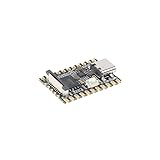
- Single core ARM Cortex-A7 32-bit core, integrated with NEON and FPU
- Built in Micro's self-developed 4th generation NPU, with high computational accuracy and support for mixed quantization of int4, int8, and int16. Among them, int8 has a computing power of 0.5 TOPS and int4 has a computing power of up to 1.0 TOPS
- Built in self-developed 3rd generation ISP3.2, supports 4 million pixels, and supports various image enhancement and correction algorithms such as HDR, WDR, and multi-level denoisin
- It has powerful encoding performance, supports intelligent encoding, adapts to save bit rates according to the scene, and saves more than 50% of the bit rate compared to conventional CBR mode, making the captured images high-definition, smaller in size, and doubling the storage space
- The design with built-in RISC-V MCU supports low-power fast startup, 250ms fast capture, and simultaneous loading of AI model library, enabling facial recognition to be completed within 1 second
Why do speed and friction affect trust?
OCTYN describes slow responses as a reason a user may close a tab, while a wrong answer can at least prompt a correction. The article treats this as an observation from building products, not a measured comparison of latency and error tolerance. Its concise formulation is: “Speed is a trust feature.”
Its closing synthesis is that users may be more forgiving of mistakes than of friction. That is a reported pattern in the article, not a quantified finding about users generally. For product teams, it is a reminder to consider the effort and waiting built into an interaction alongside the correctness of the answer.
Quick Recap
Rank #4

- 【POWERFUL ESP32‑S3 CONTROLLER】Built‑in Xtensa 32‑bit LX7 dual‑core processor, 512KB SRAM, 8MB PSRAM, 16MB Flash for stable AI voice computing and multitask processing.
- 【Preloaded Dual AI Platforms】Comespre-installed with complete Deepseek and OpenAI voice dialogue projects.Experience intelligent voice interaction instantly. (Note: OpenAI functionality requires your own API key.)
- 【STABLE WIRELESS & CLEAR AUDIO】Integrated 2.4GHz Wi‑Fi + Bluetooth 5 (LE); dedicated audio decoding module for natural, responsive voice interaction.
- 【USER‑FRIENDLY VISUAL & PLUG‑AND‑PLAY】2” TFT‑SPI color screen shows real‑time chat; modular design, no extra wiring, ready to use after setup.
- 【FULL LEARNING SUPPORT】45 programmable GPIOs, rich interfaces, online web tutorials, free technical support for beginners & developers.
What does building AI systems keep teaching us?
- Retaining useful context can spare users from repeating themselves.
- Demo failure knowledge becomes more durable when recorded as reproducible tests.
- Input paths should fit the task and the habits users actually have.
- A working demonstration can make product behavior easier to understand.
- Speed and friction shape how an interaction feels, but the article offers reflections rather than measured evidence.
Product prices and availability are accurate as of the date/time indicated and are subject to change. Any price and availability information displayed on Amazon at the time of purchase will apply.
Quick wins for a faster PC:
Clear out junk files and repair common Windows errorsFree Scan →Scan for outdated or missing drivers - takes under a minuteDriver Scan →
