
iTechGuides is reader-supported. When you buy through links on our site, we may earn an affiliate commission. As an Amazon Associate I earn from qualifying purchases. Learn more
There is no substantiated estimate that oyster reefs alone contribute $12 trillion a year. That figure refers to the estimated annual goods and services of all Large Marine Ecosystems collectively, according to a 2015 UNDP brief. Oyster reefs do provide valuable habitat and other benefits, but available estimates are regional or project-specific—not a global annual total.
Where does the $12 trillion figure come from?
The 2015 UNDP figure covers goods and services contributed annually by Large Marine Ecosystems (LMEs), broad marine regions that include many habitats and economic activities. It is not an estimate of oyster reefs’ value. Applying it to oyster reefs would wrongly assign the value of a much larger system to one habitat type.


NOAA Fisheries describes sustainably restored and managed oyster reefs as capable of contributing billions of dollars in economic value, but it does not provide a global annual valuation. The available figures instead measure or model particular services at named sites, using different methods and time horizons.
What benefits do oyster reefs provide?
Habitat and fisheries
Oyster reefs form three-dimensional habitat. Their structure offers shelter and feeding grounds for fish, crabs, and other species. When reefs support more abundant or accessible marine life, they can also benefit fisheries and the communities and businesses connected to them.
#1 Best Overall
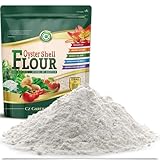
- OMRI Listed - Cz Oyster Shell Flour is an All-Natural mineral listed by the Organic Materials Review Institute (OMRI). It may be used in certified organic production or food processing and handling according to the USDA National Organic Program regulations.
- PREMIUM QUALITY INGREDIENTS – Cz Garden Oyster Shell Flour is high purity, high calcium nutrient designed to boost the healthy development of all your indoor/outdoor flowers, fruit, vegetables, and more!
- PLANTS - provides a long-lasting, steady release of nutrients to correct calcium deficiencies, safely raise and regulate pH levels, improve fertilizer uptake, promote healthy cellular structure and enhance soil tilth
- CHICKENS - Promotes enhanced egg production and stronger eggshells. Cz Garden Oyster Shell Flour is an excellent source of Calcium For Chickens, Amphibians, Reptiles, Invertebrates, Birds, and more!
- WORM BINS – Promotes more active habitats for soil microbes in compost piles and worm bins
Water filtration
Oysters filter algae from water. NOAA says that under certain conditions a single oyster can filter up to 50 gallons of water a day. That is a conditional capacity statement, not a dependable rate for every oyster or reef: actual filtration depends on local conditions, including the health and density of oysters.
Shoreline and storm-related benefits
In some settings, reefs can reduce wave energy, help limit erosion, or fortify wetlands. These effects depend on location and site conditions; a reef is not a universal substitute for other coastal protection, nor does every reef provide the same level of protection.
Rank #2

- [NATURAL CALCIUM SOURCE]: Crushed oyster shell provides a natural source of calcium to supplement the diets of laying hens, chickens and other poultry
- [SUPPORTS EGG PRODUCTION]: An additional source of calcium to help support normal eggshell formation in laying poultry
- [IDEAL FOR FREE-CHOICE FEEDING]: Offer separately in a feeder or container, allowing birds to consume as needed alongside their regular feed
- [COARSE CRUSHED OYSTER SHELL]: Durable shell particles provide a convenient supplemental calcium source for backyard flocks and poultry
- [50 LB BULK BAG]: Generous 50-pound supply helps keep your flock stocked with a reliable source of supplemental calcium
What are oyster reefs worth at specific sites?
Regional assessments can show how reef restoration may translate into economic outcomes, but their numbers should be read within their stated geography, assumptions, and time frame.
| Place and source | Reported value | What the figure represents |
|---|---|---|
| Harris Creek, Tred Avon River, and Little Choptank River, Maryland; NOAA Fisheries, 2021 | More than 150% potential increase in commercial blue crab harvest | Modeled for fully mature restored reefs compared with pre-restoration conditions; not a realized increase across all reefs. |
| Dorchester and Talbot counties, Maryland; NOAA Fisheries, 2021 | $11 million in annual dockside seafood sales and $23 million in annual total sales impacts | Modeled annual impacts as the named restoration sites mature; regional estimates, not global totals. |
| Senator Jean Preston Oyster Sanctuary Network, Pamlico Sound, North Carolina; NOAA Fisheries, 2025 | $1.70 return per $1 spent; $38 million in ecosystem benefits through 2048 | Assessment of a 400-acre sanctuary network. The return and benefits are project-specific assessment outputs; the latter is a projection, not a measured global outcome. |
| North Carolina network investment, 2013–2023; NOAA Fisheries, 2025 | $34 million in business revenue and 143 jobs, following $20 million invested | Reported project-related economic impacts in 2023 dollars; these figures describe the North Carolina project, not the value of oyster reefs everywhere. |
The Maryland estimates illustrate potential fisheries and sales impacts; the North Carolina assessment combines a project return with projected ecosystem benefits and reported economic impacts. They are not interchangeable measures, and none supports multiplying a local result into a global annual valuation.
Rank #3
How much reef restoration has succeeded?
A 2018 synthesis by Bersoza Hernández and colleagues reviewed 1,768 oyster-substrate restoration projects undertaken since 1964 across the US Atlantic and Gulf regions. It reported that 4.5% of lost reef area had been re-established in the studied regions. This is not a global recovery rate.
The review found that project returns varied widely and generally increased with project size. It recommended prioritizing places where ecological and economic benefits are high and construction costs are lower. Size alone is not a sufficient guide: a project also needs suitable conditions and a clear account of which benefits it is designed to deliver.
Rank #4

- Combined for Maximum Growth: Neptune’s Harvest Organic Crab & Lobster Shell fertilizer is an excellent dry organic plant food made from natural crab and lobster shell meal; this organic fertilizer supports lawns, garden beds, bulbs, indoor and outdoor plants and vegetables by supplying calcium, magnesium, and nitrogen that work with soil to support long-term soil health and steady performance throughout the growing season and is safe for kids and pets
- Power of Crab & Lobster Shell: Crafted entirely from crab and lobster shell meal, this organic plant fertilizer contains 17–23% calcium and 1.3–1.7% magnesium and is naturally high in chitin (kite-en); this mineral-rich profile supports soil nutrition while also helping control root nematodes, grubs, ants, slugs, and fungus, making it a dependable choice for gardeners managing soil conditions organically
- How to Use: This crab meal organic fertilizer can be worked into soil before planting or applied as a top dressing to established plants; suitable for lawns using a broadcast spreader, garden beds, compost, potting mixes, seedbeds, and bedding plants; one 10 lb bag covers up to 1,000 sq. ft., making it easy to apply across multiple growing areas and gardening routines. For enhanced results, pair with our Kelp Meal to increase overall benefits
- Supports Soil Performance: This organic fertilizer breaks down slowly for natural slow release, adds organic matter to soil, helps soil drain yet retain moisture, helps sequester carbon and aerates soil to give roots room to move and breathe; roots reach deep to access shell chucks as a food source, supporting deeper root systems over time while improving overall soil structure; generically approved by OMRI for organic production
- Package Contents: Neptune’s Harvest Organic Crab & Lobster Shell Multi-Purpose Plant Food (5-3-0) - 4 lb Resealable Bag (Pack of 1)
What does better management involve?
Restoration is not just placing shell or rock in the water. NOAA describes a mix of approaches, including building reefs with shell or rock, adding shell cultch, using hatcheries, monitoring outcomes, and coordinating with partners. Management also has to address the conditions that allow reefs to persist.
Quick wins for a faster PC:
Fix the driver behind crashes, sound loss and screen glitchesFind Drivers →Repair Windows errors before they cause bigger problemsFix Now →Scan for outdated or missing drivers - takes under a minuteDriver Scan →- Protect reef structure: damaging harvest practices and overharvesting can undermine reefs and their habitat.
- Assess site conditions: water quality, salinity, sedimentation, disease, and hydrodynamics affect whether a reef can establish and mature.
- Match the project to its intended service: fisheries, filtration, shoreline protection, and biodiversity call for different outcome measures.
- Monitor ecological results: track reef area, height, oyster density and biomass, habitat, filtration, and recruitment rather than counting construction alone.
- Include people and costs: consider harvest rules, local fishery and community effects, governance, cost per area or service, and time to maturity.
These choices matter because reefs face interacting pressures, including pollution, sedimentation, disease, wetland loss, erosion associated with development, and damaging or excessive harvest. Restoration can add habitat, but it does not by itself remove every pressure affecting a reef.
Best Value
How should readers judge a claim about reef value?
A useful valuation states what was counted and where. Before comparing two dollar figures, check whether they cover the same services, geographic area, and time horizon, and whether they describe observed results, modeled impacts, or projected benefits. Also check what costs and assumptions the assessment includes.
Economic estimates capture only the benefits their methods measure. A fisheries estimate, for example, does not automatically include filtration or shoreline effects; nor should a project’s projected benefits be described as cash already earned. Without a consistent global method and a clearly defined scope, a single annual dollar figure for all oyster reefs cannot be responsibly inferred from local assessments.
Quick Recap
Product prices and availability are accurate as of the date/time indicated and are subject to change. Any price and availability information displayed on Amazon at the time of purchase will apply.
Free tools Windows power users keep installed
One-click scans. No signup required.

