
iTechGuides is reader-supported. When you buy through links on our site, we may earn an affiliate commission. As an Amazon Associate I earn from qualifying purchases. Learn more
AI agents can do more for service reliability than answer operational questions: they can investigate incidents, assemble evidence, suggest mitigations and, in tightly controlled cases, carry out approved actions. That potential is real, but it is not proof that agents generally improve uptime or reduce incident resolution times. The practical question is how to give an agent useful responsibility without letting an uncertain decision become a production outage.
What can AI agents do for service reliability?
Reliability work involves finding signals across monitoring, logs, traces, deployment history and runbooks, then deciding what to do. An agent can help connect those steps: identify an alert, gather relevant context, explain likely causes, draft an incident update, or propose a mitigation. Some designs go further and execute a bounded change after authorization.
Google SRE describes agent designs for monitoring, investigation and operational action, while Microsoft documents an Azure SRE Agent for incident triage, root-cause analysis and governed mitigations. These are documented capabilities and approaches, not independent evidence that every organization will see better service outcomes. Microsoft describes its product as “an AI-powered operations teammate that helps you improve uptime, reduce incident impact, and cut operational toil”; that is a product description, not a verified outcome.
What’s actually slowing this PC down?
Pick the symptom - the matching free tool is one click away.
The useful distinction is between assistance and authority. An agent that reads telemetry and drafts a recommendation can still save operator effort, but it has a different risk profile from one that changes production configuration or restarts services.
#1 Best Overall
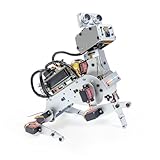
- AI-Powered Raspberry Pi Robot Dog — PiDog: Powered by Raspberry Pi (5/4B/3B+/3B/Zero 2W), OpenClaw, and multi-LLMs like ChatGPT, Gemini, Grok, DeepSeek, Qwen & Ollama. With 12 servos, camera, gyroscope, hearing & touch sensors, PiDog can see, listen, talk, move, and interact intelligently. Supports OpenCV, MediaPipe, TTS & STT, app control, FPV & Python. A great STEM robotics gift for students, makers & tech enthusiasts—perfect for birthdays and holidays. (Raspberry Pi not included)
- Realistic Dog-like Movements: PiDog's 12 powerful servos enable 32 dog-like actions, including walking, sitting, standing, shaking its head, wagging its tail, and performing playful tricks, closely mimicking a real dog and providing an engaging experience. This is an AI development robot product designed for engineers, suitable for ages 15 and above
- Rich Sensor Suite for Interactive Experiences: PiDog features ultrasonic, touch, gyroscope, sound, camera, speaker and microphone. These provide it with advanced hearing, vision, and touch, enabling it to see, detect obstacles, respond to touch, and recognize sounds, making interactions highly engaging
- AI-Powered Interactions with OpenClaw & Multi-LLMs. PiDog combines voice, vision, and gesture recognition for immersive AI experiences. Powered by OpenClaw and multi-LLMs like ChatGPT, Gemini, Grok, DeepSeek, Qwen, Doubao, and Ollama (local LLMs), it can understand questions, respond naturally through TTS & STT, recognize math problems, interpret hand gestures, and hold smart conversations. OpenClaw also enables customizable AI behaviors and personalized robotics development, helping users create their own intelligent robotic companion
- Comprehensive Learning Resources and Support: PiDog offers detailed online documentation, video tutorials, prompt technical support, and an active forum community, ensuring beginners can easily complete all projects and enjoy a great experience
How much autonomy should an agent have?
Google SRE presents five autonomy levels as a framework, not an industry standard. The levels help teams describe what an agent may do and where a human remains in control.
| Level | What the agent does | Human role |
|---|---|---|
| L0 | No AI execution; actions are manual. | People monitor, investigate and act. |
| L1 | AI monitors and investigates. | A person approves and carries out actions. |
| L2 | AI prepares or actuates a proposed change only after explicit approval. | A person authorizes the change. |
| L3 | AI acts independently in specific, well-defined scenarios, with technical controls and notification. | People handle novel cases and retain oversight. |
| L4 | Full autonomy. | The framework describes this level but does not establish that it is appropriate or achieved for any particular production service. |
A sensible progression is not “automate everything.” Start with useful read-only investigation, then consider approval-gated actions. Allow independent action only for narrowly defined cases where the impact is understood, the action is reversible or contained, and the system can verify the result. Google also describes downgrading an otherwise autonomous request to human approval when the current risk or production state calls for it. In other words, autonomy can depend on context rather than being a permanent permission.
What safeguards belong around production actions?
Production mistakes can have immediate consequences. Google SRE warns: “Mistakes in production are costly–unlike development sandboxes where failures are contained, an AI agent making an incorrect decision or taking a faulty action in production can lead to immediate and widespread service disruptions.” Its described design patterns offer a practical checklist:
Recommended Free Tools
- Separate identity and least privilege: Give each agent its own identity and only the access needed for its assigned tasks.
- Assess risk in context: Consider the proposed action and the current state of the service before granting authority.
- Authorize progressively: Require stronger approval as potential impact rises; do not treat a broad permission as a default.
- Require dry runs: Let the system preview or validate a change before execution.
- Guard execution: Use a control plane to validate actions, plus rate limits and circuit breakers to limit damage.
- Keep an emergency stop: Operators need a way to pause actions already in flight and revoke elevated autonomy.
- Preserve an audit trail: Record the agent’s evidence, decision, authorization, tool calls and outcome so people can reconstruct what happened.
These are architectural recommendations described by Google, not a guarantee that any one control eliminates risk. Their value is that they make authority bounded, observable and interruptible.
Rank #2

- Optimized AI Arm Kit for LeRobot & Hugging Face Projects – The SO-ARM101 is an upgraded low-cost robotic arm servo motor kit designed for AI robotics enthusiasts and developers. Fully compatible with LeRobot and Hugging Face frameworks, it supports imitation learning and reinforcement learning, making it ideal for real-world robotics applications. (3D-printed parts not included.)
- Enhanced Wiring & Performance – Compared to the SO-ARM100, the SO-ARM101 features improved wiring to prevent disconnection at joint 3 and eliminates range-of-motion limitations. The leader arm uses optimized gear ratio motors for smoother performance—no external gearboxes required.
- Real-Time Leader-Follower Functionality – New real-time tracking allows the leader arm to follow the follower arm, enabling human intervention and correction during reinforcement learning (RL) training. Perfect for hands-on AI robotics development and research.
- Open-Source, DIY-Friendly & Nvidia-Compatible – Developed by TheRobotStudio, this open-source AI Arm kit integrates seamlessly with the LeRobot platform, offering PyTorch-based datasets, simulation, training, and deployment tools. Fully compatible with Nvidia Jetson edge devices, including reComputer Mini J4012 Orin NX 16 GB.
- Comprehensive Learning Resources – Includes detailed open-source assembly and calibration guides, testing tutorials, and deployment instructions. From wiring to AI training, get everything you need to start building, teaching, and optimizing your robotic arm for grasping and placing tasks.
How should teams test and debug reliability agents?
Before increasing an agent’s authority, evaluate it against the kinds of incidents and operational histories it will encounter. Google describes an evaluation approach using past operational trajectories, data-quality tiers that include human-verified examples, and continuous evaluation. In practice, teams can preserve incident traces, have experienced operators review a representative sample, and test proposed behavior against those cases before enabling higher-risk actions.
Look beyond whether the task finished
A successful-looking outcome can conceal a bad process: the agent might have used an unauthorized tool, misread telemetry, invented a fact, or made a change without verifying its effect. Microsoft Research’s AgentRx work argues that “Traditional success metrics (like ‘Did the task finish?’) don’t tell us enough.” Its failure categories include skipped plan steps, invented information, malformed tool calls, misread tool output, a mismatch between user intent and plan, missing user information, unsupported requests, guardrail blocks and system failures.
AgentRx analyzes traces using normalization, executable constraints, evidence-backed violation logs and critical-failure-step analysis. Microsoft Research reported tests on 115 manually annotated failed trajectories across τ-bench, Flash and Magentic-One. In those benchmark experiments, the authors reported a 23.6% absolute improvement in failure-localization accuracy and a 22.9% improvement in root-cause attribution over prompting baselines. Those are framework authors’ benchmark results, not evidence of improved production uptime or fewer incidents.
Build an evaluation set from operational reality
Use past incidents and realistic scenarios to check whether the agent follows the runbook, uses current evidence, stays within permissions, calls tools correctly and verifies any proposed or executed mitigation. Include both routine situations and cases where the right action is to stop, ask for missing information or escalate. Review failures by category, not only by a single completion score, and keep evaluating after changes to the agent, its tools or its operating environment.
Rank #3
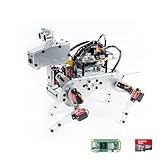
- Raspberry Pi AI Robot: powered by Raspberry Pi (5/4B/3B+/3B/Zero 2W), features 12 servos and sensors for vision, hearing, and touch. Integrated with ChatGPT-4o, it responds to complex queries. With app control and FPV, users can manage and see its view in real-time. It supports Python programming
- Realistic Movements: 12 powerful servos enable 32 actions, including walking, sitting, standing, shaking its head, wagging its tail, and performing playful tricks, closely mimicking a real and providing an engaging experience
- Rich Sensor Suite for Interactive Experiences: features ultrasonic, touch, gyroscope, sound, camera, speaker and microphone. These provide it with advanced hearing, vision, and touch, enabling it to see, detect obstacles, respond to touch, and recognize sounds, making interactions highly engaging
- Engaging Interactions with ChatGPT-4o: with ChatGPT-4o enables voice interactions and visual recognition, making it smarter and more responsive. Users can have natural conversations, solve math problems via the camera, and interpret gestures, creating diverse and fun interactions
- Comprehensive Learning Resources and Support: offers detailed online documentation, video tutorials, prompt technical support, and an active forum community, ensuring beginners can easily complete all projects and enjoy a great experience
How do you measure whether an agent helps reliability?
Measure the service outcome and the agent’s behavior separately. Google Cloud’s reliability guidance recommends service-level objectives aligned with business outcomes, supported by technical measures that affect user experience. It lists the following as examples, not universal targets:
| Example target in Google Cloud guidance | What it measures |
|---|---|
| “99.9% of API calls must return a successful response” | Request success |
| “95th percentile inference latency must be below 300 ms” | Inference response time |
| “TTFT must be below 500 ms for 99% of requests” | Time to first token for a specified share of requests |
| “Rate of harmful output must be below 0.1%” | Harmful output rate |
Choose targets to fit the service, user expectations and consequences of failure; do not adopt example numbers simply because they appear in guidance. Google Cloud also recommends tracking latency, traffic, error rate and saturation, and collecting logs and traces while monitoring data quality and freshness.
For an operational agent, add task-specific checks: Was the diagnosis supported by current telemetry? Was the task completed correctly? Was the action authorized? Did the system verify the result? Could an operator trace the reasoning and intervene? A dashboard that records only task completion can miss unsafe actions and poor-quality answers. Conversely, faster agent responses do not establish better reliability if user-facing success, error rates or service health worsen.
Do these 3 things before closing this tab:
1Clear out junk files and repair common Windows errors2Fix the driver behind crashes, sound loss and screen glitches3Repair Windows errors before they cause bigger problemsWhat do adoption and security surveys tell us?
The Cloud Security Alliance’s report Enterprise AI Security Starts with AI Agents, released April 15, 2026, reported that 47% of surveyed organizations had experienced an AI-agent-related security incident, 53% said agents occasionally or sometimes exceeded intended permissions, and 58% said detection and response took five hours or longer. The report also said 43% of organizations had more than half their employees regularly using agents, and 54% reported 1–100 unsanctioned agents.
Rank #4
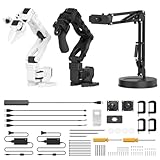
- 【End-to-End Imitation Learning】Hiwonder SO-ARM101 robot arm is an embodied intelligent hardware platform compatible with the Lerobot open-source framework. It provides developers with streamlined access to shared code, templates, and pre-trained models to explore the latest advancements in AI research.
- 【Dual-Camera Vision System】Equipped with both a gripper-mounted camera and an external camera, the system supports both precise manipulation and environmental awareness for accurate imitation learning.
- 【Hiwonder High-Performance Bus Servos】Featuring 12 high-torque bus servo motors with magnetic feedback, the Hiwonder SO-Arm101 robotic arm delivers smooth, stable motion, eliminating issues like power deficiency and jitter.
- 【Professional Control & Debugging】Integrated with the Hiwonder BusLinker V3.0 debugging board, the system supports servo scanning, real-time status monitoring, and trajectory control. The professional PC software simplifies device calibration and debugging, making it accessible for both researchers and hobbyists.
- 【Open-Source Compatibility】The SO-ARM101 robotic arm is designed to be fully compatible with the LeRobot open-source project. We acknowledge the contributions of the open-source community; all trademarks and copyrights belong to their respective owners.
These figures describe that report’s survey, not a universal estimate of how often agents cause incidents or a causal assessment of risk. The report was commissioned by Zenity, a sponsor that should be disclosed when interpreting its findings. The numbers are useful as a signal that permission boundaries and incident response deserve attention, but they do not establish how a particular SRE agent will perform.
What is still unknown about AI agents and uptime?
The available examples show that agents can be designed to investigate, recommend and sometimes execute bounded operational actions. They also show how teams can structure autonomy, evaluation and safeguards. They do not establish a general measured improvement in uptime, mean time to resolution, incident volume or operating cost attributable to AI agents across organizations.
Nor do the cited materials provide a neutral, head-to-head ranking of commercial SRE agents. When assessing an implementation, compare its supported environments and integrations, whether it is read-only or can change systems, approval and autonomy controls, auditability, evaluation support, security model, and fit with existing monitoring and service-level objectives. Check current vendor documentation for volatile details such as availability, supported regions, pricing and feature scope.
Quick Recap
Sources
- Google SRE: AI in SRE: How Google is Engineering the Future of Reliable Operations
- Microsoft Learn: Azure SRE Agent documentation
- Microsoft Research: Systematic debugging for AI agents: Introducing the AgentRx framework
- Google Cloud: AI and ML perspective: Reliability
- Cloud Security Alliance: Enterprise AI Security Starts with AI Agents
Product prices and availability are accurate as of the date/time indicated and are subject to change. Any price and availability information displayed on Amazon at the time of purchase will apply.

