
iTechGuides is reader-supported. When you buy through links on our site, we may earn an affiliate commission. As an Amazon Associate I earn from qualifying purchases. Learn more
Manage a website as an ongoing operating process, not a task that ends at launch. Keep an inventory of what you run, monitor availability and important user journeys, patch software, verify recoverable backups, review accessibility and search health, and record changes and incidents. Automate checks that can run reliably; reserve human review for whether the site is usable, accurate, and working for real people.
What should a website management process cover?
A useful operating plan connects the site’s technical components to the tasks visitors and staff rely on. Start by documenting the systems, owners, and recovery expectations; then combine continuous automated checks with regular hands-on review. The goal is not to collect the most alerts. It is to find meaningful failures early, understand what changed, and recover without guessing.
Build an inventory and assign ownership
Record each domain and subdomain, DNS provider and records, hosting environment, TLS certificate, CMS instance, ecommerce platform, plugins, themes or templates, third-party scripts, analytics, forms, and payment flows. For each item, note its purpose, owner, renewal or update process, and where its credentials and configuration are managed. Include vendors and integrations whose failure could interrupt a critical journey.
Keep the inventory current when a system is added, replaced, or retired. Remove unused components rather than leaving abandoned plugins, accounts, scripts, or domains in place. An accurate inventory makes patching, incident response, and ownership handoffs much less dependent on individual memory.
#1 Best Overall

- Hardware Controller with Professional Network Management-Centralized management for up to 100 Omada devices including Omada access points, Omada Security Gateways and Jetstream switches.
- Premium Hardware Design-Industry-leading flexible Rackmount/Desktop design with a powerful chipset, durable metal casing, 2 fast ethernet ports and 1 USB 2.0 port for auto backup.
- Dual power selection-Support PoE (802.3af/802.3at) and micro USB for flexible installations.
- Easy Network Monitor & Maintenance-The easy-to-use dashboard makes it simple to see your real-time network status and improve network maintenance for peace of mind.
- Cloud Access with No License Fee-Enjoy cloud service with no license fee with the use of OC200. Remote Cloud access and Omada app brings centralized cloud management of the whole network from different sites—all controlled from a single interface anywhere, anytime.
Set service and recovery objectives
Agree on the service outcomes that matter to the organization: availability, acceptable response time, recovery time after an incident, and acceptable data loss. These are business decisions, not numbers that apply identically to every website. A brochure site and an online store may have very different consequences when unavailable. Set targets that match the site’s purpose and resources, and make sure the people responsible for monitoring know what should trigger action.
Maintain a change log for releases, configuration edits, DNS changes, and infrastructure work, plus an incident log for symptoms, impact, response, and resolution. When a regression appears, these records help connect it to a deployment or other change.
How should you monitor availability and user experience?
Monitor both whether the site responds and whether people can complete important tasks. A successful homepage response does not prove that sign-in, search, a contact form, checkout, or another business-critical journey works. Define a small set of representative journeys and check their meaningful outcomes, not just whether a page loaded.
Free tools Windows power users keep installed
One-click scans. No signup required.
Automate checks that need frequent attention
- Availability: Check HTTP responses for key pages and services, and alert on sustained failures rather than treating one transient result as proof of an outage.
- DNS and certificates: Watch for resolution failures and certificate expiry so that an expired certificate or incorrect record does not surprise visitors.
- Synthetic transactions: Run controlled checks of important flows, such as submitting a test form or progressing through a checkout to an appropriate safe stopping point. Avoid creating real orders or sending real messages unless the test is designed for that.
- Errors and security signals: Review application and server logs, failed requests, malware signals, and security events. Make sure alerts go to an owner who can act on them.
- Backups and performance budgets: Verify backup jobs and monitor defined performance limits, not just whether a job or page technically completed.
Use real-user and lab performance evidence together
Core Web Vitals describe aspects of loading, interactivity, and visual stability. Google Search Central says the Core Web Vitals report is useful for site-wide performance numbers and PageSpeed Insights for inspecting individual pages. Use those views for different questions: field data helps reveal experience across actual visits, while lab measurements help investigate a specific page under controlled conditions.
Rank #2

- Automatic Router Rebooter / Reset - Stop manually restarting your router! Automate the process to ensure highly reliable internet connection uptime
- Constantly Monitors Router and/or Modem Internet Health. Keep Connect provides 24/7/365 protection to ensure that your smart home and connected devices are always online and available.
- Notifications - Free Texts or Emails from Keep Connect notifying you of detected eventsif you choose to enter your phone number/email. You may also choose No Notifications.
- Perfect for Smart Home Reliability - Schedule Periodic Resets to keep your connection fresh and fast.
- Premium Cloud Services App Available (iOS App Store and Google Play Store) - Our Premium Keep Connect Cloud Services platform allows using our Online/Mobile App to monitor many locations in one place as well. Cloud Services allows remote management of devices at all locations as well as heartbeat monitoring of your Keep Connects to notify you in the event of an ISP internet outage at one of your sites.
Look at trends and sustained regressions instead of treating one score as a verdict. When a metric worsens, record the page, device, browser, geography, and release context where available. Compare affected templates and journeys, then investigate likely causes such as heavier scripts, image changes, third-party tags, or server response. web.dev’s guidance frames the aim as experiences that are accessible, fast, and secure; performance monitoring should serve that user outcome rather than score-chasing.
Include visual checks where they help
Automated HTTP and transaction checks may miss visual regressions: a modal covering a button, a broken layout at a particular viewport, or a consent banner obscuring content. Capture representative pages after important releases and review differences alongside functional checks. Screenshot comparison is useful for spotting changes, but it does not establish that a page is accessible, accurate, or usable; a person still needs to judge the result.
When selecting monitoring services or tools, compare coverage of transactions and performance, alert latency and quality, geography and device options, integrations with incident workflows, reporting, and the human review they do not replace. Also weigh operational effort and total cost. Avoid choosing a tool solely because it produces a large dashboard of metrics.
How often should you maintain a website?
There is no single schedule that fits every site. NIST’s guidance and Google’s maintenance guidance support systematic, ongoing monitoring and patching; W3C guidance calls for regular accessibility reviews. The intervals below are an operational starting point, not a frequency mandated by those organizations. Increase checks when risk, change volume, or business impact warrants it.
| Cadence | Recommended work | Why it belongs there |
|---|---|---|
| Continuous or frequent automated checks | Availability, certificates, DNS, critical journeys, backup-job status, and security signals | Failures can affect visitors before the next manual review. |
| At least weekly | Review monitoring dashboards, investigate trends and incidents, and confirm alerts have owners | A check is only useful if someone notices and acts on its results. |
| Monthly and after material changes | Review dependencies, software updates, accounts and permissions, and the component inventory | New releases and staff or vendor changes can alter exposure and ownership. |
| Quarterly and after redesigns | Conduct a deeper accessibility, SEO, content, and visual review; examine restore readiness | Broader reviews catch issues that simple automated checks cannot assess well. |
Do not wait for a calendar date to apply a critical security update. Prioritize it according to the vendor’s guidance, the severity and exposure of the issue, and the site’s risk. Conversely, do not deploy an unreviewed change blindly just to satisfy a schedule: understand the change, preserve a recovery path, and verify the result.
Rank #3

- (10/100/1G) Gigabit Bypass network tap / sniffer equivalent to port mirror on a switch.
- The two monitor/sniff ports are isolated from the network being monitored.
- Automatic bypass of device on power fail.
- Power-over-Ethernet (POE) pass-through. Rated at .75A max at 57vdc
- 5v power through USB3 port or 5v wall transformer (or both). ~500ma consumption.
How do you keep a website secure and maintainable?
NIST SP 800-44 Version 2 describes public web server security as systematic work that includes secure configuration, patching and upgrades, security testing, log monitoring, and backups. Its abstract notes that “Web servers are often the most targeted and attacked hosts on organizations’ networks.” That is a reason to treat maintenance as a routine control, not to assume an incident is inevitable.
Patch and reduce the attack surface
- Install applicable operating-system and application updates, including updates for the CMS, ecommerce platform, plugins, themes, and templates. Follow vendor guidance and assess urgency against exposure and impact.
- Remove software and integrations no longer used. Unneeded components still require decisions about updates, access, and risk.
- Use least privilege for accounts and service credentials. Require multifactor authentication where supported, separate administrative accounts from routine accounts, and rotate secrets when warranted.
- Keep a dependency inventory and triage vulnerabilities rather than treating every alert as equally urgent. Test important changes in a safe environment when practical, then confirm the live site still works.
- Review logs and security events on a defined schedule, with escalation paths for suspicious or high-impact findings.
Google’s maintenance guidance also recommends installing available updates and patches for the operating system and applications, removing software no longer used, and restoring from a clean backup where appropriate. A patch process should make clear who evaluates updates, who applies them, and how the site is checked afterward.
Crashes, No Sound, or Screen Glitches?
Random freezes, missing sound and display glitches usually trace back to one bad driver. Find and replace yours safely.Free scan · under a minuteWindows Errors? Fix Them Before They Spread
Repair common Windows errors and clear accumulated junk for a smoother, more stable PC - no reinstall needed.Free scan · no reinstallHow do you make backups recoverable?
Keep backups of the database, uploaded files, configuration, and deployment artifacts needed to rebuild the site. Store at least one copy isolated from production credentials: if an attacker or operational mistake can erase both production and every backup through the same access, the backup may not help when it is needed.
- Define what must be restored. List data, files, configuration, and dependencies required to bring the site back to a known-good state.
- Verify the backup itself. Check that scheduled jobs completed and that expected components are present; a green job status alone may not prove completeness.
- Practice restoration safely. Periodically restore into a non-production environment and confirm that the application starts and the data is usable.
- Write down the recovery path. Identify who declares an incident, who communicates, how hosting or DNS would change, and how integrity is checked after recovery.
A backup that has never been restored is an unverified assumption. Restore practice can reveal missing credentials, undocumented dependencies, incomplete files, or a process that takes longer than the business can accept.
Rank #4
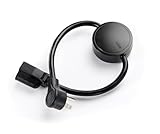
- NEVER MANUALLY REBOOT YOUR ROUTER AGAIN – The ConnectSense Rebooter Pro plugs between your modem or router and the wall outlet, automatically detecting lost internet connectivity across up to 5 network targets and power cycling your equipment instantly — keeping your home, office, or remote location always online 24/7.
- SCHEDULED & AUTOMATIC REBOOTS – Set up to 10 custom reboot schedules to proactively clear memory leaks, prevent slowdowns, and keep your connection fresh — even before problems occur. Perfect for smart homes, security cameras, smart locks, thermostats, and any device that depends on a stable internet connection.
- REMOTE CONTROL FROM ANYWHERE – Trigger a manual reboot anytime from the free ConnectSense app (iOS & Android) or directly from your home network. Whether you're traveling, at work, or managing a vacation rental or remote office, you stay in control of your network without needing to be on-site.
- AUTOMATIC POWER OUTAGE RECOVERY – When the power goes out, the Rebooter Pro automatically restores and reboots your networking equipment once power returns, eliminating downtime and the need for manual intervention. Ideal for unattended locations, rental properties, and small business networks.
- INTEGRATOR & PRO-GRADE FEATURES – The only router rebooter with a built-in local HTTPS API, giving IT professionals, smart home integrators, and power users advanced automation, monitoring, and remote management capabilities — no cloud subscription required for local control.
How should accessibility be maintained?
Accessibility is a continuing quality attribute because content, components, and workflows change. W3C WAI planning guidance recommends reviewing the environment and websites, establishing a monitoring framework, assigning resources, training personnel, evaluating early and regularly, prioritizing issues, and tracking progress. Its sustain guidance likewise calls for regular reviews as content changes, trend comparison, reporting, monitoring, stakeholder engagement, and adaptation to new technologies.
Include accessibility checks in release and content workflows. Review keyboard operation and focus order, meaningful headings and labels, contrast, captions, error messages, zoom and reflow, and screen-reader behavior. Check whether users can actually complete key tasks, not simply whether a page passes an automated scan. Automated tools can identify patterns efficiently, but people must assess meaning, context, and task completion.
Track findings with severity, affected journeys, an owner, and a planned fix. Prioritize barriers that prevent people from completing essential tasks, and compare review results over time so recurring causes can be addressed in design or publishing processes. Report progress to the people accountable for the website rather than leaving findings in an audit file.
How do you maintain SEO and crawlability?
Make search maintenance part of deployment review, not a separate activity performed only when traffic drops. Google Search Central recommends HTTPS, ensuring important resources are accessible to Google, using robots.txt for crawl control rather than removal from indexing, providing sitemaps, and using Search Console reports. Google Search Essentials also emphasizes technical requirements, spam policies, helpful people-first content, descriptive wording in titles, headings, alt text and link text, crawlable links, and appropriate search features.
Best Value
![[Upgraded] AURSINC NanoVNA-H Vector Network Analyzer 9KHz -1.5GHz Latest HW V3.7 HF VHF UHF Antenna Analyzer, Measuring S Parameters, SWR, Phase, Delay, Smith Chart](https://m.media-amazon.com/images/I/41hseV6xSbL._SL160_.jpg)
- [UPGRADED NanoVNA-H] New HW Version V3.7. It is upgradeable as new firmware is developed. With MicroSD card port now can have the measurement data or the screenshots saved in the it at anytime. Added battery circuit management, more secure. Redesigned PCB, you can connect to mobile phone with Type C-Type C cable (original PCB needs OTG cable), see a clear HD image on your phone. Added a ABS case, which is protective and dust-proof. Disply: 2.8 inch TFT (320 x240).
- [IMPROVED FREQUENCY ALGORITHM] The improved frequency algorithm can use the odd harmonic extension of si5351 to support the measurement frequency up to 1.5GHz. The 9KHz-300MHz frequency range of the si5351 direct output provides better than 70dB dynamic, The extended 300M-900MHz band provides better than 60dB of dynamics, and the 900M-1.5GHz band is better than 40dB of dynamics.
- [MULTIPLE FUNCTIONS] The default firmware main function is used for antenna performance measurement. The TX/RX method can measure the complete S11 and S21 parameters. If you need to obtain S12 and S22, you need to manually replace the transceiver port wiring. The CH0 output level is increased to 0dBm when using the fundamental wave, resulting in more accurate reflection measurement.
- [SUPPORT ANDROID PHONE & PC SOFTSARE CONTROL] Designed a practical and simple control application on PC, you can download touchstone(SNP) files for radio design and simulation software. There is a PC interface that adds functionality and lets you work interactively on a bigger screen. Supports time domain analysis function (TDR). Compatible with most Android mobile phones, convenient for connecting to mobile phones. Support Windows Computer Control.
- [STRONG AND SECURE POWER SUPPLY] This VNA is battery powered or USB powered. Built in 650mAh battery, could work for 2 hours continuously. For longer measurement time, kindly connect an external power source. The product interface displays battery usage, providing a clear understanding of the power status.
- Check that important pages remain indexable and canonicalized as intended, and that deployments have not introduced accidental noindex directives or blocked required resources.
- Keep sitemaps accurate and current. Confirm that they contain canonical pages intended for discovery rather than error pages or redirected URLs.
- Check broken internal links, redirects, structured data, and changes to important URLs after releases or redesigns.
- Review Search Console reports for indexing and search issues, then inspect affected pages rather than assuming every warning has the same impact.
- Write descriptive, useful titles, headings, alt text, and link text for people as well as crawlers; avoid treating keyword repetition as maintenance.
Or skip the browser setup
If your visual monitoring workflow needs repeatable page captures, ScreenshotNeo is a website screenshot API and MCP server for developers. For a do-it-yourself check, automate a browser to open the target URL at the viewport and state you want to inspect, wait for the page to settle, and save an image; compare captures carefully because dynamic content can create harmless differences. With an API call, a URL returns an image or PDF without setting up that browser capture flow. See the ScreenshotNeo API documentation for request options.
cURL:
curl -G "https://api.screenshotneo.com/v1/shot" -d access_key=YOUR_API_KEY --data-urlencode url=https://stripe.com -o shot.webpPython:
import requests
r = requests.get("https://api.screenshotneo.com/v1/shot", params={"access_key": "YOUR_API_KEY", "url": "https://stripe.com"}, timeout=90)
open("shot.webp", "wb").write(r.content)
Node.js:
const q = new URLSearchParams({ access_key: 'YOUR_API_KEY', url: 'https://stripe.com' });
const res = await fetch(`https://api.screenshotneo.com/v1/shot?${q}`);
ScreenshotNeo accepts cookie or consent banners as a visitor and removes more than 60 known consent platforms, newsletter popups, and chat widgets before capture; each of those steps can be turned off. Bot checks or CAPTCHAs, blank pages, timeouts, failed loads, and cache hits are not billed, and responses identify the page verdict and billing status in headers. Its MCP server offers take_screenshot, get_page_info, and capture_pdf for Claude, Cursor, and other MCP clients. Plans include 1,000 screenshots a month free with no card; paid plans start at $5 for 3,000 shots, and every feature is on every plan. Sign up for the free plan.
Recommended Free Tools
How should you respond when a check fails?
A monitoring alert is a lead, not a complete diagnosis. Confirm the impact, compare it with recent changes, and record what fixed it. These common failures illustrate a disciplined first response.
| Symptom | Likely cause to investigate | Practical response |
|---|---|---|
| Visitors cannot reach the site | Hosting outage, DNS change, expired certificate, or network issue | Check the failure from another location, inspect DNS and certificate status, and use the documented hosting or DNS recovery path. |
| Homepage loads but a key journey fails | Application error, broken integration, changed form or payment flow | Reproduce the journey safely, inspect application and vendor logs, and compare with the latest release or configuration change. |
| Performance worsens after a release | Heavier assets, scripts, layout changes, or server-side regression | Compare field and lab trends, isolate the affected page or template, and test the relevant change before rolling back or optimizing. |
| Updates break the site | Incompatibility between a dependency and the CMS, theme, or application | Use the change log to identify the update, restore service through the tested rollback or recovery route, then test a corrected update safely. |
| Backup exists but restoration fails | Missing database, uploads, configuration, credentials, or deployment dependency | Restore in a safe environment, identify missing components, correct the backup procedure, and repeat the recovery test. |
| Pages disappear from search | Accidental noindex or crawl block, canonical change, redirect error, or resource access issue | Inspect affected URLs and deployment changes, then check relevant Search Console reports and restore intended crawl and indexing signals. |
| Automated accessibility scan passes, but users still struggle | Issues of meaning, sequence, focus, or task completion not captured by automation | Test the workflow with keyboard and assistive technology, document the barrier, and assign an owner and priority. |
For any suspected incident, preserve useful logs and timestamps, communicate through the agreed escalation route, and avoid making several unrecorded changes at once. After recovery, document cause and impact, confirm the relevant journey works, and add a check or process change if the incident exposed a monitoring gap.
How do you choose monitoring and maintenance tools?
Choose tools around the operating process rather than buying a separate product for every metric. Score each approach on the following dimensions:
- Coverage across uptime, transactions, performance, security, accessibility, and SEO.
- Detection delay, false alarms, actionable alert detail, and the ability to route incidents to an owner.
- Geographic, device, and browser coverage appropriate to the site’s audience.
- Integration with issue tracking and incident response, plus useful trend reporting.
- Depth of human audit and review, which automation cannot replace.
- Backup isolation and the ability to test restoration.
- Total operating cost and the ongoing effort required to maintain checks and interpret results.
A managed service may reduce operational burden but still needs an accountable owner and a recovery plan. In-house monitoring offers control but requires time to maintain scripts, thresholds, and integrations. Whichever approach you use, periodically verify that alerts arrive, checks still cover real journeys, and someone knows what to do next.
Quick wins for a faster PC:
Repair Windows errors before they cause bigger problemsFix Now →Fix the driver behind crashes, sound loss and screen glitchesFind Drivers →Clear out junk files and repair common Windows errorsFree Scan →Quick Recap
Product prices and availability are accurate as of the date/time indicated and are subject to change. Any price and availability information displayed on Amazon at the time of purchase will apply.

