
Recommended Free Tools
iTechGuides is reader-supported. When you buy through links on our site, we may earn an affiliate commission. As an Amazon Associate I earn from qualifying purchases. Learn more
“Virtual SIM” usually means an eSIM: a digital subscription profile provisioned to a supported device’s embedded eUICC, rather than a plastic card you insert. That can make activating a plan easier, but it does not make eSIM inherently safer or more dangerous than a physical SIM. Security depends on the device, carrier, account protections, and transfer and recovery processes. The phrase “dark past” is ambiguous: the available evidence does not establish which historical risk the original title meant, so it should not be treated as proof that eSIMs revive a particular old problem.
What is a virtual SIM card?
In consumer use, “virtual SIM” commonly refers to an eSIM. The GSMA’s SGP.21 v2.7 specification, dated April 27, 2026, describes the architecture and technical requirements for remotely provisioning SIM profiles in consumer devices. The device has an embedded eUICC, a component designed to receive and manage those profiles. Instead of obtaining a separate plastic SIM for each supported plan, a user can download or otherwise activate a profile through a supported carrier process.
“Virtual SIM” is not a precise technical label, however. It can be used loosely for technologies that are not the same as consumer eSIM. In particular, a SoftSIM can refer to a software-only implementation that stores operator credentials in ordinary device software. That distinction matters when discussing security: concerns about a software-only credential should not automatically be applied to a GSMA-compliant eSIM architecture.
Quick wins for a faster PC:
Fix the driver behind crashes, sound loss and screen glitchesFind Drivers →Clear out junk files and repair common Windows errorsFree Scan →Scan for outdated or missing drivers - takes under a minuteDriver Scan →Does eSIM bring back an old security problem?
The title’s “dark past” could refer to worries about phone-number control, surveillance, fraud, SIM swapping, or reliance on mobile carriers. The evidence available does not identify the original comparison or establish that eSIM recreates any one of those historical problems. A more useful question is what the eSIM architecture protects against, and what remains exposed through devices, accounts, and carrier procedures.
#1 Best Overall
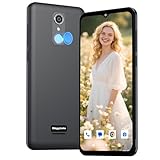
- Vivid Large Screen & All-Day Battery - Features a 6.56" HD+ display for clear viewing and a robust 4000mAh battery that lasts. With an IP52 rating, it resists spills and dust, built for daily life.
- Easy eSIM Activation & Carrier Compatibility - Get connected faster with eSIM. No physical SIM card slot. Pre-configured and fully compatible with AT&T, T-Mobile, and Verizon ( not included their MVNOs).
- Clear Cameras & Practical Features - Capture life's moments with a 13MP rear AF camera and dual LED flash. The 5MP front camera is perfect for video calls. GPS and multiple sensors make it a capable daily driver.
- Clean Android Experience & Smooth Performance - Runs the latest Android 13 for a simple, intuitive experience. With 3GB RAM and 32GB storage, it handles everyday apps and tasks smoothly.
- Fast Charging & Modern Connectivity - Supports 18W fast charging to power up quickly. Equipped with USB Type-C, Dual-Band Wi-Fi, and Bluetooth for all your connection needs.
What GSMA says about the 2024 security analysis
Researchers at Aalto University published an analysis in August 2024. In its response, published December 2, 2024 and modified February 23, 2026, the GSMA described the result this way: “The GSMA notes and welcomes the findings of the researchers that the remote SIM provisioning (RSP) protocol is adequately secured, between honest entities, against network adversaries and the security goals defined in the eSIM specifications are achieved.” This is the GSMA’s qualified account of the findings, not an unqualified claim that eSIM is risk-free or an independent consensus statement.
The qualification is important. GSMA says the attack scenarios discussed assume a compromised endpoint, such as a subscription-management server (SM-DP+) or an eUICC, and describes TLS and certification as mitigations. Protection against a network adversary between honest entities does not mean a compromised phone, eUICC, carrier account, or service provider is harmless.
Standards are an assurance framework, not a guarantee
The GSMA’s SGP.25 v2.1 protection profile, dated February 20, 2025, covers remote provisioning and management of eUICCs in consumer and IoT devices. Its compliance documentation describes security, functionality, and interoperability requirements, including digital certificates used to authenticate eUICCs and subscription-management servers. These measures define an assurance framework; they do not prove that every device, carrier, account, or implementation is immune to compromise.
Rank #2

- 6.1" Super Retina XDR OLED, HDR10, 800 nits (HBM), 1200 nits (peak), 2532x1170px at 460ppi, 4005mAh Battery
- 8GB RAM, Apple A18 6-core CPU (2 performance + 4 efficiency cores), Apple GPU 4-core, 16‑core Neural Engine
- Rear camera: 48MP, f/1.6, wide, Front Camera: 12MP, f/1.9, wide, iOS 18.3.1, upgradable to iOS 18.5
- Connectivity: Global 4G LTE, Sub-6 GHz 5G, LTE, Wi-Fi 6, Bluetooth 5.3, NFC, USB-C, Wireless Charging (7.5W). (does not have mmWave 5G or MagSafe or physical SIM card) - Dual eSIM Only
- Unlocked for freedom to choose your carrier. Compatible with both GSM & CDMA networks. The phone is unlocked to work with all GSM Carriers & CDMA Carriers Including AT&T, T-Mobile, Verizon, Straight Talk., Etc.
Why SoftSIM concerns are not interchangeable with eSIM concerns
A 2014 industry blog recounting concerns attributed to a GSMA presentation discussed software-only credentials and operating-system compromise. That is historical, secondary material about SoftSIM-style approaches. It can help explain why the terms are sometimes confused, but it is not evidence that current consumer eSIMs have the same security design or weaknesses.
eSIM and physical SIM: what changes for the user?
Neither format is universally easier or safer. A physical SIM can be moved by taking the card out and inserting it into another compatible phone. An eSIM transfer is digital and may be convenient, but it depends on the carrier and device supporting an activation or transfer route. Both formats remain affected by the security of the carrier account and the process used to regain service after a lost or damaged phone.
| Consideration | Physical SIM | eSIM |
|---|---|---|
| Moving service to another phone | Usually involves physically moving the card, subject to device compatibility and carrier rules. | Requires a supported digital transfer, carrier activation, or another carrier-provided method. |
| Compatibility | The phone needs a compatible SIM slot and carrier support. | The device must support eSIM, and the carrier must support the relevant activation or transfer method. |
| Activation | Often uses an issued card, though carrier activation may still be required. | May involve carrier activation, a QR code, or a supported device-to-device transfer. |
| Recovery after loss or failure | May require a replacement card and carrier action if the card or phone is lost. | May require carrier reactivation or a new profile if the device is lost or fails. |
| Security considerations | Physical possession and carrier-account processes matter; the format alone does not prevent account takeover or number fraud. | eUICC and remote-provisioning protections matter, as do endpoint security and carrier-account processes. |
Can you transfer an eSIM to a new phone?
Sometimes. Apple’s guidance for iPhone says: “If your network provider supports eSIM Quick Transfer, you can transfer the SIM from your previous iPhone to your new iPhone without contacting them.” The condition is central: carrier and device support vary. Apple also describes activation through a carrier, a QR code, and other carrier-supported methods. For Android-to-iPhone transfers, Apple says users should contact the carrier for activation when the carrier or device does not support the newer transfer feature.
Rank #3

- Universal Carrier Compatibility: This phone is unlocked and compatible with any carrier of choice on GSM and CDMA networks (e.g. AT&T, T-Mobile, Sprint, Verizon, US Cellular, Cricket, Metro, Tracfone, Mint Mobile, etc.)
- Carrier Verification Required: Please check with your carrier to verify compatibility
- Simple Activation Process: When you receive the phone, insert a SIM card from a compatible carrier. Then, turn it on, connect to Wi-Fi, and follow the on screen prompts to activate service
- Package Contents: The device does not come with headphones or a SIM card. It does include a generic (Mfi certified) charger and charging cable
- Battery Health Guarantee: Tested for battery health and guaranteed to have a minimum battery capacity of 80%
Before replacing or wiping a phone, check the carrier’s instructions for that specific line and both devices. Do not assume an eSIM profile will move automatically or remain recoverable from a device backup. Keep access to the carrier account and any activation details the carrier provides until service works on the new phone.
Are eSIMs useful for travel?
They can be. A traveler with an eSIM-capable phone may be able to add a data plan digitally instead of obtaining a local plastic SIM, but a plan’s usefulness depends on its actual terms and the traveler’s needs. Commercial travel-plan providers promote this use case; their claims are not independent evidence about eSIM security, and specific availability or terms can change.
- Device support: Confirm that the phone supports eSIM and is eligible to use the intended carrier or plan.
- Coverage: Check the countries and networks included, not just the plan’s headline region.
- Data and duration: Compare the allowance, validity period, and what happens when the data is used up or the period ends.
- Voice and number needs: Establish whether the plan is data-only or includes calls, texts, or a phone number. Keep your primary line active if you need it for calls or verification, while checking the cost and roaming settings with your carrier.
- Activation and recovery: Check when the plan starts, whether activation requires internet access, and how the provider handles reinstallation or a replacement device.
- Terms: Verify current restrictions, supported devices, and refund or transfer rules directly with the provider.
What the public debate does—and does not—show
A 2026 UK parliamentary debate excerpt records a member’s concern that rules addressing SIM farms could lag behind eSIM-capable devices. That is an attributed policy argument about whether regulation keeps pace with technology; it is not evidence that eSIMs are currently being used at scale for crime. A technology-neutral policy discussion should distinguish the potential for misuse from proof of its prevalence.
Quick Recap
Product prices and availability are accurate as of the date/time indicated and are subject to change. Any price and availability information displayed on Amazon at the time of purchase will apply.

