
Recommended Free Tools
iTechGuides is reader-supported. When you buy through links on our site, we may earn an affiliate commission. As an Amazon Associate I earn from qualifying purchases. Learn more
If you want to replace Vercel and Supabase without taking on routine server administration, start by comparing Render for a conventional app with managed Postgres. Consider Railway when usage-based services and long-running workloads fit, but verify who maintains its database. For apps designed for the edge, Cloudflare Workers can use D1 or connect to an existing database such as Supabase or Neon, so a host change need not force a data migration.
What “Vercel + Supabase alternative” can mean
Vercel and Supabase cover different parts of an application stack: hosting and deployment on one side, backend data services on the other. Replacing both may mean moving to one provider for application services and a database, or changing the host while keeping a separately managed database. Those choices have different operational trade-offs.
A managed platform reduces some infrastructure chores; it does not remove the need to manage application configuration, database migrations, secrets, monitoring, or recovery decisions. Choose according to the work your team wants a provider to operate, not just the number of vendor accounts.
Which option fits your workload?
Render: conventional app services with managed Postgres
Render is the best-supported first comparison here for a conventional full-stack app that needs a web service, background workers, scheduled jobs, and managed Postgres. Its service menu includes static sites, web services, private services, background workers, cron jobs, workflows, and managed Postgres. That range can bring several parts of an application into one provider account.
#1 Best Overall

- MODEL P74439-005: Compact and affordable HPE ProLiant MicroServer Gen11 powered by Intel Pentium Gold G7400 3.7GHz processor, ideal for file sharing, NAS, and basic business workloads
- READY OUT OF THE BOX: Includes 16GB DDR5 UDIMM memory (expandable to 128GB), one 1TB SATA 6G Business Critical HDD, embedded Intel VROC SATA, dedicated iLO-M.2 port kit, 180w external power adapter and 1/1/1 warranty for dependable plug-and-play server operation
- WHISPER-QUIET & SPACE-SAVING: Ultra-compact mini tower design fits easily in small office spaces; supports wall, flat, or vertical placement for deployment flexibility
- INTEGRATED REMOTE MANAGEMENT: Comes with HPE iLO 6 and embedded TPM 2.0 for secure, license-free remote server administration through shared port access
- EXPANDABLE DESIGN: Two PCIe slots (including PCIe 5.0) and four LFF-NHP drive bays provide robust options for storage and component scalability. Features new MR408i-p controller support for enhanced storage performance
Render documents full-stack preview environments and pre-deploy commands. A pre-deploy command can run a migration step before a new deployment, while a preview environment can help test a change across the app stack. These are useful deployment capabilities, not a substitute for a migration and recovery plan. See Render’s service types and its Vercel comparison.
Render says its compute model can offer more predictable pricing than Vercel’s, but the same comparison says which is more cost-effective depends on the workload. Treat that as Render’s own positioning, not a universal price verdict. Compute and database costs are separate, so estimate the actual mix of app instances, storage, bandwidth, previews, and workers before moving.
Rank #2
- 2.80 GHz processor speed ensures efficient operation with consistent reliability
- Intel Xeon 2.80 GHz processor provides enterprise-grade performance with built-in security and remote management capabilities
- Quad-core (4 Core) processor core helps server process data quickly and reliably for maximum productivity
- 1 processors supported for faster processing and improved access to data, optimizing performance under heavy loads
- With 16 GB memory, you can multitask between applications seamlessly, keeping productivity high and response times quick
Railway: usage-based services and long-running workloads
Railway is worth evaluating if usage-based services, container workloads, scheduled jobs, or long-running backend work suit your app. Its comparison describes services, cron jobs, and functions. The important question for a team trying to reduce DevOps is not only how the app deploys, but who is responsible for operating the database.
A Prisma comparison published in September 2026 describes Railway Postgres as a template the user maintains, unlike Render Postgres, which it describes as managed. Prisma sells a competing app-and-database product, so regard that as one dated, commercially interested comparison rather than neutral consensus. Confirm Railway’s current database operations, maintenance responsibilities, and recovery options directly before treating it as a managed Supabase replacement: Prisma’s September 2026 comparison.
Rank #3

- Dell PowerEdge R730xd 24B SFF 2U Server
- 2x Intel Xeon E5-2690 v4 2.6Ghz 14-Core (28-cores Total)
- 128GB DDR4 RAM – 4x 1.2TB 10K SAS 2.5” 12Gb/s
- Dell H730P mini 2GB 12Gb/s RAID
- 2x 750W PSU - 2x 10Gb SFP+ 2x 1Gb (RJ45) NIC
Cloudflare Workers: edge runtime with D1 or an external database
Cloudflare Workers can suit applications built for its runtime. Cloudflare describes D1 as its SQL-based serverless database, optimized for global access from Workers; its documentation says D1 can scale out across smaller databases of up to 10 GB each. That database-unit limit can influence how you partition data as an application grows.
Workers can also connect to PostgreSQL and MySQL providers, including Supabase and Neon. Cloudflare’s Hyperdrive pools connections globally to reduce connection-setup round trips. This makes a staged move possible: change where the application runs while retaining its existing database provider. It is not evidence that D1 or Workers reproduces every Supabase capability, and the application must be compatible with the Workers runtime. Details are in Cloudflare’s database connectivity documentation, last updated April 23, 2026.
Rank #4
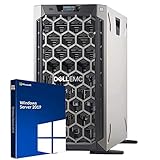
- 3.5 Inch Hot Plug Hard Drive PowerEdge T340 Tower Server Chassis
- Microsoft Windows Server 2019 Standard Operating System
- Processors: Intel Xeon E-2124 Quad-Core 3.3GHz 8MB CPU, Up To 4.3GHz Turbo
- Memory: 32GB (2 x 16GB) DDR4 PC4-21300 2666MHz Unbuffered Memory
- Hard Drive: 8TB (4 x 2TB) 7.2K RPM 6Gb/s SATA 3.5 Inch HDDs in RAID
Compare operational responsibility, not just platform names
Before choosing, map your application’s actual needs to what the provider operates and what your team will still own.
What’s actually slowing this PC down?
Pick the symptom - the matching free tool is one click away.
- Runtime compatibility: Check whether your app fits a conventional web-service or container model, or needs to be adapted for an edge runtime such as Workers.
- Database operations: Distinguish a managed database from a template or deployment you maintain. Confirm backups, recovery choices, maintenance, and the boundaries of provider responsibility.
- Background work: Identify workers, scheduled jobs, and other long-running processes your app needs, then confirm they fit the chosen platform.
- Deployment workflow: Check preview environments, pre-deploy commands, and how database migrations will be coordinated with application releases.
- Workload-specific cost: Estimate compute, database storage, bandwidth, previews, and background jobs for your own traffic and usage pattern. Avoid comparing unlike example workloads or relying on a provider’s general pricing claim.
Reduce migration risk with a staged decision
- Write down what you want to stop operating. Separate routine app hosting from database maintenance, deployment coordination, and recovery work. “One provider” is not the same as “the provider handles everything.”
- Choose the smallest meaningful change. If hosting is the main concern, Cloudflare Workers can connect to external SQL providers, including Supabase and Neon, so you can evaluate a host change without moving data at the same time.
- Test deployment and migration behavior. Verify how previews and pre-deploy steps work with your schema changes, and decide how you will recover if a deployment or migration fails.
- Price the real workload. Include the app, database, bandwidth, preview environments, and workers you actually expect to run. Provider compute models are not directly comparable without those assumptions.
- Confirm ownership and support boundaries. Before committing, establish who handles database maintenance and what backup and recovery arrangements your team must configure or operate.
How to make the call
For a conventional full-stack application where managed Postgres and a broad set of app services are priorities, begin with Render. If usage-based services and long-running workloads are central, evaluate Railway while treating database maintenance ownership as a gating question. If your app is built for Workers, Cloudflare offers a path to D1 or to an external database, including keeping Supabase during a staged hosting move.
There is no workload-neutral price winner established here, and the platforms do not offer identical runtimes or database responsibilities. The right alternative is the one that fits your app and makes the remaining operational work explicit.
Quick Recap
Product prices and availability are accurate as of the date/time indicated and are subject to change. Any price and availability information displayed on Amazon at the time of purchase will apply.

