
iTechGuides is reader-supported. When you buy through links on our site, we may earn an affiliate commission. As an Amazon Associate I earn from qualifying purchases. Learn more
Vendor concentration risk is the business exposure created when too much depends on one provider—or on dependencies shared by several providers. A second provider reduces that exposure only if it can be operated independently, meet workload-specific recovery objectives, and provide usable evidence of service and cost. A warm-standby drill can test those capabilities while a separate invoice-reconciliation check tests whether the related charges and usage records can be explained.
What is vendor concentration risk?
Vendor concentration risk is the possibility that a provider dependency magnifies the impact of a disruption, data-access problem, commercial lock-in, or difficult exit. It is not simply a count of suppliers. Two named providers may still rely on the same identity system, network path, data store, support team, subprocessor, or billing record. If a shared dependency fails, both apparent alternatives may be affected.
Map the providers and supporting dependencies to the important business services they enable. The FCA’s operational-resilience material, first published on 9 January 2020 and updated on 14 July 2026, expects firms within its remit to map the people, processes, technology, facilities, information, and third parties needed to deliver important business services. The expectation is proportionate and risk-based; it is not a blanket rule for every organization.
Recommended Free Tools
Map the dependency, not just the supplier name
- Start with the business service and identify the systems, data, teams, facilities, and processes required to deliver it.
- Trace each provider’s dependencies, including identity and access, network connectivity, support, subprocessors, and the systems that generate usage and billing evidence.
- Record where providers share a control plane, staff, data path, or other critical dependency. A different logo does not establish an independent failure domain.
- Revisit the map after material changes to architecture, procurement, or contracts.
UK Government cloud strategy guidance treats both commercial and technical concentration as considerations and says provider diversity and provider-specific lock-in should be conscious choices. It also warns that delivering identical services across multiple environments can take significant extra work; a primary-and-secondary design may be more suitable for some organizations.
#1 Best Overall

- PORTABLE SCANNER FOR USE ON-THE-GO — The fastest and lightest mobile single-sheet-fed compact document scanner in its class¹
- QUICK DOCUMENT SCANNING ― This Epson ultra-fast scanner scans a single page as quickly as 5.5 seconds²; Windows and Mac compatible
- VERSATILE PAPER HANDLING ― Portable scanner scans documents up to 8.5 x 72 in; Also easily digitizes receipts and ID cards to make accounting, bookkeeping, and organizing simpler
- INTUITIVE, HIGH-SPEED SOFTWARE — Epson ScanSmart Software³ is a smart tool allowing you to easily scan, review, and save; Stay organized easily with the help of this Epson scanner
- EASY SETUP — USB-powered connect to your computer for quick and simple scanning; No batteries or external power supply required to operate portable document scanner; Standard Connectivity: USB 2.0
How do you reduce vendor concentration risk?
Reduce exposure by making dependencies visible, deciding which failures the organization must withstand, and keeping a credible route to recovery or exit. Using multiple providers is one possible response, not an automatic improvement: it can add operational latency, skills requirements, cross-provider dependencies, and ongoing cost. AWS’s multicloud recommendations likewise advise using multiple providers only when the business value outweighs the additional costs and challenges.
Choose a response that matches the service
Compare the options against the same service-specific criteria. A backup environment that cannot meet the required recovery time, data currency, or staffing needs does not provide meaningful continuity simply because it exists.
Rank #2

- FAST SPEEDS - Scans color and black and white documents a blazing speed up to 16ppm (1). Color scanning won’t slow you down as the color scan speed is the same as the black and white scan speed.
- ULTRA COMPACT – At less than 1 foot in length and only about 1. 5lbs in weight you can fit this device virtually anywhere (a bag, a purse, even a pocket).
- READY WHENEVER YOU ARE – The DS-640 mobile scanner is powered via an included micro USB 3. 0 cable allowing you to use it even where there is no outlet available. Plug it into you PC or laptop and you are ready to scan.
- WORKS YOUR WAY – Use the Brother free iPrint&Scan desktop app for scanning to multiple “Scan-to” destinations like PC, Network, cloud services, Email and OCR. (2) Supports Windows, Mac and Linux and TWAIN/WIA for PC/ICA for Mac/SANE drivers. (3)
- OPTIMIZE IMAGES AND TEXT – Automatic color detection/adjustment, image rotation (PC only), bleed through prevention/background removal, text enhancement, color drop to enhance scans. Software suite includes document management and OCR software. (4)
| Approach | What it can address | Key trade-offs to assess |
|---|---|---|
| Single-provider design | May be appropriate where the organization accepts the provider dependency and has other resilience controls. | Exposure to provider-specific disruption or lock-in; test recovery and exit assumptions rather than treating them as settled. |
| Multi-region recovery within one provider | Can address some regional failures while retaining the provider’s broader platform. | Does not by itself remove provider-level or shared-control dependencies. AWS’s guidance discusses multi-region resilience, but its cost discussion is not a general estimate for second-provider standby. |
| Warm standby at a second provider | Can provide a partially prepared recovery environment outside the primary provider’s environment. | Requires data movement, compatible configuration, distinct access and control dependencies, staff capability, and ongoing standby cost. |
| Hybrid or other recovery arrangement | May suit services with different technical or business requirements. | Assess portability, operational complexity, contract terms, evidence quality, recovery objectives, and cost for the specific design. |
For recognized payment system operators and specified service providers, the Bank of England’s 2026 supervisory statement identifies options including regional resilience, hybrid recovery, backup vendors, and data portability. It says, “There is no hierarchy or one-size-fits-all combination of cloud resiliency options.” That statement’s detailed supervisory expectations apply to the entities within its scope, not to every company or cloud customer.
Windows Errors? Fix Them Before They Spread
Repair common Windows errors and clear accumulated junk for a smoother, more stable PC - no reinstall needed.Free scan · no reinstallOutdated Drivers Are Slowing You Down
One free scan finds every outdated or missing driver and matches the right update for your exact hardware.Free scan · exact hardware matchKeep an exit route credible
A provider-exit plan should identify the conditions that trigger action, viable alternatives, and procedures for recovering or exiting data. UK Government cloud lock-in guidance emphasizes that “Assessing your cloud providers must not stop after procurement.” U.S. GSA Cloud SIN ordering guidance is a procurement reference for U.S. federal acquisition contexts, not a rule for private-sector buyers. As one practical way to reassess switching ability, periodically rebuild or test critical components in another environment.
Rank #3
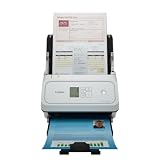
- Fast and Efficient: Scans both sides of a document at the same time, in color, at up to 45 pages per minute, with a 60 sheet automatic feeder, and one touch operation. Innovative Feeding System.
- Reliably Handles Many Different Document Types: Receipts, business cards, reports, contracts, long documents, thick or thin documents, and more. Monochrome LCD Display.
- Designed exclusively for the included Canon CaptureOnTouch software;TWAIN and ISIS drivers are not supported.
- Easy Setup: Simply connect to your computer using the supplied USB-C cable.
- Bundled Software: Includes easy-to-use Canon CaptureOnTouch scanning software.
What is a warm standby?
A warm standby is a secondary environment kept in a partially ready state for recovery. It is neither a fully active duplicate nor an environment that can be assumed to be instantly interchangeable with the primary. Its usefulness depends on what is already prepared, how current its data and configuration are, and whether the organization can activate and operate it under the scenario being tested.
AWS Prescriptive Guidance distinguishes warm standby from hot standby and pilot light, and recommends setting recovery time objectives (RTOs) and recovery point objectives (RPOs) for each workload. RTO is the target time to restore service; RPO describes the acceptable age or loss window of recovered data. Choose those targets with business and technical stakeholders, based on the service’s impact and needs—not by applying one target to every workload. The architecture is a trade-off among resilience benefit, cost, and complexity.
Rank #4

- OUR MOST ADVANCED SCANSNAP. Large touchscreen, fast 45ppm double-sided scanning, 100-sheet document feeder, Wi-Fi and USB connectivity, automatic optimizations, and support for cloud services. Upgraded replacement for the discontinued iX1600
- CUSTOMIZABLE. SHARABLE. Select personalized profiles from the touchscreen. Send to PC, Mac, mobile devices, and clouds. QUICK MENU lets you quickly scan-drag-drop to your favorite computer apps
- STABLE WIRELESS OR USB CONNECTION. Built-in Wi-Fi 6 for the fastest and most secure scanning. Connect to smart devices or cloud services without a computer. USB-C connection also available
- PHOTO AND DOCUMENT ORGANIZATION MADE EFFORTLESS. Easily manage, edit, and use scanned data from documents, receipts, photos, and business cards. Automatically optimize, name, and sort files
- AVOIDS PAPER JAMS AND DAMAGE. Features a brake roller system to feed paper smoothly, a multi-feed sensor that detects pages stuck together, and skew detection to prevent paper damage and data loss
How do you test a second cloud provider?
Use a bounded, authorized exercise focused on a defined service and failure scenario, such as a simulated prolonged primary-provider outage or loss of a required primary control plane. The exercise below is a practical design, not a regulator-mandated test or a claim that any particular organization has performed it. Use a test environment or another specifically authorized scope, and set stop conditions before starting.
Quick wins for a faster PC:
Clear out junk files and repair common Windows errorsFree Scan →Scan for outdated or missing drivers - takes under a minuteDriver Scan →Before the exercise
- Select the service and map its dependencies. Identify the people, processes, information, technology, facilities, and third parties required. Include identity, network paths, data, support, subprocessors, and systems that produce usage and billing evidence.
- Set objectives and boundaries. Document service-specific RTO and RPO, business impact limits, scope, data-handling rules, decision authority, and conditions for stopping the exercise.
- Define activation and return criteria. Specify the trigger for using the secondary provider, minimum acceptable service, who may authorize failover, and how the service returns to the primary. Include the alternatives and data recovery or exit procedures in the relevant plan.
- Confirm operational readiness. Check that required access, data, configurations, support contacts, and staff procedures are available in the secondary environment. Identify which dependencies remain shared with the primary.
- Set the billing baseline. Record the applicable contract or order, rate card, committed quantities, currency, billing entity, discounts, credits, taxes, service period, and any expected usage report or service-acceptance evidence. These are practical drill fields; contract terms and internal accounting processes determine which apply.
During the exercise
- Announce the scenario and timestamp the key events. Record detection, decision, activation, first successful transaction, and stable service.
- Run representative transactions. Confirm that the service works, not merely that an environment starts. Check whether recovered data is current enough to meet the stated RPO.
- Capture service and cost evidence. Save the usage or service evidence for the exercise window and record relevant primary- and secondary-provider charges. Label charges as actual, simulated, or estimated rather than blending those categories.
- Reconcile the invoice or test record. Compare the provider’s bill or invoice-like test record with the agreement and appropriate usage or service evidence. Record exceptions instead of silently adjusting them.
After the exercise
- Report observed results. Document recovery time, data currency, failed or manual steps, access and staffing issues, evidence gaps, invoice variances, and temporary or recurring costs.
- Assign corrective actions. Give each action an owner and due date. Reassess dependencies and switching-cost assumptions after material architecture, procurement, or contract changes.
- Make a resilience decision. Decide whether the outcome supports the organization’s concentration tolerance, calls for a better-tested fallback, or points to a different combination of controls.
How do you reconcile a cloud provider invoice?
Invoice matching is a control as well as a finance check: it can surface discrepancies, but it does not by itself prove that a service was resilient or that every charge was contractually valid. Microsoft Learn’s accounts-payable invoice-matching guidance describes matching invoice, purchase-order, and product-receipt information. In a purchase-order workflow, two-way matching compares invoice and purchase-order information; three-way matching also compares invoice quantity with the matched receipt quantity. Configured tolerances determine which discrepancies are flagged, and price or charge comparisons may also be checked against those tolerances.
Best Value
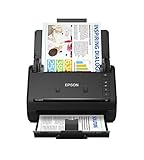
- FAST DOCUMENT SCANNING — Document scanner with feeder allows you to speed through stacks with a 50-sheet Auto Document Feeder (ADF); Efficient office scanner to help you scan more productively
- INTUITIVE, HIGH-SPEED SOFTWARE — Quickly scan with this desktop document scanner; Epson ScanSmart Software lets you easily preview scans, email files, upload to the cloud, and more; Plus, automatic file naming saves even more time
- SEAMLESS INTEGRATION — Easily incorporate your data into most document management software with the included TWAIN driver; Office document scanner integrates seamlessly with business workflows
- EASY SHARING — Duplex scanner allows you to scan straight to email or popular cloud storage2 services like Dropbox, Evernote, Google Drive, and OneDrive for simple storage and sharing
- SIMPLE FILE MANAGEMENT — Scanner allows the creation of searchable PDFs with Optical Character Recognition (OCR) and convert scans to editable Word or Excel files effortlessly; Designed for home and office document scanning
Cloud usage reports, metering records, or service-acceptance records can play an analogous evidence role when the contract and internal process define them. Product-receipt matching guidance does not prescribe one universal artifact for cloud billing. Do not call a usage report a “product receipt” unless the organization’s accounting policy or system explicitly defines it that way.
Build a traceable evidence set
- Invoice: retain line items, totals, billing entity, currency, service period, taxes, and credits shown.
- Commercial terms: compare charges with the applicable contract or order, rate card, committed quantities, discounts, and other agreed terms.
- Service evidence: use usage or metering exports and, where the agreement provides for them, service-acceptance or SLA records.
- Drill linkage: tie the evidence to the tested service and exercise window so the team can distinguish ordinary charges from exercise-related usage.
- Exceptions: record rate or quantity variance, unexpected charges, a mismatched billing entity or period, missing usage evidence, duplicate invoices, unapplied credits, tax or currency discrepancies, and invoices that cannot be tied to the tested service.
The checks for duplicates, billing periods, and service linkage are additional drill controls, not claims about automatic behavior in any particular matching product. Follow the organization’s accounting policy and the terms of its provider agreement when deciding how to resolve a variance.
What should the team learn from the drill?
The exercise is useful when it tests the dependency chain and leaves evidence that supports decisions—not just when the secondary environment comes online. Compare the outcome against the defined service objectives and concentration tolerance. A failed transaction, stale data, inaccessible identity system, unavailable operator, or unexplained charge is a finding to investigate, not a reason to declare the exercise complete.
Free tools Windows power users keep installed
One-click scans. No signup required.
Use the results to decide whether the chosen fallback is independently operable, whether it meets the service’s recovery needs, and whether the organization can explain the associated usage and charges. If it is not, adjust the design or controls and retest the specific gap.
Quick Recap
Product prices and availability are accurate as of the date/time indicated and are subject to change. Any price and availability information displayed on Amazon at the time of purchase will apply.

