
Recommended Free Tools
iTechGuides is reader-supported. When you buy through links on our site, we may earn an affiliate commission. As an Amazon Associate I earn from qualifying purchases. Learn more
TSMC and GlobalFoundries announced on October 28, 2019, that they would dismiss litigation between them and involving their customers, while granting each other a broad patent cross-license. The companies did not disclose a settlement payment, and the public record cited here does not establish that the deal set a dollar-value record.
What did TSMC and GlobalFoundries agree to?
The companies said they would dismiss litigation between them and cases involving their customers. They also announced a cross-license covering each company’s worldwide existing semiconductor patents and patents filed during the following ten years. GlobalFoundries made its announcement on October 28, 2019; TSMC filed its release on October 29, 2019. GlobalFoundries’ announcement and TSMC’s SEC-filed release describe the agreement.


The announcements describe the broad outline, not the full contract. The license itself was confidential in the U.S. International Trade Commission record, and the public sources do not state a payment amount. The Federal Register notice says the unredacted cross-license was confidential and was to be disclosed only to the settling parties and Commission staff.
What lawsuits led to the settlement?
On August 26, 2019, GlobalFoundries announced that it had filed lawsuits in the United States and Germany. The company alleged that TSMC’s semiconductor manufacturing technologies infringed 16 GlobalFoundries patents. It named the U.S. International Trade Commission (ITC), federal district courts in Delaware and the Western District of Texas, and regional courts in Düsseldorf and Mannheim. GlobalFoundries said it sought import restrictions and damages. These were the company’s allegations and requested remedies, not findings that TSMC infringed the patents. GlobalFoundries’ filing announcement sets out its claims and requested relief.
#1 Best Overall
How did the ITC investigation end?
The ITC investigation involved 22 respondents. According to the Federal Register notice, the parties and all respondents jointly moved to terminate it, saying the settlement between GlobalFoundries and TSMC purportedly resolved the issues as to all respondents.
An administrative law judge granted the motion on November 25, 2019. No petition for review was filed, the Commission did not review the initial determination, and the investigation was terminated. This procedural outcome ended the investigation; it is not an adjudicated finding that the alleged patent infringement occurred. The ITC notice records the respondent count and procedural history.
Rank #2
Was it really a “record” settlement?
The word “record” is not supported as a claim about the settlement’s dollar value by the public sources cited here: neither the company announcements nor the ITC notice supplies a payment amount or a comparison establishing a record. GlobalFoundries said it sought damages before the settlement, but that request is not evidence of what either company paid or received.
Free tools Windows power users keep installed
One-click scans. No signup required.
Executives framed the agreement as positive for innovation and customers. GlobalFoundries CEO Thomas Caulfield said the settlement acknowledged the strength of the companies’ intellectual property; TSMC General Counsel Sylvia Fang called the resolution a positive development for keeping focus on customers and technology. Those are company characterizations, not independent findings about patent strength or the terms of the confidential contract. The companies’ announcement contains both statements.
Quick Recap
Best Value

- IC Type: Semiconductor
- Each wafer fragment contains visible integrated circuit patterns for demonstration and display purposes only.
- Made from single-crystal silicon wafer material for authentic semiconductor teaching and research.
- Ideal for electronics courses, microfabrication demonstrations, and STEM student projects.
- Also suitable for art installations, photography props, and chip design exhibitions.
Rank #3
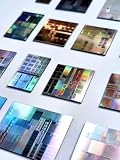
- AUTHENTIC SILICON SAMPLE: Real silicon wafer die sample featuring genuine wafer surface patterns, designed for semiconductor learning, research demonstration, and technology display purposes.
- NON-FUNCTIONAL SPECIMEN: This silicon sample is a display and educational specimen only. It is not an electronic component and does not perform computing or electrical functions.
- SEMICONDUCTOR EDUCATION USE: Suitable for classrooms, laboratories, engineering courses, STEM activities, and demonstrations of wafer structures and semiconductor manufacturing concepts.
- TECHNOLOGY DISPLAY ITEM: Ideal for exhibitions, science displays, collections, and demonstrations related to microelectronics and semiconductor technology.
- INDIVIDUAL PACKAGING: Each sample is separately packaged to help maintain surface cleanliness and reduce scratches during storage and handling.
Product prices and availability are accurate as of the date/time indicated and are subject to change. Any price and availability information displayed on Amazon at the time of purchase will apply.

