
Quick wins for a faster PC:
Fix the driver behind crashes, sound loss and screen glitchesFind Drivers →Repair Windows errors before they cause bigger problemsFix Now →iTechGuides is reader-supported. When you buy through links on our site, we may earn an affiliate commission. As an Amazon Associate I earn from qualifying purchases. Learn more
Both standalone travel insurance and a credit card’s trip-delay benefit may reimburse certain extra costs after a covered delay, but neither automatically pays for every delay or expense. The controlling details are the specific policy or card guide: what caused the delay, how long it lasted, which travelers and expenses qualify, the benefit limit, and what proof and claim steps are required.
To decide whether you need separate cover, compare the current guide for your exact card with the particular travel-insurance policy you are considering. Also check how either benefit coordinates with airline assistance or other reimbursements. The U.S. examples below are not universal card terms; Australian and New Zealand guidance is identified where it illustrates local policy or activation differences.


What trip-delay coverage may pay for
Trip-delay coverage is a category, not a promise of payment. A policy or card benefit may reimburse eligible additional expenses when a specified cause produces a delay that meets its waiting period. Limits, covered situations, exclusions, and evidence requirements vary. As the U.S. National Association of Insurance Commissioners (NAIC) puts it: “Each policy sets its own limits and lists specific situations it will or won’t cover.” (NAIC, June 16, 2026.)
What’s actually slowing this PC down?
Pick the symptom - the matching free tool is one click away.
Standalone travel insurance
A standalone travel-insurance plan may include trip delay as part of broader travel protection. NAIC describes trip cancellation, interruption, and delay insurance as potentially reimbursing prepaid, nonrefundable travel costs when a covered event prevents or interrupts travel; its example for delay is needing an overnight hotel. That does not mean every hotel, meal, or rebooking expense is covered: the covered reason, waiting period, eligible costs, limit, and exclusions in the purchased policy decide what may be reimbursed. See NAIC’s travel-insurance overview and its consumer guidance.
#1 Best Overall
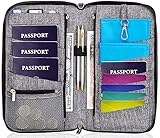
- DESIGNED BY TRAVELERS FOR TRAVELERS unique, Smartly designed, elegant high capacity document holder. Removable wristlet and cross body straps allow choosing the desired type of wearing and usage
- THE MOST SPACIOUS Letter Sized TRAVEL ORGANIZER EVER. Designed specifically for large families or groups of travelers. 6 passport pouches, 2 pockets for boarding passes for passengers flying with connection, 2 zippered big pockets for cash, 2 latter size stash pockets for documents, external zippered phone pocket… Totally 21 pockets and slots
- BE COOL YOUR DOCUMENTS ARE SAFE. Manufactured from 100% Premium RFID protected WATER RESISTANT material with tight lining will guaranty safety of your documents in any weather
- It is Not Just a Passport Wallet where you can put only few passports and cards. It’s real capacious letter sized travel organizer were all your travel necessities will be in one place
- NO DOUBTS - BUY IT NOW 1- year warranty, friendly customer support 24/7. 60 days money back guarantee
Australian government travel guidance offers an example of how terms can differ by market and policy: transport-delay cover commonly begins after a specified wait, often six hours but sometimes 12, and may have a relatively low limit capped per 24-hour period. It says provider rescheduling is often excluded, although some policies may cover additional accommodation and travel costs for people already en route. These are observations about Australian policies, not rules for U.S. plans. Check the actual wording, including whether cover applies once a trip is underway. Smartraveller’s coverage guidance explains the variation.
Credit-card trip-delay benefits
A card benefit may reimburse selected expenses when the account, trip, traveler, cause, and delay satisfy the card’s terms. Payment activation rules matter: the guide may require charging some or all of the qualifying travel cost to the card. Australian and New Zealand consumer guidance both warn that some card-linked cover depends on charging flight or travel costs to the card; the specific guide determines the rule. See Smartraveller’s card-insurance guidance and New Zealand Consumer Protection’s travel-insurance guidance.
Rank #2
![ESSENTIAL Car Auto Insurance Registration BLACK Document Wallet Holders 2 Pack - [BUNDLE, 2pcs] - Automobile, Motorcycle, Truck, Trailer Vinyl ID Holder & Visor Storage - Strong Closure On Each -](https://m.media-amazon.com/images/I/41k-QvzFVuL._SL160_.jpg)
- ESSENTIAL Car Auto Insurance Registration BLACK Document Wallet Holders 2 Pieces
Visa’s U.S. network-level pages illustrate why a card’s logo alone is not enough to determine cover. The pages describe different delay thresholds and maximum benefits, but direct cardholders to the issuing bank’s Guide to Benefits; issuer-specific terms and exclusions apply.
The Tool Desk
Outbyte PC Repair FREERepair Windows errors before they cause bigger problemsFix Now →Outbyte Driver Updater FREEScan for outdated or missing drivers - takes under a minuteDriver Scan →| U.S. Visa example | Delay threshold and stated maximum | Important qualification |
|---|---|---|
| Visa Signature | Up to $300 after a delay longer than 12 hours | For specified covered hazards; issuer terms and exclusions apply. |
| Visa Infinite | Up to $500 after a delay longer than six hours | For specified covered hazards; issuer terms and exclusions apply. |
These are examples from Visa’s U.S. consumer pages, accessed October 4, 2026—not guaranteed benefits for every card in either tier. The exact current Guide to Benefits issued for the card controls. The pages do not establish one complete list of reimbursable expense categories for every Visa issuer, and they do not establish terms for other card networks. Do not assume that meals, lodging, or replacement transportation qualify without checking the guide.
Rank #3

- ESSENTIAL ITEMS FOR CAR INTERIORS: This car registration & insurance card holder is convenient and portable, making it an excellent option for storing your essential documents. Instead of haphazardly placing your car papers in the glove box or an unsightly envelope, this product allows you to keep them organized in one place. It is a practical accessory for maintaining a well-organized car interior.
- PREMIUM MATERIALS AND CRAFTSMANSHIP: The insurance registration holder is crafted from premium PU leather that is both long-lasting, resistant to wear and tears, and waterproof, as well as being soft to the touch. The intricate 3D embossing technique produces attractive car designs on the cover, while the meticulous sewing method showcases the flawless quality of the product in every aspect.
- HIGH CAPACITY AND BROAD APPLICATION: The car must haves features six compartments designed to store different documents and cards, helping to protect your important paperwork and keep your glove box tidy. It also makes a thoughtful gift for friends, especially those who are new to driving.
- EASY TO USE AND READ: This insurance card holder features a magnetic clasp for easy opening and closing, making it convenient to use. The transparent compartments inside allow for easy organization and quick access to files or cards. Additionally, this ID holder is simple to keep clean by gently wiping with a wet tissue to maintain its appearance.
- WORRY-FREE AFTER-SALES GUARANTEE: To ensure a positive shopping experience, we have a dedicated team available to assist with any post-purchase inquiries or concerns. If you experience any difficulties with our car registration and insurance holders, please don't hesitate to reach out via email. Rest assured, we will respond promptly and work to find a suitable resolution within a day.
How to compare a card benefit with a travel-insurance policy
Read the current card guide and the proposed policy side by side. Compare the following terms rather than relying on a card tier, a plan name, or a general description of “trip delay.”
- Qualifying cause: Which weather, mechanical, strike, or other events count? Are foreseeable events or carrier-controlled schedule changes excluded?
- Waiting period and clock: How many hours must pass? Is the time measured from scheduled departure, arrival, or another point?
- Eligible expenses: Which necessary additional costs may be claimed? Check separately for lodging, meals, new transportation, and personal necessities, along with any conditions on each category.
- Benefit limit: Is the maximum per traveler, trip, occurrence, or time period? Is it a reimbursement ceiling or a fixed payment?
- Eligible travelers and activation: Which companions or family members are covered? Must some or all of the fare be charged to the card? Does the guide accept points or mixed payment?
- Other reimbursement and claim requirements: Must you first seek assistance or reimbursement from the carrier? What receipts, carrier confirmation, proof of payment, forms, and filing deadlines are required?
- Other risks: Are you comparing delay expenses only, or do you also need cancellation, interruption, emergency medical costs, evacuation, or baggage protection? A standalone plan may bundle broader categories, but only the specific purchased plan establishes what is included. NAIC discusses these categories in its travel-insurance overview.
For an Australian policy, also check whether the delay cover applies to travelers already en route and whether carrier rescheduling is excluded; Australian guidance notes that these terms vary. For any jurisdiction, follow the applicable contract and its coordination rules. An airline’s help or payment, or another source of cover, may affect what remains unreimbursed.
Independent reader supportYour contribution helps us test, update, and keep practical guides available for everyone.Which option fits your trip?
A card benefit may be enough for the delay risk you want to address if its current guide covers the trip and travelers, the qualifying causes match your concern, and its waiting period, expense rules, and maximum are acceptable. Separate insurance may be worth considering when you also want protections beyond delay expenses, or when the card’s terms do not fit the trip. Compare the actual policy and card guide; no general rule makes one option better for every traveler.
NAIC says travel insurance usually costs 5% to 10% of the total trip price. That is a broad U.S. consumer-guidance range, not an individual quote or a guarantee that every plan falls within it. The cost and terms of a particular policy require its own quote and documents. NAIC also reports that 94.7% of travel-protection products purchased in 2022–2024 were trip cancellation/interruption/delay products, attributing that market figure to the U.S. Travel Insurance Association; it is not a trip-delay claim rate or a measure of consumer outcomes. See NAIC’s consumer guidance and NAIC’s overview.
What to do if a delay happens
- Document the event: Keep the carrier’s written delay confirmation and details of the cause and timing, if available. Check the benefit or policy for its required evidence.
- Save proof of expenses: Keep itemized receipts and proof of payment for costs you may claim. Do not assume an expense is eligible until you have checked the applicable terms.
- Check other assistance: Ask the carrier what assistance or reimbursement is available and review your policy’s coordination rules before treating an expense as unreimbursed.
- File under the right terms: Use the process, forms, and deadline in the card’s current Guide to Benefits or the insurance policy. A network-level summary is not a substitute for the card issuer’s guide.
No exact claim result can be guaranteed from a category name or a general benefit summary: the contract wording and the facts of the individual delay determine eligibility.
Quick Recap
Product prices and availability are accurate as of the date/time indicated and are subject to change. Any price and availability information displayed on Amazon at the time of purchase will apply.

